After some big upsets on Day 1, the youngsters are back in action for Round 2 of the 1st Chola Chess International Open Grandmasters Tournament
On the top board, experienced GM Sandipan Chanda takes on GM Aravindh Chithambaram.
Here are the opening moments from the round 2
@CholaChess@Rameshchess
Sharing some of my key learnings from October, a month in which I booked Rs 15.8 lakhs+ in trading profits. ,Here is the Verified PNL from Zerodha
https://t.co/PK5YU7MrTC
As most of you who follow me from long time knows, I trade index and equity derivatives using a structure-based price action approach: market structure, key levels, and multi-timeframe confluence (30m bias → 15m setup → 5m trigger).
Trades are executed with predefined risk and a documented plan. My edge comes from the consistency of execution, not from prediction.
Things I look for before executing any new trade :-
Market structure: Identifying trend, range, and transition phases through higher-high/higher-low sequences, breaks of structure .
Key levels: Focusing on Previous day high/low, weekly pivots, VWAP, and support/resistance zones across multi-timeframe ( 30m bias → 15m setup → 5m trigger).
Entry triggers: Rejection candles, breakout-retest patterns, and momentum confirmation, taken only where risk can be tightly defined.
Fixed risk per trade: a defined percentage of capital 30% per setup, with hard stop-losses placed at structural invalidation points.
Minimum risk-reward: setups are taken only at 1:2 or 1:4, so profitability doesn’t depend on a high win rate.
Daily and weekly loss limits: trading stops when the max drawdown threshold is hit
Delta: I keep directional exposure aligned with my price action bias and hedged or reduced when the market invalidates the thesis.
Structure selection: I use defined-risk structures (spreads, hedged positions) where appropriate to control tail risk.
Gamma: I manage gamma risk near expiry and around key levels, where small moves can sharply shift delta.
Vega: I check implied volatility rank/percentile before entry, avoid buying inflated IV ahead of events, and account for IV crush after them.
For options, I size accounts for premium at risk, lot size, and aggregate portfolio delta/vega, so correlated positions never push total exposure beyond predefined limits.
My focus remains on process metrics (expectancy, , max drawdown, and adherence to rules) rather than on individual trade outcomes.Profits come from disciplined execution repeated over time, not from predicting the market.
Note - In my yesterday's post Verified PNL was not updated by Zerodha with profits booked on 30-Oct , so Profits is 13.79 Lacs in previous post.
MOST TRADERS OPEN A CHART AND IMMEDIATELY LOOK FOR AN ENTRY
The ones who actually make money do this first
Step 1: Higher timeframe → Daily or Weekly. Get the big picture.
Step 2: Support & Resistance → Two levels above. Two below.
Step 3: Trend & Direction → What direction is the market going?
Step 4: Shapes & Formations → Any patterns near current price?
Step 5: Indicators → One or two max. More is confusion.
Step 6: Read the story → Who is in control? Bulls or bears?
Step 7: Form an opinion → Rate your conviction. 3/5 bullish? 5/5?
Step 8: Risk management → Does R:R meet your plan? If not, skip.
Step 9: Timing → Entry available now or set alert and wait?
Step 10: Trust the process → Respect the time you put in.
Ten steps before touching a position
Most traders skip to step 9
That’s why they lose...
If you cannot wait, trading is not for you.
Today I will explain why most of trading is “waiting.”
Short-term results are heavily affected by randomness, so we need to keep repeating consistent actions and let probability work through sample size.
To keep following consistent rules, you need to “wait,” but many people cannot.
Even when the market is not yet in a state where they should trade, they search for some way to trade anyway, or they regret it, thinking, “If I had taken that trade, I would have made a profit.”
If your rules say, “Do not trade in this market,” then no matter how much the chart moves, you must do nothing.
That is because it is not a trade you should take.
You have done nothing wrong.
In fact, you are doing the right thing.
Yet you feel “regret,” and that itself is the real mistake.
You mistakenly believe that making a profit is “good” and “correct.”
That way of thinking is the “game of winning and losing” itself, the exact opposite of the “game of probability.”
The moment you put “making a profit” ahead of following your rules, your failure in this uncertain world of trading is guaranteed.
If you have properly tested in advance, through a large sample size, that your strategy has an edge, follow its rules no matter what.
You cannot wait because your rules are not clear, because you do not understand the basic fact that the law of large numbers works on the large sample size you build by continuing to follow those rules, and because you still put weight on the win or loss in front of you.
If you are clear about “if this happens next, I will do this,” you should know at least the minimum time the chart needs to get there.
Obviously, a single one-hour candle takes one hour to form.
For example, if you trade on the one-hour chart, there should be no need to stare at the chart the whole time.
A scenario of “if this happens next, I will do this” is extremely important, and if your rules are not clear, you do not know what to wait for, so you cannot wait.
People who cannot wait do not understand what trading is.
You must keep acting exactly as you planned in advance.
You need to wait as planned, skip trades as planned, enter as planned, and take profit or cut your loss as planned.
Every one of these actions is made of “waiting.”
Your only physical action is the “click.”
If your actions are made of “waiting,” then the key is “the clarity of your rules” and “the scenarios you prepare in advance” based on those rules.
A scenario is not a “prediction.”
It is your plan of action.
“If this happens, I will do this” is completely different from the prediction that “this will definitely happen.”
You only have a plan, and you are not predicting that “this will definitely happen.”
If things do not play out as your scenario says, you must not act.
But many people cling to predictions and wishful thinking.
Even though their original plan has been invalidated, they think, “It will definitely go up,” and never take the loss they should take, or they enter earlier than their real entry based on a prediction, even though it is not yet time to enter.
Wait properly.
Waiting is the foundation of trading.
Everything in trading takes time.
You have to wait for the right timing, wait until the right time to exit, and wait for the next trade.
Building a large sample size takes time.
Compounding takes time.
Above all, maturing as a trader takes time.
Trading is not something for people in a hurry, or people who want money right now, to make easy money from.
If you trade with that mindset, trading is not for you.
The more you understand trading, the more you will realize how much you have to wait.
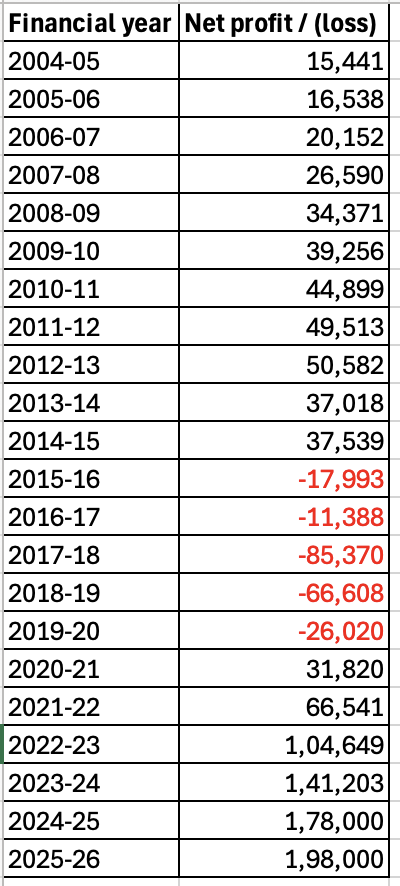
PSU banks were reasonably profitable until FY 2014-15. However, things changed significantly following the Asset Quality Review (AQR) initiated by Dr. Raghuram Rajan during his tenure as RBI Governor.
Earlier, evergreening of loans was prevalent, with banks rolling over or restructuring loans to avoid recognising them as NPAs. The AQR forced banks to recognise stressed assets and make adequate provisions, bringing the true extent of bad loans into the open.
Consequently, PSU banks' Gross NPA (GNPA) ratio surged to nearly 10%, severely impacting profitability and capital adequacy. The Government had to undertake substantial capital infusion to ensure that banks maintained adequate Capital Adequacy Ratios (CAR).
The stock market closely tracked the Government's annual capital infusion announcements. The Government infused approximately ₹25,000 crore in several years, and any shortfall against the expected allocation was viewed negatively by the market.
Today, the picture is dramatically different. PSU banks have cleaned up much of their balance sheets, improved asset quality, returned to strong profitability and built comfortable capital adequacy buffers.
From a period of capital scarcity, mounting NPAs and recurring government support, PSU banks have moved to a position of strong capital adequacy and improved financial health.
Trading Law:
A sweep means nothing without the 4H pointing in the same direction.
You can have the cleanest sweep on the 15M.
If the 4H doesn't agree, it's a trap.
Confirm the direction first.
Then wait for the sweep.
Then take the entry.
That sequence is non-negotiable.
You are a professional trader.
1. Stop checking P&L every 5 minutes.
2. Stop moving your stop loss.
3. Stop averaging down on losing trades.
4. Stop entering trades out of boredom.
5. Stop revenge trading.
6. Stop increasing quantity after a loss.
7. Stop checking what you could have made.
According to World Bank's latest report, India's extreme poverty has fallen from 27.6% to just under 2.6%.
And for Indians living under Rs. 400 a day (lower middle income), it has come down from 57.7% of the population to 16.1%.
Remarkable achievement by India given the rupee depreciated and the inflationary pressure of a fast growing economy.
93% of individual F&O traders in India lost money over FY22–24 (SEBI, Sep 2024).
Most weren't wrong on direction. They were wrong on timing.
Here's the timing framework I teach option buyers. 🧵
Fair Value Gap Tip:
Only look for longs at FVGs in the lower 50% of a price swing.
Only look for shorts at FVGs in the upper 50%.
Never sell from a FVG in the lower 50%.
It’s a low-probability setup.
The National Pharmaceutical Pricing Authority has released a list of brands of anti-cancer medicines with their revised Maximum Retail Price (MRP). The revised price list reflects the information submitted by companies up to October 27, 2026.
MOST TRADERS HAVE 10 INDICATORS ON THEIR CHART
The ones who actually make money use 5 steps
BOS → Price breaks the previous swing high. Structure confirmed.
FVG → Move left a gap. Imbalance created. Price will return.
Order Block → Last bearish candle before the BOS. Mark it.
Entry → Price returns to OB or FVG. Bullish confirmation. Enter.
Target → Previous high. Next liquidity. Take profit.
That’s the entire setup
BOS → FVG → OB → Entry → Target
Just structure and patience
Discipline. Patience. Risk management.
The three things nobody wants to hear and everyone needs
Bookmark this. It will save your trading:
1. 4H direction. Bullish, bearish, or no trade.
2. Mark equal highs and equal lows.
3. Note unfilled FVGs.
4. Wait for the sweep.
5. 15M FVG confirmation.
6. SL set. TP set. Walk away.
No exceptions.
कपड़ों की दुकान (Garment Shop) से लाखों कमाने के 11 राज़
कपड़े के धंधे में मार्जिन 50% से 200% तक होता है बस सही खरीदारी आनी चाहिए
लोकल होलसेलर से मत खरीदो सूरत, अहमदाबाद, लुधियाना, तिरुपुर या दिल्ली जाकर सीधा मैन्युफैक्चरर से माल लाओ
दुकान में लाइटिंग (Lighting) और ट्रायल रूम सबसे शानदार रखो कपड़ा लाइट में ही चमकता और बिकता है
Dead Stock से बचो जो डिज़ाइन 2 महीने में न बिके, उसे सेल लगाकर तुरंत लागत पर निकाल दो
ग्राहक को सिर्फ़ शर्ट मत बेचो साथ में पैंट, बेल्ट और परफ्यूम दिखाकर बिल का साइज़ बढ़ाओ (Cross-Selling)
दुकान के बाहर Putli (Mannequin) पर रोज़ नए और सबसे ट्रेंडी कपड़े पहनाओ 50% ग्राहक वहीं देखकर अंदर आते हैं
ग्राहकों का WhatsApp नंबर सेव करो नया स्टॉक आते ही फोटो और रील्स भेजा
त्योहारों और शादियों के सीजन से 1 महीना पहले ही पूरा ट्रेंडिंग स्टॉक भर लो
कपड़ों की अल्टरेशन (फिटिंग) की सुविधा दुकान पर ही तुरंत दो ग्राहक खुश होकर जाएगा
एक ही दुकान में सब कुछ रखने से अच्छा है किसी एक चीज़ (जैसे सिर्फ़ Kids Wear या Kurti) के स्पेशलिस्ट बनो
कपड़ा कभी सड़ता नहीं है, बस फैशन बदलता है जो ट्रेंड को पकड़ लेता है, वो नोट छापता है