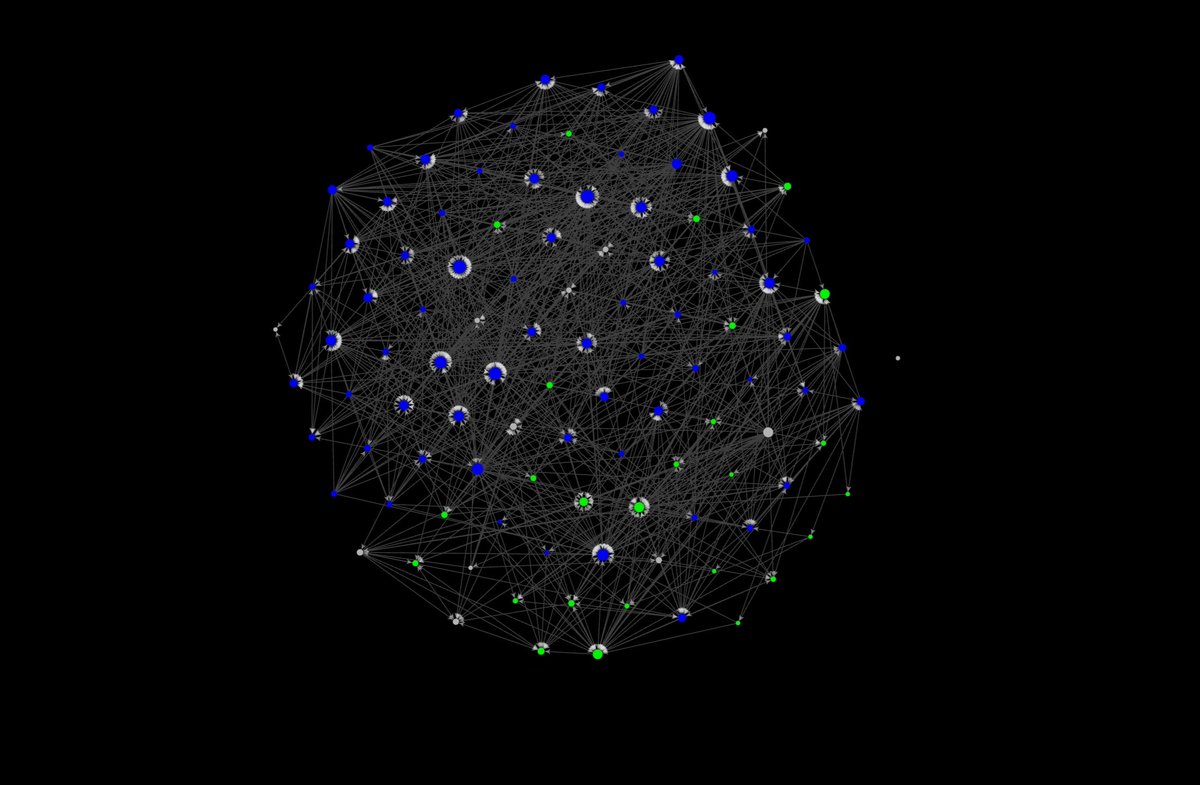
This is what AEGIS is being built to do.
Keep frontline teams and operations centres connected to the same developing operational picture — as events happen.
Not more dashboards. Better operational understanding.
➡ https://t.co/B5gtHnF6gl
We spend a lot of time asking what humans think about AI.
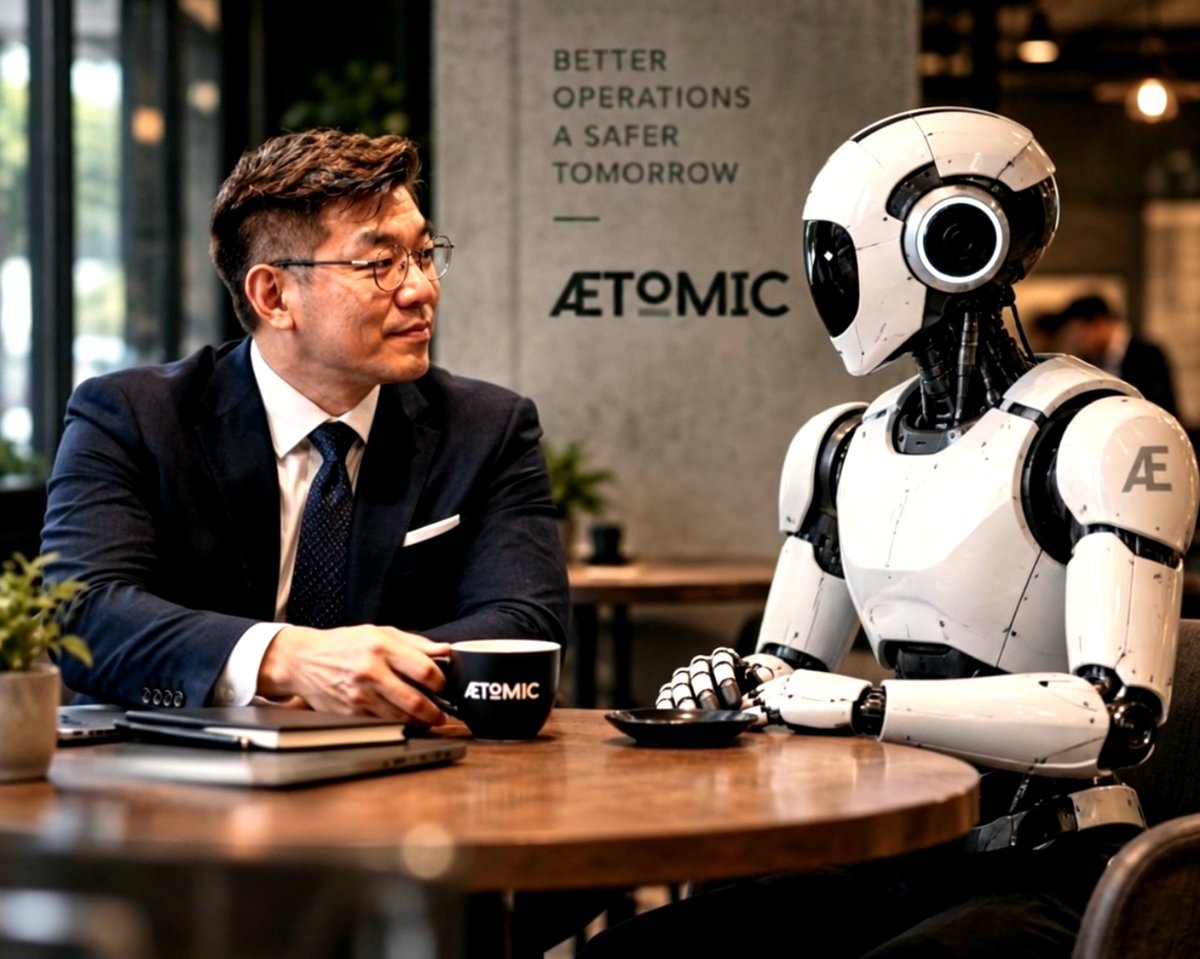
At Aetomic, we sometimes wonder what AI might think about us.
Intelligence observing intelligence goes both ways.
#AI#ArtificialIntelligence#Aetomic
AI is getting increasingly good at answering questions.
Real-world operations have a different problems.
Someone still has to decide what matters and what happens next.
That’s where Operational Intelligence gets interesting.
An officer on the move cannot realistically stop, look at a screen, and type an update every time something changes.
So we changed the product ➡ voice-guided workflows.
Technology should adapt to operations, not the other way around.
#technology#AI#Aetomic
Figure’s Helix 2.5 shows how pretraining on human behavior data can improve a humanoid robot’s ability to work in unfamiliar environments.
In Figure’s test, the Index-pretrained model achieved 56% zero-shot success across 30 unseen homes, compared with just 9% for a model trained from scratch.
The key takeaway is that learning from broad human experience could help robots generalize their skills instead of being trained separately for every new environment.
More data does not necessarily mean better situational awareness.
Sometimes it just means more noise.
The harder problem is turning information into useful judgement without losing context, uncertainty or authority along the way.
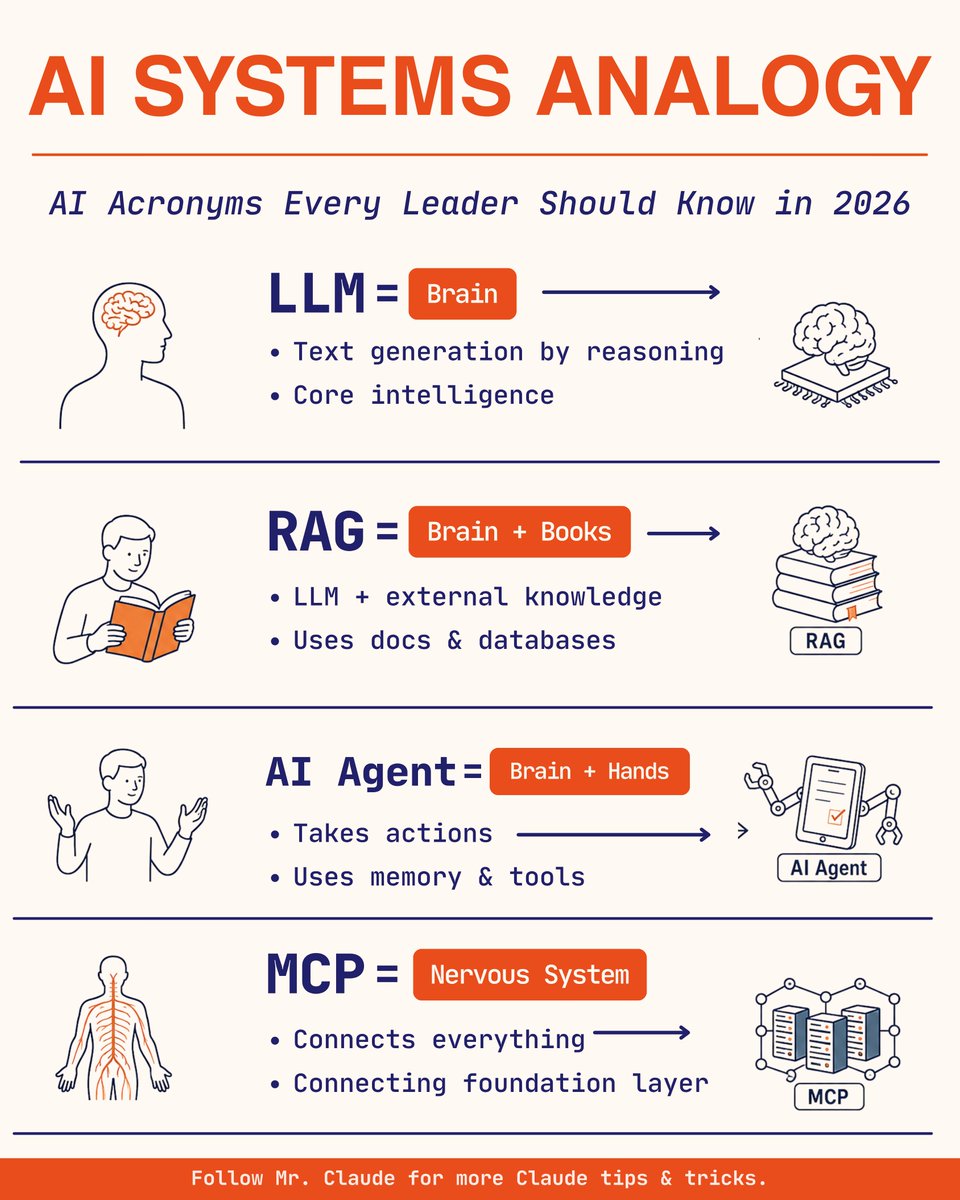
Four acronyms cover most of what a leader actually needs to understand about an AI system, and the human body is the fastest analogy for all of them.
An LLM is the brain. It generates text by reasoning over a prompt, and it is the core intelligence everything else in the system builds on. Nothing downstream works without it, but on its own it only knows what it was trained on.
RAG is the brain plus books. It pairs an LLM with external knowledge, pulling from your documents and databases instead of relying on memory alone. This is how a system answers questions about information the model was never trained on.
An AI agent is the brain plus hands. It does not just generate an answer, it takes action, using memory and tools to actually do something with what the brain decided. That is the difference between a system that talks and one that works.
MCP is the nervous system. It connects everything else together, the foundation layer that lets the brain, the books, and the hands actually talk to each other instead of operating as separate pieces.
Bookmark this before your next conversation about AI strategy turns into an acronym soup.
Modern enterprise systems have become exceptionally good at collecting information.
The question is whether they have become equally good at understanding it.
The next challenge isn't understanding.
It's interpretation.
https://t.co/GZz3DeIEQg
You are living inside a paradox that modern civilization cannot resolve.
We have built an age of unprecedented scientific brilliance: precision mathematics, powerful universities, and technologies that reshape the planet.
Yet we are more confused than ever about the most basic human questions:
What is the human being?
What gives life meaning?
How can society truly be renewed?
Dr Steiner argues that this crisis is not accidental.
It is the inevitable result of how modern cognition has been shaped over the last few centuries.
Natural science perfected a mode of thinking built on measurement, mechanism, and causal explanation.
This gave us immense mastery over the physical world.
But the problem begins when this same mode of thinking is applied to everything else.
The concepts that explain machines cannot explain consciousness.
The concepts that describe the body cannot describe the human being.
The concepts that predict physical processes cannot explain morality, creativity, or the forces that shape civilization.
Modern institutions produce extraordinary clarity about mechanisms — and almost total blindness toward life itself.
Steiner traces this blindness to the 2 great poles of human cognition.
The first is the pole of matter.
Here, modern science reaches its peak: precision, prediction, technical mastery.
But thinking often continues beyond what is actually observed, constructing abstract models that drift further and further away from living reality.
The second is the pole of consciousness.
Here the opposite distortion appears.
Either consciousness is reduced to brain activity and measurable functions, or it dissolves into vague mysticism and subjective feeling.
Neither approach grasps the living activity of the soul.
And as long as we remain trapped within either pole, something essential is lost.
Matter without consciousness reduces the human being to a mechanism.
Consciousness without grounding dissolves into subjectivism.
Both fail to reach the human being.
Steiner's claim is that cognition itself must evolve.
Through Imagination, Inspiration, and ultimately Intuition, human consciousness becomes capable of perceiving dimensions of reality that neither materialism nor subjectivism can reach.
Only then do genuine concepts of the human being become possible.
Only then can we understand education, psychology, medicine, economics, law, and social life — not as external systems, but as expressions of living spiritual realities.
The crisis of modern civilization is not primarily political, economic, or technological.
It is a crisis of cognition.
We have perfected our tools for understanding matter.
But we have forgotten how to understand the being who seeks that knowledge in the first place.
Over the past two decades, organisations have become exceptionally good at collecting data, connecting systems, and making information more accessible.
Yet, operations have not become more intelligent.
The next step isn't more dashboards or more data.
It's building systems that help organisations reason about what is happening, understand why it matters, and support better operational decisions while keeping humans accountable.