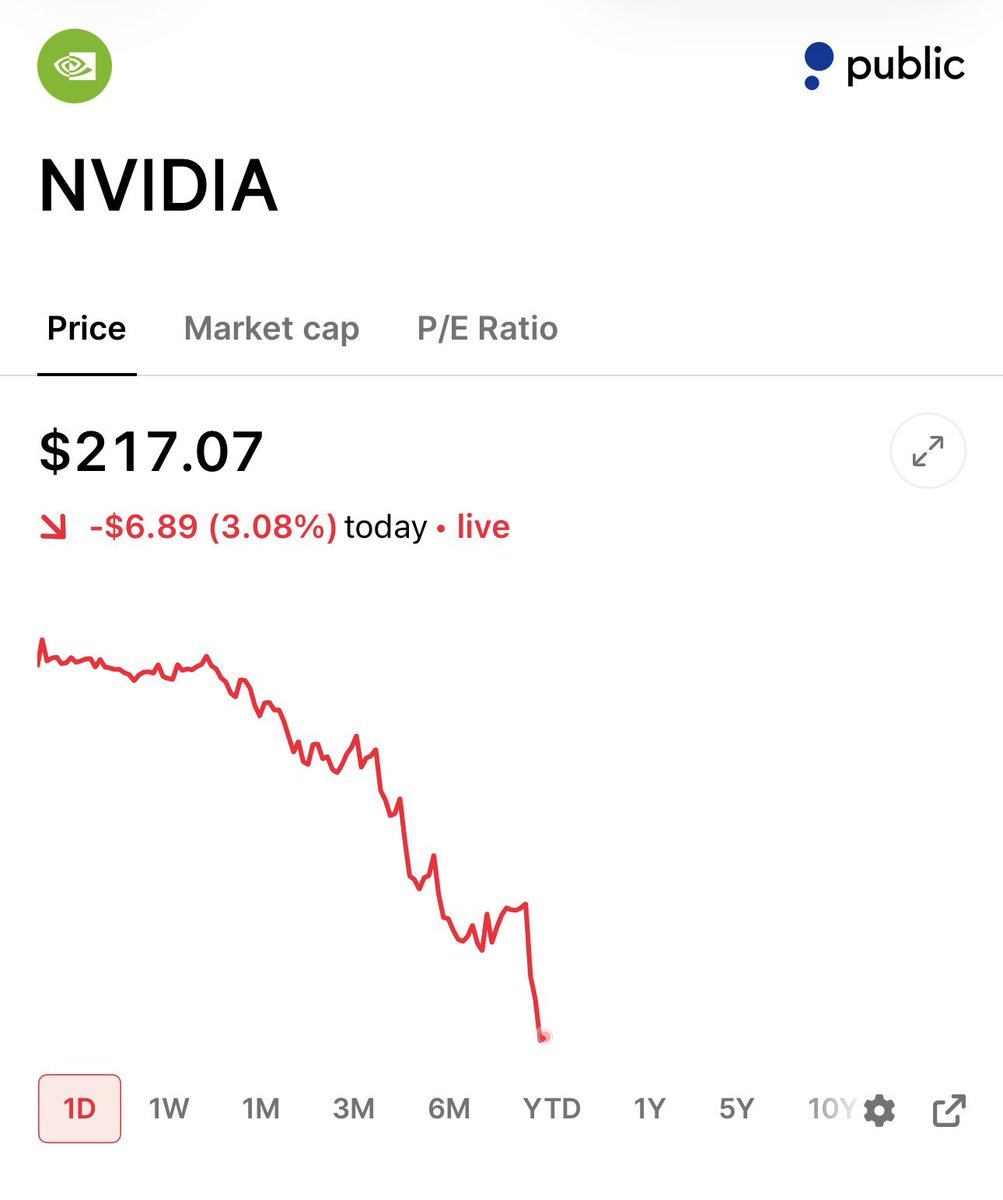
$NVDA is locking in one of the largest AI infrastructure projects yet with OpenAI and SB Energy planning an 8 GW compute campus in Ohio.
The first 4.25 GW will run on Nvidia’s DSX platform with capacity beginning in 2028 while the broader project adds at least 10 GW of new power generation and $4.2B of grid investment.
Jensen Huang says “land, power and shell have become vital in the age of AI” as Nvidia secures long-lived infrastructure to keep scaling OpenAI’s compute.
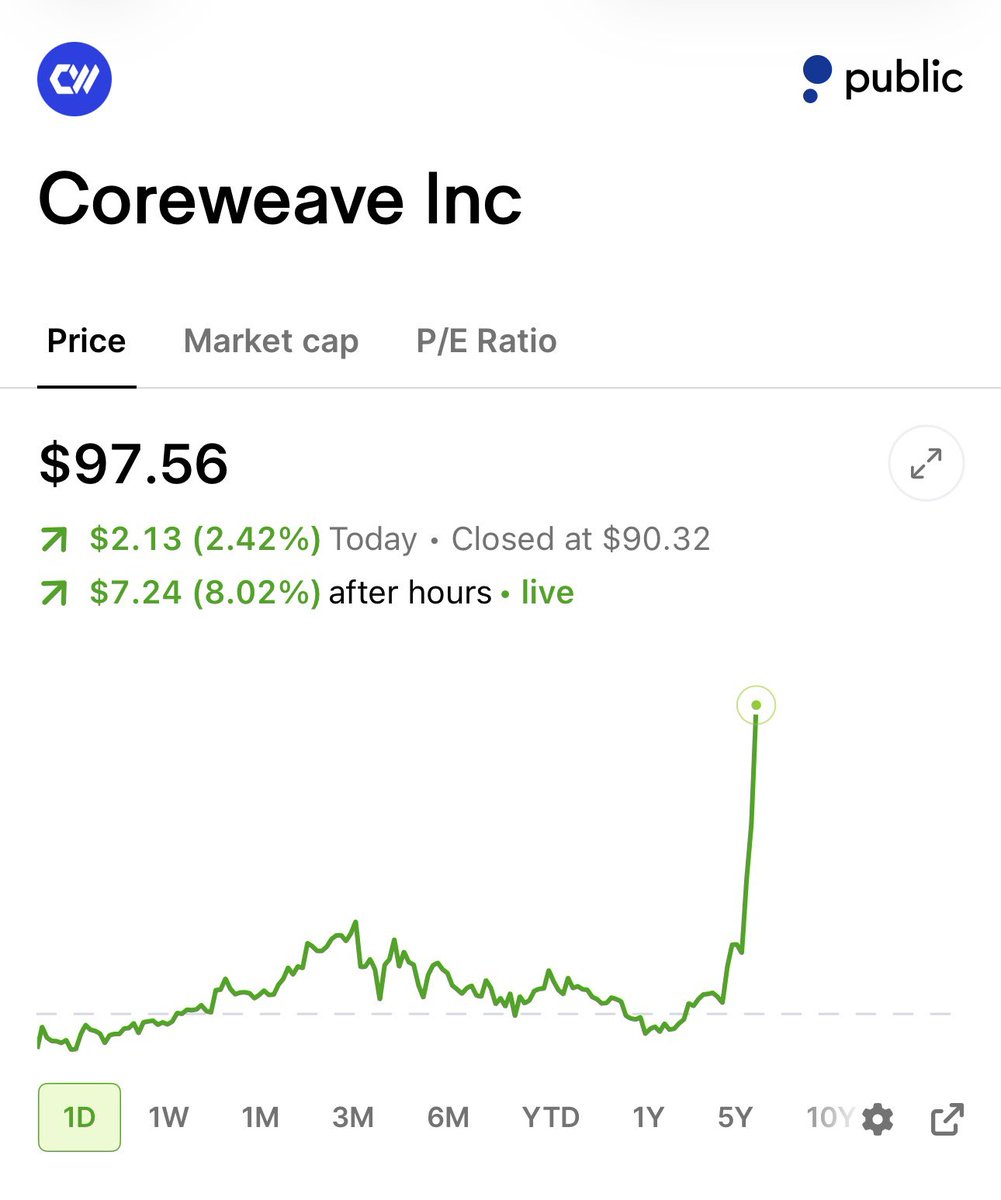
$CRWV backlog has more than tripled YoY to ~$104B, and that still excludes $25B of new customer commitments added in just the first few weeks of Q3.
The quality of that backlog is improving too with ~$42B expected to convert within 24 months versus only ~$15B a year ago giving CoreWeave much greater visibility into near-term revenue.
The bottleneck is now execution rather than demand because CoreWeave has ~3.7 GW of contracted power but only ~1.5 GW active so growth depends on bringing capacity online fast enough to turn that demand into revenue.
$CRWV Q2 EARNINGS
• Revenue: $2.58B vs. Est. $2.56B
• EPS: ($1.14) vs. Est. ($1.20)
• Operating Income: $128M vs. Est. $67M
• Total Contracted Power: ~3.7 GW
• Active Power: ~1.5 GW
• Backlog: $104B (excluding $25B of new customer commitments added in early Q3)
CoreWeave is also being added to the Nasdaq-100 Index.
$CRWV signs an A100 contract through 2029 showing $NVDA GPUs launched in 2020 can still generate revenue nearly a decade later.
That longer earning life improves returns on its infrastructure while higher-margin services like managed inference at $100M ARR and non-GPU products above a $400M run rate expand monetization beyond raw compute.
$NVDA is developing Nemotron 4 which is a 1T+ parameter open-source model aimed at competing with the best open models in the world.
By pushing open source closer to the frontier, Nvidia can broaden AI adoption while ultimately driving more demand for its GPUs.
Jensen Huang says $NVDA is helping build an open capital market for AI infrastructure with $500B of third-party funding designed to let AI labs, enterprises and clouds build capacity without funding every data center themselves.
He argues AI factories are productive assets because “an AI factory turns energy and data into valuable intelligence” while CUDA keeps improving the output and economics of already-installed hardware over time.
The structure also limits Nvidia’s direct risk because the financing partners underwrite each project independently with Nvidia only providing up to 25% residual-value support on select deals.
10 stocks I'd accumulate aggressively at these levels:
1. $SPCX - below $100
2. $RKLB - current price
3. $AAOI - below $110
4. $ONDS - below $8
5. $LMND - current price
6. $MU - below $820
7. $GOOG - below $320
8. $PLTR - below $120
9. $NBIS - below $120
10. $SKHY - below $110
Next alert dropping soon!
If you are not following us with notifications turned on, you might miss our next alerts.
$NVDA is working with Apollo, Blackstone, Brookfield, Goldman Sachs & KKR on a potential $500B AI infrastructure funding package.
The capital would fund chips, power and data centers showing how the AI buildout is increasingly being financed at infrastructure scale.
The world’s largest financial groups are working with Nvidia $NVDA to assemble a $500 Billion funding package for AI infrastructure development
A consortium of groups including Apollo Global, Blackstone, BlackRock’s Global Infrastructure Partners unit, Brookfield Asset Management, Goldman Sachs and KKR is entering a partnership with Nvidia to invest in the AI build-out - Financial Times
$NBIS has a really interesting setup into Wednesday because the demand is already there with $MSFT and $META contracts, Reflection AI’s $1B deal and GPU demand running several times above available capacity so the real question is how quickly Nebius can turn power and data centers into revenue.
That’s also why I’m getting more comfortable with the execution risk as Nebius targets 4GW+ of contracted power, proves it can raise non-dilutive capital with $775M of secured financing and introduces an asset-light model that lets partners fund infrastructure while Nebius keeps the architecture, software and customer economics.
So heading into earnings, I care much more about whether the Microsoft ramp stays on track, whether the second-half capacity bridge still looks believable and whether Nebius can keep repeating that financing model than I do about a small Q2 beat or miss.
Everything that was needed to be said was already said on 4SHOVILLE MONTHS ago. LNGSHOT at HITC. I got Music Core and Waterbomb (sick of dieting btw). The boys second ep S.W.I.S.H is getting mixed and mastered. We goin on tour Serenades and Body Rolls. Come back drop the 2nd EP and then ROTY. Everything else aint worth our time. Internet aint real life. 💯
$IONQ lands two U.S. national security wins including a $28M DARPA extension to deliver 125 optical atomic clocks and an NRO contract for commercial radar imagery.
The awards deepen IonQ’s role across quantum sensing space data and defense infrastructure.
$PLTR is one of the cleanest ways to play the AI cycle because it benefits from the entire infrastructure buildout without financing the data centers, chips, memory, power or networking underneath it.
Palantir is also emerging as one of the biggest sovereign AI winners by building the control layer that determines what AI understands, which proprietary data it can access and what decisions or actions it can influence inside an organization.
OpenAI and Anthropic create the intelligence while Palantir connects it to permissions, workflows and real operating systems where measurable economic value is produced.
$AMZN is up more than 15% after AWS delivered its fastest revenue growth in 18 quarters while operating margins expanded to 39% despite record AI infrastructure spending.
AWS added more than $4.6B in quarterly revenue which was around 80% above its previous record and pushed the business toward a $170B annual run rate with a Rule-of-40 score of 76.
This is the clearest evidence yet that AI infrastructure can generate attractive profits while scaling and shifts the hyperscaler debate from who spends the most to who spends it best.
This is exactly why Amazon is a top 3 position in my Family Portfolio.
I said earlier in the week that $MSFT could be the catalyst that reminded investors the AI buildout was nowhere near over.
That is exactly what happened as Microsoft’s June fiscal year-end gave the first major look into first half of 2027 spending and confirmed demand remains above capacity across chips, memory, networking, optics, packaging, power and equipment.
Then this morning we learned why the suppliers sold off since Leopold Aschenbrenner’s Situational Awareness ran ~$24B at up to 4x leverage with $NBIS, $SNDK, $CRWV, $IREN, $BE and $TE among its largest positions and was forced to dump its entire public book in one block.
The AI infrastructure thesis never broke but the leveraged fund behind the selling did.