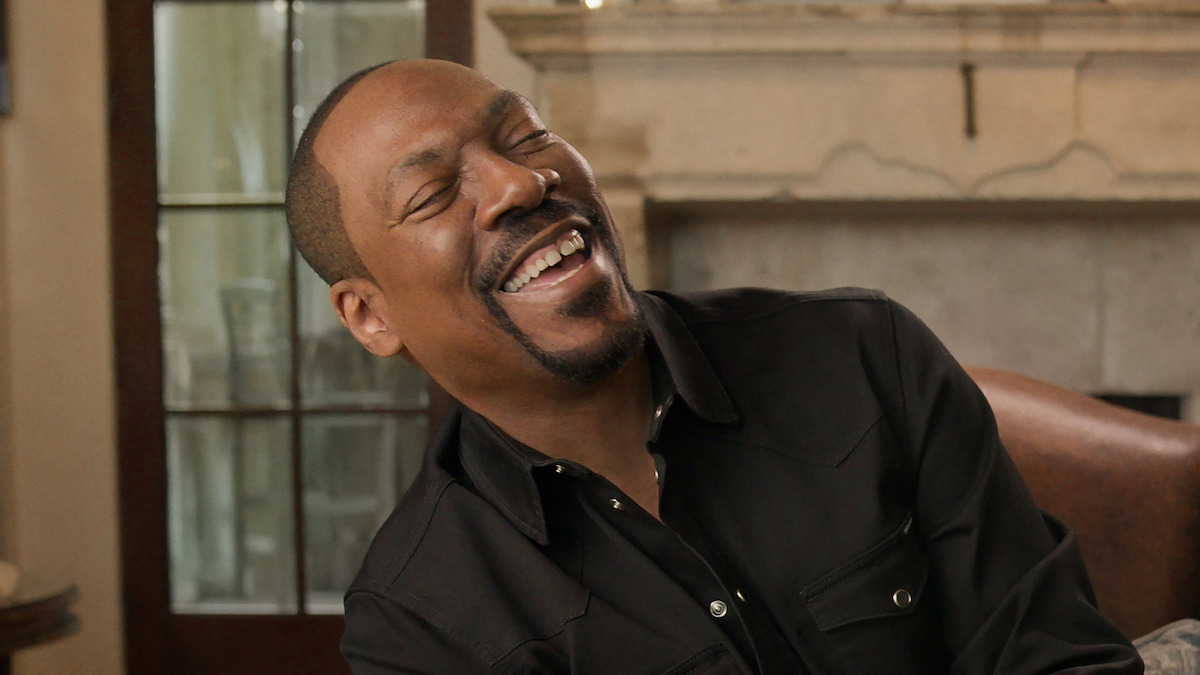
Even the biggest stars have moments of regret, and for comedy legend Eddie Murphy, those moments involve three major films he turned down.
In a recent interview, Murphy opened up about passing on "Ghostbusters," "Rush Hour," and "Who Framed Roger Rabbit." He admits that what makes these decisions stick with him is simple: all three went on to become massive box office hits.
Here is how it played out:
He chose "Beverly Hills Cop" over "Ghostbusters."
He thought "Who Framed Roger Rabbit" sounded too ridiculous to work.
Of course, Murphy's career hardly suffered. He went on to star in countless iconic films and remains one of the most successful comedians of all time. Still, his honesty is a good reminder that even at the highest level of success, people look back and wonder about the opportunities they let slip away.
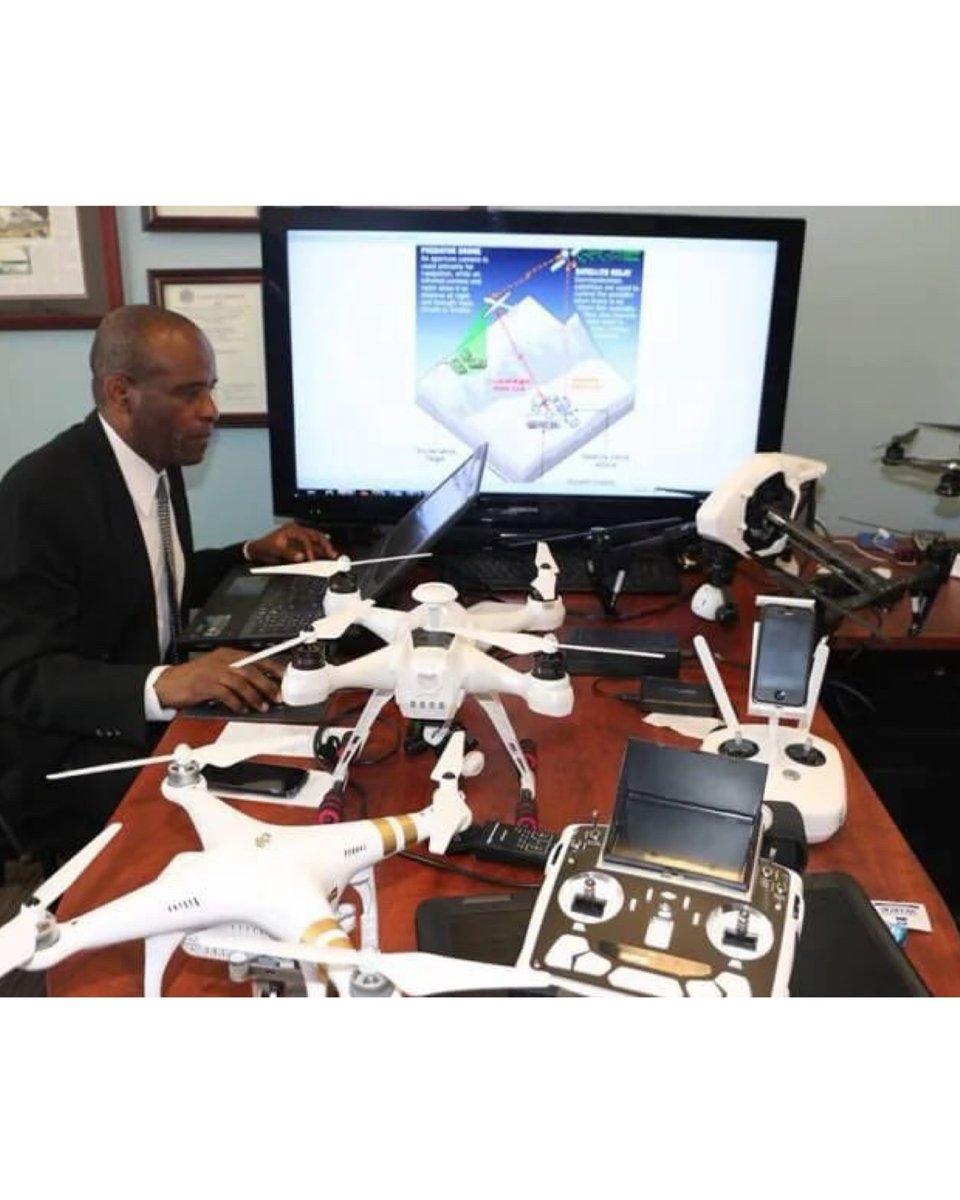
Meet Dr. Osatohanmwen Osamwenge—the Nigerian American visionary affectionately known as the “U.S. drone builder.” A towering force in academia and engineering, Dr. Osamwenge holds an astounding 7 master’s degrees and 4 PhDs, embodying a rare fusion of intellectual breadth and relentless ingenuity.
Since relocating to the United States in the 1980s, he has dedicated his career to shaping the future of robotics and defense technology, making groundbreaking contributions to the U.S. armed forces. His impact, however, extends far beyond Earth. Dr. Osamwenge played a pivotal role in the development of the Mars Curiosity rover, helping humanity unlock the mysteries of the Red Planet.
Today, he continues to push boundaries at the forefront of innovation—engineering advanced military simulations and next-generation collision-avoidance systems for drones. So, the next time you see a drone quietly cutting through the sky, remember: it just might carry the genius of Dr. Osatohanmwen Osamwenge.
The First Global Creator to Reach This Level of Wealth Without Uttering a Single Word-
In a groundbreaking move for the global creator economy, Khaby Lame, the Senegalese-born TikTok sensation and the platform’s most-followed creator has sold his company to U.S.-listed Rich Sparkle Holdings in a deal valued at nearly $900 million.
Under the agreement, Rich Sparkle will hold exclusive worldwide commercial rights to Lame’s brand for an initial three-year period, opening doors to expansive partnerships, licensing opportunities, and e-commerce ventures.
What sets this deal apart is its structure: Lame will become a controlling shareholder in Rich Sparkle, marking a rare and powerful transition from influencer to equity-driven industry leader. Remarkably, he is the first global creator to reach this level of wealth and influence without uttering a single word in his videos, letting his universal expressions and silent humour speak volumes across cultures.
This landmark partnership signals a new era in digital influence, with ambitions to scale the combined venture into a multi-billion dollar enterprise.
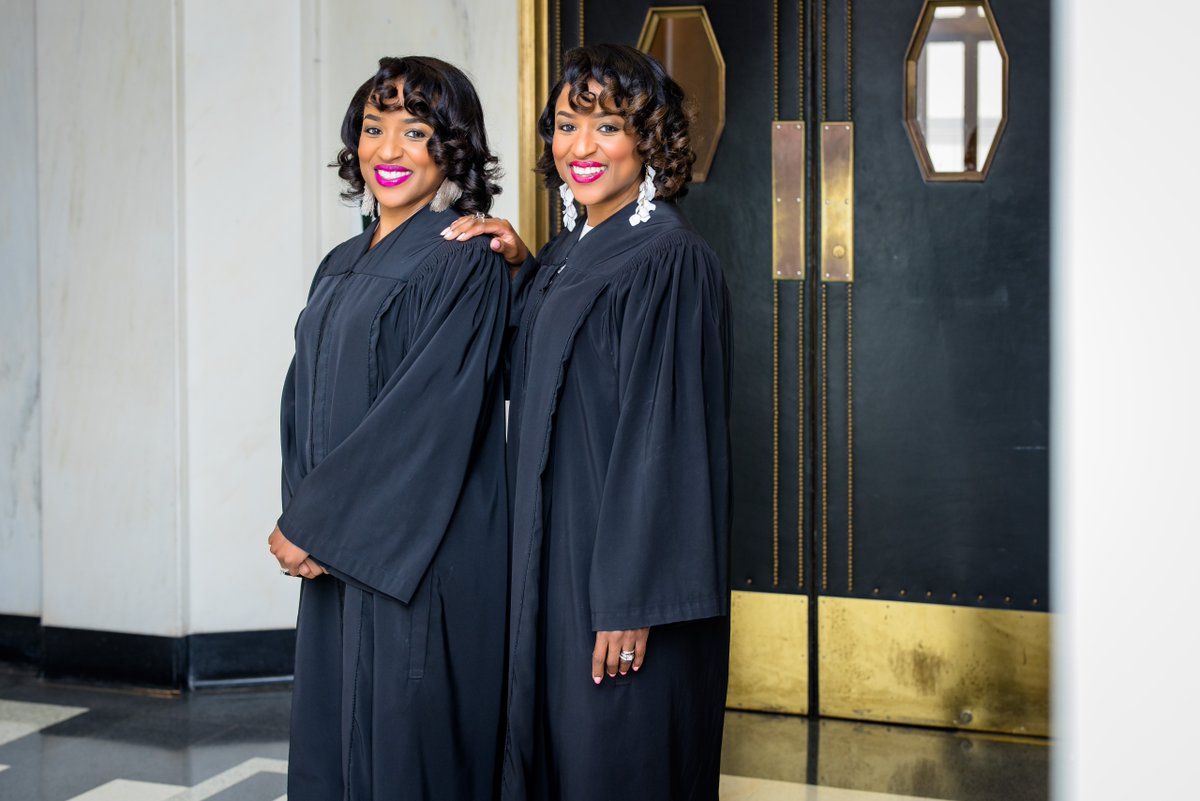
Some twins share a birthday. Others share a bond. But Shanta Owens and Shera Grant? They share a courtroom—and a place in history.
They are the first and only set of twins ever to serve together on the same district court in Alabama. Identical in face and matched in purpose, these two sisters are proof that when you walk the same path with someone who shares your dreams, you can go further than you ever imagined.
Their story didn't start in a courtroom. It began in childhood, in the quiet magic of a library, where their mother—a librarian—planted seeds that would one day grow into something extraordinary. She filled their world with books, with debate, with the belief that knowledge was power. And those two little girls? They listened.
They grew up to graduate from Alabama State University, then pushed further, earning their law degrees from LSU. Shanta, the elder by just four minutes, was the first to make her mark, elected as a criminal court judge in 2008. Eight years later, her sister Shera followed—not just joining the bench, but joining the very same courthouse. Today, one presides over criminal matters. The other, civil.
Together, they are more than judges. They are a testament to what happens when passion meets purpose, and when family lifts you high enough to touch history.
A Nigerian scientist just made history by sending a local food into space.
Last year, Temidayo Oniosun, a space scientist from Nigeria, sent Egusi melon seeds to the International Space Station. His goal? To help figure out how astronauts can grow their own food on long missions far from Earth.
The seeds launched aboard a NASA rocket from Cape Canaveral. It was the first time any crop from Nigeria or anywhere in West Africa had ever travelled to space.
Once in orbit, the seeds were exposed to microgravity and cosmic radiation. Scientists are now studying how they held up. If the seeds can survive and still grow, it could open the door to farming in space; on the Moon, Mars, and beyond.
This experiment wasn't done alone. Oniosun worked with global space organizations to make it happen.
Five years ago, the discarded tyres littering Nigerian streets were just pollution—an eyesore with no future. But Mrs. Ifedolapo Runsewe looked at the same waste and saw a multi-billion naira opportunity.
In 2018, she took a bold leap, founding Freetown Waste Management Recycle Limited. With just four employees by her side in 2020, she began a mission: to prove that what the world throws away could be rebuilt into something valuable. Today, that mission has become a movement. She now leads a team of over 128 passionate staff, transforming more than 150,000 waste tyres every single year into durable paving blocks and elegant tiles.
From those humble beginnings, her vision has grown into a multi-billion naira enterprise, a shining beacon of what is possible when creativity meets courage. Mrs. Ifedolapo is more than a Managing Director; she is a pioneer, a job creator, and a living proof that one woman’s resourcefulness can clean up a nation while building an industrial legacy.
The human hand is a masterpiece of engineering. Twenty-seven bones. A complex network of tendons, nerves, and blood vessels. The ability to grip, to pinch, to gesture, to heal, to hurt. It's the instrument through which we interact with the world. And for Dr. Ngozi Akabudike, it's also a calling.
Growing up, she didn't just see hands; she saw stories. The weathered grip of a grandfather. The gentle touch of a nurse. The trembling fingers of someone asking for help. Years before she would become one of the most respected orthopaedic surgeons in the DC, Maryland, and Virginia region, Akabudike was a student at the University of Maryland, College Park, diving deep into Biology and Neurobiology—trying to understand, at the most fundamental level, how we are wired.
But understanding wasn't enough. She wanted to fix.
That drive carried her to Cornell University Medical College, where the science became real, and the theories became patients. From there, she landed at the Hospital for Special Surgery in New York—consistently ranked among the best orthopaedic hospitals in the nation. It was there, during a grueling residency, that she learned that surgery is not just precision; it's perseverance. It's standing over an operating table for hours, working smaller than a seamstress, rebuilding what was broken.
She didn't stop. A specialized fellowship in Hand & Upper Extremity Surgery at The Cleveland Clinic followed, and by the time she emerged, Dr. Akabudike possessed a combination of skills few can claim: board certification in both Orthopaedic Surgery and Hand Surgery. The gold standard. The seal that says: this is someone you trust with your ability to hold your child's hand again.
But credentials alone don't build a practice. Vision does.
Dr. Akabudike founded Greater Maryland Orthopedics LLC to deliver world-class care close to home. No more commuting into the city for procedures. No more feeling like a number in a large hospital system. Her philosophy was simple: treat every patient as if they were family. Whether it's a pianist with a shattered finger or a grandmother with crippling arthritis, the approach is the same—listen first, operate second, and never stop fighting for function.
Her reputation spread beyond the exam room. She was asked to serve as Medical Director of the University of Maryland Ambulatory Surgery Center, then joined the Board of Directors for the Maryland Orthopedic Association. She became an Associate Professor at the University of Maryland School of Medicine, where she didn't just teach—she inspired. Residents from both the University of Maryland and Johns Hopkins programs rotated through her service, and year after year, they voted her "Teacher of the Year." Not once. Multiple times.
Because Dr. Akabudike understands something fundamental: the future of surgery isn't just in her hands. It's in the hands of the young doctors watching her every move.
Today, she continues to see patients, perform surgeries, and mentor the next generation. She publishes research, sits on editorial boards, and presents her findings to peers across the country. But ask her what matters most, and she'll probably deflect the question. She'd rather talk about the patient who can finally tie their shoes again. The child who can grip a pencil. The artist who can hold a brush.
For Dr. Ngozi Akabudike, it was never about the accolades. It was always about the hands.
The soil of a North Carolina farm doesn't look like a battlefield. But for a young researcher named Markis K. Hamilton, it was exactly that.
Years before he would begin pursuing a Ph.D. at one of the nation's most prestigious medical colleges, Hamilton was an undergraduate at Fayetteville State University, kneeling in the dirt and asking a question that would shape the rest of his life: What are we doing to the world that the world is doing back to us?
His weapon was a Sigma Xi Grant—a competitive, nationally recognized award rarely won by undergraduate researchers. With it, he launched an investigation into something invisible but urgent: antibiotic-resistant bacteria hiding in nutrient-enriched soil. The theory was simple, but the implications were massive. If farmers were enriching soil with treated waste, and if that waste contained resistant bacteria, then we might be cultivating something far more dangerous than crops.
The research was groundbreaking. It also earned him a 2nd place finish at the Fayetteville State University Research Symposium. Then came the John Bowley Derieux Research Award from The North Carolina Academy of Science—not once, but twice. Back-to-back. By the time he graduated Magna Cum Laude, Hamilton had already built a reputation as a young scientist who didn't just follow curiosity; he chased down threats.
Now, that chase has led him to Meharry Medical College, where he is pursuing a Ph.D. in Biomedical Science. His target has shifted from the soil to the water, but the mission remains the same: protecting human health from dangers we've created. Today, he studies PFAS—the notorious "forever chemicals" that linger in our blood, our water, and our future. They don't break down. They don't go away. And Hamilton is determined to understand exactly what they're doing to us.
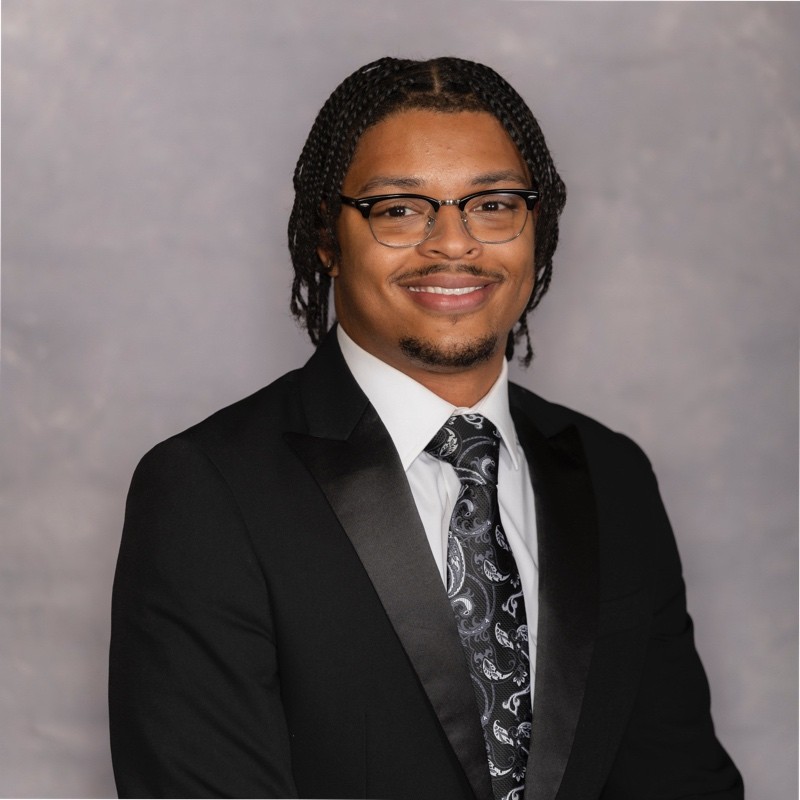
His work hasn't gone unnoticed. At the graduate level, he has already received a Rising Scholars Award, proof that the scientific community is watching. But if you ask him, he'll probably tell you he's just getting started.
Because Markis K. Hamilton isn't the kind of scientist who waits for answers. He's the kind who digs until he finds them—whether in the soil of a North Carolina farm or the chemicals lurking in our water supply. And if his trajectory is any indication, he's not done digging yet.
Building the Future: Meet Kendall Powe, the Electrical Engineering Star Merging AI with Social Impact
At just 20 years old, Kendall Powe isn't just studying Electrical Engineering at Tuskegee University—she is actively redefining what it means to be a engineer in the 21st century.
With a perfect 4.0 GPA, the title of Eminent Scholar, and a resume that reads like a seasoned researcher, Kendall is proving that the next generation of tech leaders is already here. And they are building with purpose.
Engineering That Saves Lives
Kendall's research is not theoretical—it is personal, practical, and powerful. At Wake Forest University, she is contributing to the development of a life-saving, AI-powered wearable device designed for pediatric patients. This is technology with a heartbeat, engineered to protect the most vulnerable.
Her work doesn't stop there. At Duke University's Pratt School of Engineering, she developed machine learning models for augmented reality security, building a pipeline that culminated in a research symposium presentation. Whether it's securing digital spaces or safeguarding children's health, Kendall is operating at the critical intersection of AI, medicine, and human safety.
A Scholar Among Scholars
Tuskegee University recognizes exceptional talent. Kendall has been honored as an Eminent Scholar, a distinction reserved for students maintaining academic perfection. But her excellence hasn't gone unnoticed beyond campus walls. She was also selected as a Cargill Thrive Scholar, a prestigious award that places her among the brightest young minds in the nation.
Technology with a Conscience
What sets Kendall apart is not just her technical prowess—it is her unwavering commitment to community.
As an ambassador for Black Girls Do Engineer, she is actively empowering the next generation of women in STEM, showing young Black girls that the lab coat and the hard hat belong to them too.
She is also tackling one of America's most persistent crises: food insecurity. As a Research Scholar for the University of Colorado Boulder, Kendall is creating a living toolkit to combat food insecurity right in Tuskegee. She believes engineering should feed people, not just machines.
Building Bridges Beyond the Lab
Kendall's vision extends into the innovation economy. Through her current internship at gener8tor, she is developing a data-driven framework to connect research universities with startup networks. She understands that great ideas need ecosystems to survive.
Looking ahead, her trajectory shows no signs of slowing. In 2025, she will participate in the Summer Research Program in Biomedical Engineering at Wake Forest University and the HBCU Innovation Internship with the Economic Development Partnership of Alabama.
The Synthesis of Brilliance and Purpose
Kendall Powe embodies a rare synthesis: the analytical mind of a researcher, the creative drive of an innovator, and the compassionate heart of a community advocate. She is not waiting for permission to change the world—she is building it, one algorithm, one device, and one empowered girl at a time.
She is not just an engineer. She is an African Giant.
From Visa Denials to Directing at Okta: The Unstoppable Rise of Chukwuemeka Afigbo
When life closes a door, Chukwuemeka Afigbo builds a runway.
Today, he is a Nigerian tech executive directing Developer Success at Okta, with a resume that boasts leadership roles at Google and Meta. But his journey to the top of the global tech industry didn't follow the usual script—it was forged in the face of rejection.
A Detour That Defined a Destiny
Afigbo's path was initially meant to lead him to Canada for an international education. But after several visa denials, what looked like a closed door became a pivot point. Instead of giving up, he enrolled in the University of Carlton's inaugural online Master's program in Technology Innovation Management. It was a decision that would set the tone for his entire career: adapt, innovate, and keep moving forward.
Building Bridges Across Africa and the Middle East
His talent for connecting people and technology quickly caught the industry's attention. At Google, he served as Program Manager in Developer Relations, where he led community outreach initiatives across Sub-Saharan Africa. He wasn't just building programs; he was building ecosystems.
He then took his expertise to Meta (then Facebook) as Head of Platform Partnerships for the Middle East and Africa. In this role, he managed developer programs and partnership strategies across two dynamic regions, further cementing his reputation as a bridge-builder between global platforms and local talent.
The Philosophy of the Moving Masquerade
Throughout his journey, Afigbo has been guided by an Igbo proverb: "One does not stand at the same spot while watching the dance of a great masquerade."
For him, this is more than folklore—it's a philosophy of proactive adaptation. In a fast-moving world, he believes you cannot afford to stand still. This mindset has not only shaped his career moves but also his critical eye on the African tech landscape. He has spoken openly about the region's talent shortage, pointing to the shortcomings of formal education systems. His remedy? Corporate-sponsored training programs that bridge the gap between classroom theory and industry reality.
Leading the Workforce of Tomorrow
Today, as a Director at Okta, Afigbo leads the Developer Success team for the company's Workforce Identity Offering. His mandate is clear: provide developers with the content, technical support, and community programs they need to build seamlessly on Okta's platform.
Yet, despite an international career that has taken him from London to Silicon Valley, his heart remains tethered to home.
Never Too Far from Home
Afigbo serves as Chairman of the Advisory Board for the Nigerian government's 3MTT program, a bold initiative to train three million technical talents. He is also a member of Club 14, a professional syndicate investing in African startups, helping the next generation of founders avoid the roadblocks he once faced.
He does not shy away from acknowledging Nigeria's socio-economic challenges. But he is equally vocal about the nation's greatest export: its people. From tech to entertainment, Afigbo points to the international accomplishments of Nigerians as proof that the talent has always been there—it just needs the right opportunities to shine.
The Giant's Blueprint
Chukwuemeka Afigbo's story is not just about personal success. It is a blueprint for resilience, a testament to the power of adaptation, and a reminder that sometimes, the detour is the destination.
He stands as an African Giant—not just for where he has been, but for how he is lifting others as he climbs.
For centuries, the story of Africa has been written by outsiders. The result? A historical record so distorted by prejudice and racial stereotypes that it erased entire kingdoms, dismissed ancient wisdom, and reduced a continent of giants to a footnote.
In 1984, UNESCO published ground-breaking research revealing how deep these biases run. For decades, non-African historians dismissed the vast oral traditions of Africa—the griots, the storytellers, the elders—as "worthless." They held texts like Homer's Iliad in high regard but refused to acknowledge that Africa's memory was held in its spoken word. This wasn't just ignorance; it was a deliberate act of historical distortion born from the horrors of colonization and the slave trade. To justify economic exploitation and psychological oppression, history had to be rewritten.
But the fight for truth is not new. In the early 20th century, pioneers like Leo Frobenius, Maurice Delafosse, and Arturo Labriola risked their reputations to study Africa objectively. They saw the empires, the art, and the complex societies that prejudice blinded others to. They laid the groundwork for the restoration of our history.
Now, @africagiant continues that mission. We are a platform dedicated to showcasing the undeniable contributions of Africans and the African Diaspora to world civilization. We are here to prove that Africa is not defined by disease, poverty, or corruption—but by its giants.
Who are these giants? They are the intellectuals whose philosophies shaped thinkers across the world. They are the entertainers who created global genres of music. They are the inventors who built technologies that powered ancient economies. They are the monarchs and modern tech founders who prove that Africa is a land where talent and wisdom thrive.
We cannot heal the psychological wounds of the past until we reclaim the truth of our past. Our website is a library of resilience, holding the threads of African events in our hands—refusing to let them be dismissed any longer.
Follow us @africagiant to join the movement. Let's break through the historical prejudices together. Let's unveil the true story. Because Africa is a giant, and it is time the world saw it in full.
🔗 https://t.co/uOFBgna1Ws
Kenya has become the global leader in ChatGPT adoption.
With 42.1% of internet users on the platform monthly, it’s outranking the US, Japan, and China in penetration.
https://t.co/VwSn0IAid3
When people think of world-changing inventions, many great minds come to mind. But one of a kind was Garrett Morgan. Beyond the traffic signal, he was a hero and entrepreneur whose legacy drives our safety every day.
https://t.co/TTzz4LOXVc
Chukwuemeka Afigbo's career started with a "No" from Canadian immigration.
Today, he's a director at @Okta , after landmark roles at @Google & @Meta.
His philosophy? "You don't stand at the same spot to watch a great masquerade dance." #Leadership#Tech
https://t.co/CyXePHAhhH
SFA alumna Voke Ogueh receives the highest honours in U.S. STEM education, the Presidential Award.🏆
A phenomenal achievement celebrating her 20 years of inspiring students in Texas.
#STEM#HighestHonours#PAEMST
https://t.co/U9sz8qepR7
At just 9 years old, Basil Okpara Jr. from Lagos built over 30 mobile games! 🎮
Now 14, his journey from playing games to creating them like "Mosquito Mash" inspires a new generation of young tech innovators across Africa.
#YoungInventor#GameDev#Tech
https://t.co/vvHMzSL6tT