@terraindustries Secures Africa's Largest Seed Round with $52 Million Raise
Nigerian defence-tech startup Terra Industries has closed a landmark $52 million seed funding round, making it the largest seed raise by an African startup to date.
The company secured an additional $18 million from new investors Norleo Space Investments and angel investor Grant Gordon, alongside continued backing from existing investors 8VC, Silent Ventures, Nova Global, Belief Capital and SV Angel.
According to the company, the new funding will be used to establish its first international office in London, expand manufacturing capacity, accelerate the deployment of its defence technologies across the Global South, and strengthen its engineering, operations, and business development teams.
The milestone highlights growing global investor confidence in Africa's deep-tech and defence innovation ecosystem. It also signals that African founders are increasingly building companies capable of solving complex, strategic challenges while attracting significant international capital.
As investment in frontier technologies continues to rise, Terra Industries' achievement could pave the way for more African startups developing advanced solutions in aerospace, defence, robotics, and industrial technology.
#AfricanStartupMetrics #TerraIndustries #DefenceTech #DeepTech #AfricanStartups #StartupFunding #SeedFunding #Innovation #Technology #Nigeria #MadeInAfrica #VentureCapital #Engineering #GlobalSouth #StartupEcosystem #TechInAfrica #FutureOfDefense #Entrepreneurship
When Failure Becomes the Feedback
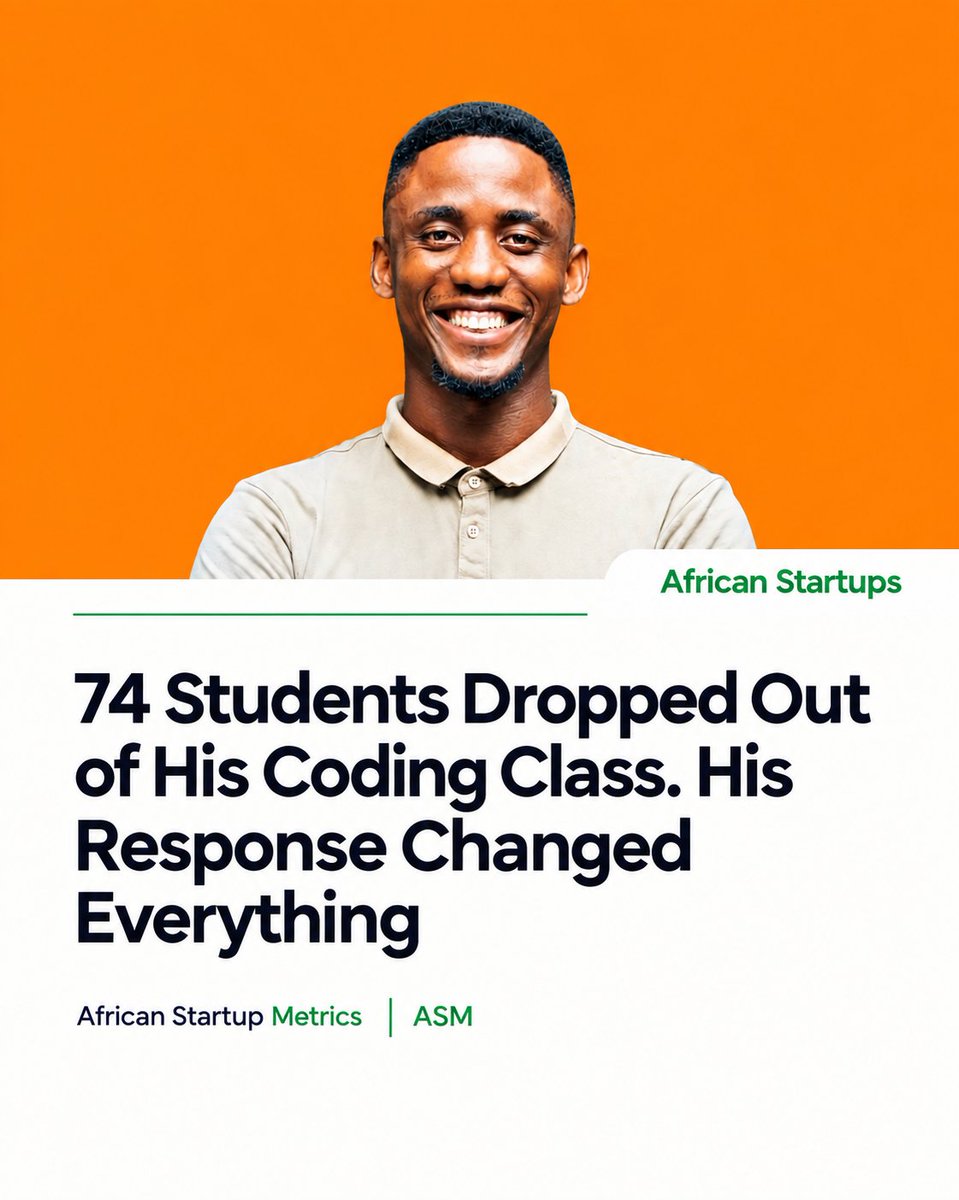
When 74 students dropped out of a coding programme, the founder could have viewed it as a failure. Instead, he treated the experience as valuable feedback.
Rather than simply blaming student engagement, he went back to examine the programme itself. The goal was to understand why learners were dropping out and whether the structure of the programme was actually suited to the realities of aspiring tech talent across Africa.
Learning From the Data
By examining where students were dropping off, the programme identified several potential barriers, including high data costs, demanding prerequisites, limited access to practical guidance, and learning structures that were difficult for many students to maintain.
Redesigning the Curriculum
The experience led to changes in how the programme approached learning, with greater emphasis on practical projects, flexible learning formats, and approaches that could work better in environments where internet access and data affordability remain challenges.
Measuring What Actually Matters
Instead of focusing primarily on the number of students who enrolled, the programme placed greater emphasis on completion, practical skill development, and the ability of learners to apply what they had learned.
There is an important lesson here for both founders and educators. A failed assumption does not necessarily mean a failed product. Sometimes, user behaviour provides the clearest indication of what needs to change.
The real question is not whether something failed, but whether you are willing to understand why it failed and use that information to build something better.
How do you respond when user behaviour does not match your original assumptions?
#EdTech #AfricanStartups #SkillBuilding #CodingEducation #TechEducation #Entrepreneurship #ProductDevelopment #Innovation #AfricanInnovation #DigitalSkills #FutureOfWork #StartupLessons #AfricanStartupMetrics
@kredete Acquires Gravv to Build the Next Generation of Cross-Border Payment Infrastructure
Diaspora-focused fintech startup Kredete has acquired Gravv, an agentic stablecoin infrastructure platform, in a move that brings key payment and settlement technology directly into Kredete's infrastructure.
The acquisition represents a shift beyond consumer-facing financial products as Kredete expands its focus toward the underlying infrastructure that supports cross-border payments and financial services across emerging markets.
A Unified Infrastructure Layer
Gravv's technology provides capabilities across stablecoin settlement, multi-currency account management, foreign exchange liquidity, and automated payment reconciliation, giving Kredete greater control over key components of its payment infrastructure.
Real-Time Settlement
The platform uses automated routing to connect banks, blockchain networks, and local payout channels, with the aim of making international money movement faster and more efficient.
Expansion Into B2B Payments
The acquisition also creates an opportunity for Kredete to make Gravv's infrastructure available to third-party developers, fintech companies, and financial institutions operating across emerging markets.
As stablecoins and blockchain-based settlement systems continue to develop, fintech companies are increasingly exploring how these technologies can reduce the cost, delays, and complexity associated with moving money across borders.
For emerging markets, where international transfers and foreign exchange can be particularly challenging, infrastructure that connects traditional financial institutions with digital settlement networks could play an important role in the evolution of cross-border payments.
How do you see stablecoin-powered infrastructure changing cross-border payments across emerging markets over the next few years?
#Fintech #Kredete #Gravv #Stablecoins #Blockchain #CrossBorderPayments #PaymentsInfrastructure #EmergingMarkets #DigitalPayments #FinancialInfrastructure #AfricanFintech #FintechInnovation #MergersAndAcquisitions #AfricanStartupMetrics
🇳🇬 Transforming Agro-Processing in West Africa
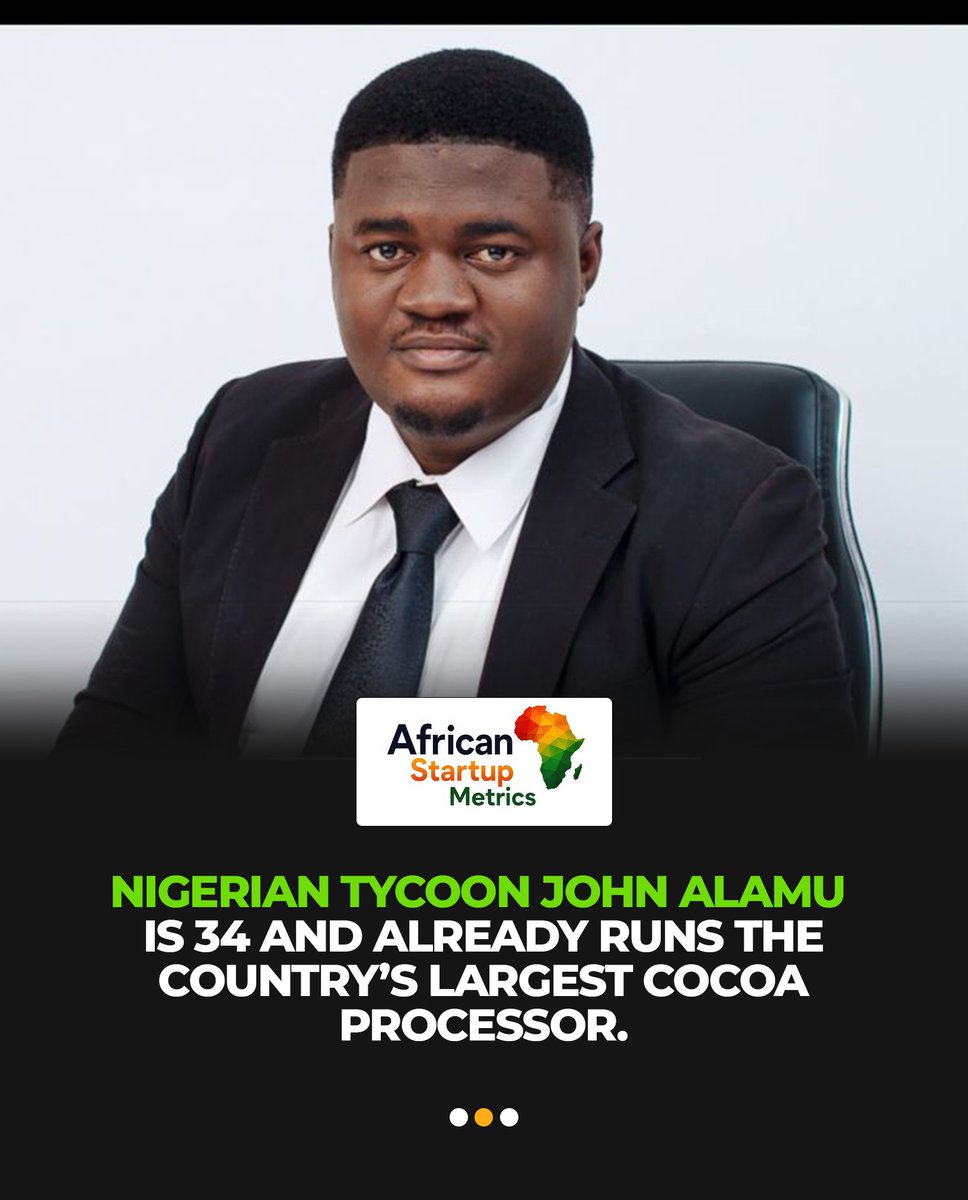
At 34, Nigerian entrepreneur John Alamu, Group CEO of @CIGL_connect INVESTMENT GROUP LTD is building a major presence in Nigeria's cocoa processing industry through Johnvents Group Industries.
His journey highlights the growing opportunity for African businesses to move beyond the export of raw agricultural commodities and capture more value through local processing and manufacturing.
Local Value Addition
Rather than exporting cocoa primarily as a raw commodity, local processing allows more value to be captured within the domestic economy while creating opportunities across manufacturing, packaging, logistics, and related industries.
Industrial Scale
Johnvents Industries operates cocoa processing facilities designed to serve both domestic and international markets, demonstrating the capital and infrastructure required to build competitive agro-processing businesses in Africa.
Youth and Industrial Leadership
Alamu's journey also highlights the increasing participation of younger African entrepreneurs in capital-intensive industries. Building large-scale manufacturing businesses can create employment, strengthen local supply chains, and increase the value of products entering international markets.
Africa produces significant quantities of agricultural commodities, but much of the economic value can be captured further down the value chain through processing, manufacturing, branding, and distribution.
The bigger opportunity is not simply producing more raw materials, but building the industrial capacity to transform those resources into higher-value products.
How can African markets improve access to financing and infrastructure for young entrepreneurs building large-scale manufacturing and agro-processing businesses?
#Agribusiness #CocoaProcessing #Nigeria #AgroProcessing #Manufacturing #AfricanEnterprise #AfricanBusiness #Industrialization #ValueAddition #Agriculture #AfricanInnovation #YouthEntrepreneurship #AfricaTech #AfricanStartups #AfricanStartupMetrics
@Five35V Ventures Completes Major Portfolio Exit
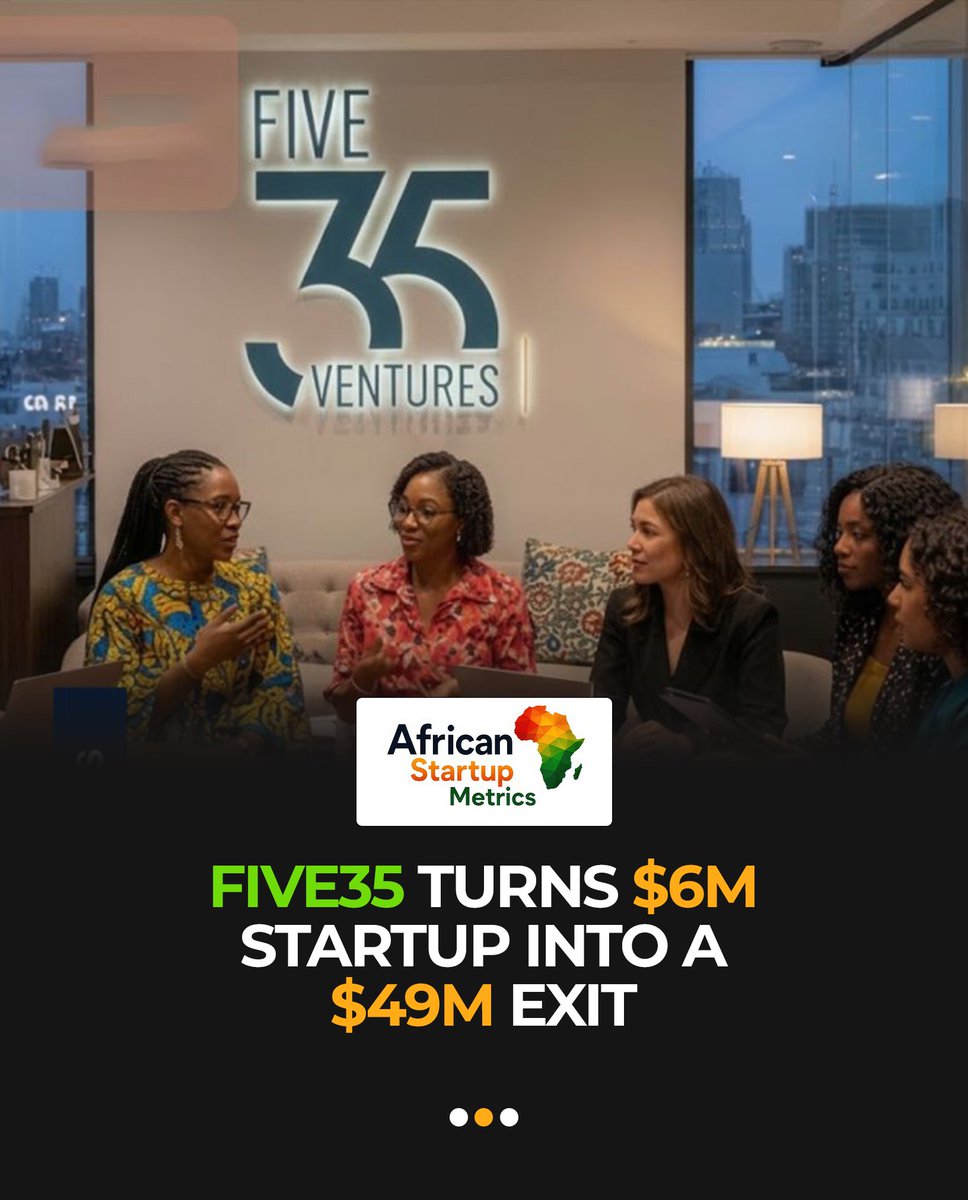
Africa-focused venture capital firm Five35 Ventures has completed a major portfolio exit involving Ghanaian agrotech startup Complete Farmer, with the company reportedly growing from a $6 million valuation to $49 million.
The investment generated a reported 3.5x return on invested capital and a 38% internal rate of return (IRR), marking a notable outcome for the African venture capital ecosystem.
Commercial and Social Impact
Complete Farmer connects agricultural producers with data-driven farming practices, resources, and global markets, helping strengthen connections across agricultural supply chains.
Gender-Lens Investing
Five35 Ventures applied a gender-inclusive investment approach. Women reportedly represented 55% of Complete Farmer's farmer network and 80% of its post-harvest workforce, demonstrating how gender considerations can be incorporated into investment and portfolio-building strategies.
A Milestone for African Venture Capital
The reported exit provides another example of how venture capital can support African technology companies as they scale, while also demonstrating the potential for investments focused on underserved markets and sectors to generate commercial returns.
For investors, founders, and fund managers, outcomes such as this contribute to the broader conversation around the role of agrotech, gender-lens investing, and locally focused venture capital in Africa's startup ecosystem.
How could exits like this influence investor interest in agrotech and gender-lens funds across Africa? Share your thoughts below.
#VentureCapital #AfricanStartups #Five35Ventures #Agrotech #GenderLensInvesting #ImpactInvesting #CompleteFarmer #StartupFunding #AfricanVC #Agriculture #Agritech #AfricanInnovation #AfricaTech #AfricanBusiness #AfricanStartupMetrics
🇨🇩 Unlocking Digital Growth in Central Africa
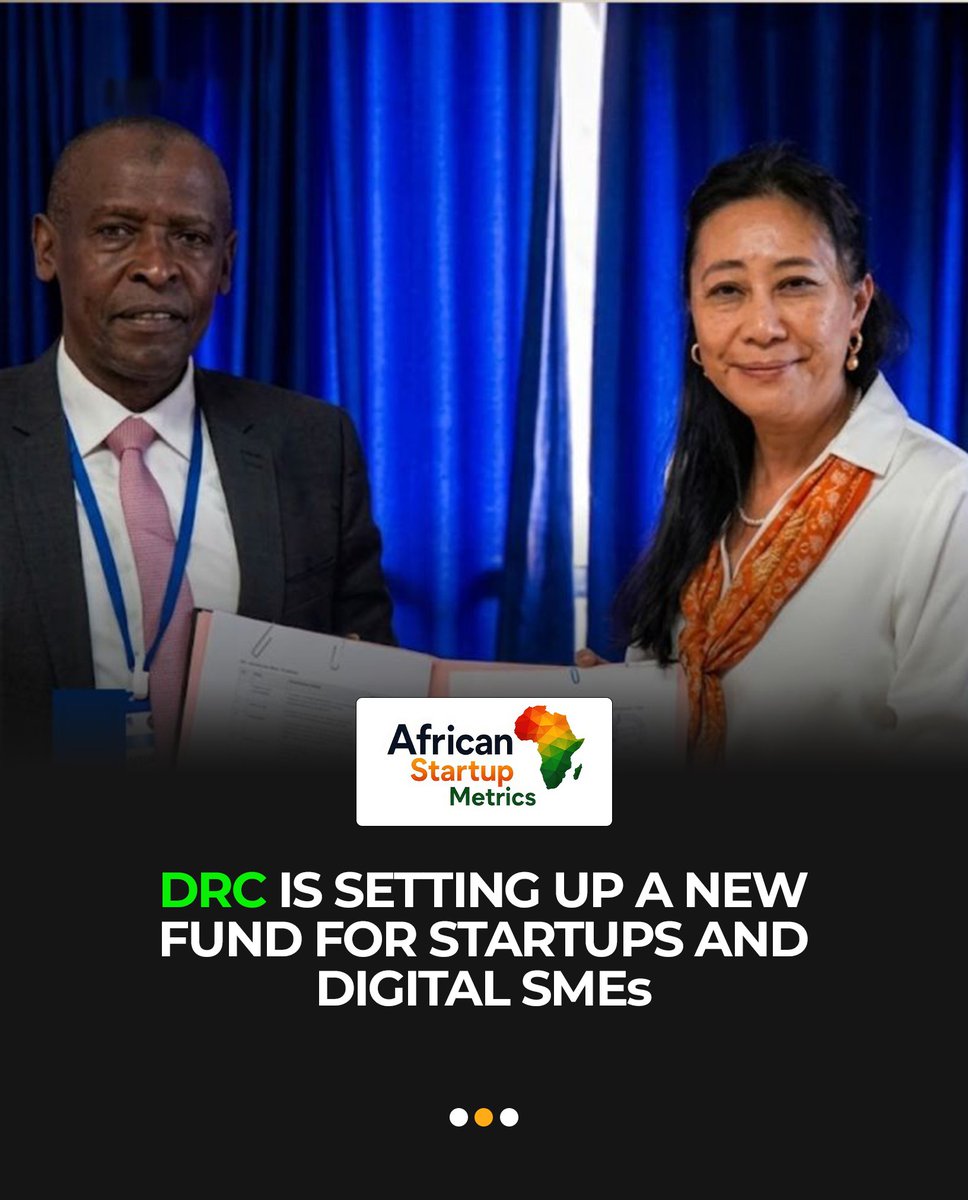
The Democratic Republic of Congo (DRC) is taking another step toward strengthening its technology ecosystem with the launch of COPA Digital, an initiative designed to provide grants, capacity building, and targeted business support to startups and digital SMEs.
Formalized through an agreement between key project coordination units, the pilot funding mechanism aims to address some of the financial and resource constraints facing digital businesses across the country.
Direct Financial Support
Providing capital grants to promising digital enterprises, incubators, and technology hubs to support business development and expansion.
Skills and Business Support
Offering technical assistance, training, and capacity-building programmes to help young companies strengthen their operations and develop products suited to local markets.
Expanding the Innovation Ecosystem
Supporting entrepreneurs beyond major urban centres and creating opportunities for digital businesses and innovators across different parts of the country.
By creating more structured support for local technology businesses, initiatives such as COPA Digital could contribute to the development of the DRC's digital economy, entrepreneurship ecosystem, and employment opportunities.
As African countries continue to invest in digital transformation, access to early-stage capital and practical business support remains an important factor in helping local startups develop and scale.
How could improved access to grant funding affect technology ecosystems across emerging African markets? Share your thoughts below.
#DRC #DigitalTransformation #COPADigital #AfricanStartups #SMEFunding #TechInnovation #CentralAfrica #AfricanTech #StartupFunding #DigitalEconomy #Entrepreneurship #AfricaBusiness #AfricanInnovation #AfricanStartupMetrics
Traditional Banking Meets Fintech Innovation
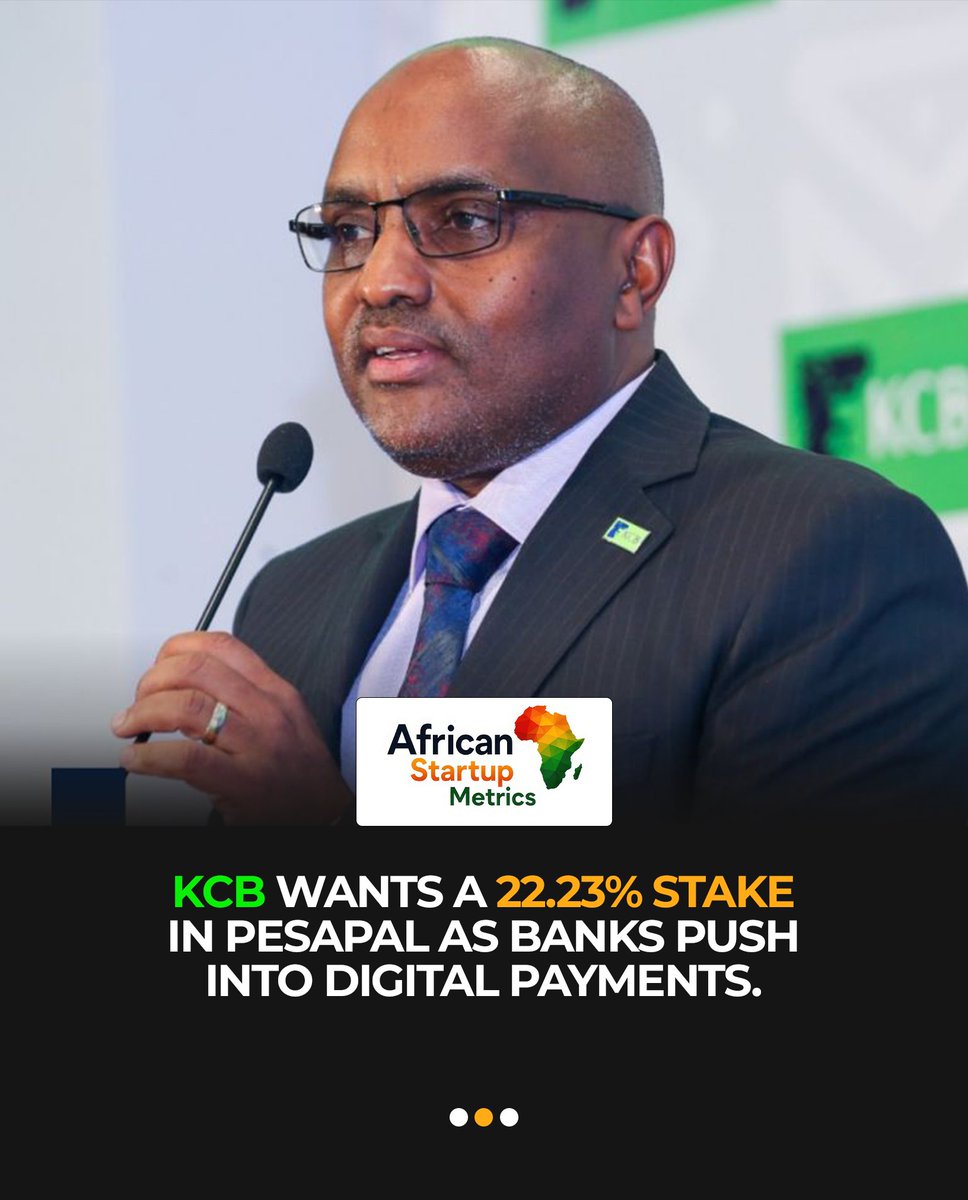
@KCBInKenya Bank Group is moving to acquire a 22.23% minority stake in regional payment gateway Pesapal Limited, highlighting the growing convergence between traditional banking and fintech across Africa.
The proposed investment, disclosed through regulatory filings, reflects a broader shift in the financial services industry as established banks increasingly seek strategic partnerships and investments in digital payment companies.
The potential transaction could create several areas of strategic alignment:
Strategic Synergies
Combining KCB's established banking infrastructure with Pesapal's merchant payment network across Kenya, Uganda, Tanzania, Rwanda, and Zambia.
SME Support
Expanding access to digital payment tools, point-of-sale systems, online checkout solutions, and other services that can help small and micro-enterprises manage transactions and cash flow.
Fintech Integration
Creating opportunities for traditional financial institutions to expand their digital offerings and develop additional revenue streams beyond conventional lending.
As the distinction between traditional banks and fintech companies continues to narrow, strategic investments and partnerships are becoming an increasingly important part of Africa's evolving financial services ecosystem.
How do you see greater collaboration between banks and fintech companies affecting merchant services across Africa? Share your perspective below.
#Fintech #Banking #KCBGroup #Pesapal #DigitalPayments #EastAfrica #MergersAndAcquisitions #AfricanStartups #AfricanFintech #FinancialInclusion #SMEs #DigitalBanking #Payments #AfricaTech #AfricanBusiness #AfricanStartupMetrics
Accelerating Climate Innovation Across Africa
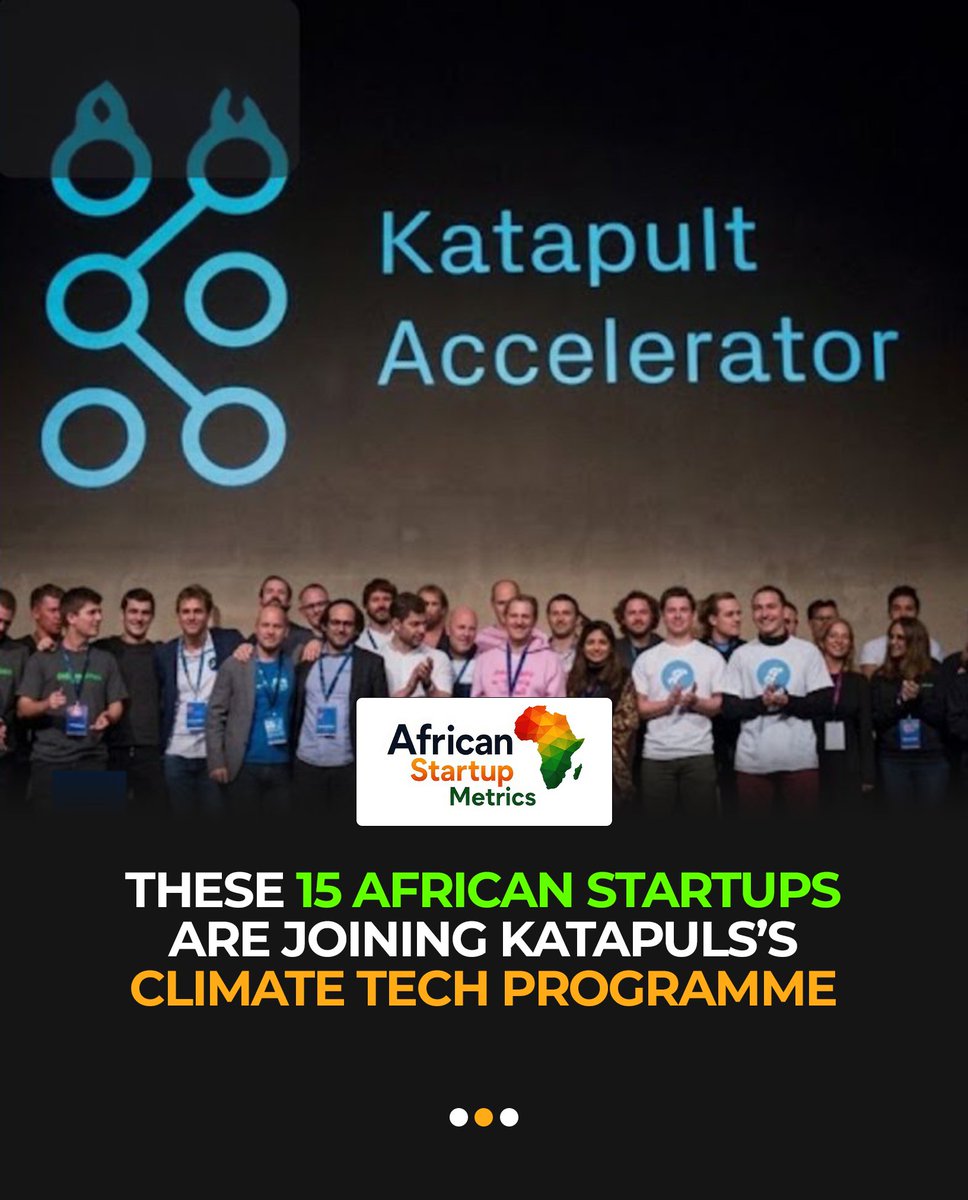
15 impact-driven African startups have been selected to join Katapult Africa’s Climate Tech Programme, bringing together founders working on some of the continent’s most pressing environmental and economic challenges.
Through the programme, participating startups can access $150,000–$500,000 in equity investment, alongside hands-on mentorship, strategic industry connections, and support designed to help them scale.
The cohort spans several important climate-tech sectors:
Sustainable Agriculture & Agritech
Supporting climate-smart farming, soil conservation, resilient food systems, and more efficient agricultural value chains.
Clean Energy & Decarbonization
Developing renewable energy solutions, decentralized power systems, energy efficiency technologies, and approaches to reducing emissions.
Circular Economy
Creating new ways to turn waste into economic value through recycling, reuse, resource recovery, and sustainable materials.
Clean Mobility & Emerging Climate Markets
Developing lower-emission transportation and logistics solutions while exploring new financial and technology models for Africa’s growing climate economy.
Programmes like Katapult Africa’s Climate Tech Programme demonstrate the growing role of African founders in developing solutions that address the continent’s specific environmental, infrastructure, and economic challenges.
Access to capital, mentorship, industry networks, and markets can be critical in helping promising climate ventures move from early-stage development to sustainable, scalable businesses.
Which area of climate technology do you think could have the greatest impact on Africa over the next decade? Share your thoughts below.
#ClimateTech #KatapultAfrica #AfricanStartups #ClimateInnovation #Sustainability #Agritech #CleanEnergy #RenewableEnergy #CleanMobility #CircularEconomy #ClimateFinance #ImpactInvesting #AfricanInnovation #AfricaTech #GreenTech #AfricanBusiness #AfricanStartupMetrics
🇬🇭 Boosting Agrotech & Empowering Local Farmers!
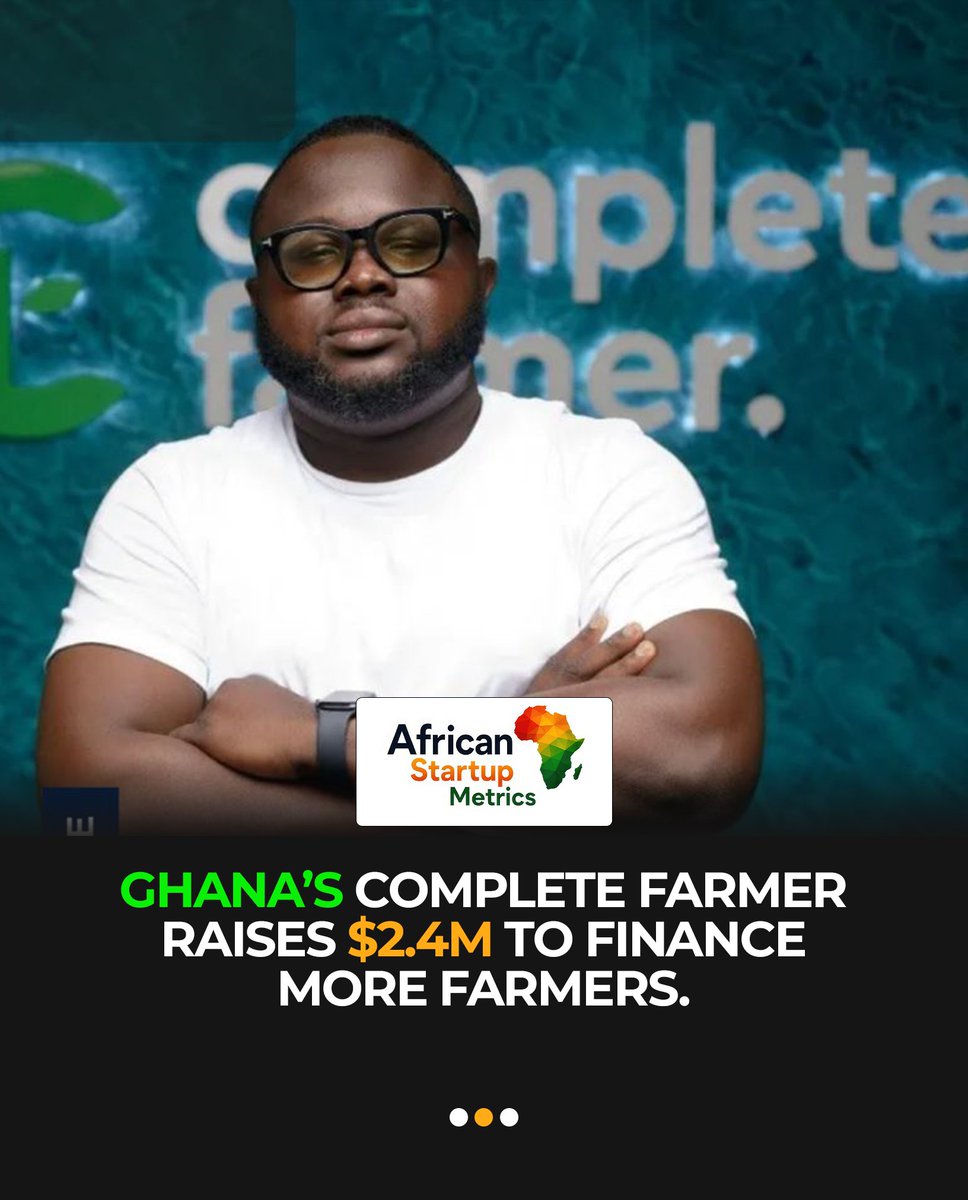
Ghanaian agrotech platform Complete Farmer has raised $2.4 million in funding to expand its operations and strengthen its support for farmers across the agricultural value chain.
The platform connects farmers with data-driven farming practices, agricultural resources, financing opportunities, and global markets, helping bridge the gap between local producers and larger commercial opportunities.
The new funding will enable Complete Farmer to scale its operations and extend its reach to more farmers, particularly smallholder producers who often face challenges accessing capital, reliable markets, technology, and agricultural expertise.
Beyond improving access to resources, platforms like Complete Farmer are contributing to the broader transformation of Africa's agricultural ecosystem by using technology to make farming more connected, data-driven, and commercially viable.
With agriculture remaining central to employment, food security, and economic activity across much of Africa, agrotech could play an increasingly important role in connecting farmers to the infrastructure and markets they need to grow.
How do you see agrotech platforms reshaping the future of farming and food production in Africa?
#Agrotech #Ghana #AfricanStartups #Agritech #Agribusiness #Agriculture #AfricanInnovation #StartupFunding #FundingNews #SmallholderFarmers #FoodSecurity #SustainableAgriculture #AgriculturalTechnology #ClimateTech #AfricaTech #AfricanBusiness #AfricanStartupMetrics
🇨🇲 Local Innovation Solving Local Challenges!
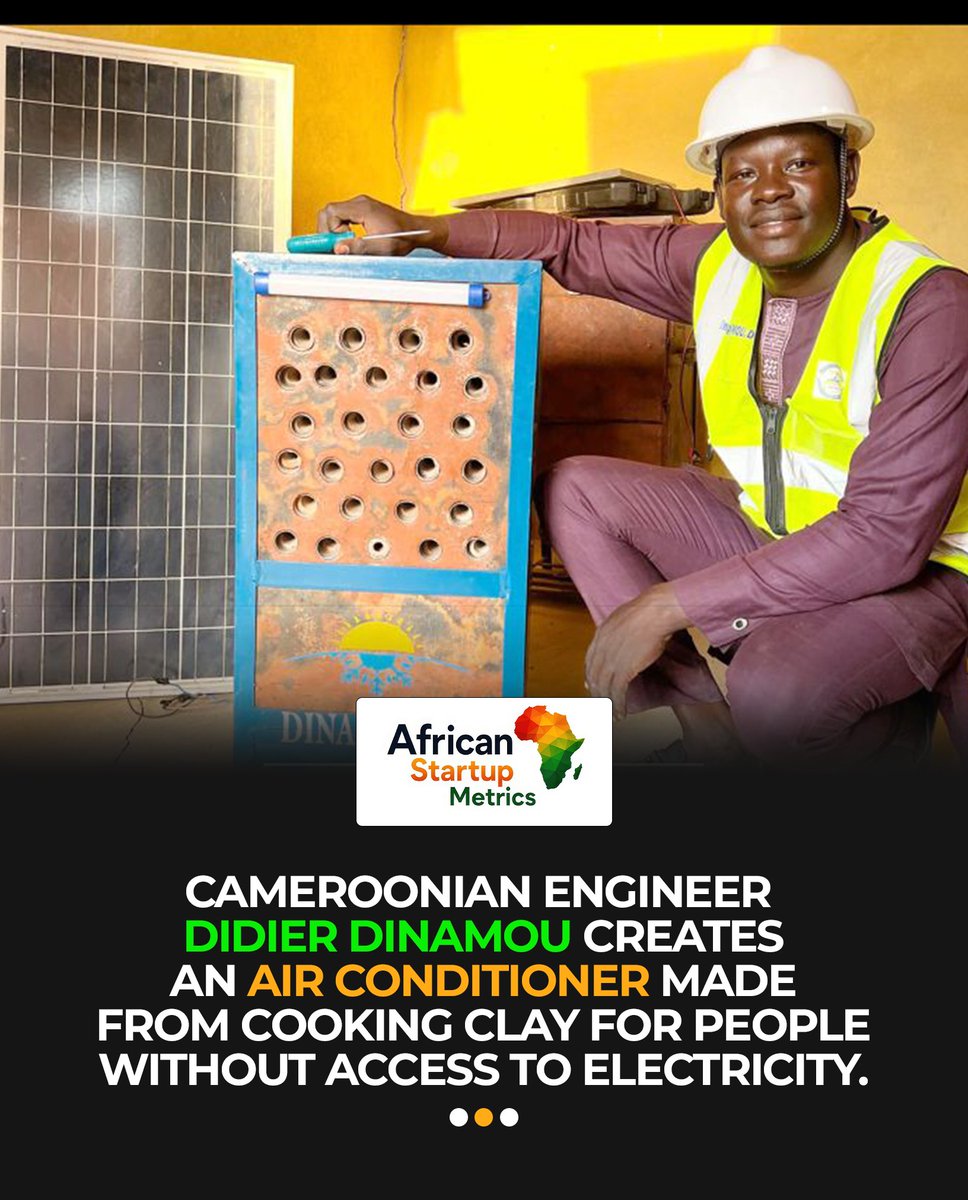
Cameroonian energy engineer Didier DINAMOU, founder of Diwa Innovation, has developed an eco-friendly cooling solution designed for communities with limited or unreliable access to electricity.
Inspired by the ancient principles of adiabatic evaporative cooling, the system uses locally sourced terracotta clay, water, and solar energy to help reduce indoor temperatures naturally.
Unlike conventional air conditioners, the concept does not depend on high-voltage electricity or conventional refrigerants. The off-grid system can also support basic energy needs, including LED lighting and mobile-phone charging.
The innovation highlights an important opportunity for Africa: solving local problems with locally available materials, appropriate technology, and sustainable engineering.
As temperatures rise and reliable electricity remains a challenge in many communities, solutions like this could offer a more accessible approach to cooling and basic energy needs particularly in off-grid and underserved areas.
The bigger question is: How can African technology hubs, investors, universities, and governments help locally engineered green technologies move from promising prototypes to solutions deployed at scale?
What do you think?
#AfricanInnovation #AfricanTechnology #GreenTech #ClimateTech #SustainableInnovation #SustainableDesign #Cameroon #OffGridSolutions #RenewableEnergy #CleanTechnology #LocalInnovation #AfricanStartups #Engineering #EnergyInnovation #ClimateInnovation #AfricaTech #AfricanStartupMetrics
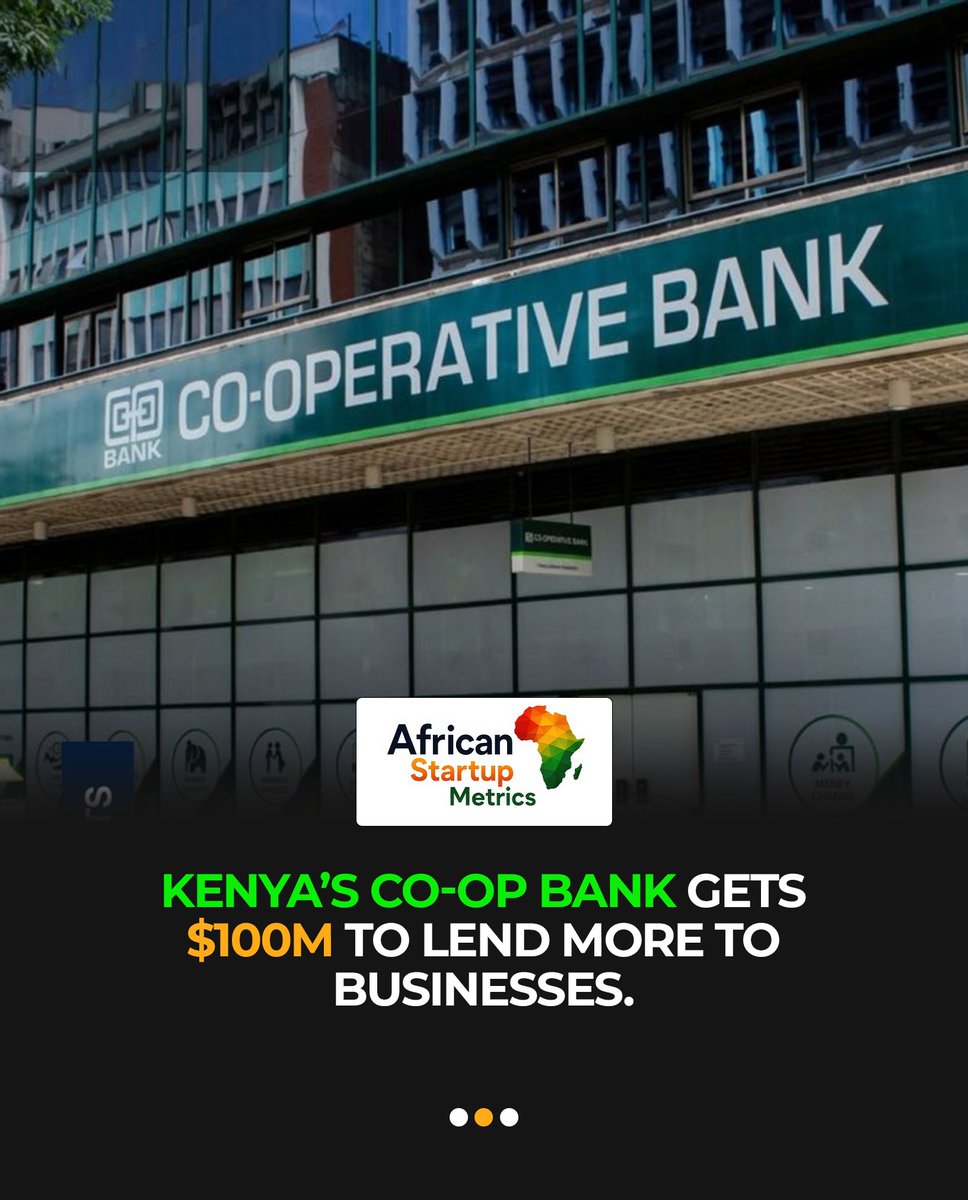
🇰🇪 Co-operative Bank of Kenya Secures $100 Million to Expand Business Lending
The Co-operative Bank of Kenya has secured a $100 million investment to strengthen its lending capacity and provide greater financial support to businesses across Kenya.
The capital is expected to help expand access to financing for small and medium-sized enterprises (SMEs), entrepreneurs, and other local businesses businesses that often face challenges accessing affordable capital to fund expansion, purchase equipment, manage cash flow, hire employees, or enter new markets.
For Kenyan entrepreneurs, increased access to credit could provide an important opportunity to move from simply keeping a business running to scaling operations, creating jobs, increasing productivity, and contributing more significantly to the local economy.
Beyond individual businesses, investments of this scale can have a wider effect across the business ecosystem by supporting suppliers, employees, service providers, and communities that depend on growing local enterprises.
The bigger question is: how effectively will this capital reach the businesses that need it most, and what impact could it have on Kenya's SME ecosystem?
#Kenya #CooperativeBank #BusinessFunding #SMEs #SmallBusiness #Entrepreneurship #BusinessGrowth #AfricanBusiness #AfricanStartups #StartupFunding #AccessToFinance #FinancialInclusion #EconomicGrowth #BusinessFinance #AfricaBusiness #AfricanStartupMetrics
INDUSTRIALIZATION & ECONOMIC SOVEREIGNTY: AFRICA’S PATH AHEAD
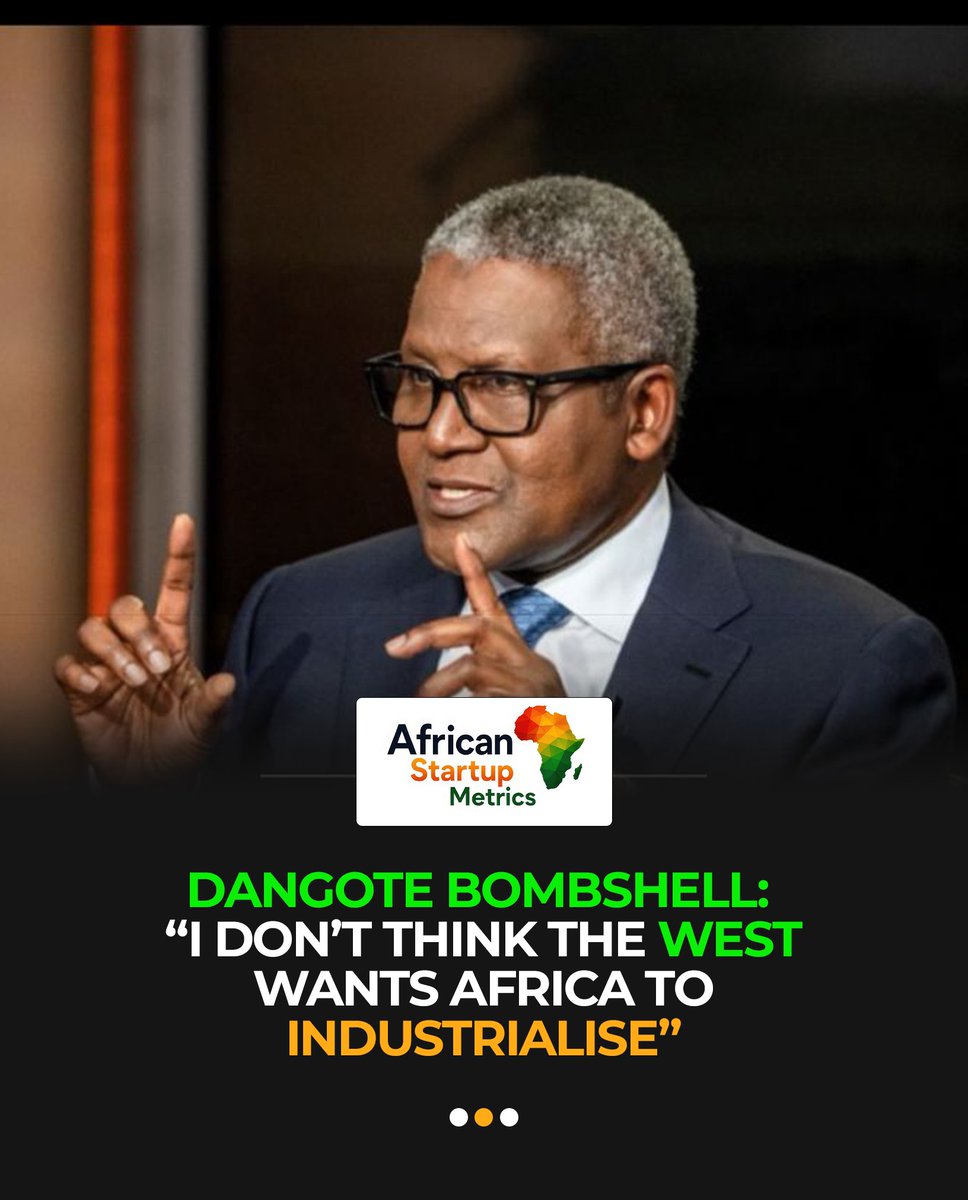
Aliko Dangote has repeatedly spoken about the challenges facing Africa’s industrialisation, including concerns over foreign interests and the continent’s continued dependence on imported goods and external capital.
The debate touches on a fundamental question: Can Africa achieve sustainable economic independence without building the capacity to produce more of what it consumes?
For decades, many African economies have remained heavily reliant on exporting raw materials while importing processed and higher-value products. Moving further up the value chain could allow more capital, skills, jobs and economic value to remain within the continent.
Several areas are particularly important:
Value Addition Over Raw Exports: Processing African resources locally can create additional economic activity, from manufacturing and logistics to finance and skilled employment.
Energy & Infrastructure: Reliable power, transportation networks, ports and industrial infrastructure are essential for competitive manufacturing at scale.
African Capital: Dangote has recently argued that more African capital should be invested within the continent to support its industrial future.
Regional Integration: The African Continental Free Trade Area (AfCFTA) could provide businesses with a larger market, making it easier for African manufacturers to achieve the scale required to compete globally.
Dangote has also described industrialisation as central to Africa’s ability to create jobs and transform its economies.
The conversation, however, is bigger than one industrialist.
Africa’s industrial future will depend on the interaction between local businesses, governments, investors, infrastructure, technology, regional trade and international partnerships.
The question is no longer simply whether Africa has resources.
Can the continent build the industries capable of turning those resources into lasting economic value?
#AfricanIndustrialization #Industrialization #AfricanBusiness #EconomicDevelopment #EconomicSovereignty #AfricanEconomy #Manufacturing #ValueAddition #AfCFTA #AfricanTrade #Infrastructure #EconomicGrowth #Dangote #DangoteGroup #Nigeria #AfricaBusiness #IndustrialDevelopment #EconomicTransformation
DRIVING CORPORATE GROWTH: EXECUTIVE LEADERSHIP AT BUA GROUP
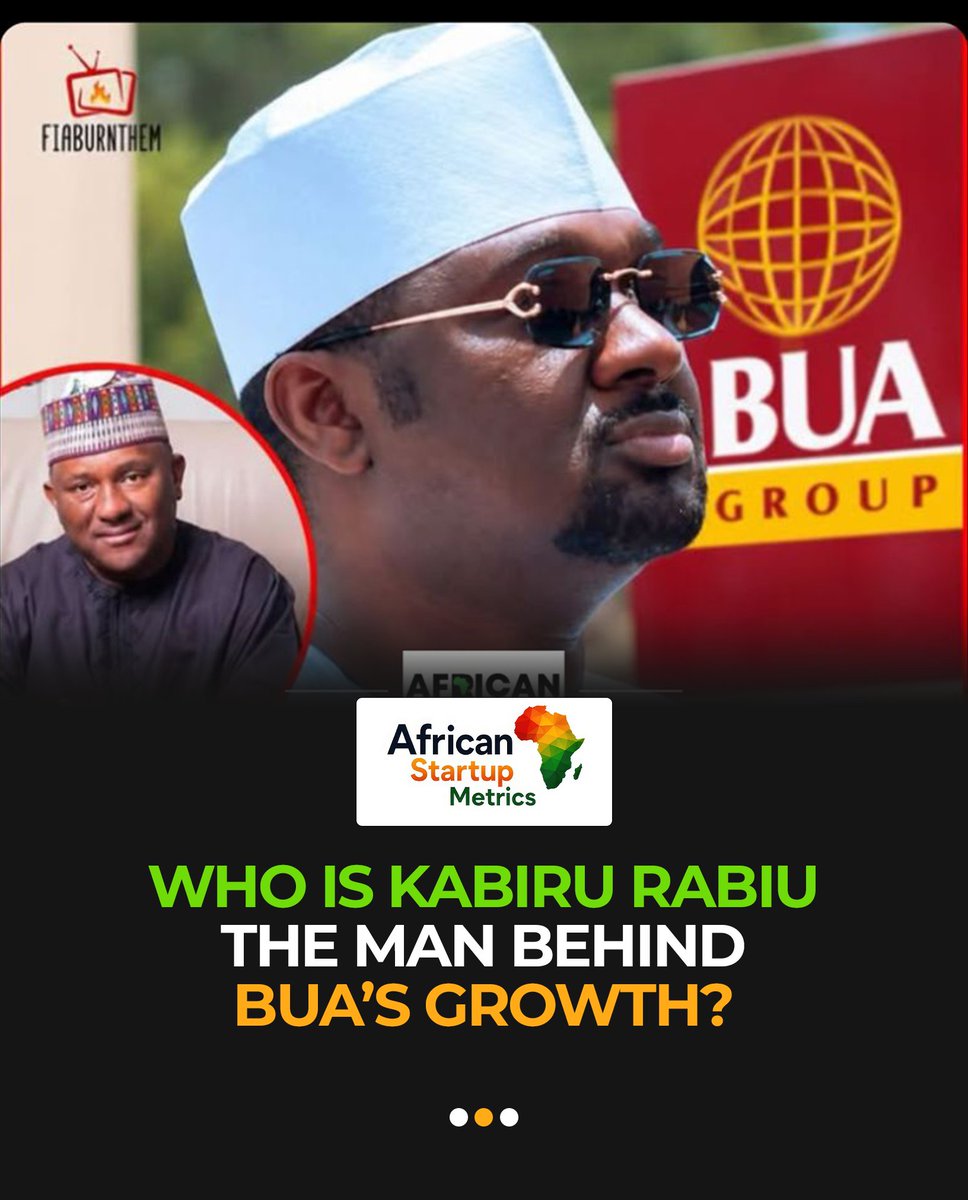
Kabiru Rabiu serves as Group Executive Director at BUA Group, one of Africa’s prominent diversified business groups with interests spanning manufacturing, infrastructure, food production and other strategic sectors.
Behind large-scale industrial expansion and diversification are executives responsible for translating long-term strategy into execution. Working alongside BUA Group founder Abdul Samad Rabiu, Kabiru Rabiu has held leadership responsibilities across businesses within the group as it has expanded its footprint across sectors including cement, sugar, real estate and consumer products.
His leadership journey offers several lessons in corporate growth:
Operational Excellence: Managing complex businesses requires strong execution, operational discipline and the ability to navigate challenges across different markets and industries.
Strategic Diversification: Expanding into capital-intensive sectors such as cement and agricultural processing requires long-term planning, significant investment and resilient supply chains.
Next-Generation Leadership: The emergence of younger executives in major African conglomerates highlights the growing role of the next generation in managing and expanding large-scale African businesses.
As African companies continue to scale, effective executive leadership will remain an important part of building competitive businesses, expanding industrial capacity and creating long-term economic value.
#BUAGroup #KabiruRabiu #Leadership #ExecutiveLeadership #AfricanBusiness #CorporateStrategy #BusinessGrowth #Industrialization #AfricanIndustry #Manufacturing #CorporateLeadership #BusinessLeadership #Nigeria #AfricaBusiness #EconomicGrowth
RETHINKING CONNECTIVITY: FAITH-BASED ORGANIZATIONS AND TECH INNOVATION
Pastor Chris Oyakhilome has unveiled Interlink, a technology initiative presented as an alternative approach to conventional internet connectivity and infrastructure.
As digital transformation continues to expand, organizations outside the traditional technology sector including faith-based organizations are increasingly exploring their own digital ecosystems for content distribution, communication and connectivity.
Interlink highlights a broader conversation around how large communities can leverage technology to build more independent digital infrastructure and communication networks.
Several aspects of the development stand out:
Independent Infrastructure: The emergence of alternative networking solutions reflects growing interest in infrastructure that can provide greater control over connectivity and content distribution.
Community-Driven Adoption: Organizations with large, established communities have the potential to introduce new technologies to users at significant scale.
The Future of Connectivity: Initiatives like Interlink contribute to wider discussions around telecom innovation, digital access, infrastructure ownership and data sovereignty.
The technology industry is no longer being shaped solely by traditional telecom companies and technology giants. Increasingly, organizations from unexpected sectors are experimenting with new ways to build, distribute and control digital experiences.
The bigger question is whether initiatives like these can evolve beyond organizational use and contribute meaningfully to the broader future of connectivity.
#Interlink #TechInnovation #DigitalTransformation #Connectivity #NetworkInfrastructure #TelecomInnovation #FutureOfTech #DigitalInfrastructure #DataSovereignty #AfricanTech #Technology #Innovation #DigitalAccess
ADDRESSING HEALTH DISPARITIES THROUGH INNOVATION
A 23-year-old student midwife is demonstrating how frontline healthcare experience can inspire solutions to long-standing gaps in medical care.
She has developed an application designed to help identify health conditions across different skin tones, addressing a gap in clinical education and diagnostic resources where lighter skin tones have historically been more heavily represented.
For conditions that present differently across skin tones, limited exposure to diverse clinical imagery can make recognition more difficult and potentially contribute to delayed or inaccurate diagnoses.
The innovation highlights several important lessons:
Bridging Equity Gaps: Technology designed around diverse patient populations can support more inclusive and accurate healthcare.
Frontline Innovation: Healthcare professionals working directly with patients are often among the first to notice gaps in existing systems and can be well positioned to develop practical solutions.
Inclusive Design: Diversity should be considered from the beginning of healthcare technology development, not added as an afterthought.
Innovation in healthcare isn't always about building something complicated. Sometimes, it starts with identifying a problem that has been overlooked and asking a simple question:
“How can we make this work better for everyone?”
Supporting frontline innovators with the resources, technology and opportunities to develop their ideas could play an important role in building a more inclusive healthcare system.
#HealthTech #DigitalHealth #HealthInnovation #MaternalHealth #HealthcareEquity #MedicalTechnology #DiversityInHealthcare #InclusiveInnovation #WomenInHealthcare #HealthcareInnovation #MedTech #GlobalHealth #AfricaHealthTech #Innovation #AfricanInnovation
PHILANTHROPY 2.0: WHEN CONTENT CREATION MEETS GLOBAL DEVELOPMENT
The line between entertainment, content creation and large-scale philanthropy is changingand @MrBeast (Jimmy Donaldson) is becoming one of the most visible examples of this shift.
A recent initiative associated with MrBeast reportedly involves an investment of nearly $10 million toward building a self-sustaining community in Ghana, with plans that include a school, homes, sustainable agriculture and access to clean water.
Beyond the size of the investment, what makes this model interesting is the way it connects content, audience attention and social impact.
Traditional development organizations remain essential, but creator-led philanthropy introduces another model: using massive digital audiences and content-generated revenue to mobilize resources and bring attention to specific community needs.
There are several lessons worth watching.
Agility: Creator-led initiatives can move from idea to visible execution relatively quickly.
The Power of Attention: Content can bring development challenges to millions of people who may otherwise never encounter them.
A Different Definition of Success: For creators with enormous audiences, success can extend beyond views, sponsorships and advertising revenue to measurable real-world impact.
At the same time, large-scale philanthropy raises important questions around long-term sustainability, local ownership, transparency and community participation. Building infrastructure is one thing; ensuring that communities can maintain and benefit from it for decades is another.
That makes initiatives like this more than just charitable projects. They are becoming interesting case studies in the evolving relationship between creator economies, CSR, development and social impact.
The bigger question is:
Could the creator economy become a significant new force in global development?
#MrBeast #Philanthropy #Ghana #Africa #GlobalDevelopment #SocialImpact #ContentEconomy #CreatorEconomy #CSR #Development #Education #CleanWater #Sustainability #AfricanDevelopment #Innovation #GlobalImpact
PHILANTHROPY 2.0: WHEN CONTENT CREATION MEETS GLOBAL DEVELOPMENT
The line between entertainment, content creation and large-scale philanthropy is changingand @MrBeast (Jimmy Donaldson) is becoming one of the most visible examples of this shift.
A recent initiative associated with MrBeast reportedly involves an investment of nearly $10 million toward building a self-sustaining community in Ghana, with plans that include a school, homes, sustainable agriculture and access to clean water.
Beyond the size of the investment, what makes this model interesting is the way it connects content, audience attention and social impact.
Traditional development organizations remain essential, but creator-led philanthropy introduces another model: using massive digital audiences and content-generated revenue to mobilize resources and bring attention to specific community needs.
There are several lessons worth watching.
Agility: Creator-led initiatives can move from idea to visible execution relatively quickly.
The Power of Attention: Content can bring development challenges to millions of people who may otherwise never encounter them.
A Different Definition of Success: For creators with enormous audiences, success can extend beyond views, sponsorships and advertising revenue to measurable real-world impact.
At the same time, large-scale philanthropy raises important questions around long-term sustainability, local ownership, transparency and community participation. Building infrastructure is one thing; ensuring that communities can maintain and benefit from it for decades is another.
That makes initiatives like this more than just charitable projects. They are becoming interesting case studies in the evolving relationship between creator economies, CSR, development and social impact.
The bigger question is:
Could the creator economy become a significant new force in global development?
#MrBeast #Philanthropy #Ghana #Africa #GlobalDevelopment #SocialImpact #ContentEconomy #CreatorEconomy #CSR #Development #Education #CleanWater #Sustainability #AfricanDevelopment #Innovation #GlobalImpact
🇧🇧 BARBADOS LAUNCHES CHILD WEALTH FUND TO GIVE CHILDREN A FINANCIAL HEAD START
Barbados has introduced a Child Wealth Fund designed to give children born since the country became a republic a financial foundation from birth.
Under the programme, eligible children born on or after November 30, 2021 receive a one-time investment of BBD $5,000, equivalent to approximately US$2,484, placed into a long-term fund in their name.
Rather than providing an immediate cash payment, the initiative is designed to build wealth over time. The funds are held and invested, giving each eligible child an asset that can potentially grow and provide financial support as they reach adulthood.
The programme reflects Barbados’ broader effort to expand economic opportunities for younger generations by giving children a financial asset from the earliest stage of life.
By putting capital aside at birth, the Child Wealth Fund takes a different approach to intergenerational wealth creation giving eligible children a financial head start that can grow over the years and potentially support major milestones later in life.
A financial foundation at birth. An asset for the future.
#AfricanStartupMetrics #Barbados #ChildWealthFund #WealthBuilding #FinancialInclusion #YouthEmpowerment #EconomicOpportunity #SocialInnovation #FutureGenerations #FinancialLiteracy #Innovation #IntergenerationalWealth #EconomicEmpowerment #GlobalInnovation
African electric mobility platform SPIRO has secured an additional $18 million debt commitment from the AfricaGoGreen Fund Fund (AGG), managed by @CygnumCapital , bringing AGG’s total financing commitment to the company to $36 million.
The latest financing comes less than a year after Spiro’s initial debt round, which included $18 million from AfricaGoGreen Fund and $7 million from @nithiocredit .
The additional capital will support Spiro’s continued expansion of electric mobility and clean transportation solutions across African markets.
The financing highlights the growing role of debt capital in scaling Africa’s electric mobility infrastructure, as the continent’s transport sector moves toward cleaner and more sustainable alternatives.
#AfricanStartupMetrics #Spiro #ElectricMobility #CleanTransport #ElectricVehicles #EV #DebtFinancing #AfricaGoGreen #CygnumCapital #Nithio #ClimateFinance #CleanEnergy #SustainableMobility #AfricanStartups #AfricaInvestment #EastAfrica
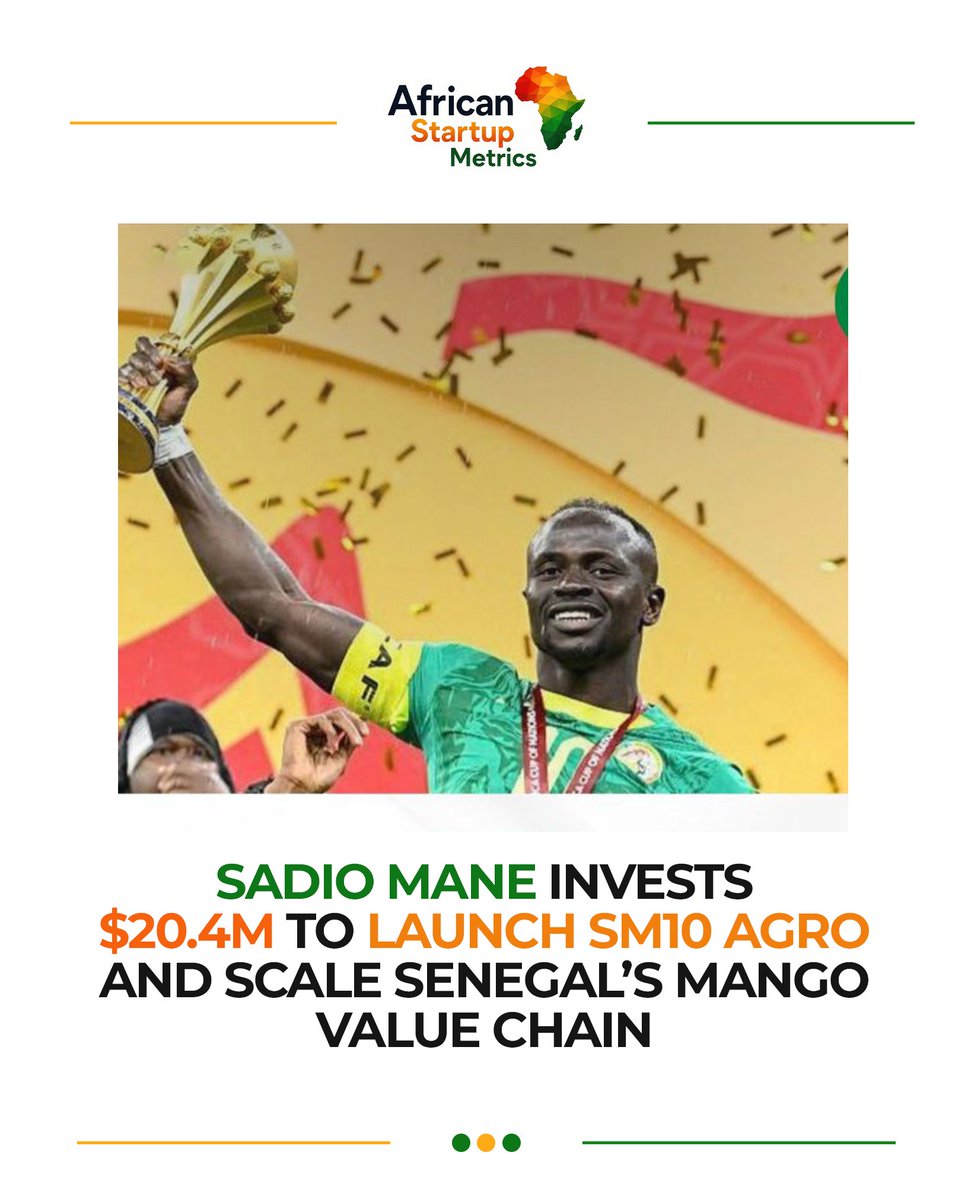
🇸🇳 Senegalese international footballer @SMane_Officiel Mané has committed 11.7 billion CFA francs ($20.4 million) of his personal funds to launch SM10 AGRO, an integrated agro-industrial park in his hometown of Bambali, Senegal.
Breaking ground on September 19, 2026, the 500-hectare project will include a major plantation, four specialized industrial processing units, an agricultural training college, and a research and development facility.
The park plans to plant 78,000 mango trees, process up to 8,500 tonnes of fruit annually, and create more than 1,000 direct jobs upon launch.
“I want the fruits of the land to stay here.”
The investment targets one of the major challenges facing West Africa’s agricultural value chain: post-harvest losses and limited local processing capacity. Only about 2% of Senegal’s fresh mango harvest is currently processed locally.
By transforming perishable mangoes into shelf-stable, higher-value products including mango purée, pulp, dried fruit, and mango butter SM10 AGRO aims to serve local demand while exporting to markets across Africa, Europe, and the Middle East.
Beyond football, Sadio Mané is putting significant capital into agriculture, industrialisation, job creation, and value addition in Senegal.
#AfricanStartupMetrics #SM10Agro #SadioMane #Agribusiness #AgroProcessing #Agriculture #Senegal #WestAfrica #AfricanAgriculture #FoodProcessing #AgroIndustry #ImpactInvesting #AfricanInvestment #MadeInAfrica #AfricaBusiness