This argument does not hold water.
While it may be debatable whether a minimum wage earner in any of the countries mentioned can comfortably afford a mortgage, the comparison falls apart once you run the numbers.
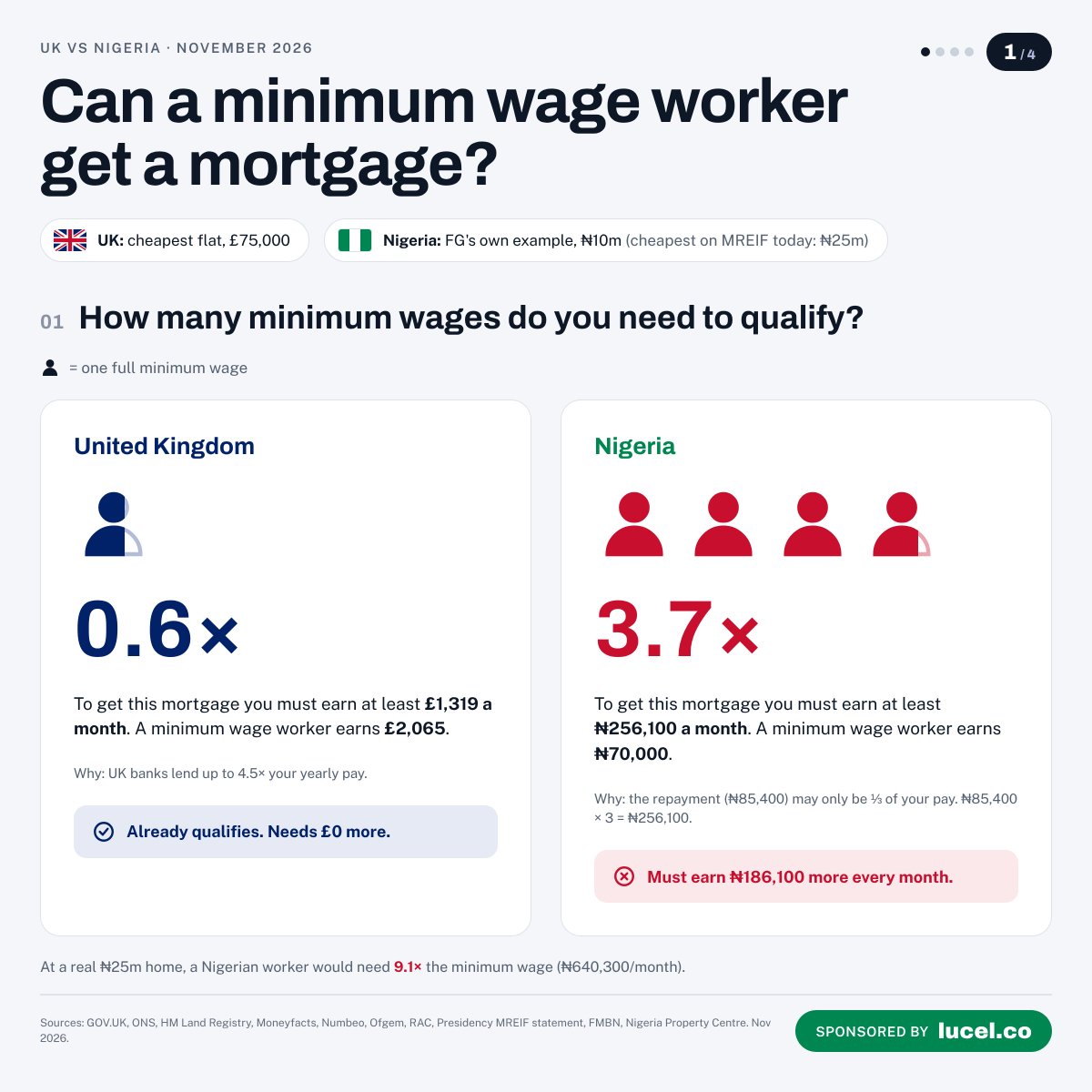
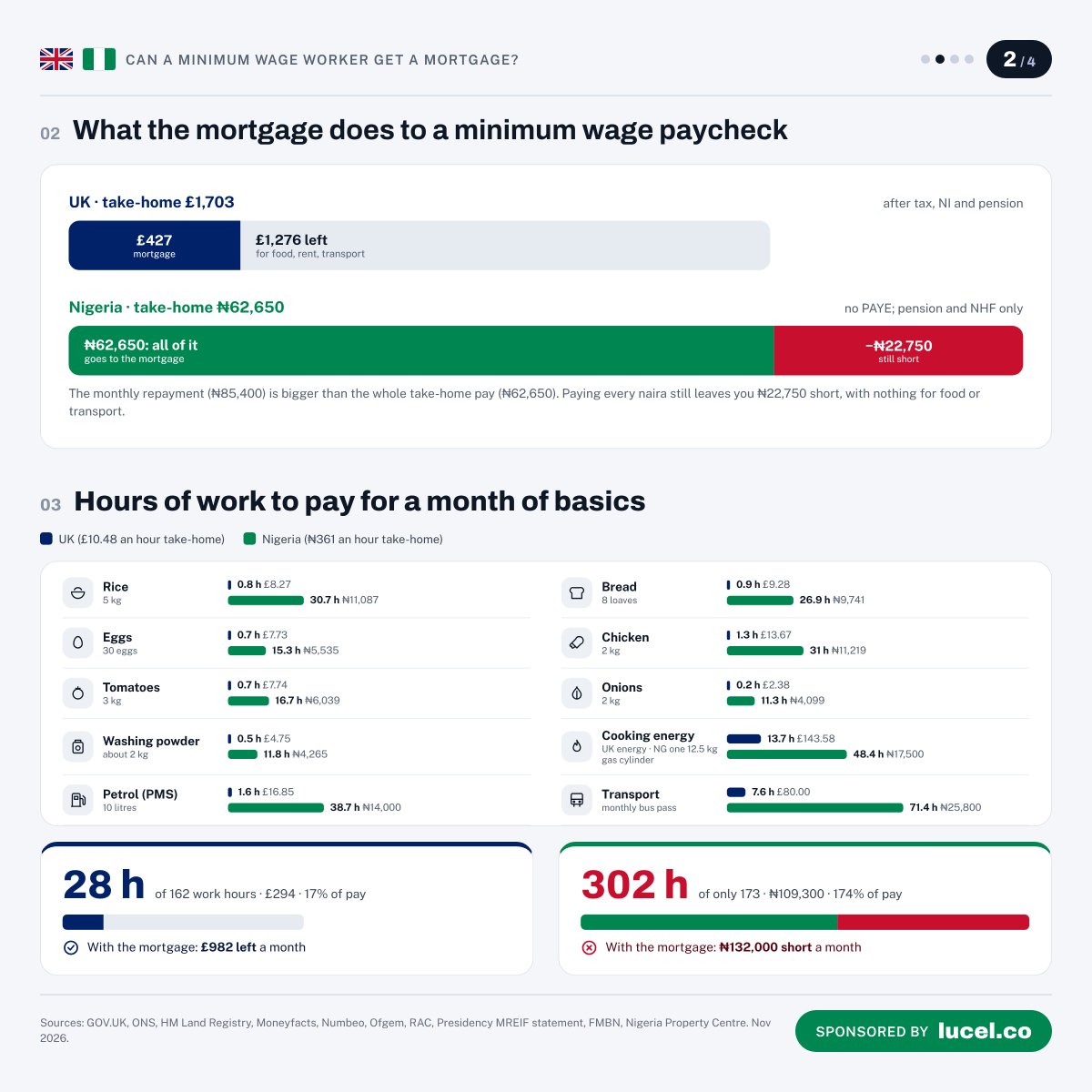
🇬🇧 A UK minimum wage earner takes home £1,703 a month. The cheapest one-bedroom flats cost about £75,000, and a 95% government-backed mortgage on one costs £427 a month. That is 25% of take-home pay. They already qualify, with £982 left over after the mortgage and basic living costs.
🇳🇬 A Nigerian minimum wage earner takes home ₦62,650. Using the FG's own ₦10m example, the repayment is ₦85,400 a month, more than their entire pay. Lenders only allow one-third of your income to go to a mortgage, so you would need to earn at least ₦256,100 a month: 3.7 times the minimum wage. The cheapest MREIF home today is ₦25m, which pushes that to 9.1 times.
Even before a mortgage, the basics alone (food, cooking gas, petrol and transport) cost 174% of a Nigerian minimum wage earner's take-home pay.
The problem isn't the interest rate. It's wages. The cheapest UK flat costs about 3 years of minimum wage. The cheapest MREIF home costs about 30 years of Nigeria's.
The answer isn't comparing Nigerians to Londoners. It's closing the gap between what Nigerians earn and what homes cost.
#MREIF #MinimumWage #Housing #Nigeria
President Tinubu’s housing credit and social housing programmes have given thousands of Nigerians an opportunity to own a home.
Here are answers to the questions you asked in the last two days.
WATCH
Capacity training organised by the same people who introduced over a million AI-generated voter entries into the voter register?
Why TF does AI even have access to the voter register to create voter entries, to the point of generating images?
Just quit the image-washing.
Nigerians are not confident in INEC as an institution.
@inecnigeria Very quick to approve budgets for T-shirts and caps for voter sensitisation, yet telling those same voters that election results cannot be transmitted or uploaded to IReV because the feature has not been built or tested.
Very quick to approve budgets for T-shirts and caps for voter sensitisation, yet telling those same voters that election results cannot be transmitted or uploaded to IReV because the feature has not been built or tested.
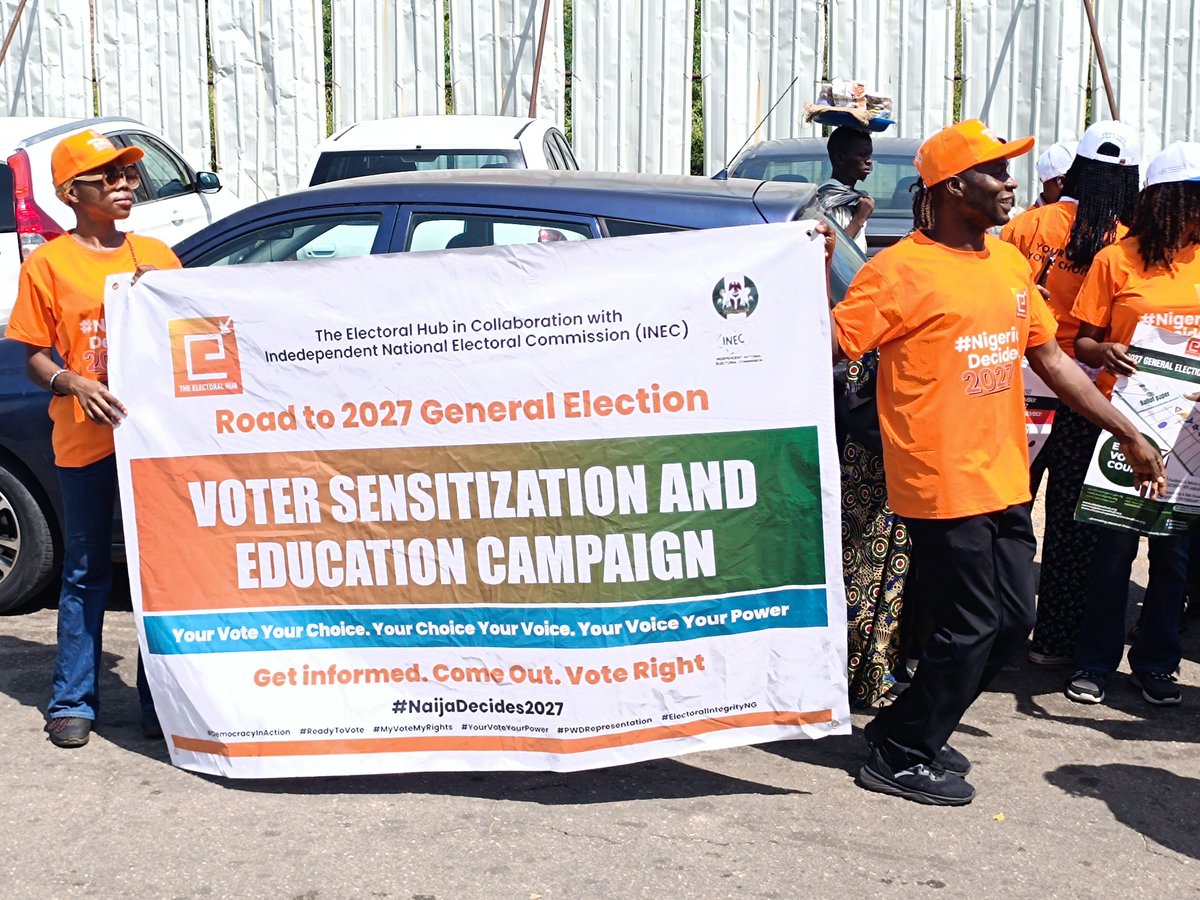
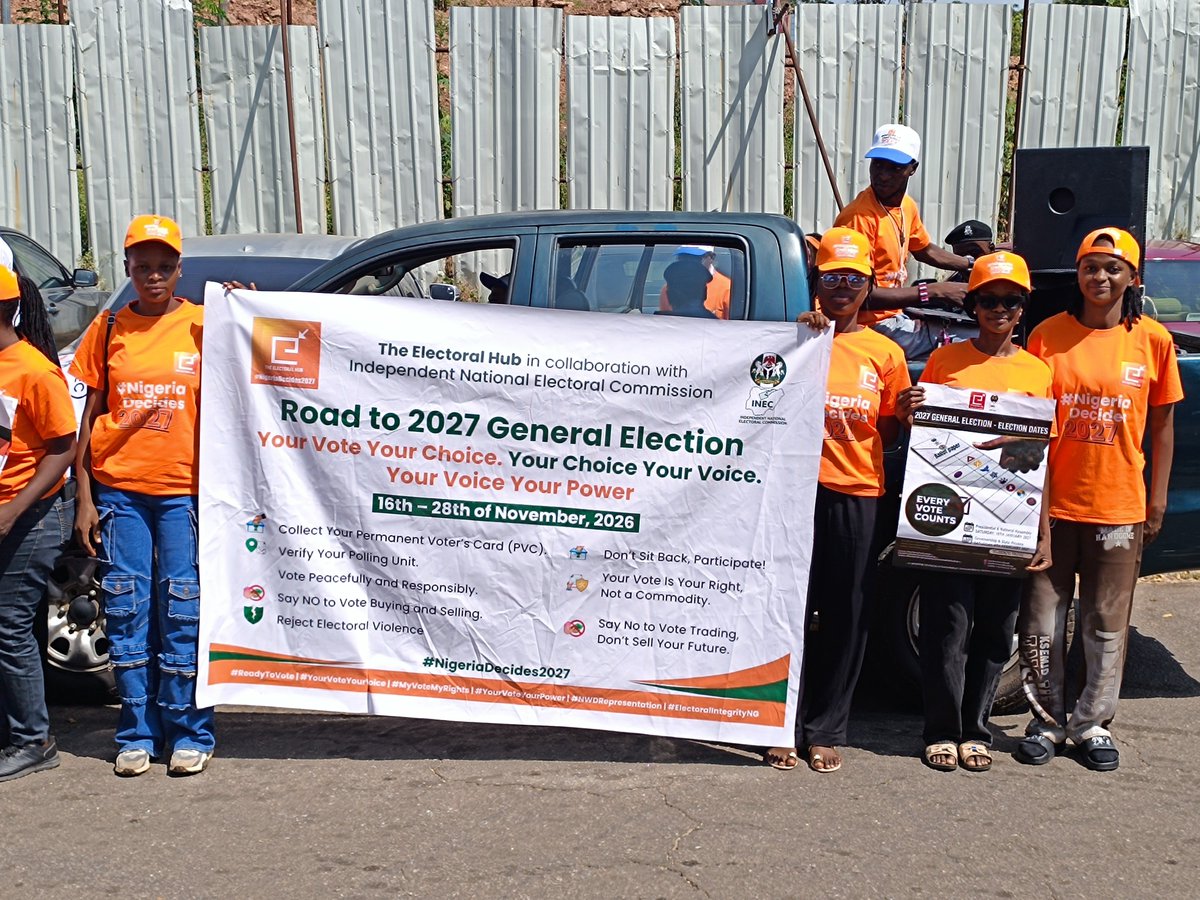
ROAD TO 2027: YOUR VOTE, YOUR POWER
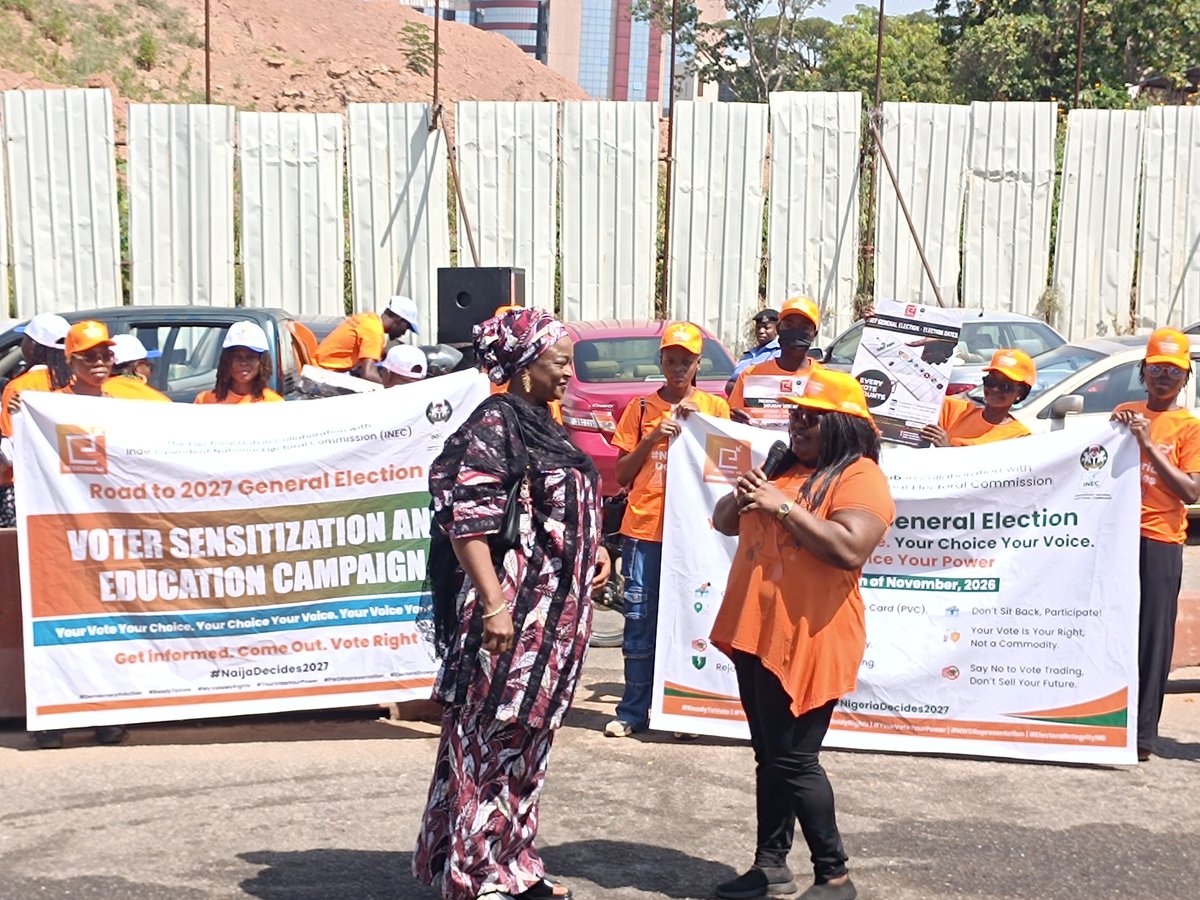
The Electoral Hub, in collaboration with the Independent National Electoral Commission (INEC), took the voter sensitisation and education campaign to the streets through a roadshow, engaging citizens and encouraging active participation ahead of the 2027 General Elections.
✓ Collect your PVC.
✓ Show up.
✓ Vote right!
#NigeriaDecides2027
@inecnigeria The voter apathy is largely a consequence of INEC's failure to conduct free, fair and credible elections.
No amount of voter sensitisation will fix that.
I don't think we fully understand the devilish arrogance of Tinubu. I genuinely don't believe that man has organically engaged with the Nigerian press.
It's always scripted, pre-recorded addresses that still fall short of addressing the questions Nigerians are asking.
How did we get here? That evil has to go.
President Tinubu has never granted a one-on-one interview to any Nigerian journalist, indigenous media personality, or local station. Instead, he sat down with American political strategist and lobbyist Diana London (of London Global Strategies), a figure whose character and motives have drawn serious questions amid reports of large payments and lobbying ties. This is an insult to the Nigerian people and the local press.
— Ayo Mairo Ese
Only a naive person would genuinely believe that @inecnigeria has Nigeria’s and democracy’s best interests at heart.
Amupitan began his tenure with a lie that he never owned a Twitter account, then went on to lead an institution that introduced millions of AI-generated voters into the voter register.