TYPES OF HAIR CARE REGIMENS
1. BASIC - Damage & Growth are constant so no drastic improvement in health is seen & lenght might remain stagnated
2. RECESSIVE - Damage is more than growth & overtime will lead to poor outcomes
3. HEALTHY - Damage is absent so hair is flourishing
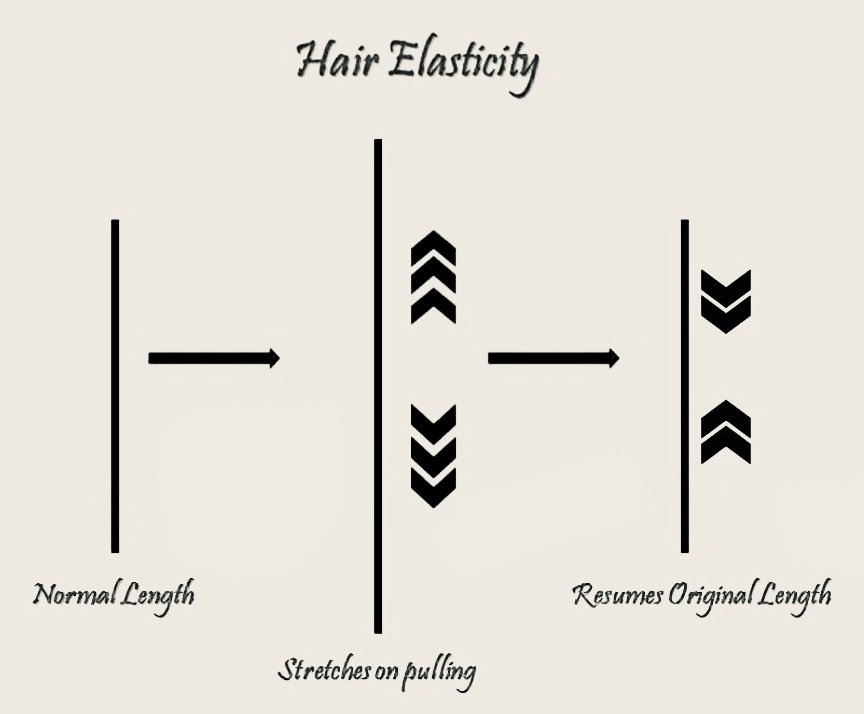
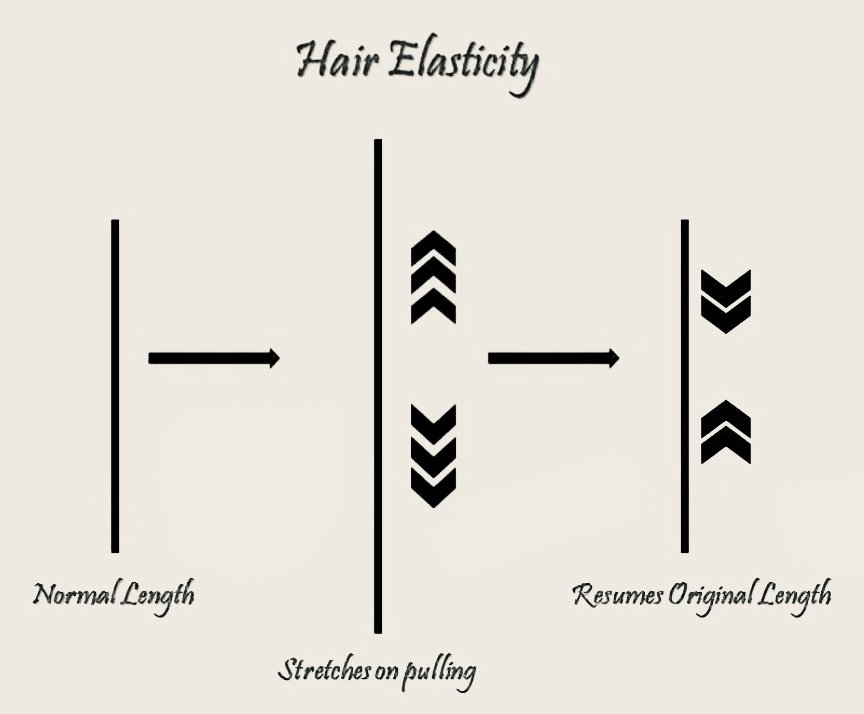
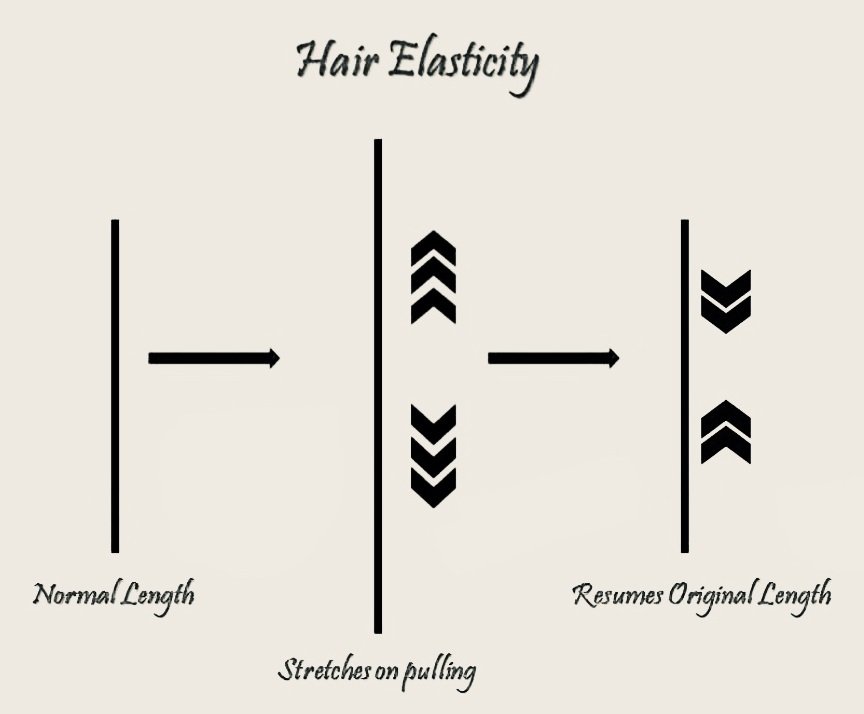
Healthy hair has a high level of elasticity giving it body, bounce and curl formation so an essential indicator of healthy hair is the capability of the hair strand to stretch and return to its previous form without breaking.
MOISTURE gives your hair the ability to stretch and bend as dry hair when stretched is more fragile & prone to break.
PROTEIN is vital in hair health & elasticity as it provides strength & protection to the hair allowing the strands to withstand manipulation during styling.
Oh Snap! Why is my hair breaking?
The main reason for hair breakage is due to an imbalance in MOISTURE/PROTEIN. Healthy hair has a high level of elasticity giving it body, bounce and curl formation.
HAIR TYPE
The thickness of your strand is what is being referred to here. Particularly, the diameter of an individual strand which is categorised into three: Fine, Medium & Coarse. (see diagram)
Method 1: STRAND TEST
Take a single hair in between your fingers
If you dont feel anything, then you have FINE hair.
If you can feel the hair, then its MEDIUM.
If you feel a strong thick strand, then its COARSE.
Method 2: THREAD TEST
Take a single hair strand and compare it to a piece of sewing thread.
If your hair is thinner than the thread, it is FINE
If hair is the same width as the thread, it's MEDIUM
If it's thicker than the thread, its is COARSE
HAIR TYPE
The thickness of your strand is what is being referred to here. Particularly the diameter of a strand. And this is categorised into three (Fine, Medium, Coarse)
3. Measure your ponytail
Another way to measure is to put your hair in a ponytail and measure the circumference of the ponytail. Low density hair will be less than 2 inches, Medium density will measure between 2 to 3 inches, and High Density will be at least 4 inches.
2. Can you see your scalp?
Alternatively, you can judge your hair density by taking a look at it in its natural state. Do not part it, let it hang loose, and take a look in the mirror. Can you see your scalp without moving and hair? If you can, you most likely have Low density.
HOW TO MEASURE YOUR HAIR DENSITY?
1. Count them
One way is by actually counting the number of hairs on your head 🥴 but to make it easier, count the number of hairs in one square inch of your scalp and then extrapolate from there.
If you can see your scalp with little or no effort, then you most likely have medium density. If it's difficult to see your scalp, you have high hair density.
HOW TO MEASURE YOUR HAIR DENSITY?
1. One way is by actually counting the number of hairs on your head 🥴 but to make it easier, count the number of hairs in one square inch of your scalp and then extrapolate from there.
HAIR DENSITY refers to the number of hair strands on your head and is totally different from HAIR THICKNESS which technically refers to the width of a single strand of hair.
On average, each person has approximately 2,200 strands of hair per square inch on their scalp.