“I HAD TO LET MY FIELDS DIE THIS YEAR TO SAVE MY TOWN’S WELL.”
In the heart of northern Nigeria, a maize farmer made an unthinkable choice — to sacrifice his entire harvest so that his community could have drinking water.
As drought intensifies across regions like Sokoto and Katsina, farmers face heartbreaking trade-offs between feeding their families and preserving scarce water sources.
This is the human side of climate change — where survival demands painful decisions.
have all concluded that currently marketed GMO foods are as safe to eat as their non-GMO counterparts. If the science is settled, why is the debate still so loud?
GMO SAFETY: WHAT THE WORLD’S TOP SCIENTISTS ACTUALLY SAY
The World Health Organization (WHO), the U.S. Food and Drug Administration (FDA), and the National Academies of Sciences, Engineering, and Medicine (NASEM)
The heaven of an economy is in the ground:
The soil.
Look at Africa, home to 65% of the world's uncultivated arable land.
This isn't just dirt; it's a massive untapped opportunity to create food security, spur economic growth, and empower communities.
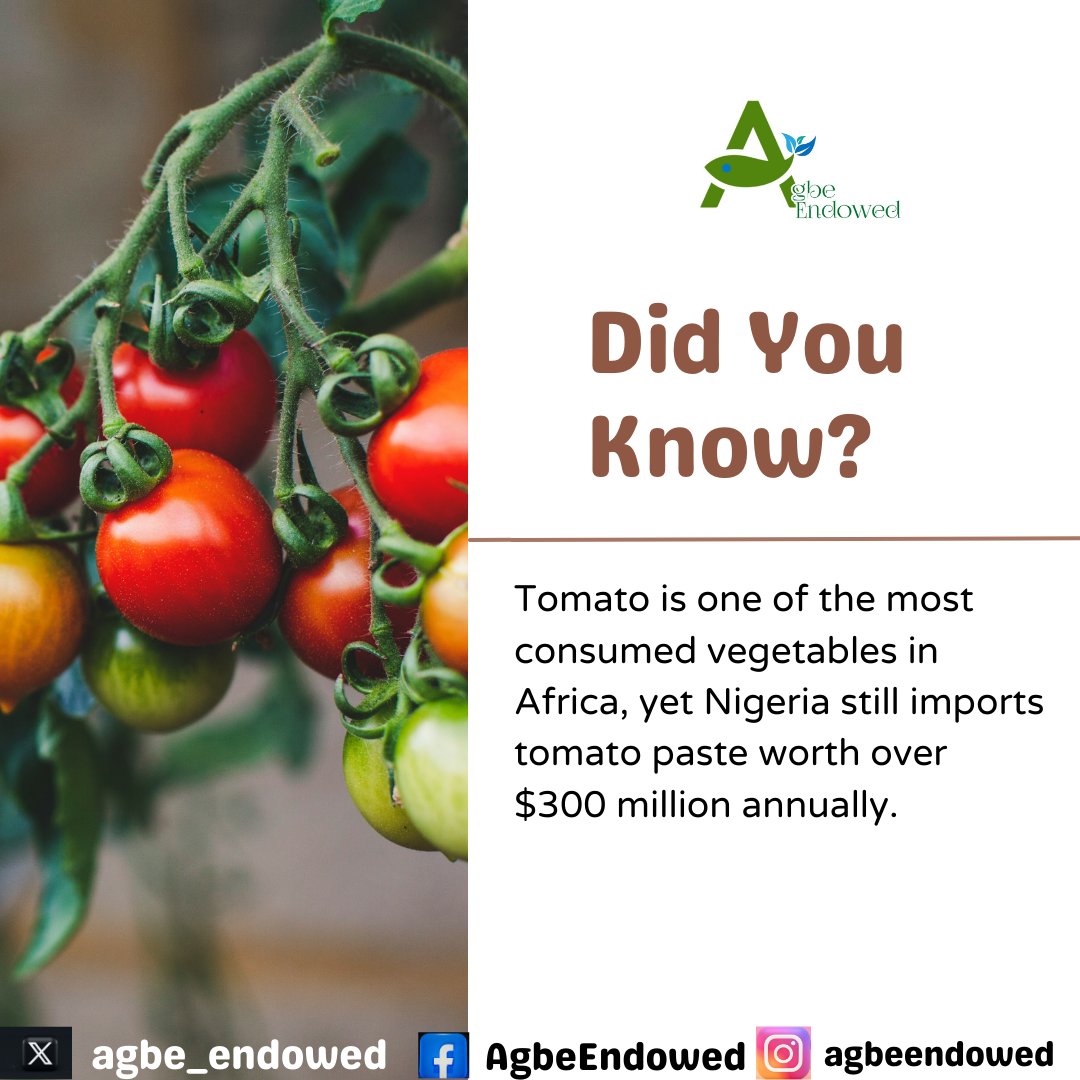
The numbers don’t lie: Nigeria imports over $300M of tomato paste annually, despite being a major producer. This is not just a statistic—it's a call to action
5. Build Your Own Water Traps
When the rain falls, don't let it run away. Simple physical barriers like small mounds of earth (known as berms) or crescent-shaped pits (often called "zaï" pits in parts of Africa) can be dug on your farm.