I've consulted with 20+ companies in the past 2 years. Every single one still writes SQL, Python, and other programming languages by hand. They use Power BI and Excel just like you and me.
They have issues with duplicates, data migrations, making use of their data.
They use AI, but it doesn't do everything for them.
People get lost in the buzzword of AI and assume all problems are solved and Data Analysts, Data Scientists, and Data Engineers are no longer relevant.
The real world is a great example of that not being the case.
This is why I still stress knowing the basics!
This young Nigerian built a $10 million automated shoe factory here in Nigeria while sourcing 90% of its leather from Kano.
I like to promote and celebrate Nigerians adding value to Nigeria.
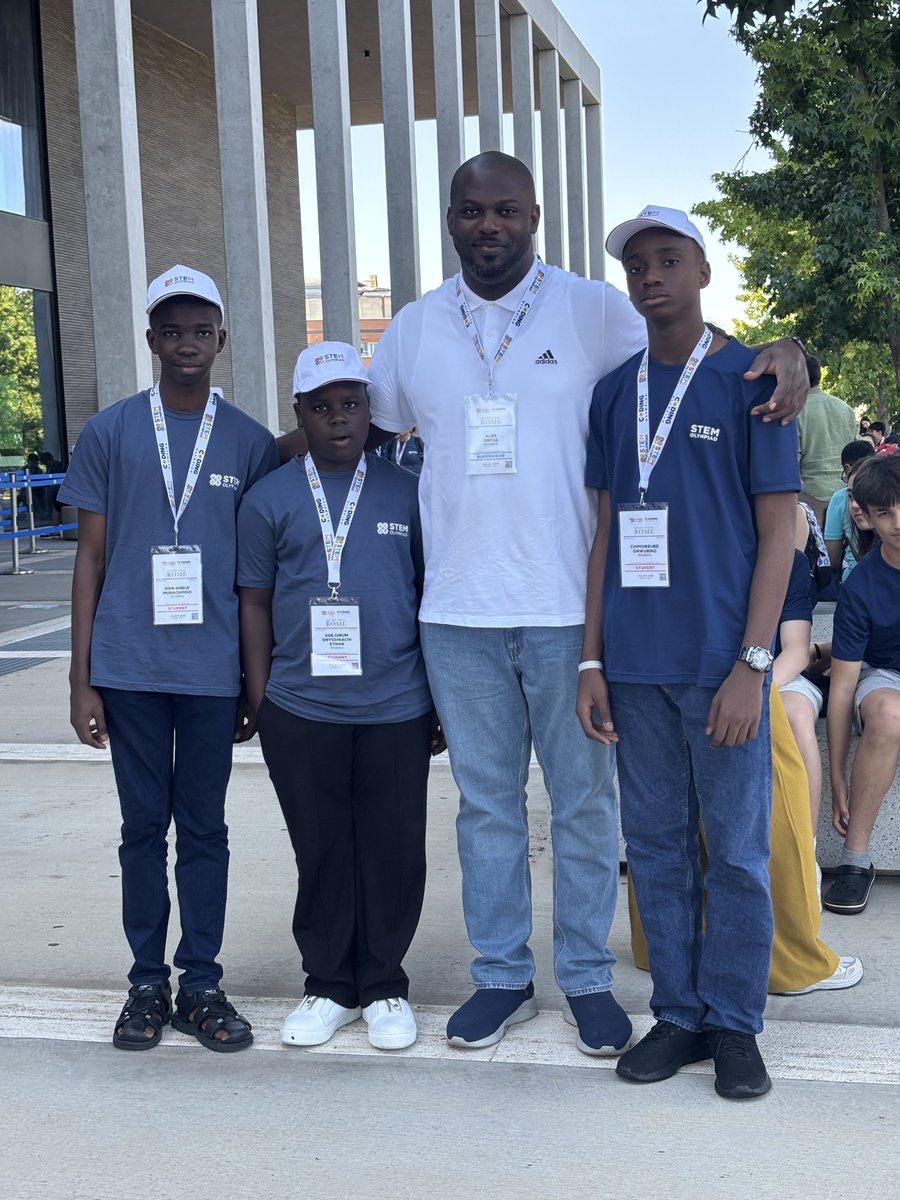
This Saturday, we will be having another edition of the Sterling Bank Nationwide Online Maths Quiz.
The platform for the quiz is https://t.co/dnjSLGbm07 . Just register and wait for the countdown.
It’s open and free for every Nigerian student, and the winners get ₦500k, ₦300k, and ₦200k respectively.
All you need to participate is a phone, tablet, desktop, or laptop.
We are making education rewarding, fun and entertaining again, because that’s the only way we can save the nation.
If tribalism is not banned in Nigeria and made a serious crime as is it in Rwanda, Nigeria can never move forward as a Nation.
A divided nation cannot progress!
Look at America, Europe and Canada today.
Indians are leading top companies, building global technology, running hospitals, teaching in world-class universities and occupying important positions across the world.
Look at China.
They moved hundreds of millions from poverty to global power by taking education, science, engineering, manufacturing and national planning seriously.
None of this happened by accident.
Nations that invest in human capital eventually export influence.
That is the path we must take.
We are not grooming children just to survive Nigeria.
We are grooming a generation that will compete with the best minds on earth.
Our education must move from survival to global domination.
"Your job as a trader is to wait for the best opportunities. Money is made stalking and sitting not being active and forcing a new trade each day."
- Dan Zanger
The best career advice I got came from my first boss.
Funny enough, he wasn't technical. He was a business and HR guy.
The advice was to "Have finesse."
Speak well. Dress well. Put effort into how you present your work. Don't just finish it. Finish it properly
He himself was an example. He get packaging, and that "corporate swag" cos he came from banking.
Back then, I didn't care much about those things. Fresh out of school, my head dey hot, I just want write code or write the specs and say "it's done". Looking back, he was right.
I'm grateful he was patient enough to keep pointing them out until they became part of me.
if you're selling to broke people, sell them a way out. if you're selling to rich people, sell them safety. if you're selling to young people, sell them potential. if you're selling to old people, sell them the legacy they'll leave behind. if you're selling to employees, sell them freedom from their boss. if you're selling to bosses, sell them freedom from their employees.
My mum owns a primary and secondary school somewhere in Akeja, Ogun Sate. There is this man, Papilo, a supplier who handles FMCG products in that area. He comes Tuesdays, Thursdays, and Fridays. Sundays are for my mum and other school owners stocking up for students during break.
He is not the only one. They are everywhere like that.
One thing I know is that most of these sellers don’t pay him immediately, They pay on the next supply day or after a week. Sometimes it stretches to 3 supplies before payment clears.
I've watched him argue back and forth with customers who say no money yet. He still gives them all or little. I've seen this for over 15 years growing up. This is the practice across every informal market in Nigeria. This is Africa’s informal supply chain.
Papilo knows all his customers. He knows their children’s names. He argues, negotiates, and finds a middle ground. No App or AI can replicate this.
Papilo now runs plenty of small kekes distributed all over Akeja and beyond.
In African businesses, relationships aren’t just nice-to-haves. They are part of the infrastructure. And this is where the majority of our builders get it wrong.
A techie once went to get bread at a store and stumbles on a sole distributor supplying them wines. He thinks “so this is how these get their stocks” he goes home to google the numbers and sees millions of retailers, no central database, orders on phone call, cash payments, manual records. He sees the classic Manufacturer → Distributor → Wholesaler → Retailer chain and he goes “yes! This is a gap. This is untapped. I can build this on an app”.
Actually, he is right. But here is what he missed;
The supplier extends credit
The wholesaler knows who always pays at each time.
The sales rep knows whose child just got admitted into university.
The delivery driver knows which shop opens late or earlier
None of this can fit in an app database because they are the everyday circumstantial reality of Nigerian business owners. Your app can’t document this.
A retailer doesn’t always buy from who is cheaper. She buys from who’s delivered consistently for years. The one who lets her pay next week. The one who picks up the phone immediately there is a problem.
See your app can calculate credit just fine. But the distributor knows Mama Olomi missed payment because her shop flooded last week. That context is the business in this part of the world.
You will think funding fixes this but marketForce had $42M and still died. Sendy had $27M, Medsaf had $7M.
Your investors will push you to the usual playbook; free delivery, discounts, cashback, promotions, etc and growth will look incredible at first but the moment the subsidies disappear, you will start to compete with relationships using economics alone.
Then you’d realize your capital didn't buy survival, it brought speed to a broken model. Somebody say Reality!
Now let’s look at the ones who didn’t die. They simply mutated.
Sabi moved into traceability/export infra. OmniRetail leaned into embedded finance.
Sendy’s co-founder built TABB on trade credit data.
Rather than say we’re replacing distributors, they became the operating system behind the distributors helping them;
📍 Manage inventory
📍 Collect payment
📍 Access financing
📍 Discover retailers
📍 Forecast demand
📍 Coordinate logistics
This is the lesson for anyone building in African informal market.
Don’t ask How do i remove the middleman
Ask, what valuable job is the middleman doing that technology can make easier?
Don’t compete with the market woman, equip her. Build the layer she can’t build herself (credit history, verified supply chains, payment infrastructure, etc).
This is because Africa’s distribution problem was never about apps vs humans. It’s about who controls the trust layer. Build that, not the marketplace.
@blocstreets
I spent my whole weekend working on this.
So here are 500 email templates for your next job applications, broken down by roles
Plus:
• A “before you send” checklist
• What NOT to do (with real examples)
• The formula behind every subject line and opener
• Industry-specific numbers to plug into your CV
This is the thing nobody is giving away for free but I am 💗
You’re welcome 💗
https://t.co/MWzhwSE83b
I am a big proponent of a meritocratic system. I am where I am today because Captain Simon Smith conducted a merit-based selection process and gave me a shot.
STREET ADDRESSES & THEIR MEANING
1. Court: Dead end street.
2. Crescent: Curved road with both ends connecting to the same street.
3. Boulevard: Wide street with greenery in the center and along the sides.
4. Avenue: Straight street that runs north-south or east-west.
5. Drive: A road that follows a natural feature (park, ocean, hills, or lake).
6. Alley: Narrow street between, behind, or within buildings.
7. Place: A short street.
So, boys and girls, what have we learned from this fall in gas prices?
To reduce prices, all you have to do is boost supply, not increase the minimum wage, not tweet, not announce policy, not do an infographic, or blame anyone, just increase supply.
meaning?
To drop the price of power, you increase the MW generated and available to be distributed. To drop the cost of rent, you increase the supply of homes.
To drop food inflation, you can increase the supply of tubers like yams, cereals like rice, and protein like meat.
I close again by repeating myself: you don't drop prices by sharing infographics on social media or giving long winding speeches; you drop prices by boosting supply.
I stress, the way to make goods affordable is NOT to increase the minimum wage but to reduce the price and cost of goods by increasing the supply and output of the economy.