I’ve been thinking a lot about open-source AI models, and the more I look at it, the more uneasy I get.
Once the weights are fully public, there’s no taking them back. Anyone with a decent GPU and a weekend can fine-tune them for whatever they want, scams, sophisticated deepfakes, automated cyber attacks, or worse. The people building the next generation of these models are brilliant and well-intentioned, but they can’t control what happens after the download button is clicked. There’s no kill switch, no update mechanism that reaches every copy, and no real accountability once the model is out in the wild. We’ve already seen how fast bad actors move when the barrier drops this low.
That doesn’t mean we should lock everything behind closed doors. Transparency matters. Researchers need to inspect models, find flaws, and improve safety. Innovation dies in complete secrecy.
This is why I think “semi-open” is the more honest path forward: open weights for scrutiny and legitimate research, but with real licenses, usage restrictions, and controlled distribution that keep the most dangerous applications out of the hands of people who shouldn’t have them. Enough openness to keep the community honest and moving fast, enough friction to slow down the people who would weaponize it.
Pure open-source feels like giving everyone a nuclear reactor blueprint and hoping they use it for clean energy. Semi-open feels like acknowledging both the power and the risk.
Curious where others land on this. Are we underestimating the downside, or am I being too cautious?
Spent the day wiring a hybrid database architecture into @seleciHQ's AI agent layer.
The problem: AI Agents had amnesia. They'd read the last 20 chat turns but couldn't search their own memories. A founder asks "what did we decide about churn last week?" - the agent scans memory keys with SQL. No semantics. No ranking. Nothing beyong the rolling window.
@polygres is what changed that.
Here's how it works with Polygres under the hood:
Polygres handles everything the agents need to think with, agent memories get embedded via Openrouter, stored in a native Polygres vector column, indexed with HNSW for sub-millisecond cosine similarity search. When an agent need context, Polygres ranks results by semantic relevance, and the app deduplicates and token-budgets them before injection into the system prompt.
Polygres's pgGraph auto-discovered all foreign key across all tables - company profile -> agent executions -> agent memories, so agents can one day walk the full relationship graph from a churn event to the conversation where it was first discussed.
PostgreSQL handles everything operational like users, billing, integrations, permissions via SQLAlchemy. Same database, same tables, zero changes to existing code.
The architecture is clean because Polygres makes it clean. One database url. Two access patterns. Polygres provisions itself, the pgvector extension, the embedding column, and the HNSW index all ger created on startup with IF NOT EXISTS.
Your business already has the data.
It does not have a team watching all of it.
Today we're launching Seleci: an AI operating team that connects your tools, catches important changes, explains what they mean, and helps you act on them with one tap.
Here's how it works.
I'm 17 and with my cofounder(@NgenfueGlynn), we just killed traditional BI tools.
We built Seleci because founders waste hours every week opening 8 different tools just to know if their business is healthy.
Seleci connects Stripe, Google Analytics, HubSpot, Intercom, PostHog, QuickBooks, Mailchimp, and Sentry into one intelligence layer.
Four specialized AI agents, Revenue, Growth, Churn, and Product, analyze your live data and deliver a morning briefing so you wake up knowing exactly where your business stands.
✅ Daily morning briefings
✅ Smart anomaly alerts (before things go wrong)
✅ Automated reports, no manual work
✅ One dashboard replacing a dozen tools
✅ Actionable insights, not just charts
Try Seleci at https://t.co/RiURyaCcEQ.
Comment "Seleci" and i'll give you a 14-days free Seleci Pro key
Built something I've wanted for a while.
Ask your AI agent how your business is doing. Get back a full executive report..... MRR, churn, failed payments, growth velocity.
No manual pulls. Just ask. Open to feedback UI/UX, and content
@fdotinc@hthieblot@FurqanR@joherkhan
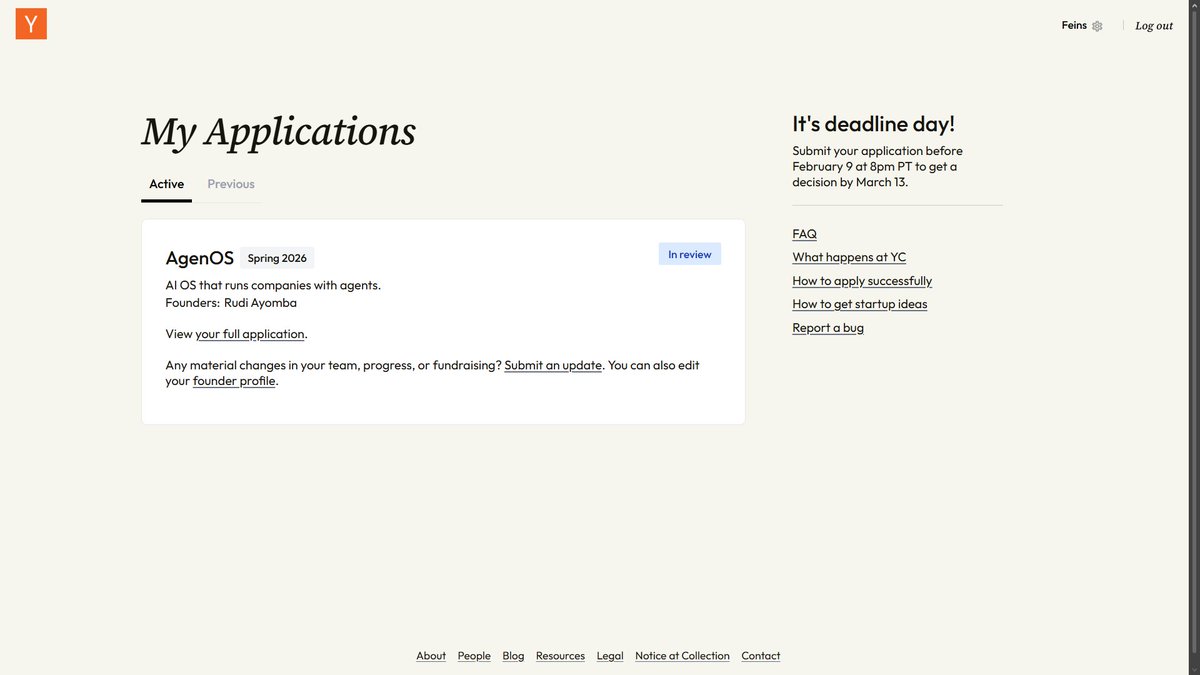
YC spring 2026 batch dateline is today. I applied as a 16y/o solofounder hoping for something positive(Second application btw). Goodluck to all those who applied and will apply. Hope I'll have the opportunity to me some of you guys at the batch🤣.
Reminder to 16-25 y/o grinding in 2026:
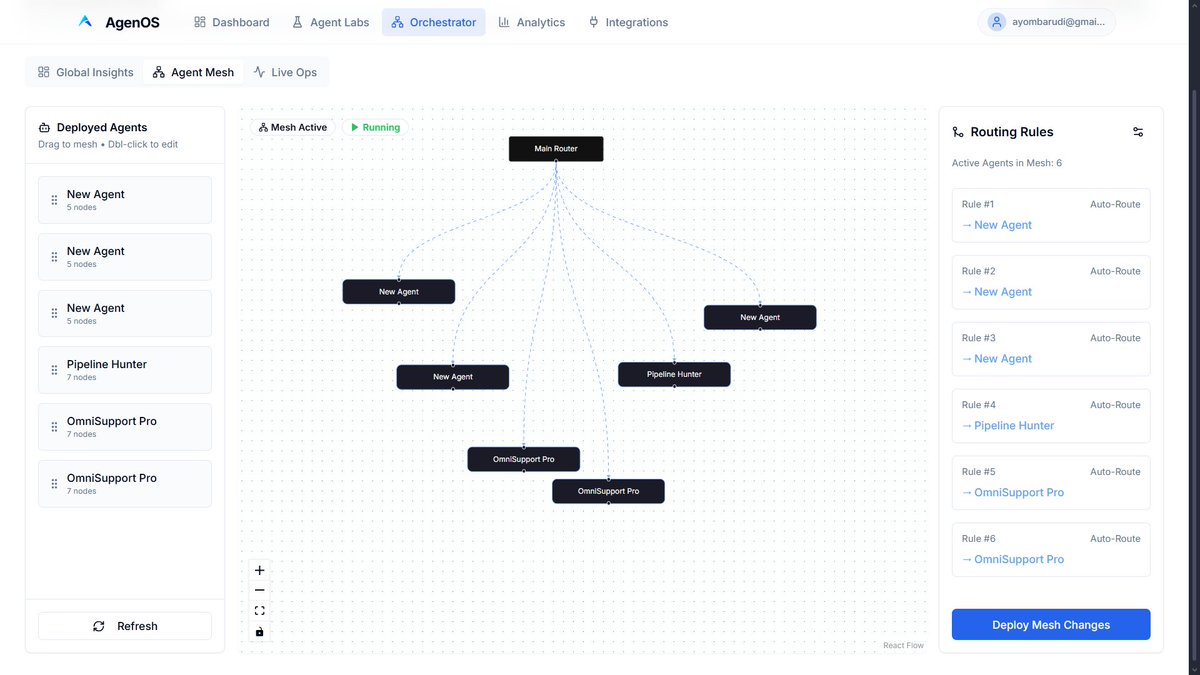
You don't need a massive team — orchestrate a swarm of AI agents and you're outpacing Fortune 500s.
Age + relentless shipping + multi-agent smarts = unfair advantage.
While others debate hype vs ROI, you're building the future.
Quick question for anyone deploying AI agents in production this year:
What was the one architecture choice that made scaling 10x easier?
(Multi-agent frameworks? Better guardrails? On-chain verification like ERC-8004 vibes?)
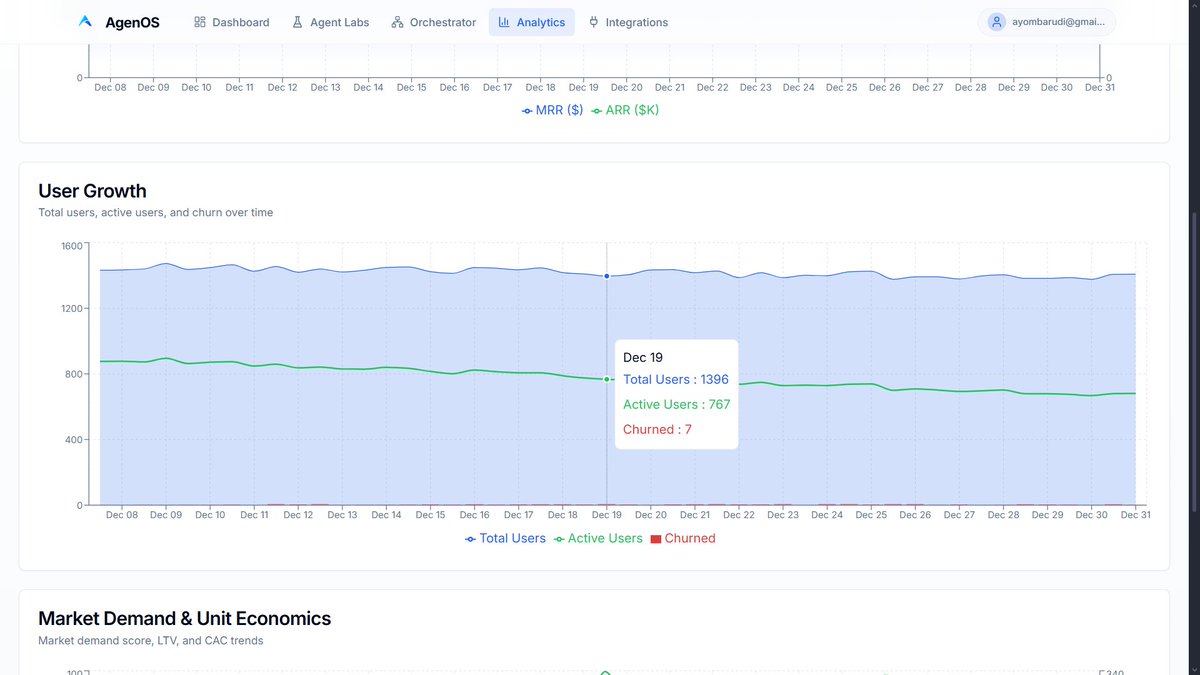
Tick-tock. AgenOS v1 is almost ready.
Every day, we get closer to unleashing the AI workforce that will transform how teams work.
The wait is almost over. Some few weeks to go
Tick-tock. AgenOS v1 is almost ready.
Every day, we get closer to unleashing the AI workforce that will transform how teams work.
The wait is almost over.
Mid-January check-in: How's your 2026 momentum actually feeling?
(Be honest — hype, burnout, steady grind, chaos?)
Mine's 60% excitement, 40% 'why did I think this was a good idea'
What's your split?
Reminder: You're young, broke, and building something most people think is impossible?
That's not a disadvantage — that's your unfair advantage.
Keep shipping. 2026 rewards the relentless. You don't need everyone to believe in you. You just need one person.
2026 hot take: Companies won't hire 100 employees anymore.
They'll hire 5 humans + 50 coordinated AI agents.
AgenOS is the OS making that real.
The waitlist just opened first 100 get 10% lifetime off
https://t.co/yrut4sLDi7
Who's ready to build the future? #FutureOfWork#AI
The next workforce won’t be human vs AI.
It’ll be humans + coordinated AI agents.
We just opened the waitlist for AgenOS, the OS for AI workforces.
Join here 👇 Up to 10% off for the first 100 subscribers
https://t.co/WGC0yKgQ9e