AgentMesh is positioned as an AI-driven cross-chain intent layer: users only need to describe the results, and the agent will bid and execute in the background.
A friendly reminder for developers: Include your strengths in the strategy interpreter:
• Which chains offer superior liquidity?
• How do you define "unacceptable risk"?
• What SLOs are you willing to commit to? Transparency is key to selection.
"Analysis of the phase:
— A "fast but unstable" strategy is no longer popular in bidding;
— A "stable but expensive" strategy, if clearly explained, will be chosen by more users;
— Reputation scores are very sensitive to "long-termism."
This is the significance of marketization."
"Access self-testing for proxies is now open:
— SDK installation and check-in
— Minimal intent execution drill
— Latency and error reporting
We care about: success rate, compensatory retries, and completeness of explanation."
Today's takeaway: Stability and predictability take precedence over "occasional brilliance."
What the on-chain world needs is engineering rationality—not fleeting fireworks. ✨
To become a successful agent, what you need is not "mysticism," but three things:
— Strategy (your expertise in routing, arbitrage, and risk management)
— Engineering (multi-chain RPCs, monitoring, and alerting)
— Reputation (delivering results as promised)
With these three elements in place, the market will naturally make room for you.
We will clearly specify the "applicable/inapplicable" scenarios in our documentation;
Incorrect choices are more common than technical flaws, and honesty is a more efficient way to collaborate.
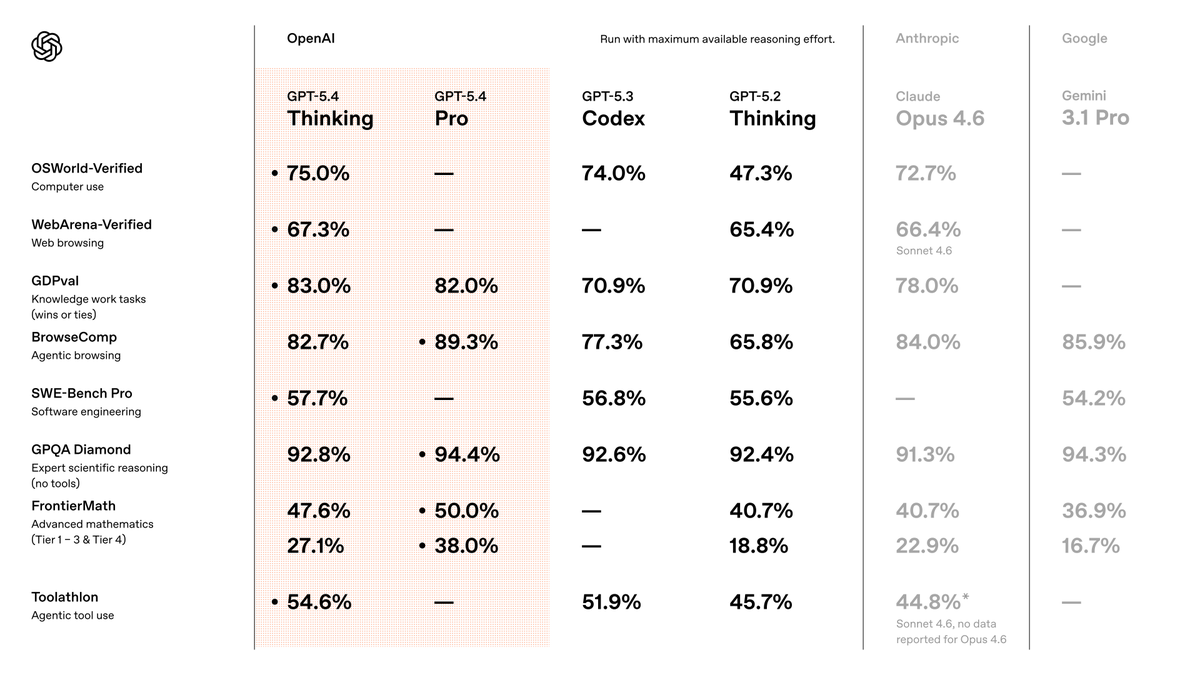
GPT-5.4 Thinking and GPT-5.4 Pro are rolling out now in ChatGPT.
GPT-5.4 is also now available in the API and Codex.
GPT-5.4 brings our advances in reasoning, coding, and agentic workflows into one frontier model.
"A word of truth for enterprise users: SLO (Success Rate/Latency) is designed, not something you pray for.
We're willing to customize metrics based on business scenarios, rather than telling a story with a PowerPoint presentation."
Some projects pursue a "magical one-step routing solution," while we pursue "multiple explainable solutions."
More or less is not a black-and-white issue, but rather something that can be compared.
Why settle for isolated AI when you can have a collaborative network? 🤖🤝
@AgentMeshcoin is connecting autonomous agents to create a smarter, more resilient decentralized ecosystem.
Stay ahead of the curve with @AgentMeshcoin.
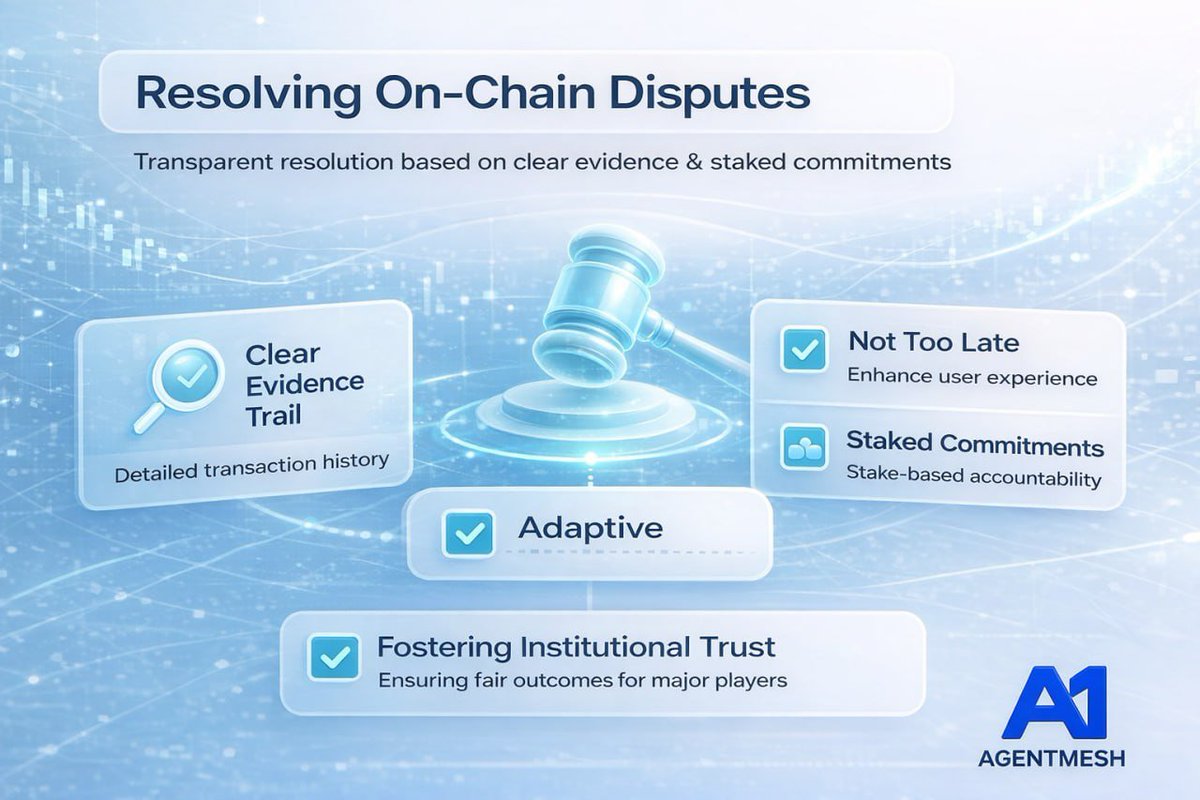
"Another thing we can bring to the market: 'Disputes are adjudicateable.'
When the chain of evidence is sound, the explanations are clear, and the parties involved have collateral, disputes are no longer shrouded in mystery. This is especially important for institutional users."
Q&A: What if the target chain remains congested within the window?
A: Three strategies are provided:
A. Most economical: Lengthen the window and wait for a suitable opportunity;
B. Most robust: Replace the chain/bridge, increasing the budget;
C. Most decisive: Cancel and rollback. Users choose according to their business needs; we do not make the decisions for you.
[7 Details of Observability Insights from a Cross-Chain Exchange]
Entry Parameter Verification: Slippage/Term/Asset Whitelist;
Plan Generation: Candidate Path × Reputation × Congestion Priority;
Pre-Execution Check: Bridge and DEX Availability and Health;
Segmented Submission: Key Segment Signatures and Minimum Public Area;
Failure-Based Rollback: Triggering Conditions and Reversal Order;
Evidence Packaging: Bypass Evidence + Explanation Token;
Exit Ledger: Fee Decomposition and Comparison of Plan Deviations;
What you see, we see too.
"Observability is our bottom line:
• Every execution has a traceable step number;
• Each segment has a success/failure reason and timestamp;
• Any rollback comes with a human-readable explanation. It's not for engineers, it's for users. 🔍"
"Test findings (in phase):
— Premature rollback incurs unnecessary undo costs;
— Late rollback makes users 'think they're still waiting';
We adopt an adaptive rollback threshold: dynamically adjusted based on on-chain congestion signals and historical distribution."
Observability is our unwavering principle:
• Every execution has traceable step numbers;
• Each segment includes success/failure reasons and timestamps;
• Any rollback is accompanied by a human-readable explanation.
This isn't for engineers; it's for the users.
"Cross-chain atomicity" is not just a slogan, but a set of engineering disciplines:
— Pre-condition checks (liquidity, fees, confirmation window)
— Segmented commits and rollback upon failure
— State reconciliation and evidence preservation. The benefits are clear: either everything succeeds or everything is refunded, leaving no "gray areas."