ΓΙΩΡΓΟΣ ΣΕΦΕΡΗΣ: Σβήνοντας κανείς ένα κομμάτι από το παρελθόν, είναι σαν να σβήνει κι ένα αντίστοιχο κομμάτι από το μέλλον. Η μνήμη όπου και να την αγγίξεις πονεί.
Ο Γιώργος Σεφέρης (πραγματικό όνομα Γεώργιος Σεφεριάδης) γεννήθηκε στις 13 Μαρτίου 1900 στη Σμύρνη της Μικράς Ασίας, η οποία τότε ανήκε στην Οθωμανική Αυτοκρατορία και σήμερα είναι η Σμύρνη (İzmir) της Τουρκίας.
ΙΩΑΝΝΗΣ Ε ΠΑΛΑΙΟΛΟΓΟΣ - John V Palaeologus
John V Palaiologos, liderlik edemeyen çözüm bulamayan bir imparatordu. Orduyu ve savunmayı organize etmeye çalışmak yerine sürekli Batı'dan yardım arıyordu. Papa, Venedikliler, Bulgarlar, Türkler ve kendi halkı tarafından defalarca aşağılanmıştır.
John V Palaiologos'un altın [Hyperpyron-Çukur Bizans] sikkeleri, Bizans imparatorları için darb edilen son altın sikke serisindendir.
🔗https://t.co/hiEaZBZ99T
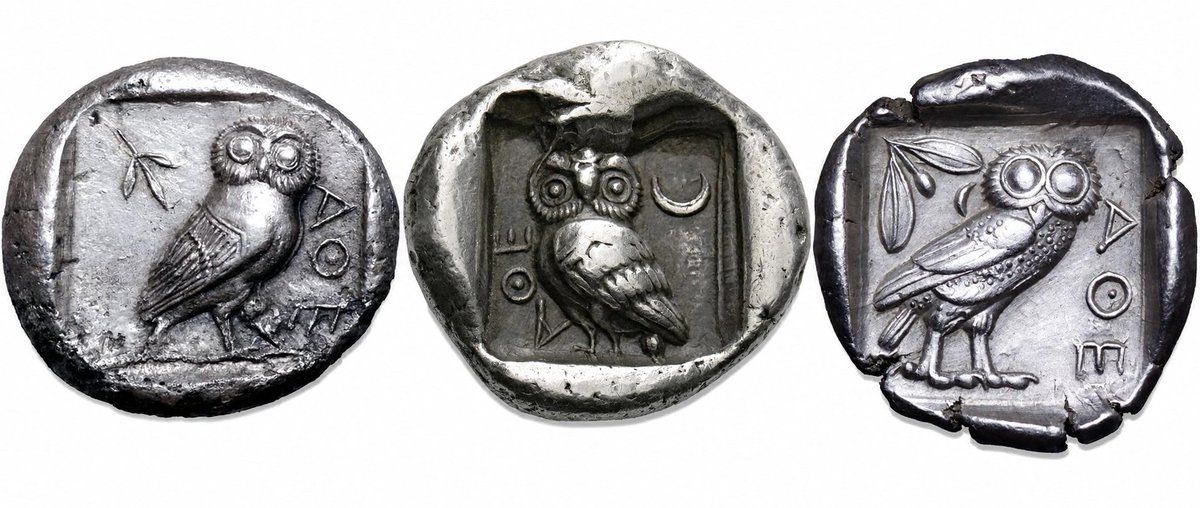
Athens was one of the few Greek cities with significant silver deposits in their immediate territory, a remarkable stroke of fortune upon which Xenophon reflected: The Divine Bounty has bestowed upon us inexhaustible mines of silver, and advantages which we enjoy above all our neighbouring cities, who never yet could discover one vein of silver ore in all their dominions.
The mines at Laurion had been worked since the bronze age, but it would be only later in 483 that a massive new vein of ore would be discovered that enabled Athens to finance grand new schemes such as the construction of a fleet of 200 triremes, a fleet that would later prove decisive in defending Greece at the Battle of Salamis.
#Greek Aeolis #Myrina#İzmir#Aliağa#Çandarlı [Elaitikos]
Myrina'nın stephanophorik sikkelerinde, ön yüzünde defne çelenkli Apollo başı yer alır; arka yüzünde de Apollo, sağa doğru tam figür halinde durur. Apollon'un ayaklarının dibinde şehrin geleneksel amblemi olan bir amfora ve bir ompholos bulunurken, şehrin etnik bayrağı [MYPINAIΩN] arkasından aşağı doğru uzanır.
Sikkelerde Apollon'un görünmesi, şehrin onun için önemini yansıtmaktadır; şehir öncelikle Gryneion'daki Apollon tapınağına yakınlığıyla biliniyordu [Pliny,22] ve bu yer Helenistik dönemin büyük bölümünde Myrina'nın etkisi altındaydı.
Isaac I Komnenos'un yeğeni General Alexios I Komnenos, Konstantinopolis'e yürüyerek ve III. Nicephoros'un tahttan çekilmesini sağlayarak iktidarı ele geçirdiğinde 24 yaşındaydı. MS 3. yüzyılın sonlarındaki daha başarılı asker imparatorlar gibi, Alexios I Komnenos'un güçlü eylemleri, o zamanlar çöküşün eşiğinde olan imparatorluğun hayatta kalmasını sağlayacaktı.
Alexios I Komnenos'un saltanatının tarihi, kızı prenses aynı zamanda Bizans tarihçisi Anna Komnene [ΑΝΝΑ ΚΟΜΗΝΕ / 1083-1153] tarafından 1148 civarında yazılmış ortaçağ tarihsel ve biyografik bir metin olan Alexiada'da [ΑΛΕΞΙΑΣ] anlatılmıştır.
🔗https://t.co/rKQodoydjN
Dio Cassius [68.9] and the authors of the Historia Augusta [Hadrian 10.2-11.1] both comment on Hadrian’s belief that the army should be run strictly, frugally and efficiently. The latter gives the impression that #Hadrian was a stickler for details, and that he often scrutinised military documents.
They further note that he led by example, sharing in the privations of the common soldier by eating the same food, by living simply when in their presence, and often by marching twenty miles per day in full armour to provide a good example.
His skills as a military administrator were well applied during his reign, and aside from the consolidation of the empire’s frontiers, #Hadrian also made a great many beneficial reforms to the Roman military system, including the introduction of the first regular unit of auxiliary, mailed cataphract cavalry, the ala I Gallorum et Pannoniorum cataphractata, whose primary armament was a heavy lance far more effective than a regular cavalry spear, capable of puncturing two layers of chain mail.
Constantine IX Monomachos
ΚΩΝΣΤΑΝΤΙΝΟΣ Θ Ο ΜΟΝΟΜΑΧΟΣ
Uzun ve etkileyici tarihi boyunca Bizans İmparatorluğu, Bizans'ı kaosa ve yıkıma sürükleyen birçok kötü imparatora ev sahipliği yapmıştır. Alexios IV Angelos ve Phokas gibi birçok aday en kötü imparator unvanını hak ederken, en kötü Bizans imparatorlarından biri, hatta belki de en kötüsü olarak gözden kaçmış bir imparator daha vardır o da Constantine IX Monomachos'tur.
🔗https://t.co/JqybVXP1Mo
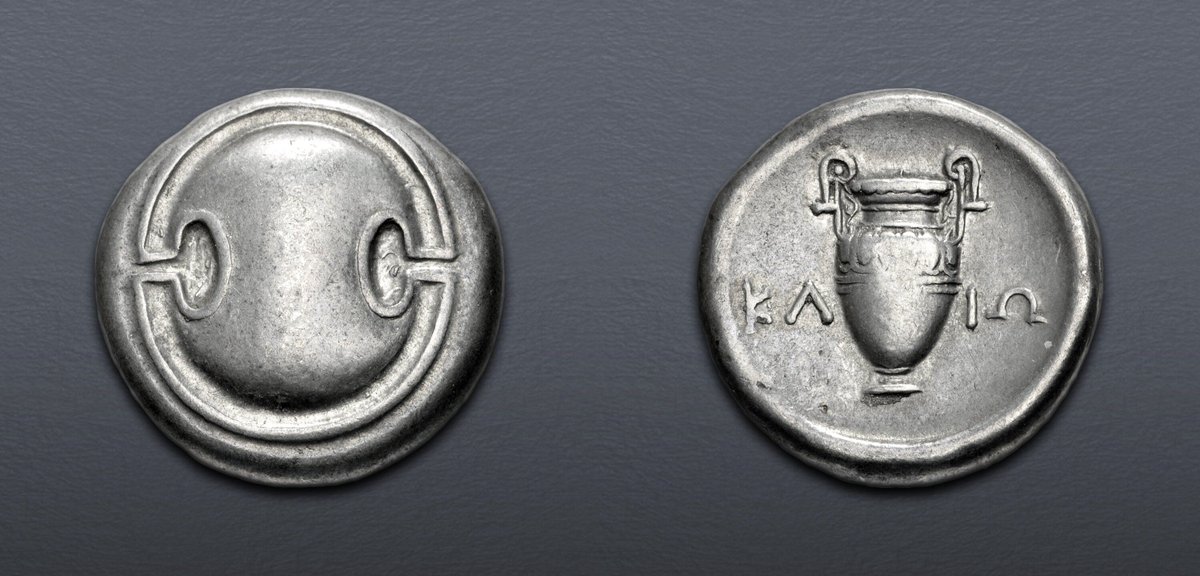
For a few decades in the mid-fourth century BC, Thebes was the dominant power on the #Greek mainland, with its coinage nearly supplanting the owls of #Athens and the pegasi of Corinth as the primary medium of trade.
Leo V the Armenian. 813-820. AV Solidus (19.5mm, 4.40 g, 6h). Constantinople mint. Struck 11 July-25 December 813. EF. Among the finest known. Very rare.
Auction Highlight: Lot 912 from【Feature Auction 132】, May 18-19, 2026..
.
.
#cng#auction#cng132#coin#history#art#gold #byzantine #solidus
This unusual reverse combines Peace and Nemesis as the personification of the fear of divine vengeance, prescribing moderation and self-restraint for Vespasian.This posture is intended to lead to triumph, here most probably Vespasian's subjugation of Judaea, and eventually peace.
Vespasian. AD 69-79. AV Aureus (20mm, 7.10 g, 6h). Lugdunum (Lyon) mint. Struck AD 72. Good Fine.
Lot 723 from【E-Sale 612】, ends July 1, 2026, 10 AM EDT.
#cng#auction#history#art#gold
The reason for the assassination remains debated, however Aristotle states it was due to a personal familial offense. Perhaps Alexander the Great was simply lucky and like so many famous leaders a consummate opportunist 🤔
There is a short just up on Youtube suggesting that Alexander the Great was one of the conspirators in the assassination of his father Philip II in 336BC. This is a short thread explaining why the evidence strongly suggests he was not implicated 🧵https://t.co/OUNCkng2eD
#MosaicMonday - Mosaic of the Judgment of Paris, from Antioch on the Orontes (Antakya, Turkey). Dated AD 115-150. This panel was placed on the floor of a dining room, which was redone shortly after AD 115, following a devastating earthquake that ravaged Antioch. Inspired by Hellenistic Greek painting, the artist worked in opus vermiculatum, transforming stone and glass into a vivid “painting” for the floor.
This exquisite mosaic captures the legendary moment that set the Trojan War in motion. The Trojan prince Paris is asked to judge which of three goddesses, Hera, Athena, or Aphrodite, is the fairest. Entrusted with a golden apple inscribed “to the fairest,” Paris ultimately awards it to Aphrodite, who promises him the love of Helen of Sparta. Grape and ivy leaves, birds, insects, and theatrical masks frame the mythological scene.
Louvre Museum, Paris.
@gezilesiyerler_ Antik kent ayrıca filozof Epiktetos'un [ΕΠΙΚΤΗΤΟΣ] doğum yeridir. Hierapolis'teki Apollon Lairbenos tapınağı Strabon ve Plinius'a göre zehirli gazlar içeren ve yalnızca Magna Mater [Leto] rahiplerinin güvenli bir şekilde girebildiği bir mağaranın üzerine inşa edilmiştir.
Η Νατάσα Θεοδωρίδου θα εμφανιστεί στην Κωνσταντινούπολη στις 7 Ιουνίου σε μια μεγάλη συναυλία.
📍Στο Θέατρο Harbiye Cemil Topuzlu Open Air [Ανοιχτό Θέατρο Χαρμπιγιέ].
@Knjiga6776 Tesalya atları, Lakedaimonlu [Spartalı] kadınlar ve kutsal Arethusa'dan su içen adamlar. Strabon [10.1.13], bir kahinin bu sözlerini bize Yunanistan'ın en güzel üç şeyi olarak aktarır.




![AntikSikkeler's tweet photo. ΙΩΑΝΝΗΣ Ε ΠΑΛΑΙΟΛΟΓΟΣ - John V Palaeologus
John V Palaiologos, liderlik edemeyen çözüm bulamayan bir imparatordu. Orduyu ve savunmayı organize etmeye çalışmak yerine sürekli Batı'dan yardım arıyordu. Papa, Venedikliler, Bulgarlar, Türkler ve kendi halkı tarafından defalarca aşağılanmıştır.
John V Palaiologos'un altın [Hyperpyron-Çukur Bizans] sikkeleri, Bizans imparatorları için darb edilen son altın sikke serisindendir.
🔗https://t.co/hiEaZBZ99T](https://pbs.twimg.com/media/HL_8WSJW8AAsElk.jpg)
![AntikSikkeler's tweet photo. #Greek Aeolis #Myrina
#İzmir #Aliağa #Çandarlı [Elaitikos]
Myrina'nın stephanophorik sikkelerinde, ön yüzünde defne çelenkli Apollo başı yer alır; arka yüzünde de Apollo, sağa doğru tam figür halinde durur. Apollon'un ayaklarının dibinde şehrin geleneksel amblemi olan bir amfora ve bir ompholos bulunurken, şehrin etnik bayrağı [MYPINAIΩN] arkasından aşağı doğru uzanır.
Sikkelerde Apollon'un görünmesi, şehrin onun için önemini yansıtmaktadır; şehir öncelikle Gryneion'daki Apollon tapınağına yakınlığıyla biliniyordu [Pliny,22] ve bu yer Helenistik dönemin büyük bölümünde Myrina'nın etkisi altındaydı.](https://pbs.twimg.com/media/HLqneusXsAAk9gG.png)
![AntikSikkeler's tweet photo. Isaac I Komnenos'un yeğeni General Alexios I Komnenos, Konstantinopolis'e yürüyerek ve III. Nicephoros'un tahttan çekilmesini sağlayarak iktidarı ele geçirdiğinde 24 yaşındaydı. MS 3. yüzyılın sonlarındaki daha başarılı asker imparatorlar gibi, Alexios I Komnenos'un güçlü eylemleri, o zamanlar çöküşün eşiğinde olan imparatorluğun hayatta kalmasını sağlayacaktı.
Alexios I Komnenos'un saltanatının tarihi, kızı prenses aynı zamanda Bizans tarihçisi Anna Komnene [ΑΝΝΑ ΚΟΜΗΝΕ / 1083-1153] tarafından 1148 civarında yazılmış ortaçağ tarihsel ve biyografik bir metin olan Alexiada'da [ΑΛΕΞΙΑΣ] anlatılmıştır.
🔗https://t.co/rKQodoydjN](https://pbs.twimg.com/media/HLp-wSsW0AAb91U.jpg)
![AntikSikkeler's tweet photo. Dio Cassius [68.9] and the authors of the Historia Augusta [Hadrian 10.2-11.1] both comment on Hadrian’s belief that the army should be run strictly, frugally and efficiently. The latter gives the impression that #Hadrian was a stickler for details, and that he often scrutinised military documents.
They further note that he led by example, sharing in the privations of the common soldier by eating the same food, by living simply when in their presence, and often by marching twenty miles per day in full armour to provide a good example.
His skills as a military administrator were well applied during his reign, and aside from the consolidation of the empire’s frontiers, #Hadrian also made a great many beneficial reforms to the Roman military system, including the introduction of the first regular unit of auxiliary, mailed cataphract cavalry, the ala I Gallorum et Pannoniorum cataphractata, whose primary armament was a heavy lance far more effective than a regular cavalry spear, capable of puncturing two layers of chain mail.](https://pbs.twimg.com/media/HLmqHYlWgAAHs3W.jpg)


