An experienced #HR professional currently Heading HR for key functions with one of the world's largest #Steel producer (Retweets do not imply endorsements)
U.S. farmers are intentionally flooding their fields to revive ancient "prairie potholes," creating temporary "pop-up" wetlands that deliver a huge boost to migratory birds while improving soil health.
In regions like California's Central Valley and the Mississippi Delta, innovative programs—most notably BirdReturns (launched by The Nature Conservancy in 2014)—pay farmers to strategically flood low-lying or post-harvest fields at precise times during bird migrations. These short-term wetlands mimic the natural prairie potholes and seasonal marshes that once dotted the landscape but were largely drained for agriculture.
By timing floods to align with peak migration periods (e.g., spring and fall for shorebirds, waterfowl, and sandhill cranes), farmers provide essential stopover habitat: shallow water, mudflats, and abundant food for millions of birds traveling along flyways like the Pacific Flyway. The approach has transformed tens of thousands of acres of working farmland into critical refueling stations, with studies showing dramatic increases in bird use and numbers—sometimes 3.5 times higher in these managed pop-up wetlands compared to standard fields.
Farmers also gain practical benefits. Seasonal flooding enhances soil structure, boosts nutrient cycling (as bird activity and water help break down residues), recharges groundwater, reduces erosion, and supports long-term land productivity—often without hurting crop yields in subsequent seasons.
This win-win model proves that modern agriculture and wildlife conservation can reinforce each other, turning productive farmland into flexible ecological assets that sustain both birds and resilient farming systems.
[The Nature Conservancy. BirdReturns: Creating Dynamic Habitat for Migratory Birds. The Nature Conservancy California]
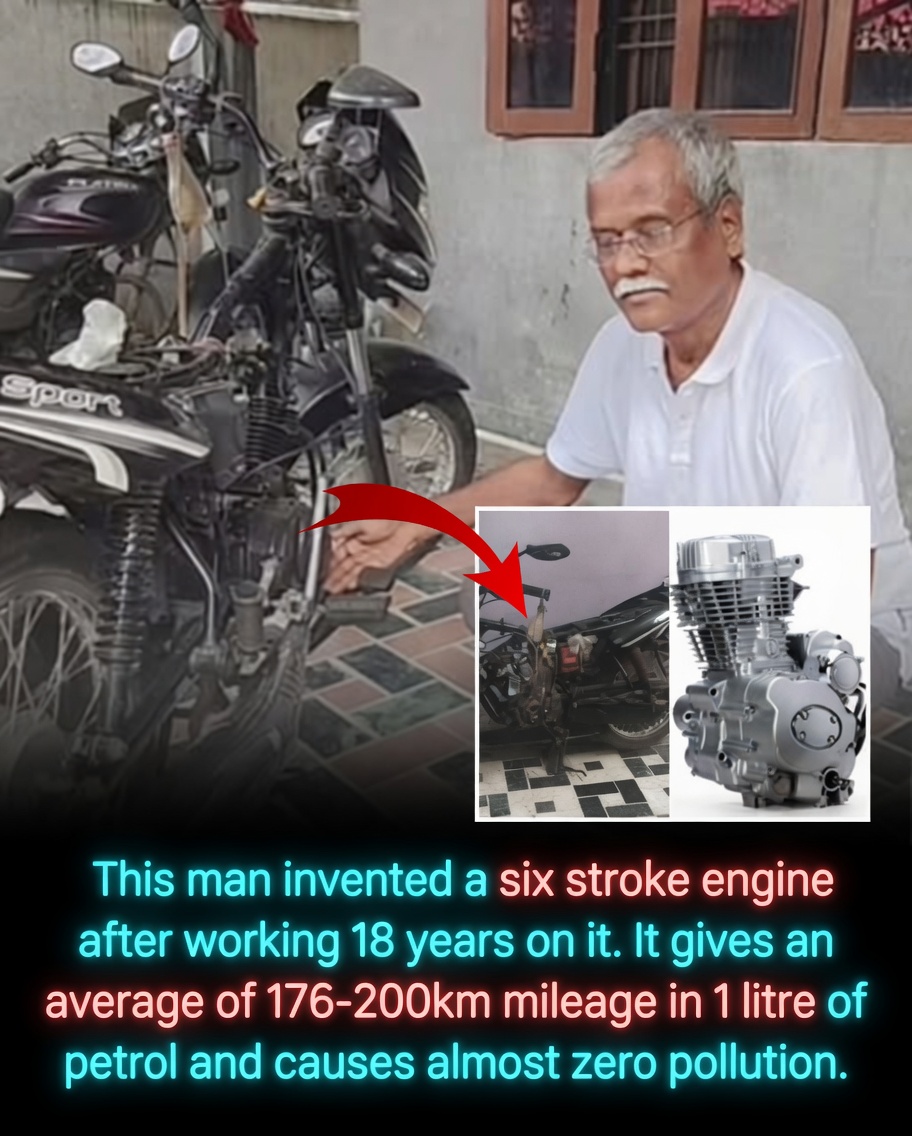
An inspiring story of perseverance has emerged from Prayagraj, India, where an alumnus of Allahabad University has developed a highly efficient six-stroke engine after nearly two decades of dedicated work.
Shailendra Singh Gaur, who graduated in 1983, spent 18 years refining his invention, often at great personal cost. He sold his land, shop, and even his house to fund the project, converting a rented space into a makeshift workshop. Drawing on technical experience gained at institutions such as Motilal Nehru National Institute of Technology and IIT (BHU), he created a prototype that he claims delivers an extraordinary 176 to 200 kilometers per liter of petrol on a modified 100cc motorcycle.
Unlike conventional four-stroke engines, Gaur’s six-stroke design aims to extract significantly more energy from the same amount of fuel. In one demonstration, the modified bike reportedly ran for 35 minutes on just 50 milliliters of petrol. The inventor states that the engine achieves up to 70% thermal efficiency, runs on multiple fuels, and produces near-zero pollution.
Gaur has already secured two patents for the technology, with more pending. If successfully scaled and independently validated, this innovation could dramatically reduce fuel consumption and emissions for motorcycles, cars, and other vehicles across India and beyond.
While the claims are remarkable and have generated significant excitement, further rigorous testing and peer review will be essential before widespread adoption. Nevertheless, Gaur’s story stands as a powerful example of individual determination and grassroots innovation in Indian engineering.
@TheOfficialSBI is there any issue with the site since yesterday. Despite top internet speed, the site takes time for transactions and hangs midway. Please clarify or confirm?
What an aesthetic and graceful anti-racist anthem from our Northeast!
Would be grateful if someone could help identify the producers. I got this as a forward on a family messaging group.
@Airtel_Presence Three days back your sales person took 1500 charges for providing optic firbe broadband connection but still not been operational. Please arrange to refund
In an important step for packaging steel in Europe, we have officially opened our new TCCT®️ Line: an advance REACH- compliant production line for sustainable food packaging in IJmuiden, Netherlands.
The line is designed for steel used in applications such as food cans and other food packaging. With this new line, we bring steel production, coating application and packaging material lamination together at one single site. This makes the process more efficient, more flexible and easier to control.
In this way, we continue to build reliable packaging steel that meets strict requirements for food safety, quality and regulation. Today and tomorrow.
Know more: https://t.co/jQfUc2Tnyk
#TataSteel #WeAlsoMakeTomorrow #TCCT #Packaging #Innovation
@amazonIN ordered same item second time as first one was undelivered and were informed 'item missing'. Second time for the last two days still shows as "out for delivery"
@FaberIndia i have made a complaint on Tuesday, still nobody to attend. Follow-up on what's app is of no respite, my product is covered under AMC then also poor service follow-up


![Rainmaker1973's tweet photo. U.S. farmers are intentionally flooding their fields to revive ancient "prairie potholes," creating temporary "pop-up" wetlands that deliver a huge boost to migratory birds while improving soil health.
In regions like California's Central Valley and the Mississippi Delta, innovative programs—most notably BirdReturns (launched by The Nature Conservancy in 2014)—pay farmers to strategically flood low-lying or post-harvest fields at precise times during bird migrations. These short-term wetlands mimic the natural prairie potholes and seasonal marshes that once dotted the landscape but were largely drained for agriculture.
By timing floods to align with peak migration periods (e.g., spring and fall for shorebirds, waterfowl, and sandhill cranes), farmers provide essential stopover habitat: shallow water, mudflats, and abundant food for millions of birds traveling along flyways like the Pacific Flyway. The approach has transformed tens of thousands of acres of working farmland into critical refueling stations, with studies showing dramatic increases in bird use and numbers—sometimes 3.5 times higher in these managed pop-up wetlands compared to standard fields.
Farmers also gain practical benefits. Seasonal flooding enhances soil structure, boosts nutrient cycling (as bird activity and water help break down residues), recharges groundwater, reduces erosion, and supports long-term land productivity—often without hurting crop yields in subsequent seasons.
This win-win model proves that modern agriculture and wildlife conservation can reinforce each other, turning productive farmland into flexible ecological assets that sustain both birds and resilient farming systems.
[The Nature Conservancy. BirdReturns: Creating Dynamic Habitat for Migratory Birds. The Nature Conservancy California]](https://pbs.twimg.com/media/HHfHV9iWoAA8GVU.jpg)