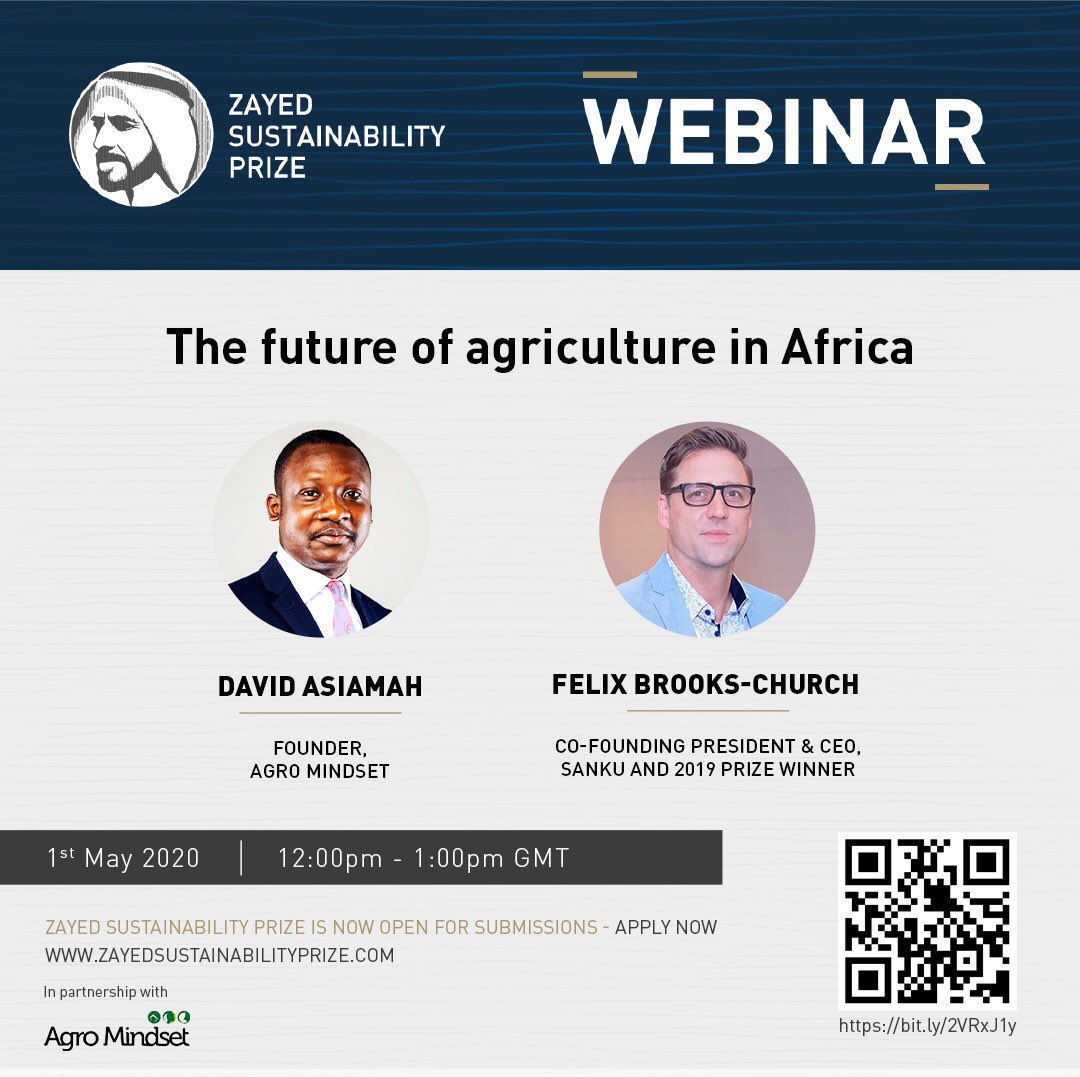
Make a date us as we drum home to the Zayed Sustainability Prize. Good companies will meet needs; great companies will create markets. #business#leadership#Zayed
Dumping birds into constituencies without synchronizing with market demand may flood local markets, depress prices, and hurt smallholder farmers already in the poultry business. Without a structured value chain (processing, distribution), excess supply may collapse margins.
Government to procure 3 million birds under 'Nkoko Nkitinkiti' project. Agriculture Minister Eric Opoku announces each constituency will receive 10,000 birds.
#3NewsGH#TV3GH
Poultry production is not just about acquiring birds. Feed accounts for up to 70% of production costs. Without a clear subsidy or strategy to stabilize feed supply (e.g., maize and soybeans), farmers may struggle to sustain the birds, leading to high abandonment rates.
Government to procure 3 million birds under 'Nkoko Nkitinkiti' project. Agriculture Minister Eric Opoku announces each constituency will receive 10,000 birds.
#3NewsGH#TV3GH
FOOD IS EXPENSIVE but why?
Breakdown from a tomato farmer.
Currently, the largest box of tomatoe as seen in this picture with the Asante Akyem MP is GHS500.
Truck Drivers charge betwen 50-60 cedis to transport 1 box from Agogo to Accra.
At the Dome Market in Accra, the white Olonka of Tomato in frame 2 sells for minimum 150 cedis.
From one large box, a vendor can get between 40-45 Olonka.
150 cedis x 40 Olonka =6,000
So from the farm community to Accra in less than 200Km, tomato value increases from GHS 500 to GHS6,000.
Consider all other factors but..where’s the problem coming from?
I’m discussing rising prices of basic street food in Ghana, despite some farmers selling at cheaper prices.
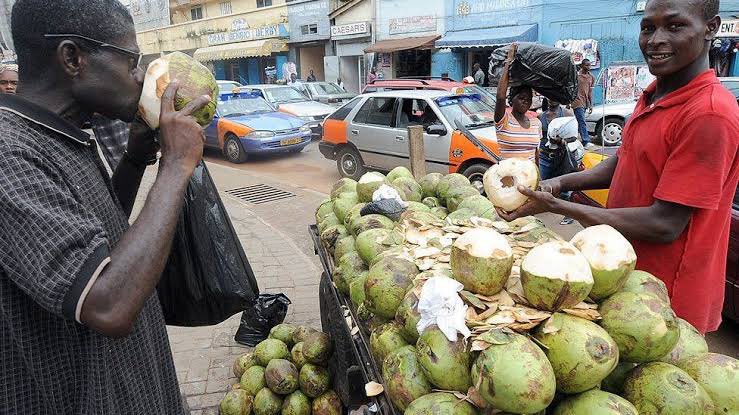
A coconut farmer and trader from Gomoa Afransi gave us a breakdown of the coconut business.
Famers in Gomoa sell 100 pieces of coconut for GHC120. That means the farm gate price of one coconut is GH1.20 pesewas as at September 2025.
Farmer makes GHS 3,600 for 3,000 pieces of coconuts.
The distributors purchase 100 pieces for GHS120 then pay the pluckers, the carriers and load each truck with 3,000 pieces of coconuts. A truck driver from Gomoa to Accra for instance is paid GHS1,800. That cost is by their trade custom, borne by the distributors.
The distributors therefore sell to the retailers for GHS 3.20 for a piece of coconut. That means a GHS2 addition to the farmgate price.
A distributor makes GHS9,600 for the 3,000 pieces his operational cost inclusive.
Then come retailers and the selling joints.
Coconut is currently selling at between 7-10 cedis.
The 3,000 pieces of coconut for 8 cedis a piece is 24,000.
The difference between farmer income GHSS3,600 (for one truckload) and market seller GHS24,000 is GHS 20,400.
Do The Maths.
Governments, NGOs, and private sector organisations can offer resources and support where needed, facilitating equitable access and empowering communities to harness AI’s full potential.
Technology solutions must respect indigenous land rights or local farming traditions, rather than imposing one-size-fits-all models that can lead to social conflict and environmental degradation.
Achieving good AI governance in agriculture involves multiple approaches, the first of which is stakeholder engagement. Farmers, especially marginalised smallholders, indigenous communities, scientists, policymakers, and consumers should all be involved in decision-making...
As we are beginning to see in different sectors, over-reliance on AI could reduce human expertise and decision-making skills. It could also increase social exclusion, where unequal access to AI tools deepens the inequalities already suffered by some rural and marginalised areas.
The ransomware attack on JBS, one of the world’s largest meat suppliers, forced temporary shutdowns of multiple facilities in North America and Australia, disrupting the supply chain, delaying meat production, and raising food security concerns.
Cybersecurity threats are also serious concerns, as hackers could target supply chain systems, manipulate data, and compromise food safety, disrupting operations or causing widespread contamination.
A lack of transparency can negatively impact consumer trust and damage the reputation of businesses and governments involved in food systems. E.g., suppose a government employs AI to monitor food safety but fails to disclose the data use, its collection, and how it is managed.
Sensitive data collected from farmers or consumers could be misused, leading to privacy violations or exploitation by technology providers or untrustworthy third parties.
There are risks associated with using AI without proper oversight and governance. Biased algorithms may favour large-scale farms or regions, marginalising smallholders and indigenous communities.
Innovations such as soil sensors, satellite imagery, AI-powered crop management tools, disease monitoring and prediction, supply chain traceability systems, and weather forecasting models are transforming traditional farming and food production.