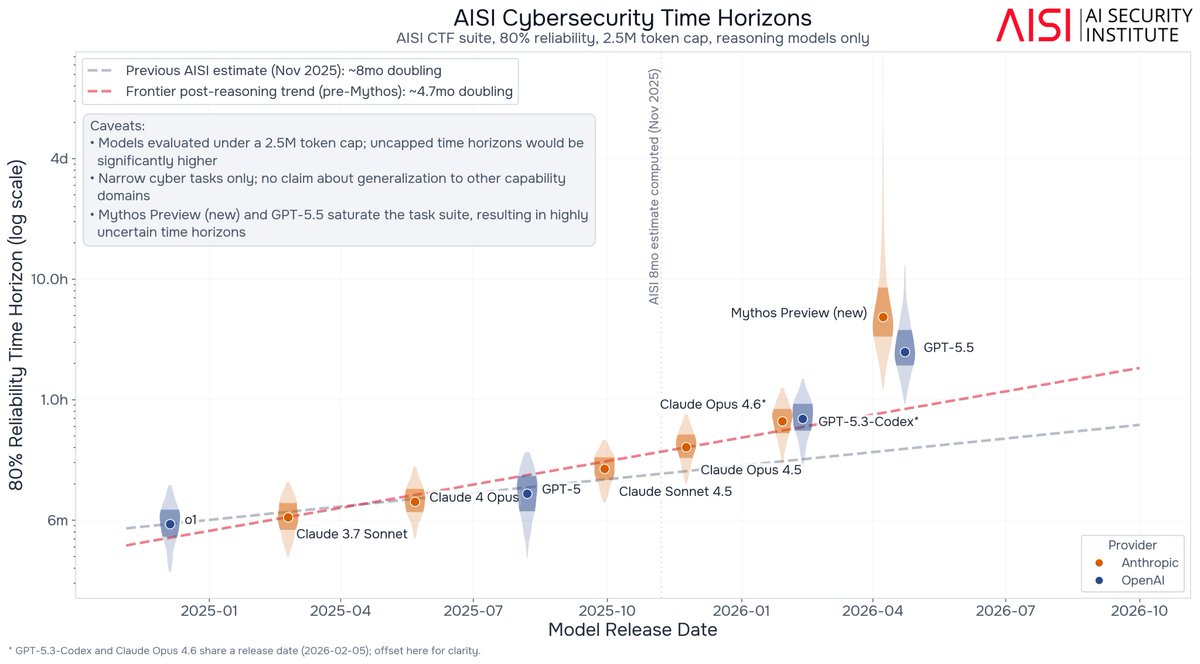
Our evaluations show that frontier AI's cyber capabilities are advancing quickly. The length of cyber tasks frontier models can complete has been doubling every few months, and this rate has become faster over time, with recent models exceeding our previous trends. 🧵
We know AI systems occasionally act against their operators’ intentions – but what in their environment causes them to do so?
In a new paper, we make progress on this question 🧵
We (@AISecurityInst) tested GPT-5.5 for its cyber capabilities and safeguards. It's the strongest performing model we've tested on our narrow cyber tasks and solved one of our cyber ranges in 1/10 attempts. We found a universal jailbreak with 6 hours of expert red teaming.
Disturbing anecdotal reports of "AI psychosis" and negative psychological effects have been emerging in the news. But what actually happens during these lengthy delusional "spirals"? In our preprint, we analyze chat logs from 19 users who experienced severe psychological harm🧵👇
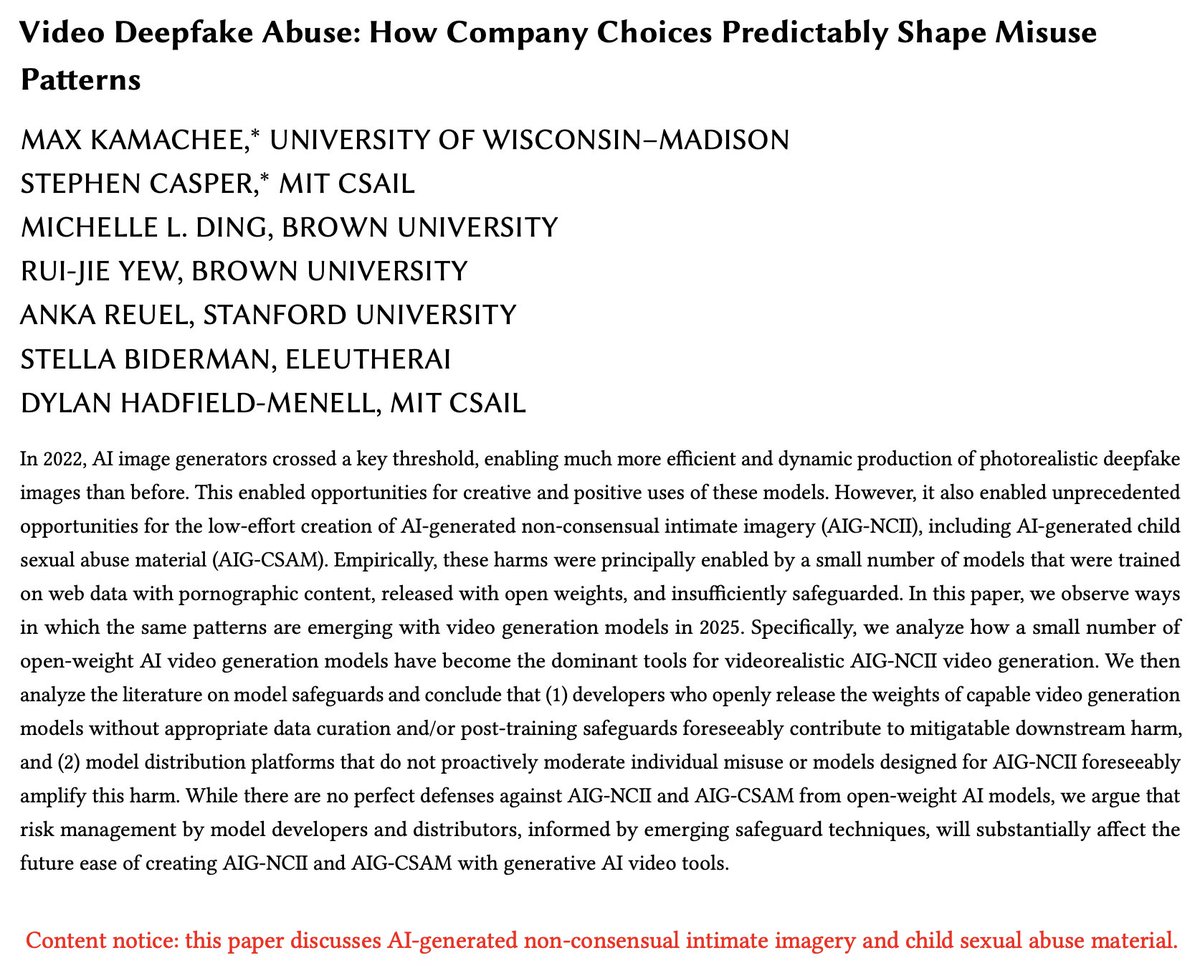
Did you know that one base model is responsible for 94% of model-tagged NSFW AI videos on CivitAI?
This new paper studies how a small number of models power the non-consensual AI video deepfake ecosystem and why their developers could have predicted and mitigated this.
🤝 You���ll work with 2 other researchers and in collaboration with other gov departments. The first project is to create a problem book of methods to reduce these risks (building on https://t.co/rLBqhCZSZy). Crucially, you are not expected to view sensitive material directly.
🛠️ This is a technical role for an applied ML or security engineer. The work we anticipate could include building scalable ways to detect malicious LoRAs, exploring data filtering and other methods for reducing malicious fine-tuning, and other technical methods.
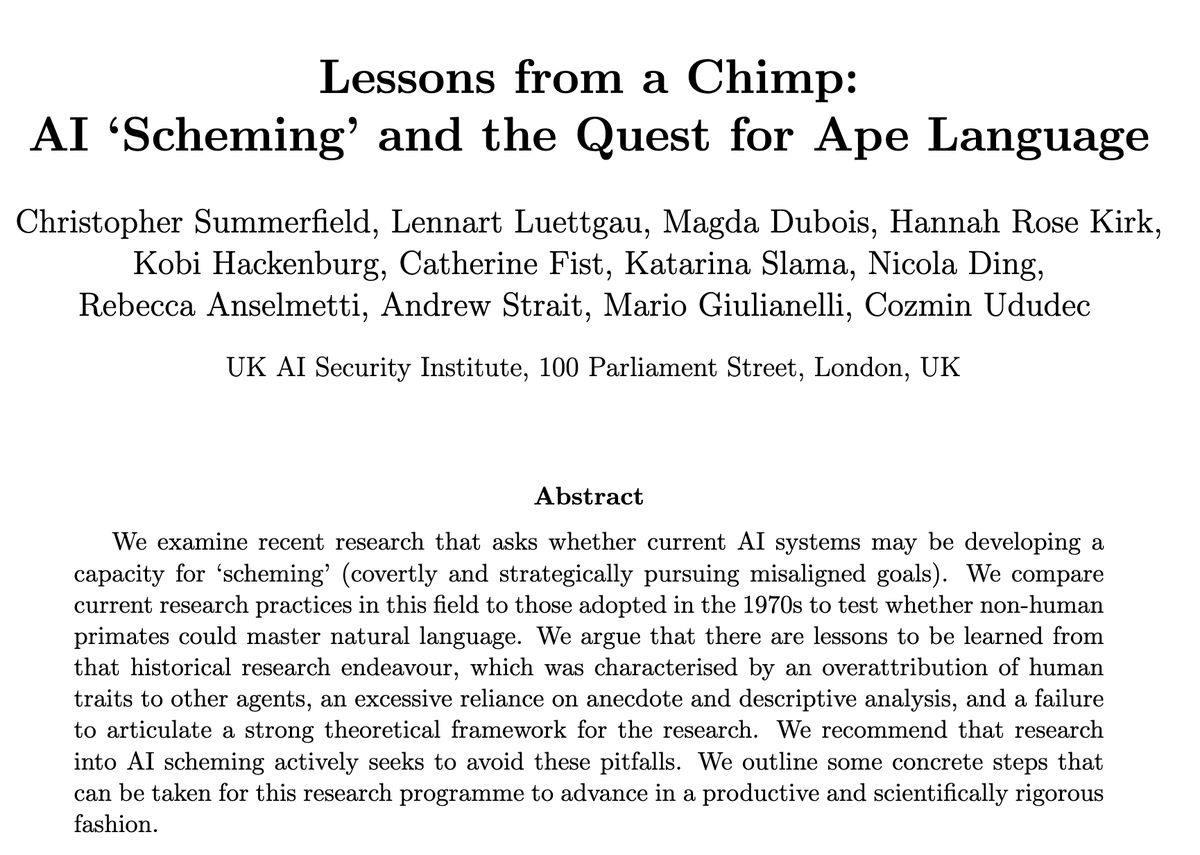
In a new paper, we examine recent claims that AI systems have been observed ‘scheming’, or making strategic attempts to mislead humans. We argue that to test these claims properly, more rigorous methods are needed.
Newest @reboot_hq 🎙️post: @jessicadai_ and I discuss forecasting, and how people present unhelpful narratives about the future (mostly by picking on AI 2027, sorry guys)
Why we should view the future as constructed, not predicted
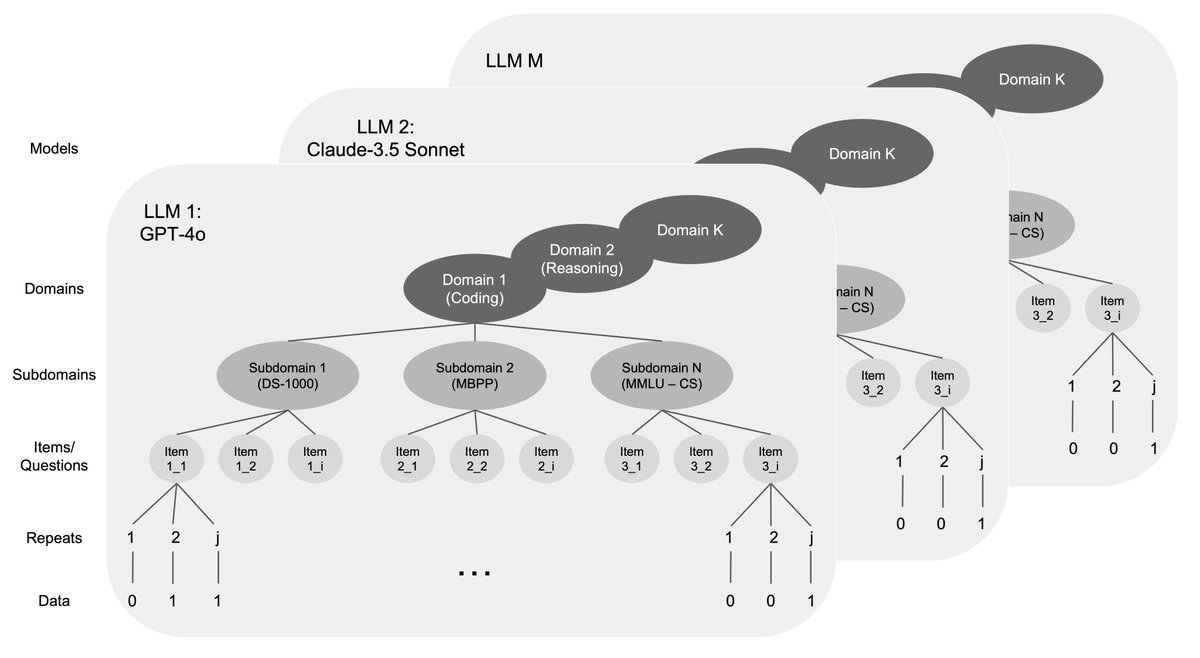
Advanced AI systems require complex evaluations to measure abilities, but conventional analysis techniques often fall short.
Introducing HiBayES: a flexible, robust statistical modelling framework that accounts for the nuances & hierarchical structure of advanced evaluations.
How will AI impact the economy? Can we defend against misuse? What policies would mitigate the risks of AI?
Thrilled to share that @random_walker and I are writing another book to tackle these questions! Today, we release a paper laying out our argument: AI as Normal Technology.
I too find this really weird, mainly in that it shows the frontier of AI research is at risk of moving further away from producing useful, safe, reliable products. These seem like features, not bugs.
We've funded 20 new research projects to enhance AI security in critical infrastructure ⚡
Our Systemic AI Safety Grants Programme, announced at the Seoul AI Summit, has awarded up to £200,000 seed grants to projects tackling AI risks 🧵👇
A great thread re: problematic extrapolations on claims about AI being superhuman at tasks.
1. Coding =/= all computer-related tasks, let alone all tasks
2. Generating code to complete a task =/= the most efficient, secure way to complete a task.
This tweet is misleading. State-of-the-art AI models struggle at some tasks that take humans <10 minutes, while *simultaneously* excelling at some tasks that would take humans several hours or days to solve.
@peterwildeford Presumably they'll be similar kinds of answers as the last industrial revolutions, i.e. social innovations like labour protections, the 5 day work week, etc. that balanced societal interests with the interests of employers?
These include undesirable automation, over-reliance on AI systems, mental health impacts, mass generation of unreliable content, power concentration, and social destabilisation...and so much more.
I'll do a longer post about the new role, but in short, we're building a research team, funding programme, and partnerships to tackle crucial questions about advanced AI's societal impacts. We'll track how AI is being used across critical sectors, and study societal-level risks.