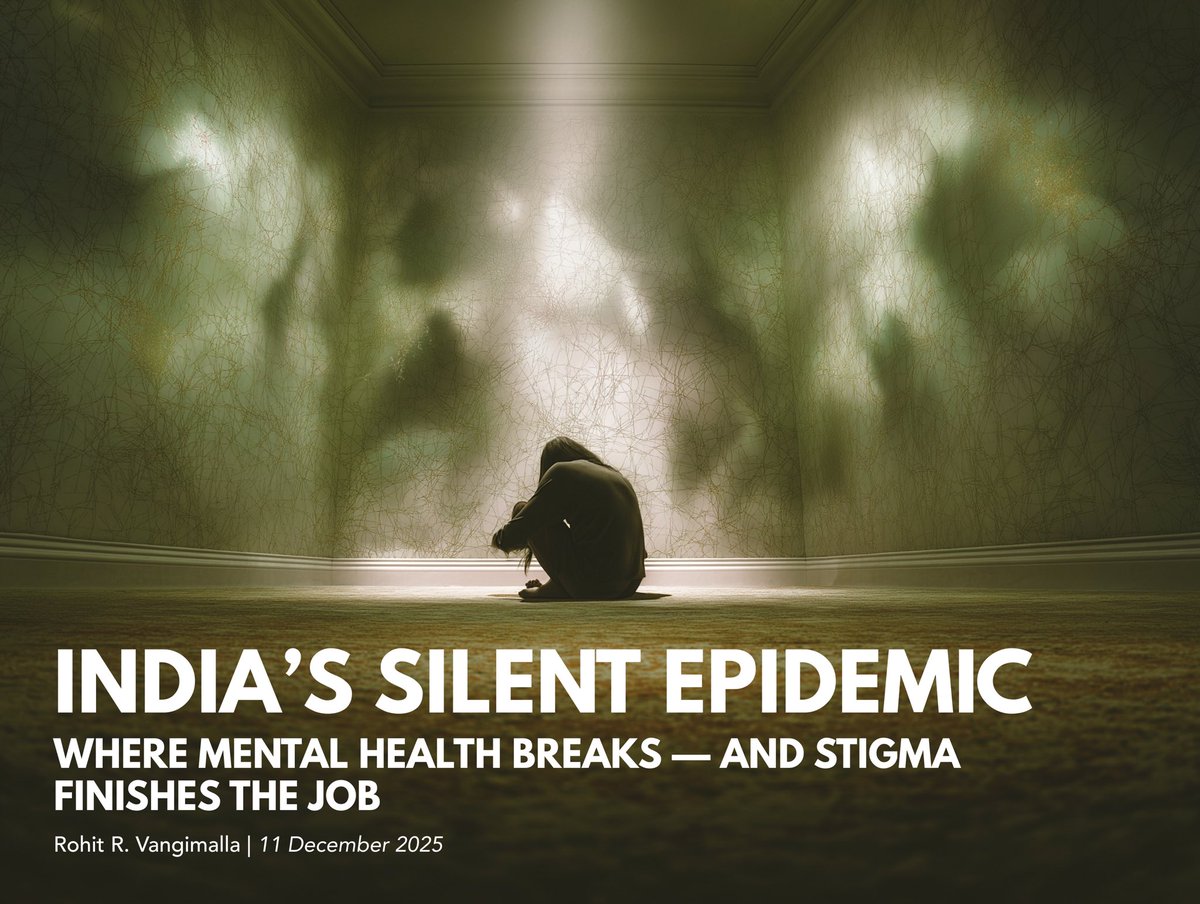
This isn’t a story.
It’s an autopsy.
Of a boy who was failed beautifully by every system meant to save him.
Dreams Never Told — now live.
Read it slowly. Or don’t. But don’t say you weren’t warned.
View/ Download here ➡️ https://t.co/WevvYfYh2w
#DreamsNeverTold
#MentalHealthMatters #HighFunctioningDepression
#GriefIsLouderThanAddiction #addiction #depression #RecoveryPosse
Recovery rarely fails loudly.
It drifts through small permissions that feel reasonable at the time.
The work isn’t dramatic.
It’s precise, daily, and often invisible — which is why it’s easy to misunderstand until it’s gone.
#AgainstTheBottle#RecoveryRealism#SobrietyJourney #InnerDiscipline
Recovery doesn’t collapse in chaos.
It erodes inside quiet permission.
The mind rarely argues for ruin. It knows better than to show up with a wrecking ball and a formal invitation. Instead, it drafts gentler proposals — small allowances wrapped in the language of deserving, each one measured just enough to pass inspection. They look reasonable in daylight. They look harmless in memory. They carry the subtle perfume of progress, of someone who has finally learned to loosen the grip without letting go entirely.
And that's the craft of it. Every concession feels earned. Every exception feels temporary. Every compromise arrives dressed in the quiet confidence of maturity — as if the act of choosing poorly, slowly, with full awareness, somehow makes it wise. We don't lunge toward what undoes us. We drift. We graze. We extend the leash one notch at a time and call it freedom.
The architecture of collapse is never dramatic in its early sketches. It is polite. It is incremental. A skipped boundary here. A softened standard there. A door left slightly ajar because closing it all the way felt rigid, felt like punishment, felt like something a lesser version of you would do. And so the room fills — not with chaos, but with permission. Layer after layer of it. Each one so thin it barely registers on its own, but together they form a weight you only notice once it's settled into your posture.
By the time consequence appears — sharp, undeniable, dressed in the clothes you should have recognized — the decision already feels old. Familiar. Inevitable. As though it was always going to land here, as though the outcome was stitched into the fabric of things long before you noticed the thread. What we call surprise is often just delayed recognition. The slow arrival of something we saw clearly but chose to see softly — because softness, in the moment, felt like mercy. And mercy, in the moment, felt like the least we owed ourselves.
#RecoveryRealism #InnerWork #AddictionTruth #CognitivePatterns #QuietDecisions
False clarity rewards speed. Real understanding survives silence.
Some work cannot begin until the noise finishes pretending to be direction. The page stays blank longer than comfort allows — and that is usually where the truth starts forming.
#WritingLife#CreativeProcess #Clarity #DeepWork #AgainstTheBottle
Change rarely fails because of resistance.
It fails because the brain is loyal to efficiency — not truth.
This work keeps circling that problem: how familiar thinking survives long after it stops serving. The patterns don’t disappear when named. They disappear when replaced — quietly, repeatedly, without drama.
#WritingLife #HumanBehavior #RecoveryRealism #MindAtWork
The mind doesn’t resist change.
It resists losing its favorite shortcuts.
What we call instinct is often rehearsal — a well-worn loop that learned speed before it learned accuracy. The brain rewards familiarity long before it checks usefulness. That’s why the wrong move can feel right, and the right one can feel foreign. Comfort isn’t proof. It’s just memory dressed as certainty.
#HumanBehavior #Cognition #NeuroPatterns #RecoveryRealism #MentalLoops
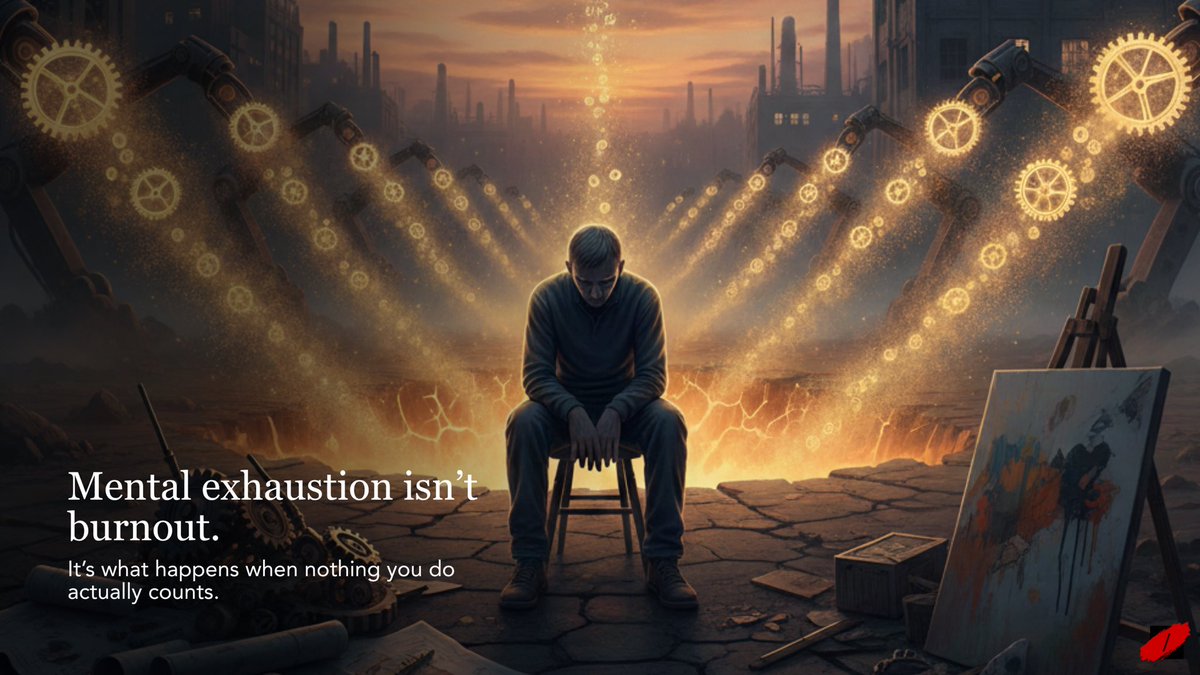
There’s a special kind of tired that doesn’t come from effort, but from motion without consequence. Calendars stay full, conversations feel productive, plans sound responsible — yet nothing actually shifts. It’s not collapse; it’s suspension. The body keeps showing up because the mind keeps promising that progress is just one more cycle away. That’s how stagnation survives: well-structured, politely exhausting, and almost convincing.
#idinsayit #BurnoutCulture #MentalNoise #QuietCollapse
This is the quiet collapse no one budgets for. Not overwork — empty work. Meetings that recycle themselves, recovery plans that sound impressive but change nothing, effort that keeps the machine warm without moving it forward. The mind doesn’t break from pressure alone; it breaks from futility. When energy is spent just maintaining the illusion of progress, exhaustion stops feeling dramatic and starts feeling permanent. That’s when fatigue becomes realism.
#BurnoutCulture
This isn’t an attack on knowledge — it’s a reminder of weight. Clinical language travels cleanly; lived chaos doesn’t. You can map the terrain, name the landmarks, quote the literature — but some roads only teach themselves by breaking you. Presence helps. Curiosity helps. Humility helps most. Anything else risks sounding like certainty where experience is still bleeding.
#MentalHealthAwareness #Psychology #addiction
Alcohol leaves the room.
Benzodiazepines don’t.
That’s the dirty little secret nobody warns the alcoholic about. You kick the bottle out — ceremony, applause, maybe even a white chip — and quietly invite its more polite cousin to stay. Same house. Same nervous system. Same ending, just slower and dressed in a prescription label.
Alcoholics don’t accidentally fall in love with benzodiazepines.
They recognize each other.
The Science — stripped of romance
Alcohol and benzodiazepines work on the same neural doorman: GABA-A receptors.
GABA is the brain’s primary braking system. Press it gently, you feel calm. Hold it down long enough, the brakes fail.
Chronic alcohol use downregulates GABA receptors and upregulates glutamate — the brain’s accelerator. That’s why withdrawal feels like your nervous system is trying to tear itself out of your chest.
Benzodiazepines step in and whisper: I’ve got you.
They restore inhibitory tone.
They quiet the shakes.
They help you sleep.
They feel like relief.
But here’s the trick — they don’t fix the imbalance. They replace the missing alcohol effect, molecule for molecule, silence for silence.
From the brain’s point of view, sobriety never actually arrived.
Why alcoholics cling to them — even sober
Because alcoholics aren’t addicted to liquid.
They’re addicted to nervous system control.
Benzos deliver:
- Emotional flattening without intoxication
- Anxiety relief without social fallout
- Sleep without surrender
- A sense of being held together
And for someone whose baseline is wired, vigilant, vibrating — that feels like mercy.
Except it isn’t.
Long-term benzodiazepine use further suppresses GABA sensitivity, deepening dependence while eroding memory, cognition, emotional regulation, and — cruelly — resilience.
Withdrawal isn’t dramatic like alcohol.
It’s elegant.
Prolonged.
Psychological.
Weeks turn into months.
Months into years.
The brain forgets how to calm itself at all.
The part nobody likes saying out loud
Benzodiazepines are not “safer alcohol.”
They are alcohol with better PR.
———————————
Professor C. Heather Ashton — who ran one of the world’s most respected benzodiazepine withdrawal clinics — didn’t mince words:
“Benzodiazepines are potentially addictive drugs and can produce dependence even when taken as prescribed.”
— The Ashton Manual
———————————
———————————
And the U.S. National Institute on Drug Abuse states plainly:
“Combining opioids or alcohol with benzodiazepines increases the risk of life-threatening overdose.”
— NIDA
———————————
Notice the wording — combining.
Because the brain never really separates them.
The alcoholic nervous system — exposed
Take alcohol away from an alcoholic and you don’t get peace.
You get raw signal.
Noise.
Hyper-arousal.
Insomnia that laughs at sleep hygiene.
Anxiety that doesn’t respond to breathing apps.
Benzos don’t heal that.
They mute it.
And muting isn’t recovery — it’s postponement.
The uncomfortable truth
If alcohol was the storm, benzodiazepines are the fog.
Quieter.
Less obvious.
Just as disorienting.
Alcohol announces its destruction.
Benzodiazepines whisper theirs — until one day the nervous system no longer remembers how to stand without them.
Sobriety isn’t silence.
It’s learning to tolerate sound again.
And that — unfortunately — takes more courage than any pill has ever provided.
— RRV
#alcoholism #recovery #MentalHealth #MentalHealthMatters #MentalHealthAwareness
“If your recovery requires someone else to hide their relapse to stay welcome, it isn’t recovery — it’s performance.”
@rohitvangimalla
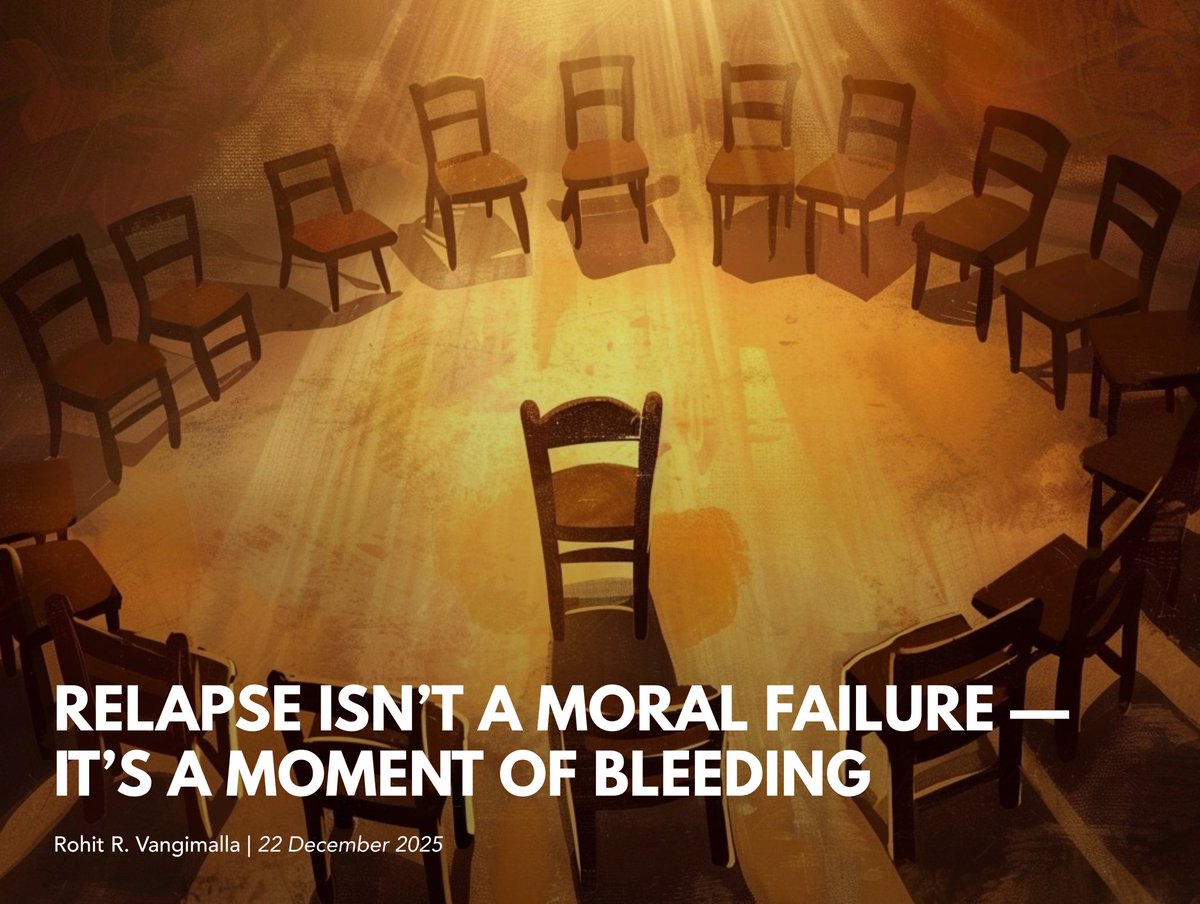
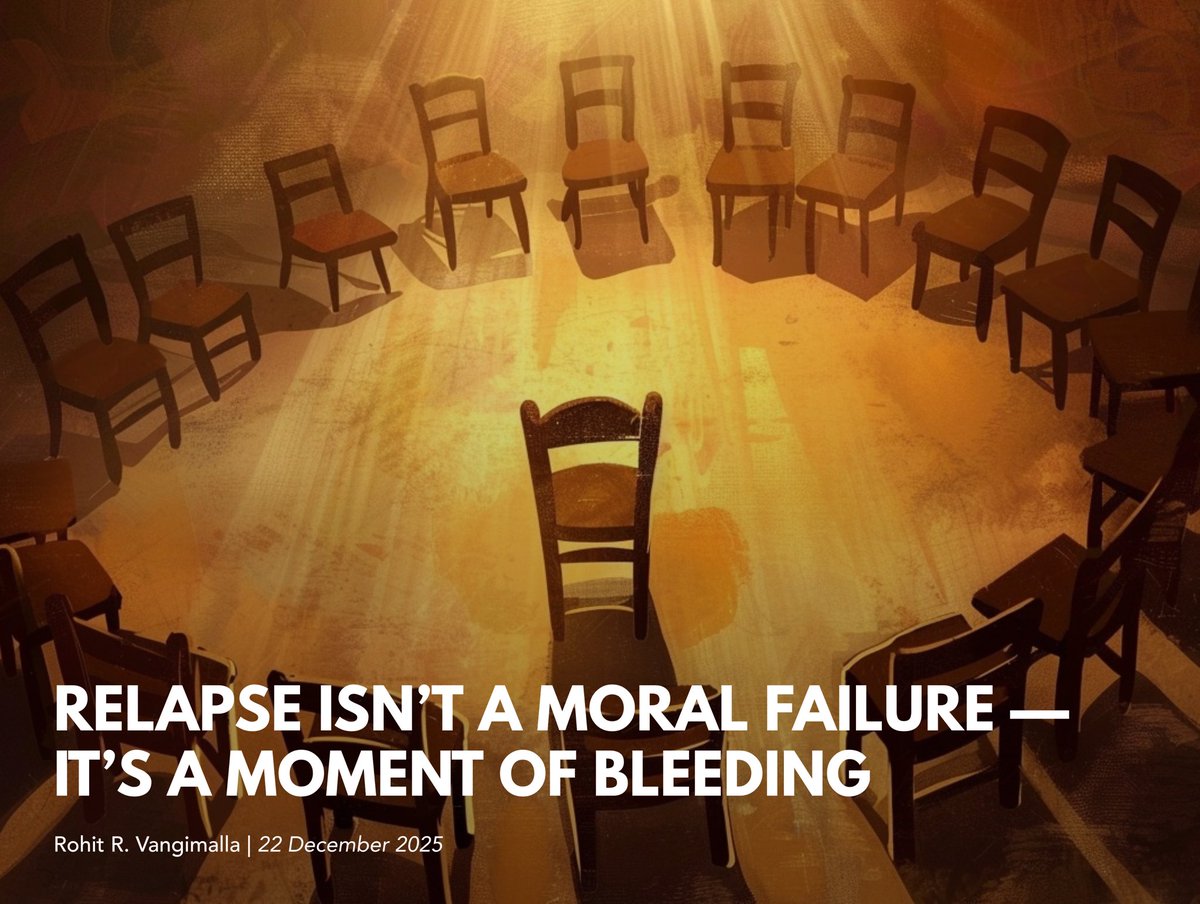
RELAPSE ISN’T A MORAL FAILURE —
IT’S A MOMENT OF BLEEDING
Somewhere along the way, something goes wrong in recovery spaces.
Not loudly.
Not officially.
Quietly.
The language stayed spiritual. The slogans stayed clean. The coffee kept flowing. But compassion — real compassion — began to thin out. What once felt like shelter slowly started feeling like scrutiny.
Relapse stopped being seen as pain and started being treated as inconvenience.
Messy.
Awkward.
Bad optics.
No one says it out loud, but you feel it immediately. The pause. The recalibration. The subtle shift in body language that says you’re no longer safe to stand too close to. Not banished — just quietly distanced. Not judged openly — just no longer welcomed warmly.
As if relapse is contagious.
As if struggle is betrayal.
As if falling disqualifies you from belonging.
Which is absurd.
If recovery were reserved for the flawless, the rooms would be empty. If sobriety were sustained by judgment, no one would last long enough to finish a cup of coffee.
Relapse isn’t arrogance. It isn’t rebellion. It isn’t a lack of respect for the program. More often than not, it’s exhaustion. Loneliness. A stretch of silence that went unanswered for too long.
And here’s the irony that cuts deepest.
The very philosophy that teaches rigorous honesty sometimes punishes people for practicing it when it becomes uncomfortable. We say “keep coming back” — but too often what we really mean is come back once you’re presentable again.
That isn’t recovery.
That’s reputation management.
Compassion isn’t tested when someone is doing well. It’s tested when someone is shaky, ashamed, and barely holding themselves together. That’s where the philosophy either shows up — or exposes itself.
If your recovery depends on someone else hiding their failure, it isn’t recovery. It’s performance. It’s theatre dressed up as spirituality.
The people who relapse don’t need sermons. They don’t need distance. They don’t need to earn their seat again. They need what the program promised in the first place — principles over personalities, presence over posture, compassion without conditions.
Anything less isn’t spiritual.
It’s judgment — wearing a sobriety badge.
#recovery #aa #MentalHealth #MentalHealthAwareness #mentalhealthindia
RELAPSE IS NOT A CHAPTER OF RECOVERY — IT’S THE REASON YOU HAVE TO START AGAIN
Calling relapse “part of recovery” doesn’t heal anyone — it just keeps the rehab doors revolving.
If “relapse is part of recovery” were gospel, rehab would come with a loyalty card —
Attend five, get the sixth free. Same faces. Different pin codes. Same speeches. Same nods. Same tragic optimism. I know — fourteen years, six rehab stints, front-row seating.
It becomes a travelling circus — the same men/ women rotating venues, recycling wisdom like it’s a Spotify playlist stuck on repeat. Relapse is part of recovery. Say it enough times and it starts sounding like permission, not insight. Comfort dressed up as philosophy.
Yes — relapse happens. Sometimes once. Sometimes repeatedly. Sometimes spectacularly. But let’s get one thing straight before we turn nonsense into doctrine: relapse is not recovery. It’s the absence of it. Confusing the two (somehow adding an ‘em’ bar between them to keep them associated) is how people keep checking back in instead of staying stopped.
Rehab matters — not because it’s magical, but because honesty doesn’t survive freedom. Left alone, most of us lie with Olympic-level skill. Confinement does what willpower can’t — it corners you. Then you work the steps, not because you believe in them, but because you watch them work on others who were just as clever, just as broken, just as full of excuses.
And only then — painfully, reluctantly — you practice the one thing that actually moves the needle: ‘rigorous honesty’. With yourself. With whatever you call God. And with one other human being who won’t buy your bullshit.
Recovery starts there.
Relapse doesn’t belong in the same sentence — let alone the same story.
#aa #recovery #RecoveryPosse #MentalHealthMatters #MentalHealthAwareness #mentalhealthsupport #mentalhealthindia
WhatsApp Channel: https://t.co/0T7PCzesxL
Corporate puppets. Political soap opera.
And one sober man still asking:
“Did humanity skip the brain update?”
If sarcasm was a religion — this is the temple.
If stupidity triggers you — bring popcorn.
Welcome to idinsayit / —
@rohitvangimalla’s perfectly legal way to violate common sense.
🔗 𝕏 @rohitvangimalla
🔗 𝕏 @agthbo
🔗 IG: idinsayit
#daily #motivation #Satire #meme #comedy
Follow the lighter side of things:
corporate lies, political circus, and sober sarcasm from a man who survived all three.
Welcome to @rohitvangimalla's favourite trouble corner.
𝕏 @rohitvangimalla
𝕏 @agthbo
IG idinsayit
idinsayit /
Invite to the channel where satire drinks black coffee, politics forgets its script, and corporates wish they had thicker skin.
Curated by @rohitvangimalla — author, creative menace, recovering alcoholic who now roasts life sober.
If you like truth with attitude, humour with a hangover, and commentary that HR would never approve… step in.
Follow here: ⬇️
https://t.co/0T7PCzesxL
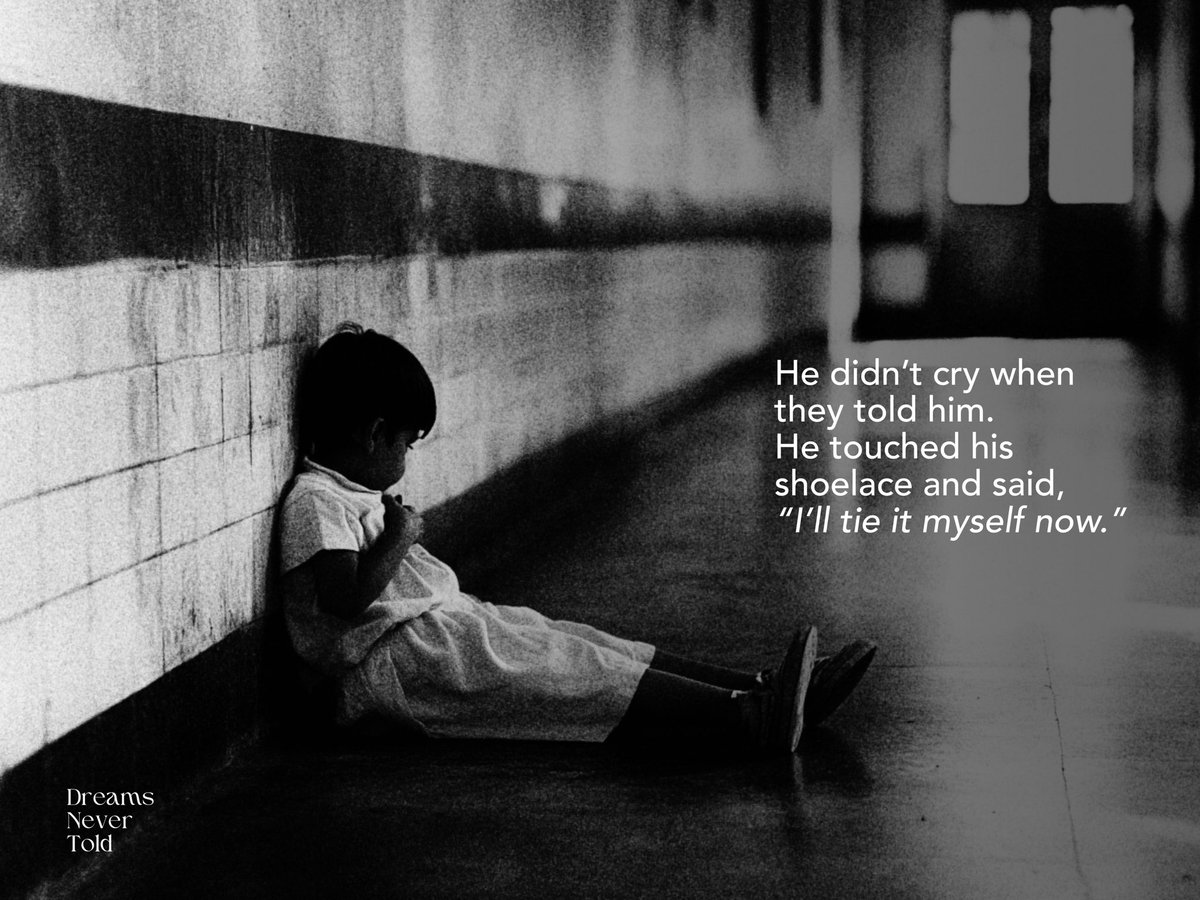
That’s the kind of grief we miss — the kind that doesn’t scream, but folds itself into small, adult sentences a child should never say.
This excerpt is from the early pages, after Aditya loses his parents. It captures the essence of the book: quiet collapse in full view — and no one noticing.
Read the novella Dreams Never Told ➡️ https://t.co/jpxgqVc4Gw
#DreamsNeverTold #GriefIsLouder
#MentalHealthMatters #addiction #RecoveryPosse