New paper: “Recognition at the Peak: Awards, Performance, and Market Valuation in Elite Soccer.”
I study first-time Ballon d’Or nominations in football/soccer as recognition events in a superstar labor market.
The question is simple: when a player receives highly visible public recognition, does that signal future productivity, or does it often arrive after an unusually strong and partly transitory performance peak?
To study this, I compare first-time Ballon d’Or nominees with model-implied “near-misses”: elite players from the same award cycle who ranked highly in a nomination-probability model but did not make the official shortlist.
The main result is a wedge between performance and valuation.
I find no evidence that measured performance improves after nomination. Finishing, measured as goals minus expected goals, declines slightly, and broader production measures also do not improve.
Market valuation moves in the opposite direction. First-time nomination is associated with a sizable increase in Transfermarkt value: about 0.254 log points, or roughly 29 percent, in the preferred specification.
The mechanism is consistent with regression to the mean. Players who outperform expected goals before recognition tend to perform less strongly relative to expected goals afterward.
Recognition may certify real quality while also arriving at a moment when recent performance is unusually visible and partly transitory. If that recognition premium is capitalized into transfer values, wages, or bargaining positions, buying immediately after public recognition may mean paying for performance that has already peaked.
The broader implication extends beyond soccer: awards and rankings can be informative signals of talent, but they can also amplify recent success precisely when that success is least likely to persist.
https://t.co/Sj76MI8PVp
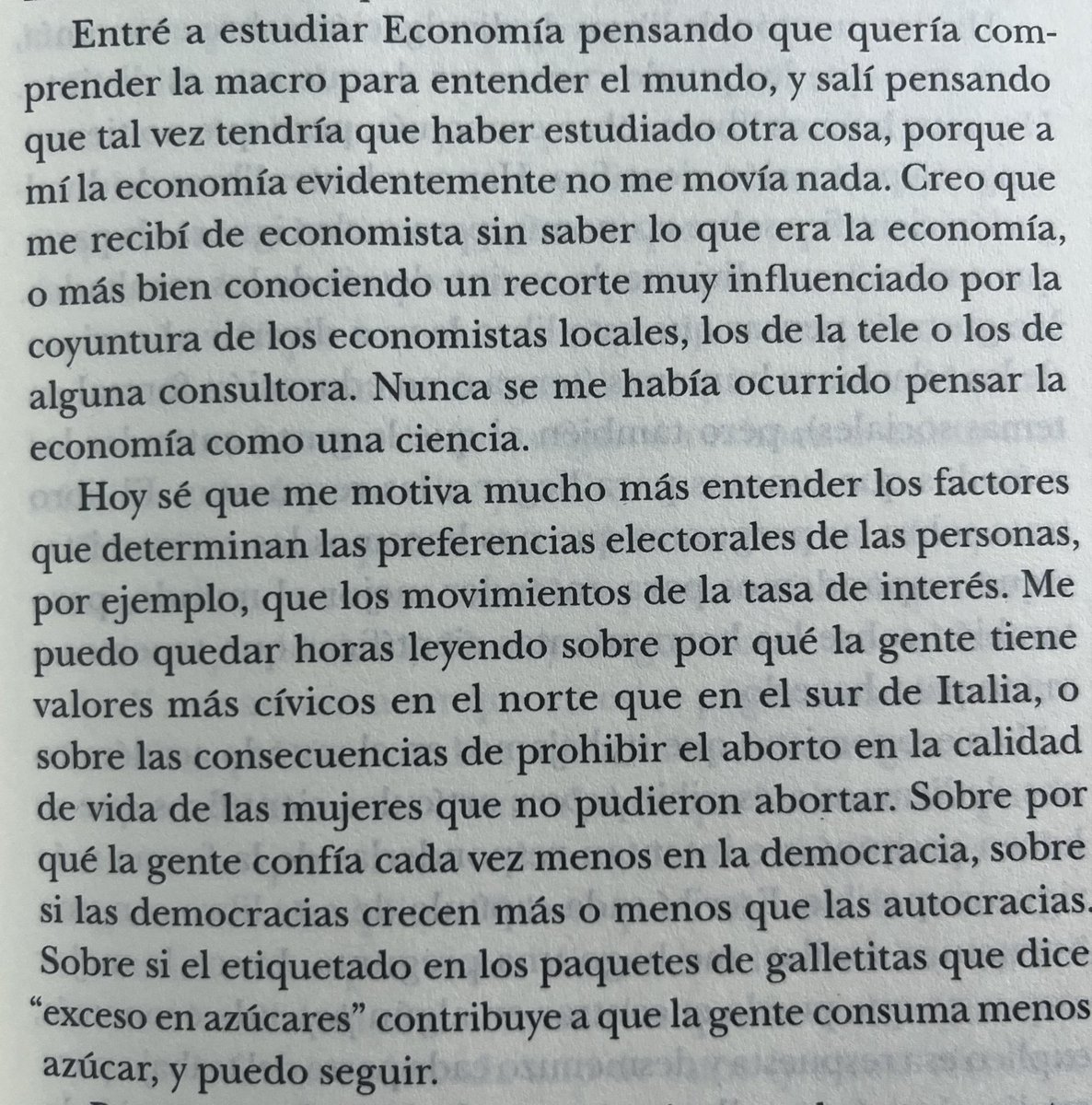
Seguramente tengo una mirada algo sesgada: soy contemporáneo a Nicolás y, como muchos, decidí estudiar economía para entender la crisis de 2001. También hubo un momento en mi carrera en el que sentí que la disciplina, tal como la estaba practicando, no me terminaba de llenar. Me siento muy representado por esta descripción que hace en la intro.
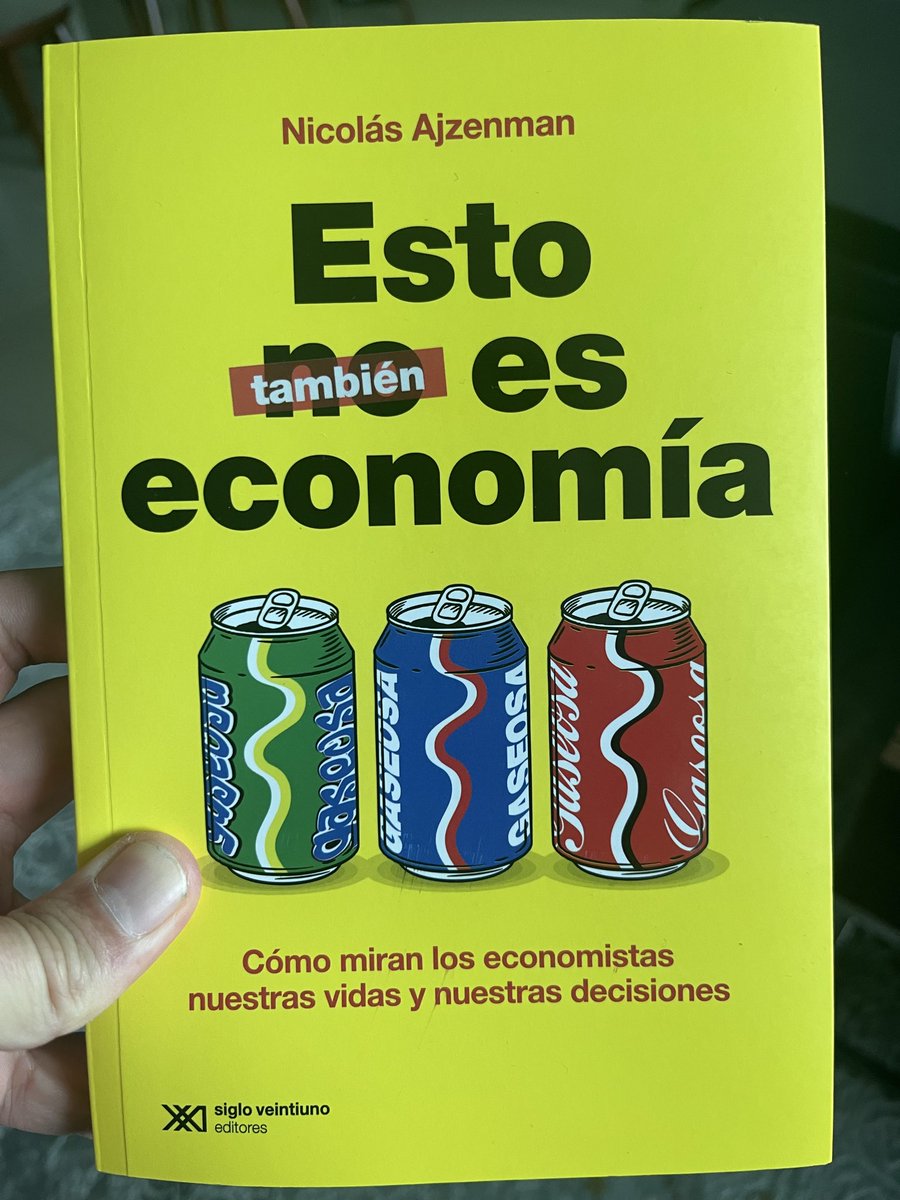
Súper recomendable este libro de @Nicolas_Ajz. Hace años que enseño Micro 1 y lo más difícil no es explicar los modelos, sino transmitir lo poderosa y versátil que es la economía como marco conceptual para estudiar casi cualquier pregunta.
Mucha gente cree que la economía es solo predecir el precio del dólar o explicar la evolución del riesgo país. A muchos economistas (me incluyo) esas preguntas nos resultan bastante aburridas. Desde Gary Becker en los 70s, el campo se expandió enormemente: crimen, discriminación, matrimonio, decisiones cotidianas.
Este libro recopila excelente evidencia académica sobre ese “otro” mundo que estudia la economía, lejos de la sección económica del diario. Muy buena lectura si estás pensando qué estudiar o si querés una forma más rigurosa de pensar y abordar preguntas empíricas interesantes.
Muy provocativo y estimulante este artículo del gran @wsosaescudero: explica por qué analizar datos “a lo bobo” y creer que más datos siempre es mejor es una ilusión peligrosa. Sin teoría ni comprensión del proceso generador, el big data puede incluso amplificar el sesgo.
https://t.co/bGZhyJO8Ce
Join #MarkusAcademy this Thursday for a conversation with Benjamin Golub, Professor of Economics and Computer Science at @NorthwesternU and co-founder of https://t.co/kQ2iAy9NiL. Live at 12:30 PM ET with introductions from @MarkusEconomist.
Register now: https://t.co/AMRC2sx7i5
A pre-Thanksgiving update on the #EconJobMarket, with data as of Nov 23. Based on total # of job listings on JOE, this year continues to be even weaker (by 14.3%) than during COVID (2020). 1/many #EconTwitter
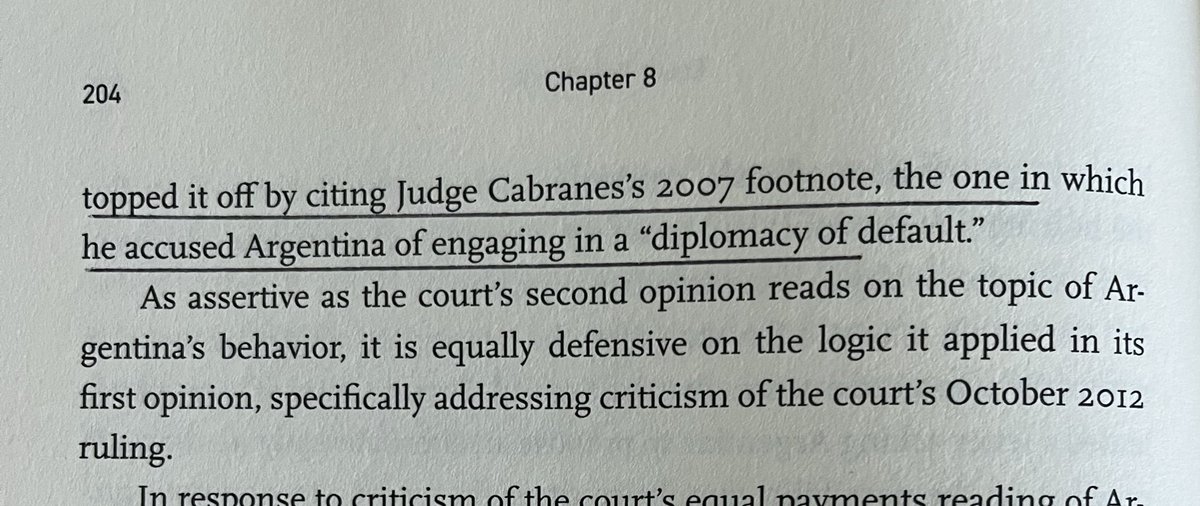
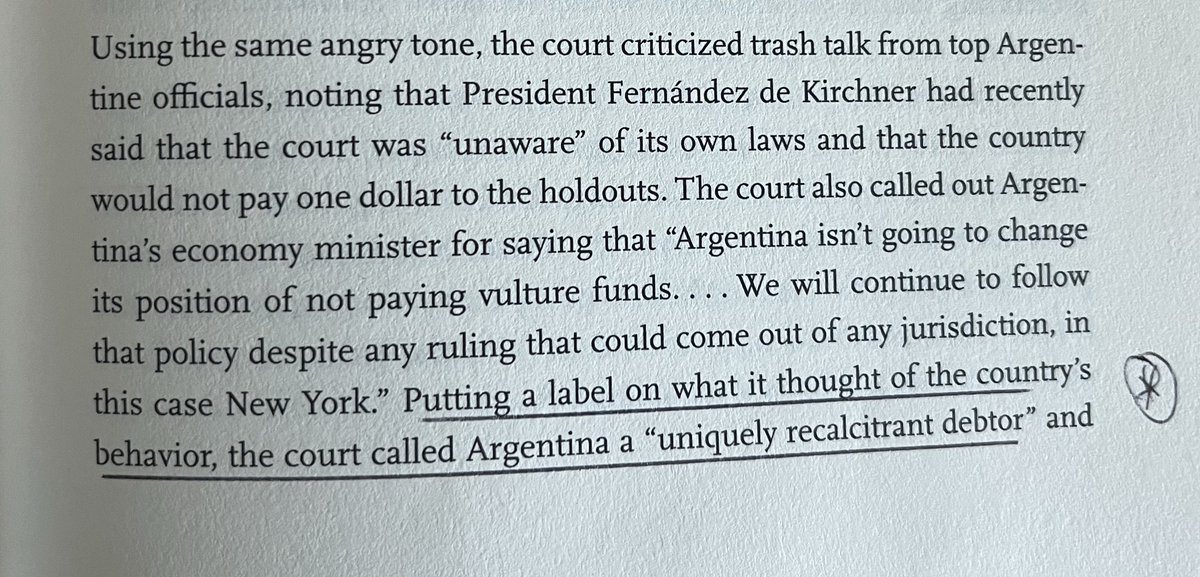
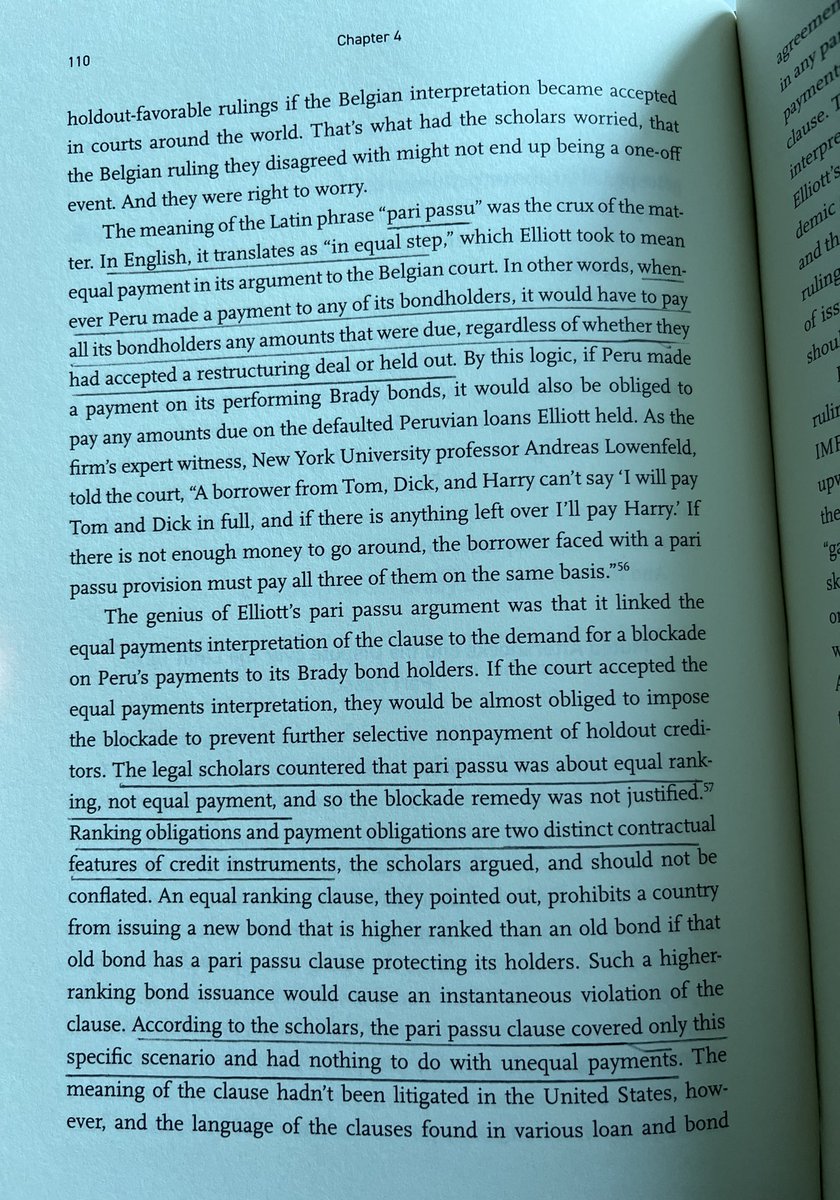
4) The Second Circuit Court of Appeals calls Argentina a “uniquely recalcitrant debtor” and accusing the country of engaging in the “diplomacy of default “.
Just finished this fascinating book by @GMakoff. Great read, especially as Argentina once again faces financial turmoil and new bailout/swap talks, this time involving the US gov.
Argentina always finds itself in uniquely tangled webs of economic and political hardship. Partly ostracized by the international community, its alliances swing dramatically with each new government. In just 20 years, we went from Kirchner lecturing Bush on how U.S. foreign policy had brought “misery and poverty” to the region, to Milei positioning himself as one of Trump’s closest allies.
Makoff’s book brilliantly reconstructs the 2002-2016 default saga; the $100 billion debet battle that reshaped sovereign debt finance. It’s a rollercoaster, and throughout it you see both what’s broken and what’s been improved in the architecture of international sovereign debt market.
"Argentina is waiting for the next bailout, yet another a shipment from the IMF that won't help resolve the myriad unresolved issues in economics, politics and the social area. Of
course, everybody knows that this is not the answer but it is easier than taking the unconventional path of radical reform. The truth is that Argentina is bankrupt, bankrupt economically, politically and socially. Its institutions are dysfunctional, its government disreputable, its social cohesion collapsed. Having fallen that deep, it comes as no surprise that reconstruction rather than quick-fix financial support has to be the answer."
It sounds like it could have been written today. But it comes from Rudi Dornbusch and Ricardo Caballero in 2002.
Their proposal was in that report was startling: Argentina should give up much of its monetary, fiscal, regulatory, and asset-management sovereignty for an extended period to a team of international technocrats.
https://t.co/PZnRKDrh0H
“Rather than abandoning economics because it’s politically inconvenient, we should celebrate its remarkable ability to explain how the world works. There’s always more to learn. But the basics aren’t broken; they’re underappreciated.”
@BrianCAlbrecht
Completely agree. One of the (many) reasons I love teaching Principles of Micro. Provides such a useful and powerful framework to understand the world.
https://t.co/xBliqZ0rpz