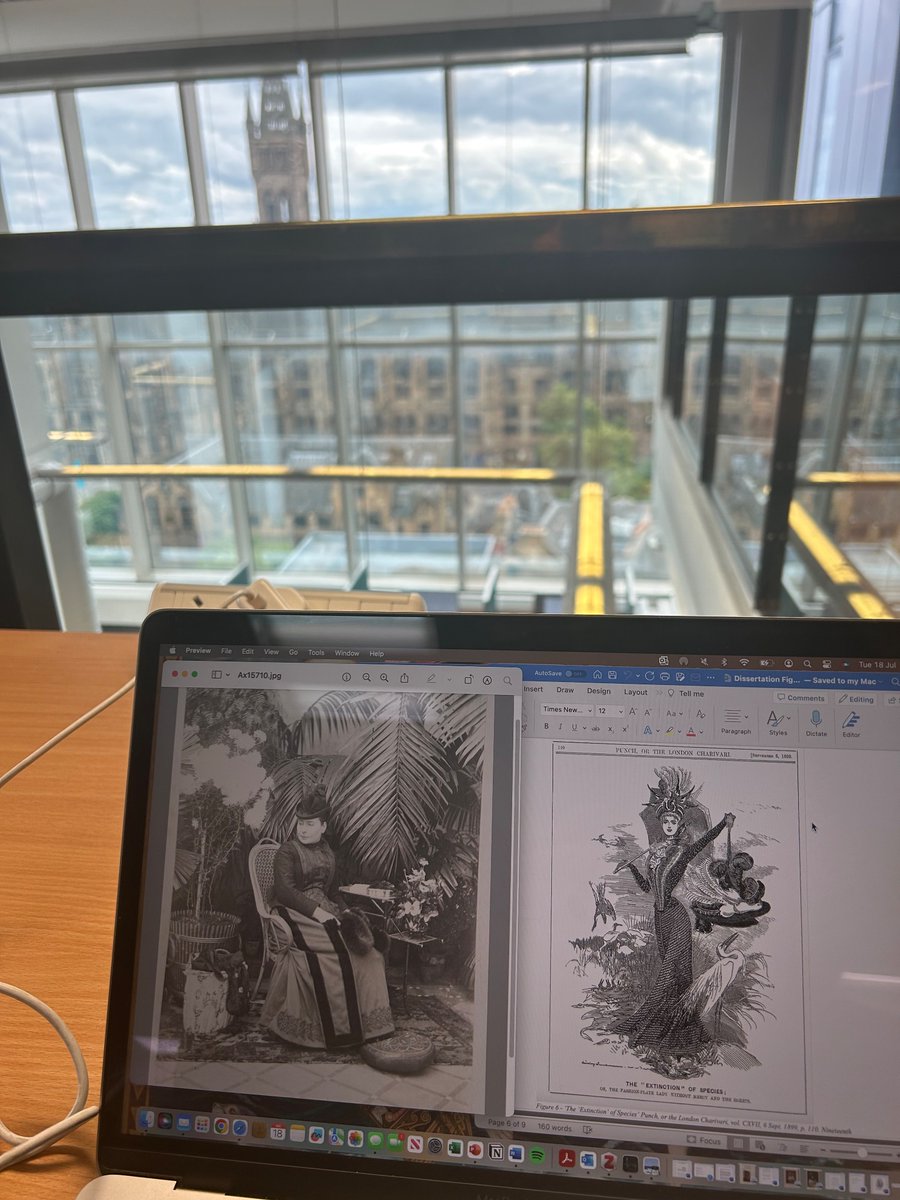
Today I’m attending the @MakingHistDress ‘Replicas, Reconstructions and Recreations’ workshop virtually from sunny Bute. @FourRedShoes’ keynote on expanding the embodied turn was a brilliant introduction to the range of methodological questions in historical recreation!
This Harry Emanuel necklace (@britishmuseum) showcases how the bodies of birds were aestheticised as part of jewellery in the 1860s and 70s. Emanuel patented his framing and adhesive techniques to transform plumage into “novel [articles] of manufacture.”
However, preservationists bolstered their arguments for the end of the bird and feather trade by asserting that many birds used in fashionable dress were insectivorous, placing these earrings at an interesting intersection of Victorian ethical discourses.
This pair of earrings from the @V_and_A feature the heads of honeycreepers, connected to the hook by figures of flies. In the late 19th century, birds were transformed into material goods and reanimated as novelties on the fashionable lady. (AP.258-1875)
The position of the cast metal fly next to the beak mimics a predatory relationship, co-opting the lived experiences of birds for aestheticised accessories.
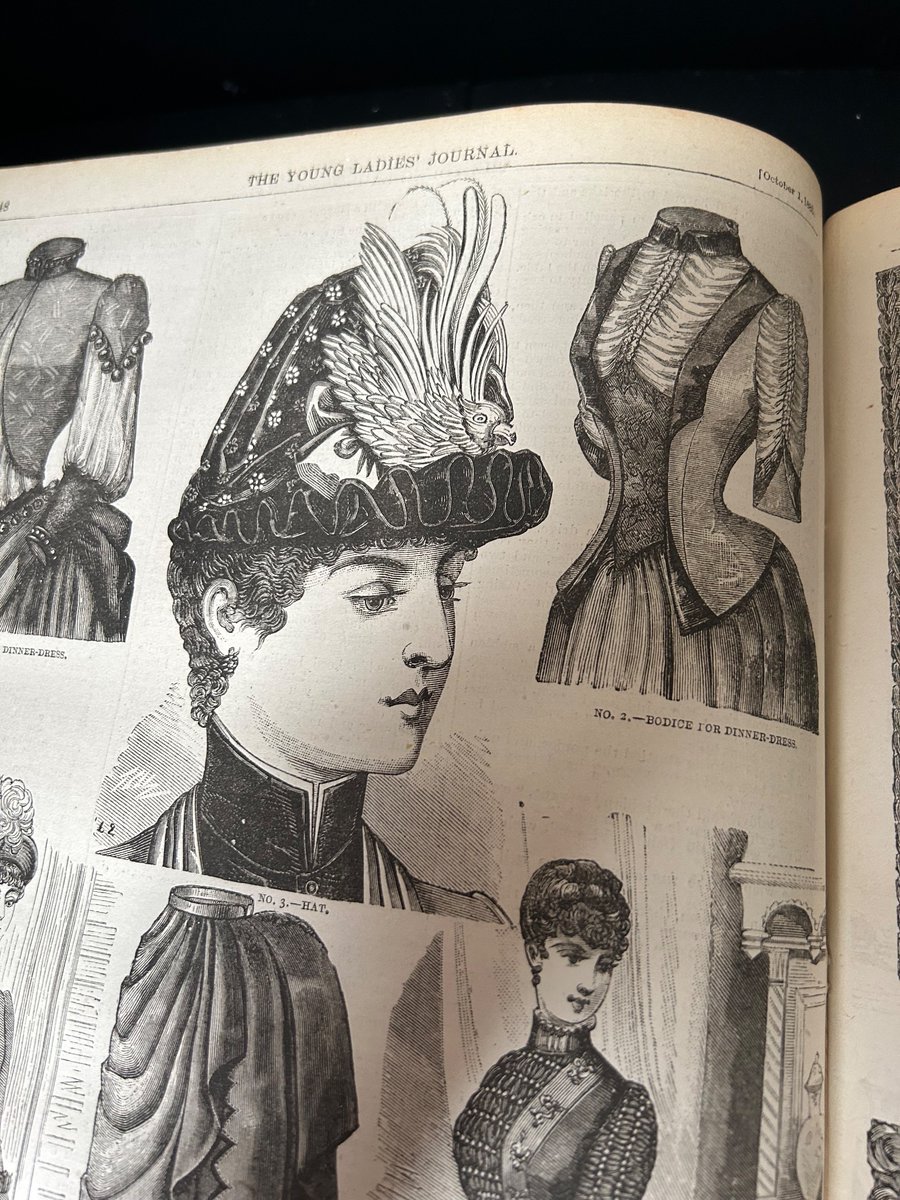
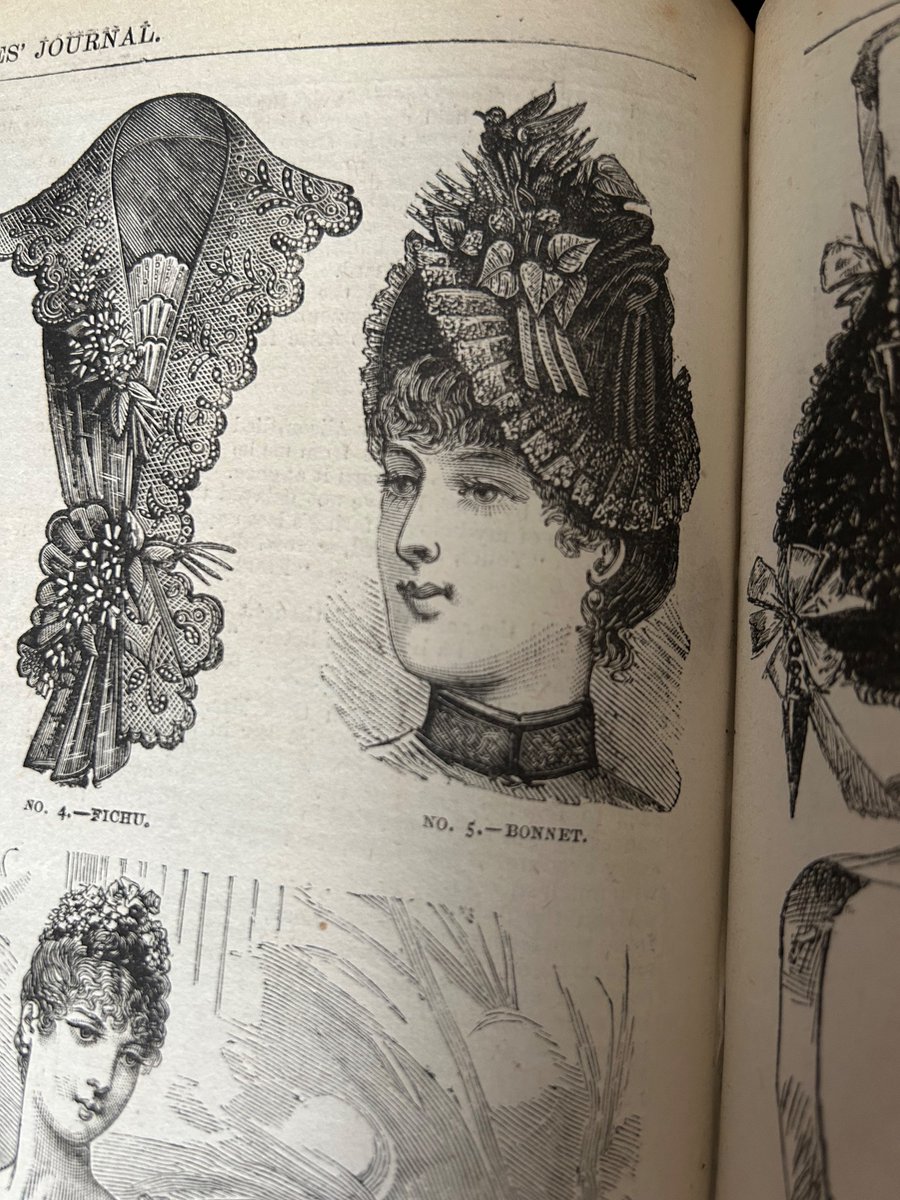
The Young Ladies’ Journal, an illustrated periodical running from 1864-1920, is a goldmine for avian adorned bonnets - some more conspicuous than others. These illustrations are from 1885, predating the emergence of the SPB by four years!
Looking today at this macabre set of earrings from the V&A. The practice of wearing hummingbirds, “the gems of bird life,” in jewellery reached the height of its popularity in the 1860s and 70s, but continued on bonnets into the early 20th century! (AP.259-1875)









![ahehealy's tweet photo. This Harry Emanuel necklace (@britishmuseum) showcases how the bodies of birds were aestheticised as part of jewellery in the 1860s and 70s. Emanuel patented his framing and adhesive techniques to transform plumage into “novel [articles] of manufacture.” https://t.co/UsGOJ1OFBE](https://pbs.twimg.com/media/F2tAV-JXUAk47ep.jpg)