Plz RT
My excellent colleague @mikkelwallentin and I are recruiting 2 PhD students for a project on the neural correlates of spatial communication and mental body map in typical and atypical ageing.
https://t.co/f0WNNKjcXQ
Start date: Feb 1 ‘25
Appl deadline: Oct 1 ‘24
We are really looking forward to our coming Tuesday seminar 2nd May, where we have @AIAS_dk fellow @Barbarabarbaber presenting her work on working memory and functional connectivity patterns.
All welcome, online or in-person.
Lunch + coffee provided 🥪☕️https://t.co/5nB1gQ4SaG
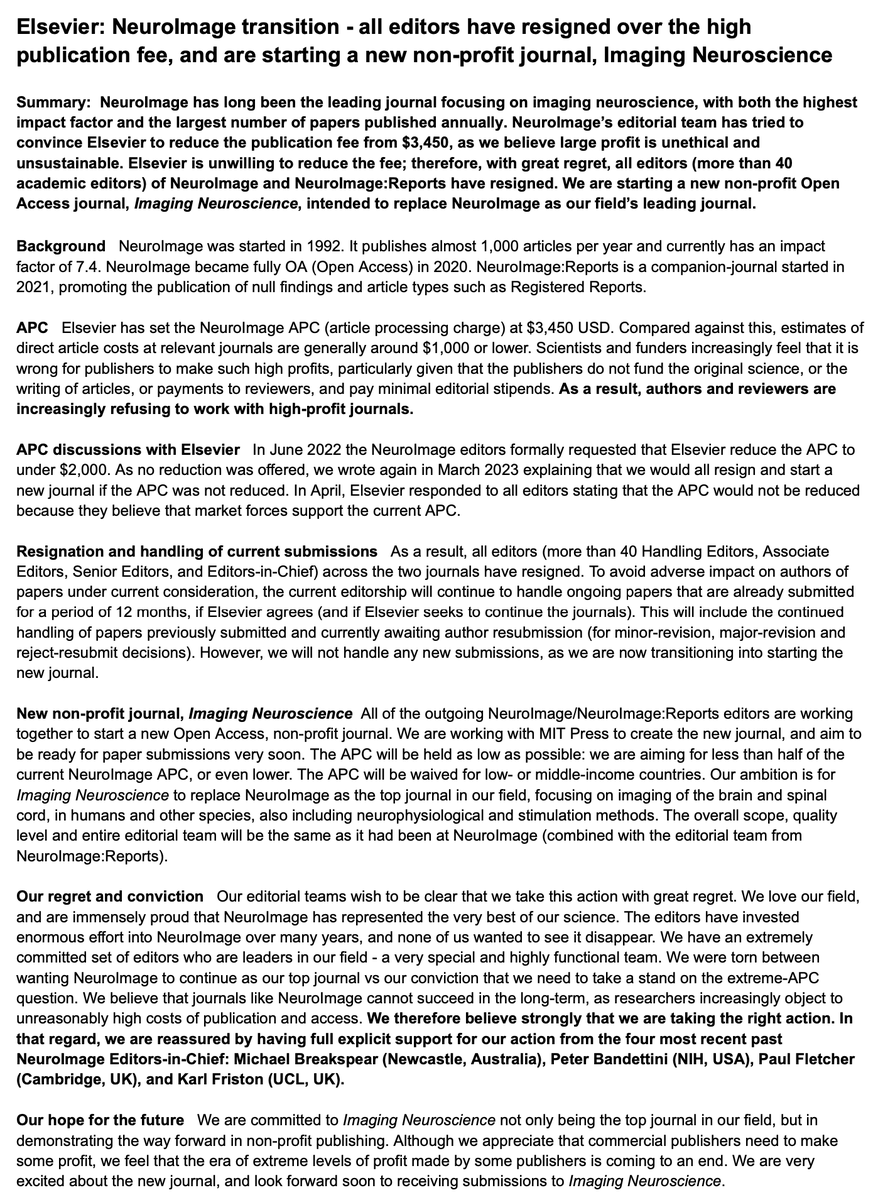
All NeuroImage and NeuroImage:Reports editors have resigned over the high publication fee, and are starting a new non-profit journal
https://t.co/DmnwDKVCK7
This comes with great regret, and a huge amount of thought and discussion- please read announcement to get more details.
My awesome PhD student @AlberteSeeberg is running a really cool online study on #groove perception in #cochlearimplant users - and she needs more CI-users. It only takes approx. 15 min and it mainly requires listening to a bunch of cool rhythms:
https://t.co/iVzpUPxyyw
Plz RT
So happy to share our new paper in @NatureHumBehav! Why do we change how we speak when interacting with infants?. Does IDS in British English sound similar to IDS in Korean or Danish? Do the acoustics of IDS change as the child develops more sophisticated language knowledge?
Adults across the globe seem to adjust their speech to suit the changing needs of infants (with some interesting cross-linguistic variation). Study led by @ChrisMMCox, with @chbergma@aroepstorff and others. Check the paper here the thread: https://t.co/nFifcXXWRF
@fusaroli Haha, I hear you - had some modeling thoughts for my own ideas with the verbal fluency data from DBS patients - but for the larger dataset with both HC and PD, Methods 3 is ofc the way to go for continuation of this work on vocal markers. I’ll keep both avenues in mind next sem
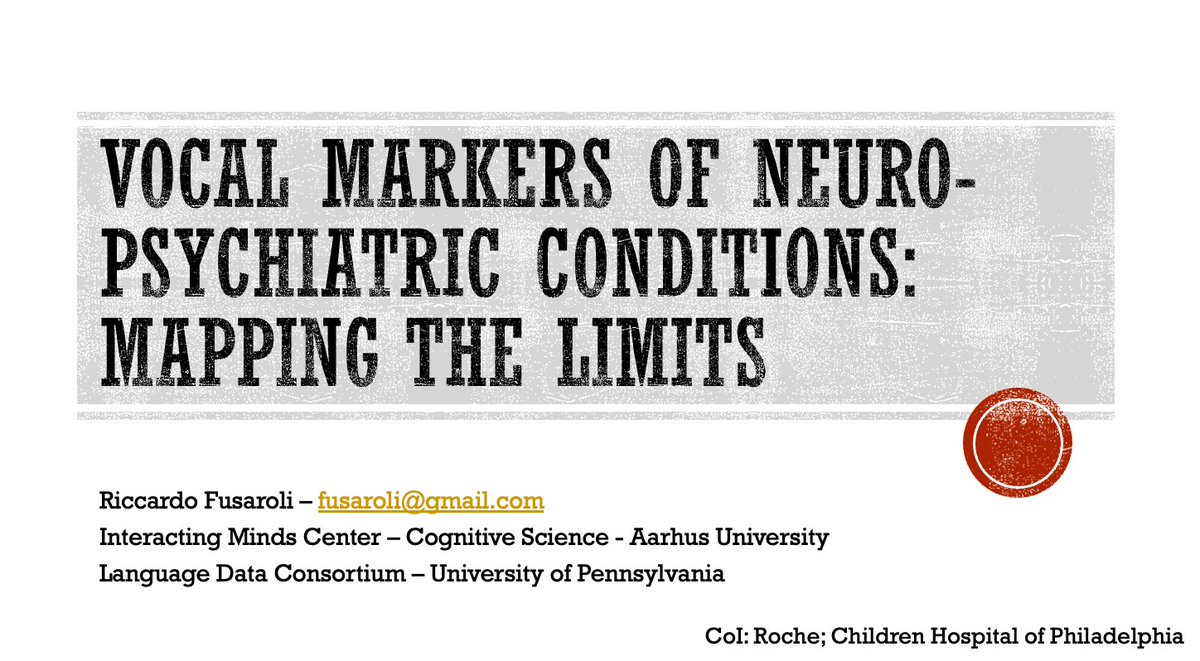
Yet another fascinating thread+talk by the awesome @fusaroli. This time on vocal markers of neuropsychiatric disorders (and the limits of ML approaches to tackling this). Amazing work! Could responses to the 1 min verbal fluency task potentially be used in this context?
Today I have given a talk at the PRAAT group (@IrisSommer4@SBrederoo) on (some of) the limits of machine learning approaches to vocal markers of neuropsychiatric conditions (identifying them using voice data only). A thread (and video at the end): 1/
@fusaroli Absolutely! I’ve got res sem next semester starting to look at these data - maybe integrate with potential exam projects in your modeling course?
@fusaroli Yeah, bulk-wise maybe not too many repeated measures - with my DBS-MEG study I have multiple rep recordings (but of low q b/c optic mic inside MEG). But the verbal fluency task is SO widely used by clinicians (eg neuropsych, neurologists) + not unc to record for offl scoring…
Thx heaps for sharing this awesome & enlightening thread+talk on using informed priors based on prev work @fusaroli! Particularly enjoyed the point about comparing different informed/skeptical priors as “a robustness analysis of our findings” 🙌
Should we use findings from previous studies and meta-analyses to shape our statistical inferences (aka informed priors)? What are the advantages and issues? Strap on for a loooong thread (link to a video of the talk at the end) 1/
@fusaroli @n_han_tran @wolfvanpaemel Thx heaps - will keep it mind for future ref - it’s prob gonna be a bit much for this semester’s scope - the kool thing about directing them to this thread/talk was to set them up for your course next semester 🙌
@fusaroli I totally hear you! That’s exactly what resonated so well with me in this work. Really love the approach. And now I know where to direct the students when they bring up the issue of informed priors later this semester 😜🙏
If you are a nice person, please apply for this postdoc in cognitive neuroimaging of language in Aarhus or send the ad to your friend. Thanks. https://t.co/uPziky5yov