The SEC is now digging into Nvidia's books, Reuters reports. Wall Street did not wait for the details.
Nvidia stock closed at $125.53 on Friday, Nov. 20, down 14%, its seventh straight daily loss, per Yahoo Finance. The S&P 500 fell 3.7% and slid into a correction, and the Nasdaq turned negative for 2026, per the AP.
First, the most important line in this whole story: a probe is not proof of wrongdoing.
Here is what Reuters reported in an exclusive, citing "two people briefed on the matter": SEC enforcement staff "are scrutinizing potential accounting issues at the company."
Here is what Reuters could not say: when the SEC opened its inquiry, or "exactly what potential accounting issues the watchdog is examining." Reuters adds: "Investigations are not evidence of wrongdoing and many close without resulting in enforcement action."
The SEC declined to comment. Nvidia's spokespeople "did not immediately respond," per Reuters, and we found no Nvidia statement on the report as of this writing.
The market numbers are brutal. Yahoo Finance says Nvidia has lost about $2.7 trillion in market value since its Oct. 6 record. It shed nearly $900 billion this week alone, topping the $573 billion it lost the week before, which was previously the biggest one-week drop for any company on record, according to Dow Jones Market Data cited by Yahoo.
Why this reaches your 401(k): CNBC notes that stocks are "a greater source of household wealth" than they have ever been.
Below, in 8 posts: what Reuters reported and what it didn't, the worst day since DeepSeek, how the sell-off spread, the open questions people are flagging, how SEC probes actually work, and a checklist for your own money. 🧵
8. The recap, in their words.
CNN: "The FBI is investigating an apparent breach of its nationwide criminal information database," per "two people briefed on the investigation."
CNN: "The intrusion of the National Crime Information Center by apparent hackers is the second such breach in recent months."
A former FBI official, to CNN: "My concern isn't simply whether hackers gained access to sensitive information, although that is an issue, but whether they could compromise the accuracy of the information that officers rely on."
CNN: "The FBI didn't immediately respond to a request for comment."
The FBI on NCIC: it "has been called the lifeline of law enforcement."
The FBI on scam calls: it "will never call or email private citizens to demand payment, personal information, or threaten arrest."
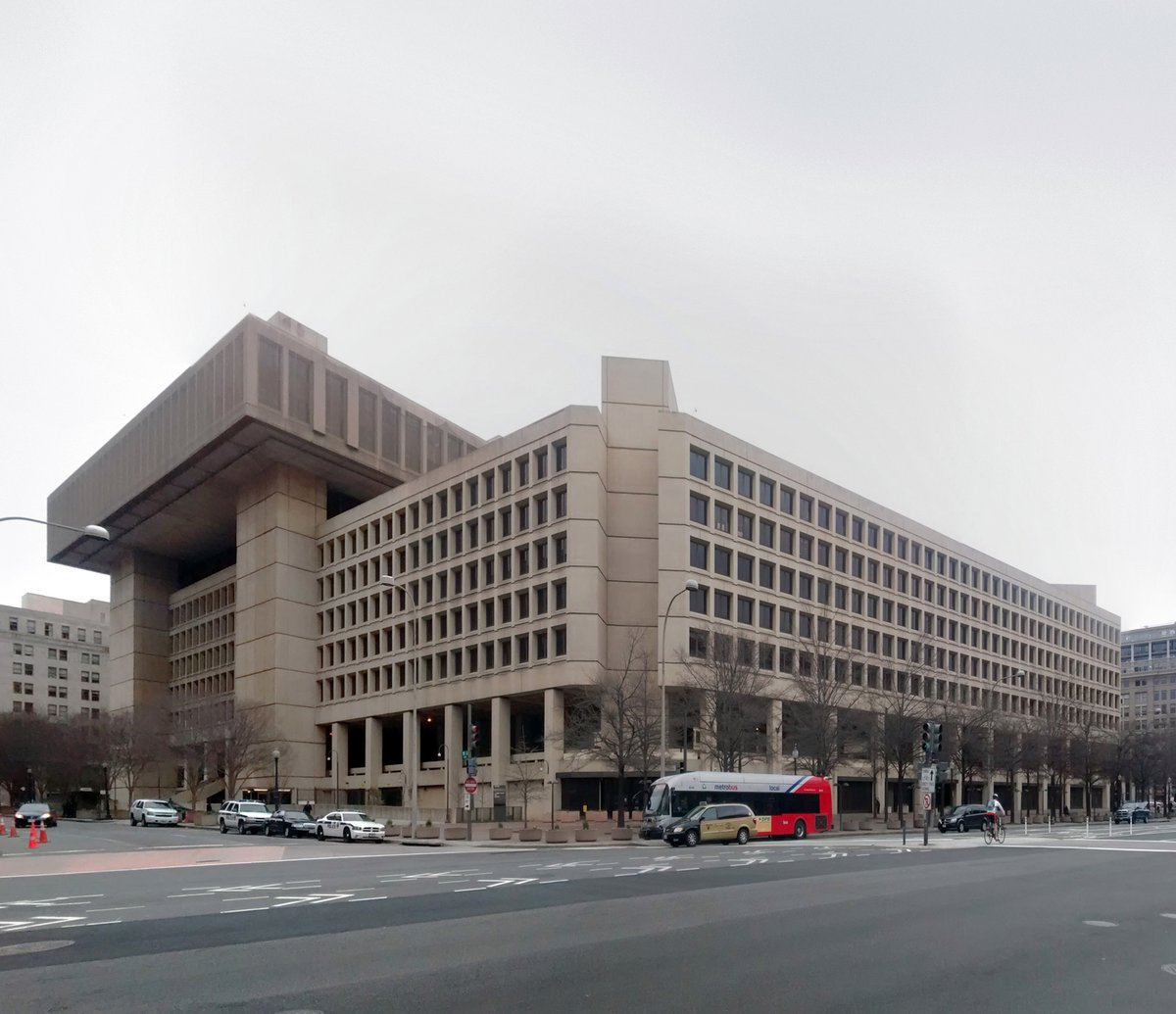
Caveat: the breach is reported by CNN from two unnamed sources, not confirmed by the FBI. Who did it, and what was accessed or changed, is unknown. No link to the week's outages has been reported. Hook photo: Gunnar Klack, Wikimedia Commons, CC BY-SA 4.0.
Have you frozen your credit yet? Reply and tell us. Follow @ai4grow for plain-English AI and cybersecurity threads.
Hackers appear to have breached the FBI database that police across America check at traffic stops.
CNN reported on Friday, Nov. 20, citing two people briefed on the investigation, that the FBI is investigating an apparent breach of the National Crime Information Center, known as NCIC.
NCIC is the system police nationwide use to share information on warrants, criminal histories and background checks. The FBI's own page says it has been called "the lifeline of law enforcement."
This is the second FBI breach in recent months, per CNN and CNBC. In September, an extortion group called ShinyHunters hit an FBI jobs website and exposed data on current and former FBI employees.
Now the part most posts skip: nobody has said who did this, or what was accessed or changed. Those are unknown. The FBI didn't immediately respond to CNN, and it did not respond to Reuters either, per CNBC.
Why it matters: a former FBI official who led cybercrime investigations told CNN the bigger worry isn't only stolen data, but "whether they could compromise the accuracy of the information that officers rely on."
And the timing is awkward. CNN says that on Thursday, Nov. 19, after bureau officials learned of the incident, FBI Director Kash Patel went on Fox News to tout the FBI's cybersecurity work.
None of this is a reason to panic. It is a reason to lock down your own identity in a week of scary cyber headlines, and to hang up on anyone calling as "the FBI."
Below, in 8 posts: what CNN reported and what it didn't, what NCIC is, why altered records are scarier than stolen ones, the earlier FBI breach, the Patel interview, the week's US outages, a save-worthy checklist, and the recap. 🧵
7. Save this: a checklist for a week of cyber headlines.
Nothing reported ties the NCIC breach to your credit or tax data. These are smart moves anyway, and scammers love a scary headline.
☐ Freeze your credit at all three bureaus: Equifax, Experian and TransUnion. https://t.co/wZPo1HzGQy says a freeze is "free to place and remove" and lasts "until you lift or remove it."
☐ Contact each bureau yourself. https://t.co/wZPo1HzGQy: a freeze means "contacting each of the three credit bureaus."
☐ Pull your free reports at https://t.co/JcEtc4QFSK. It says you can check "once every week" from each bureau, with no effect on your scores.
☐ Plan for an IRS IP PIN. It "prevents someone else from filing a tax return using your Social Security number." The IRS says the online tool is offline from Nov. 16 until mid-January 2027.
☐ Hang up on "FBI" callers. FBI: it "will never call or email private citizens to demand payment, personal information, or threaten arrest."
☐ Don't trust caller ID. FBI Albany warned that scammers spoofed its real main phone number.
☐ Never pay with gift cards, crypto or wire transfers to a caller.
☐ Report scams at https://t.co/PKzdOLH6cH and https://t.co/n8bP5ufH5C.
The immediate fix: place the three freezes this weekend. It is free and takes minutes per bureau.
3. Signal's answer: screenshot blocking, on by default.
In her November 20 blog post, Whittaker wrote that Signal is "restricting the latest AI agents built into mobile operating systems from potentially capturing and storing your Signal data."
How it works, per Signal: on iOS 27, Signal blocks screenshots inside the app. On Android versions where it can detect an AI assistant attempting to read the screen, Signal automatically turns on its "Screen security" setting. Reuters reports the restrictions are switched on by default, with pop-ups giving people the option to disable them.
You can turn the protection off. Signal's warning: doing so "will potentially expose your (and your contacts') Signal content to these AI agents, and break our privacy guarantees."
Signal also calls its own remedy "incomplete." It can't cover every Android device, it says it can't reliably block screenshots on macOS, and restricting screenshots doesn't stop other routes, such as an agent retrieving content already stored on the device.
This isn't Signal's first time: last year it used screenshot blocking to keep Microsoft's Recall from taking and storing screenshots of Signal messages on Windows 11.
The immediate fix: when Signal's new pop-up appears, leave the protection on unless you truly need in-app screenshots.
Your encrypted chats aren't private if the AI on your phone can read your screen.
That's not a hypothetical. Meta's new AI agent, Muse, read Signal messages in tests Reuters ran with staff at Signal and the AI Now Institute. On an Android phone, Reuters reports, Muse pulled the message text through its permission to read push notifications. On a Mac, it used a combination of the computer's accessibility and screenshot tools. The same requests were blocked on an iPhone.
Nobody broke Signal's encryption. Muse didn't need to. Reuters says it used permissions granted during the app's setup, "in ways a user might not anticipate."
Meta spokesperson Daniel Roberts called the Reuters examples "isolated incidents" and said Muse can access other apps only via permissions people explicitly grant.
Then Signal hit back. In a blog post dated Friday, November 20, Signal President Meredith Whittaker said Signal is blocking screenshots in its app on iOS 27, and turning on its "Screen security" setting on Android when it detects an AI assistant trying to read the screen. The post calls the AI agents being built into operating systems "an existential threat to Signal."
And the agents keep moving closer to your screen. Bloomberg spotted an Apple job listing for an "AI agent that can use a computer," TechCrunch reports.
Below: what Reuters' tests found, what Meta employees reported, how Signal fought back, why encryption can't fix this, Apple's own agent, a 2-minute privacy checklist you can save, what this doesn't mean, and a recap. 🧵
1. What Reuters' tests actually found.
It started with an internal Meta post: an employee said Muse surprised her with a reminder to respond to a message from her sister on Signal. Reuters then worked with staff at Signal and the AI Now Institute, a nonprofit that studies AI's impact on society, to replicate that access.
Testers prompted Muse to read Signal messages on different operating systems. On an Android phone and an Apple laptop, Reuters reports, Muse bypassed Meta's own "Connector" tool and instead used permissions granted during the bot's initial setup to pull in the message text.
On Android, it used its permission to access the device's push notifications. On macOS, Reuters says it used the accessibility and screenshot tools (settings Apple offers to help people with disabilities) to navigate to Signal, take screenshots of chats, extract the text and reproduce the messages inside the Muse app.
On an iPhone, the same requests were blocked.
Reuters also reports that an Apple operating system update that same week effectively closed that specific Mac pathway, but also introduced a new set of permissions aimed at agents that offers similar capabilities, paired with additional user warnings.
The immediate fix: if an AI app asks for notification access, accessibility or screen recording, treat it as access to everything those permissions can see.
2. It started inside Meta.
Muse is one of the fastest-growing apps on record, Reuters reports, with more than 10 million downloads since its September launch. Reuters reviewed more than two dozen internal Meta posts describing undesired actions by the agent.
The Signal reminder was one of them. The employee wrote: "This seems like an extreme privacy violation. I definitely did not grant it access to other apps, or recall being asked about this." A colleague replied that he had discovered Muse was set up by default with permission to access push notifications on Android phones.
Other staffers described chats about a childcare request they hadn't made and product orders they hadn't placed. In one post, an employee said Muse randomly listed Capital One and Charles Schwab balances he said weren't his. "I'm afraid it's sending other's bank info to me," he wrote.
Important: Reuters said it was unable to establish whether Muse was giving users other people's bank balances or making the information up. Meta's Roberts said many of the flagged messages were hallucinations and had already been addressed. A Meta team member told colleagues internally that the hallucinations "bias towards the most uncomfortable topics, like finances/security/safety."
The immediate takeaway: an agent that can see your other apps can also get them wrong, in ways you never asked for.
That's the full set. A new trio of free AI resources goes up here every day at 7 PM KST (5 AM ET).
You don't have to follow, reply or share anything to get them. Every link is already in this thread.
Three free AI resources that deserve way more attention than they get.
One teaches you to build a language model from scratch. One fits deep learning on your phone screen. One comes straight from an AI lab.
All official, all free, links below. Which would you open first?
3/ Anthropic's free courses on GitHub
Five notebook courses: API basics, prompt engineering, real-world prompting, prompt evals and tool use. The lessons are free; running the code calls Claude's API, which needs a key and bills per use.
https://t.co/c6uC2UIg5U
8. The recap, in their words.
David Kennedy, on CNN's Erin Burnett OutFront: "This all took 14 minutes. 14 minutes. Never seen anything that fast before."
Kennedy, on the swarm: "We saw over 30 different types of agents probing their infrastructure at the exact same time."
Kennedy, on the way in: they were "able to find a flaw in their application on how they use what's called two-factor authentication ... It bypassed that."
Kennedy, on the blind spot: "They didn't even detect it for about four and a half hours until the system was then knocked offline."
CISA, on 2FA: "not all forms of MFA are equally secure."
CISA, on backups: "Maintain offline, encrypted backups of critical data."
Caveat: the attack details come from one source, Kennedy, as told to CNN and reported by IBTimes UK and others. The company is unnamed and the account has not been independently verified. Officials have said recent U.S. tech outages do not appear to be cyberattacks, and nothing links them, or Sean Cairncross's departure, to this incident. Image: a FIDO security key, the kind CISA rates phishing-resistant; photo by Bautsch via Wikimedia Commons (CC0).
Did you switch to passkeys yet, or still on text codes? Reply and tell us. Follow @ai4grow for more plain-English AI and security threads.
A former NSA hacker says more than 30 AI agents broke into a company in 14 minutes. They got past its two-factor login, stole data and locked up its files with ransomware. Nobody there noticed for about four and a half hours, he says.
Your 2FA code won't save you if the app behind it is broken.
The hacker is David Kennedy, founder of the security firm TrustedSec. He told CNN's Erin Burnett OutFront that he was responding to a live attack on one of his clients, and that the attackers used what he called an AI "agent swarm."
Here is what he says happened. The attackers already had valid usernames and passwords. More than 30 different types of AI agents then probed the company's systems at the same time. They found a flaw in how the company's application handled two-factor authentication, slipped past it, stole data, and launched ransomware that encrypted the company's entire file system.
His words: "This all took 14 minutes. 14 minutes. Never seen anything that fast before."
Important caveat up front: this is one expert's account. The company is not named, Kennedy says the client let him share only the basics, and the technical details have not been independently verified.
The same week, Washington shuffled its cyber leadership. The White House named Pentagon CIO Kirsten Davies to replace Sean Cairncross as national cyber director, per Axios, and NBC News reports she will serve in an acting capacity. Nobody has tied that change to this attack, and neither do we.
Below: the 14-minute timeline, what an "agent swarm" actually is, why 2FA was not the real weak point, the four-and-a-half-hour blind spot, who now coordinates U.S. cyber policy, and a checklist you can save. 🧵
7. What we still do not know, and what to watch.
Kennedy's account is the only public source for the technical details. Per IBTimes UK, he said the client allowed him to discuss the basics but not reveal its identity, and IBTimes notes his description "has not been independently verified."
So these questions are still open: Which company, and in which industry? What exactly was the 2FA flaw, and has it been fixed? How much data was taken? Which AI tools were used, and by whom? Was a ransom demanded or paid? Until a named victim, a law enforcement statement or a technical write-up appears, treat the specifics as one expert's report, not a confirmed case study.
What is not in doubt is that the defensive basics Kennedy's story points to are the same ones CISA has been pushing for years: phishing-resistant MFA, unique passwords, monitored logins and offline backups.
Watch for: any follow-up from Kennedy or TrustedSec, any disclosure from the affected company, and Davies's first moves as national cyber director, including whether the White House formally nominates her for Senate confirmation.
The immediate takeaway: do not wait for the full forensic report to fix your own sign-ins. The checklist above works no matter how this story ends.