Do we though, or do we just know how read what it literally says there in black and white? If it actually said what you've interpreted it as, it would read, "some routine coding and debugging tasks will fall back..."
Yet it quite literally says, "some routine tasks like coding and debugging..."
Pretty funny to bang on about a comprehension skill issue when what you're saying it says, it doesn't say at all.
This is gonna be hilarious when they find out that you can't actually use Fable for "some routine tasks" like "coding" 😭😂😂🤣🤣 this is gonna be an all timer
🔥👀 CODEX app AUTO DEV LOOP tip
0. start work on any development project with a list of work to be done (typically a list of issues/features being tracked however you like)
1. get your main orchestration agent to a point where it can run your full development loop end to end with all the bits of project particularities and nuances in context.
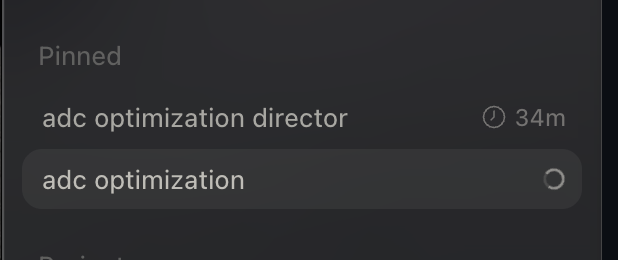
2. fork that thread in Codex app and rename it <project> director. It should have the same context as the main agent now.
3. give it the following prompt:
********
You have been forked from the main <project> orchestration thread who has diverged and continued from here by proceeding with the next planned dev cycle.
Your role from this point forward will be the <project> director, and you will continue driving forward the remainder of the remainder of the planned issues as dev cycles in order, to completion.
That means every 10 or so minutes you should wake up and check to see what's going on with the main orchestration thread "<main agent's thread name>". And continue driving it forward in the exact same way we have been doing until all remaining items have been landed through their own respective dev cycle.
Generate a wakeup prompt for yourself your based on your residual knowledge as the previous main orchestrator and project practices and conventions for a complete and reliable development cycle. Think about what about what would be your ideal optimal workflow, what you'd expect out of the main agent going forward, and how you would engage this process to be most likely to achieve a favorable outcome.
At the end of each wakeup, produce a report that gives me a good idea of what the actual progress overall and in the current dev cycle and approximately what's remaining and with an estimation of how much longer we'll likely be to finish the current cycle based on your knowledge of previous cycles.
IMPORTANT: your job is to keep your own heartbeat prompt optimized for the current development work. Don't let it grow unbounded, but do improve it as you work, especially by augmenting the instructions for any inefficiencies, problems, or other dev lifecycle issues you may encounter, to mitigate them better in subsequent cycles.
ALSO: Operationally, I want you to dynamically adjust your own wake-up interval based on the current progress that you assess of the running development cycle. When your assessment gets to be that the development cycle is more than ninety percent complete, change your interval to every five minutes and then once the next development cycle has been started, change it back to ten minutes.
******
(note: at this point is should set up a codex thread automation with a pretty killer wake up prompt, review and mold it with clanker till happy)
4. Watch your slopware cook to perfection.
Just watch it go a bit, if you ever notice anything off, now just bring it to your "director" and tell to correct the main agent and it to add that thing to its next heartbeat prompt optimization, and watch out for / reinforce it.
Here's the beauty of this when it's running:
1. the "director" already has all the project context so it monitors everything and drives the main agent from this point like a damn pro.
2. this director "heartbeat" prompt will be improved over the life of the development work by the director itself. It becomes highly reusable / adaptable for other projects, just give your director the cooked prompt from project A and ask it to adapt it for the current project.
Happy clanking (: