Citizens waving the Lebanese flag in celebration of the Liberation of South Lebanon, photographed by Selman Abbas – May 25, 2000 – Lebanon, South Lebanon, Al Khiam – Courtesy of Assafir Newspaper.
You can browse the archive by visiting their website: https://t.co/YBJ9NlP80Y.
18 years of living under the tyranny of israeli occupation came to an end when the people of South Lebanon reclaimed their land on May 25, 2000, through the power of their fists and the sacrifice of their blood.
Many thanks to Assafir Newspaper for providing the images
The family of Abbas Alawieh in a tent they built on the site where their house once stood in Arnoun, photographed by Tabaja Adnan – May 27, 2000 – Lebanon, South Lebanon, Arnoun – Courtesy of Assafir Newspaper.
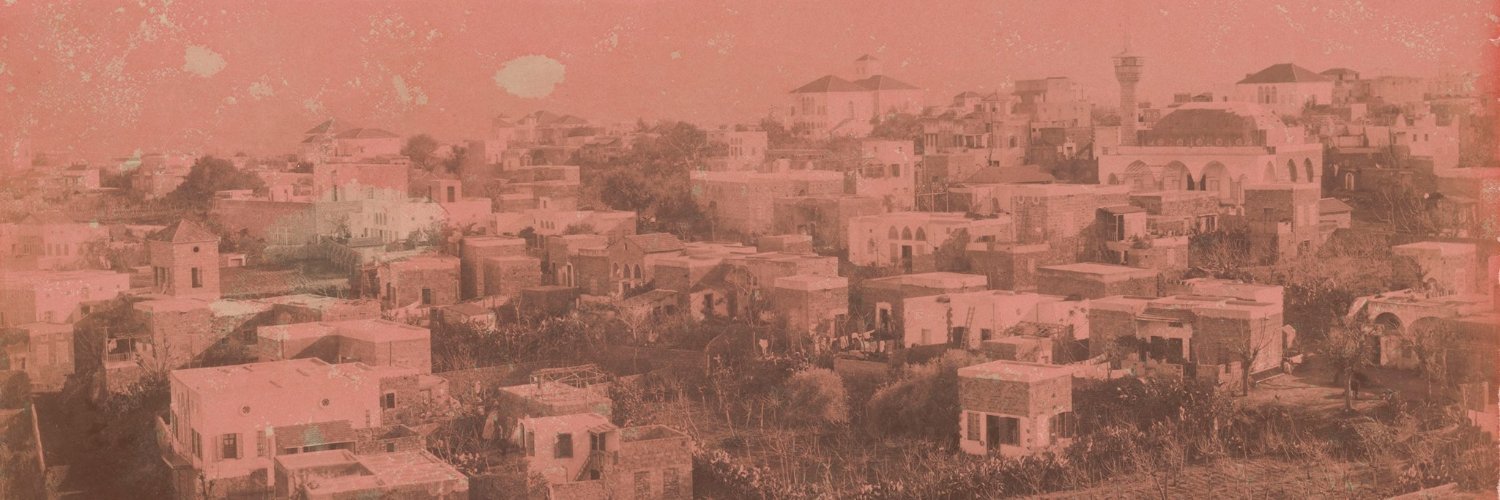
0059ne00017. Tiberias. -. Unidentified photographer. 1900 - 1910. Tiberias. Palestine. Gelatin silver negative on glass. 8.2 x 10.7 cm. 0059ne - Rami al Nemr Collection. Courtesy of the Arab Image Foundation.
The state of israel appeared and quickly recognized by U.S. President Harry Truman. Thus the seeds of the Israeli monster were sewn and irrigated with the blood and exile of Palestinians, and the fabrication of religious and historic fallacies.
Wishing all workers a restful Labour Day.
In the face of political injustice and failing institutions, workers continue to bear the brunt of oppressive economic policies and struggle to secure their most basic needs.
0195na00011. Portrait of workers and Bezbina residents, including Gerges Abdallah Hazim and Spiridon Hazim, commemorating the completion of Bezbina Road. Unidentified photographer. 1923. Bezbina, Akkar (governorate), Lebanon.
0087ch-al001-045-00101. View of the Antoura Saint Joseph School clocktower. 1920-1930. Aintoura, Lebanon. Gelatin silver printing-out paper print, mounted on album page. 9x12cm. 0087ch - Simone Chemali Collection. Courtesy of the Arab Image Foundation.
The 24th of April marks 111 years since the Armenian Genocide, perpetrated by the Ottomans.
We share with you a photograph of the Antoura Saint Joseph School. From 1915 to 1918, Ottoman forces turned the school into an orphanage for Armenian children.
The story of this orphanage reflects a broader dimension of the Armenian Genocide: beyond corporeal killings, Ottoman forces aimed to erase Armenians culturally, through the fragmentation of families and so-called re-education.