PNM is now Persons and Names of the Middle Kingdom and early New Kingdom. In version 5, 13000 persons with their names & titles from the 18th Dynasty before Amenhotep IV are added to existing Middle Kingdom dataset (adding up to a total of 53198 persons) https://t.co/wDOHbVK28A
Eine Initiative der kleinen Fächer gegen die Novellierung des Wissenschaftszeitvertragsgesetzes in Deutschland — der Verband der Ägyptologie bittet Kolleg*innen aus anderen Fächern um Unterstützung der Petition https://t.co/pDYnpJwedA
Die Ägyptologie Mainz sucht Verstärkung! Zum 1.9. ist eine Stelle als Wiss. Mitarbeiter/in im Arbeitsbereich Ägyptologie unter der Leitung von Prof. Dr. Kathrin Gabler zu besetzten. Alle Informationen entnehmen Sie bitte der Ausschreibung.
( https://t.co/ThqA2miqed ).
Tobias Konrad and I prepared a Bibliography of Egyptological databases and datasets to give an overview of publicly available databases in Egyptology(past and present).Description: https://t.co/aRLdKxveWm Library: https://t.co/H9ODEp5VmC Corrections/additions highly appreciated
How do you choose a colour space for long-term archiving of digital photos? sRGB or Adobe RGB? Or something else? Lots of best practice tips for file formats & metadata, but almost none for the colour space (U.S. National Archives did recommend Adobe RGB 1998 for back in 2004).
It aims to deal with different varieties of Unicode (including IFAO Unicode) and legacy fonts Transliteration, Umschrift_TTn, and Trlit_CG Times as well as different transliteration conventions such as Wb., Hannig, Schenkel
Transliteration still poses difficulties to database projects in #Egyptology. Unicode and legacy encoding, flavours of Unicode, diverging conventions complicate matching data across DBs. And DBs can’t natively sort transliteration alphabetically. We need dedicated libraries. 🧵
While matching names in my PNM DB with Anne Herzberg-Beiersdorf's Prosopographia Memphitica, I drafted a Python library https://t.co/Gsqhm3aAWp to standardise translit strings, produce false-coded strings that are comparable, sortable and storable in DBs & exportable to Unicode.
Besides, custom keyboard layouts for Windows for entering Egyptian transliteration in Unicode were updated to support the new sign ï/Ï used in the Leiden Unified system, see https://t.co/fSWe3CGB5p
The Transliteration to Unicode Converter was updated to support the 2023 version of Trlit_CG Times non-Unicode font with the new sign ï used in the Leiden Unified Transliteration (see OEB webpage). https://t.co/4ikDECECqF
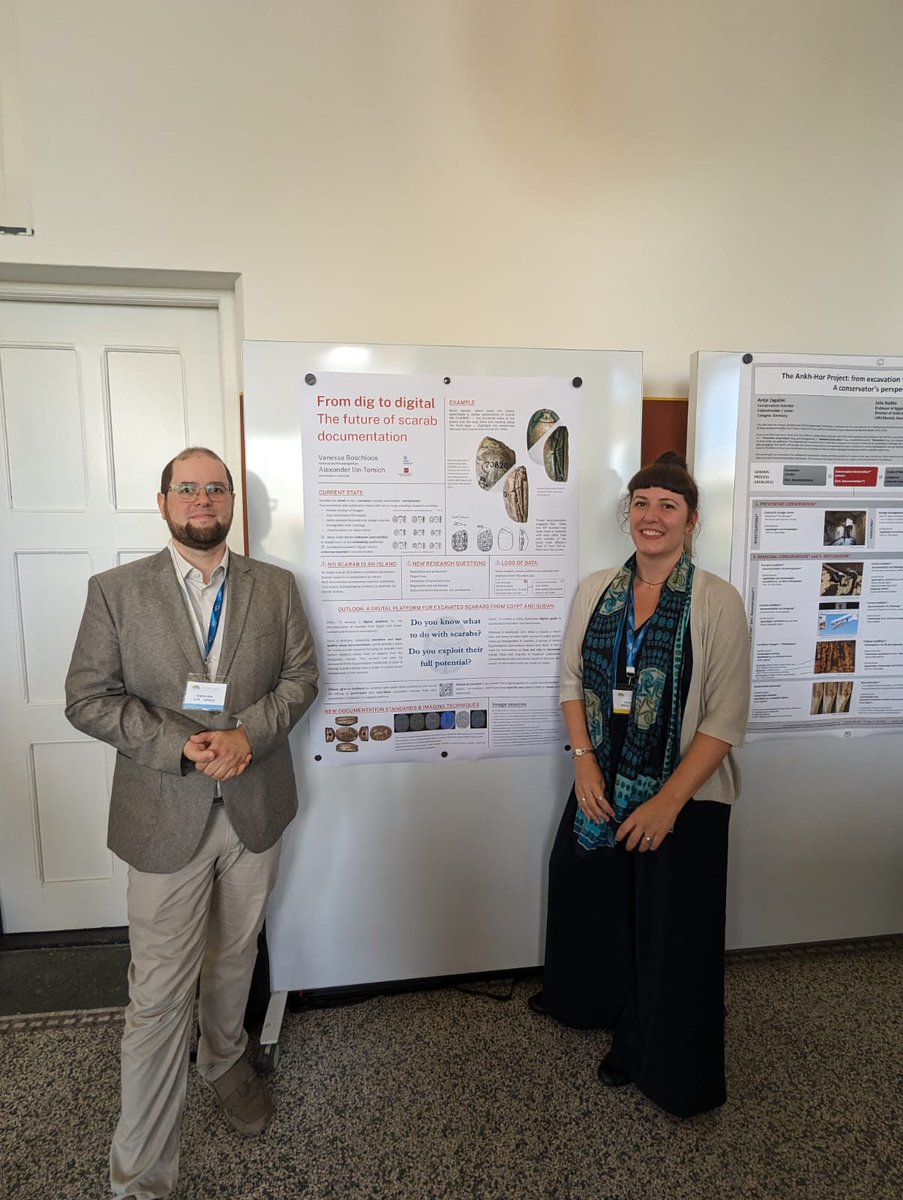
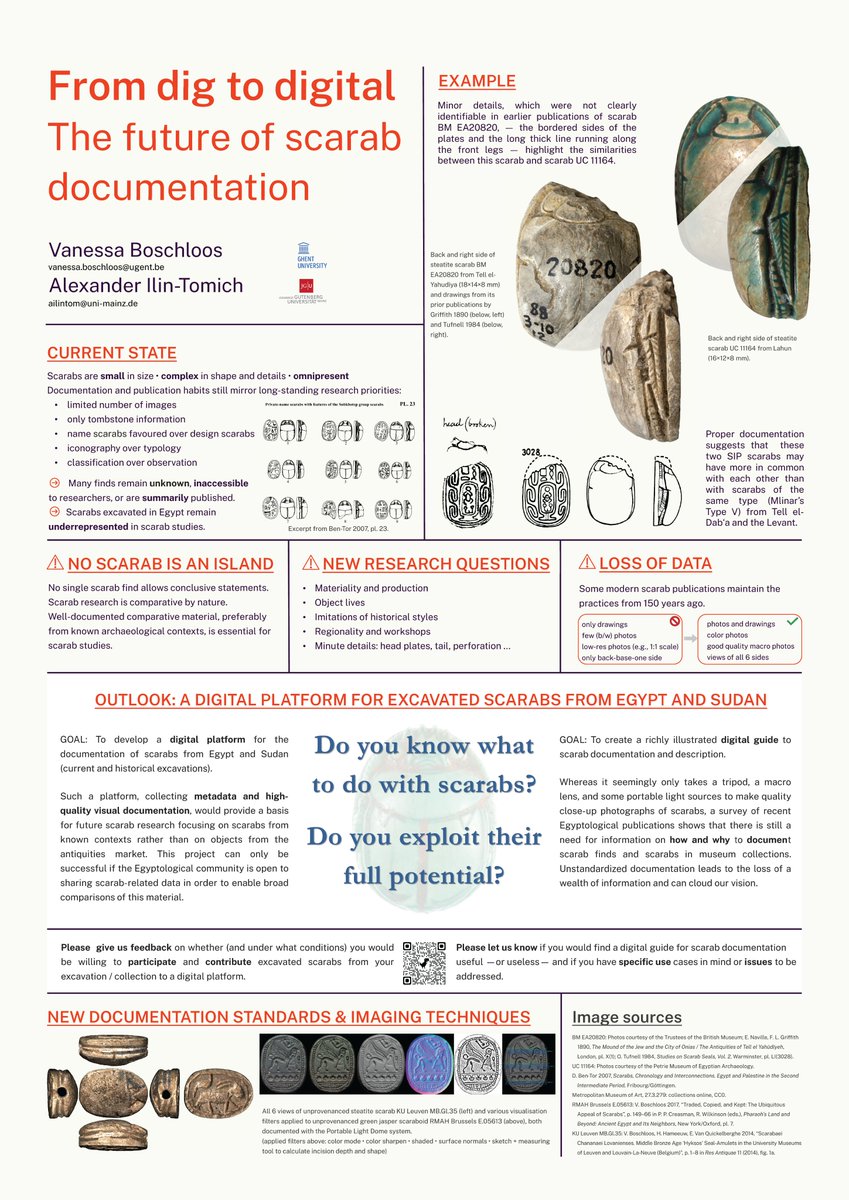
A rather unexpected result of the magnificent @ICE2023Leiden, which finished yesterday, was an award for a poster we presented with @VBoschloos — all the more surprising as it was the first physical poster I've ever presented (@VBoschloos has more experience of this sort though)
Do you know what to do with your #scarab finds? Do you know how to unlock the full potential of these small finds? poster at #ice2023 Leiden with Alexander Ilin-Tomich
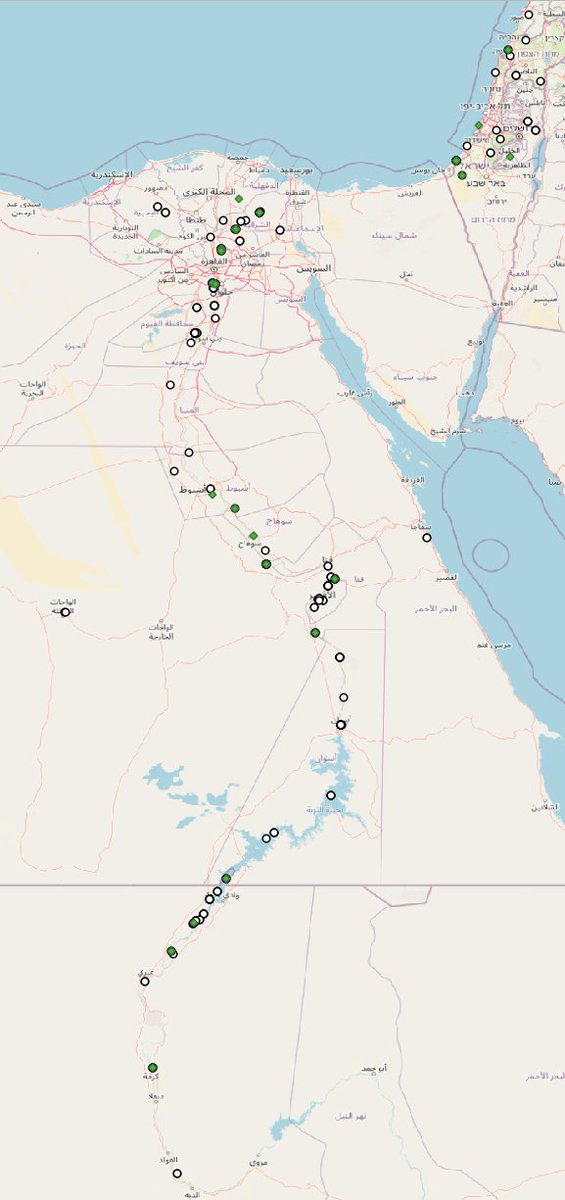
PNM dataset now includes geographical coordinates for visualisations based on SPARQL endpoint https://t.co/NUzO9J59vY
E.g.,one can put Middle Kingdom (white) and Second Intermediate Period (green) private-name scarabs on a map using QGIS and SPARQL-plugin SPARQLing Unicorn.