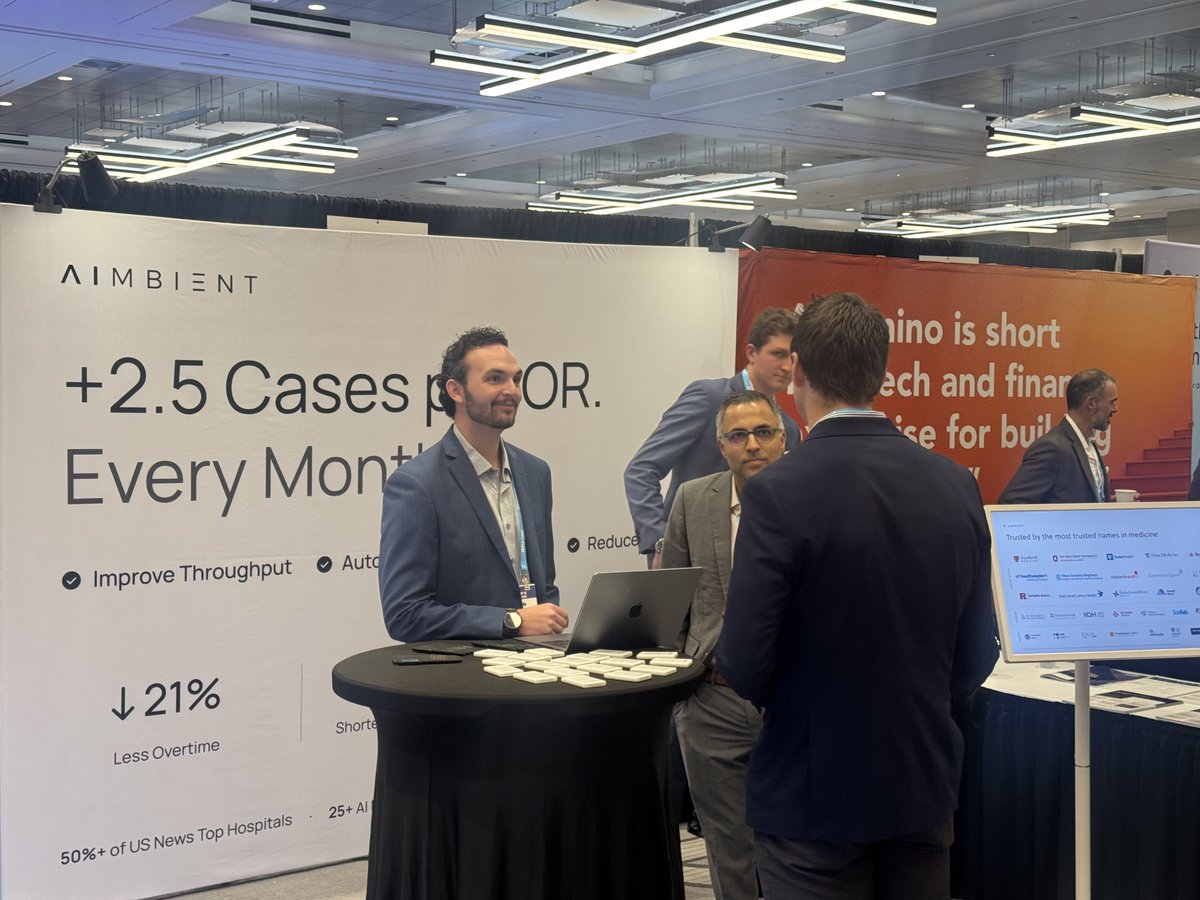
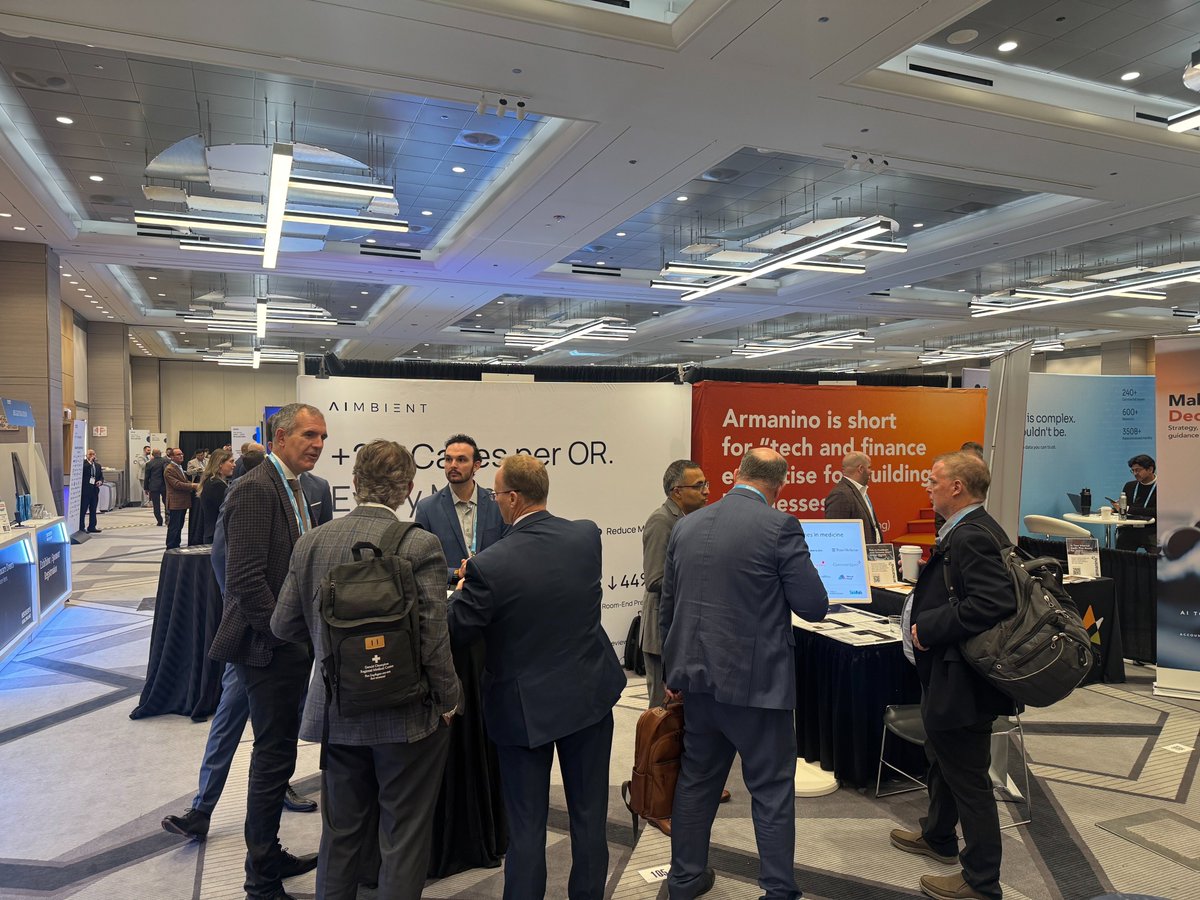
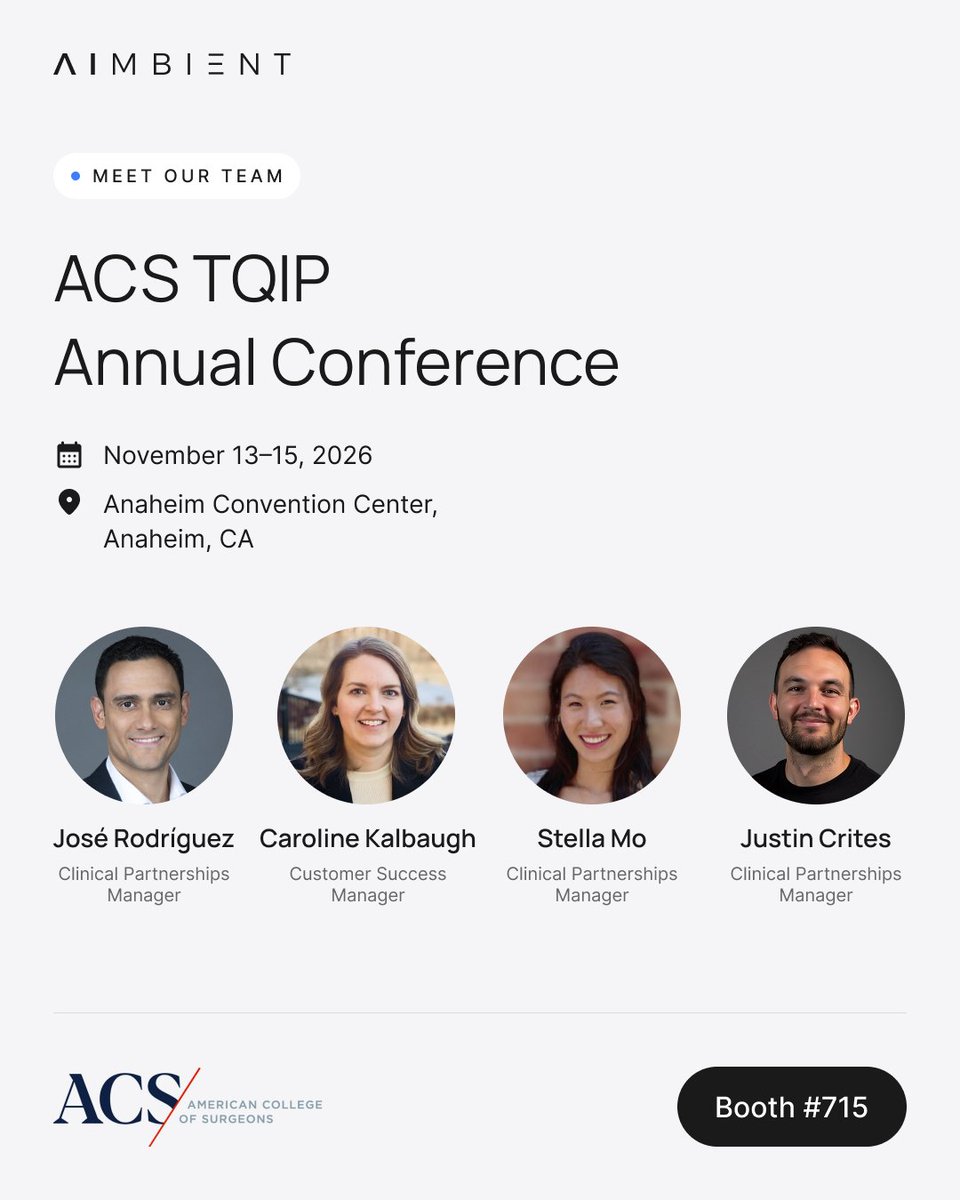
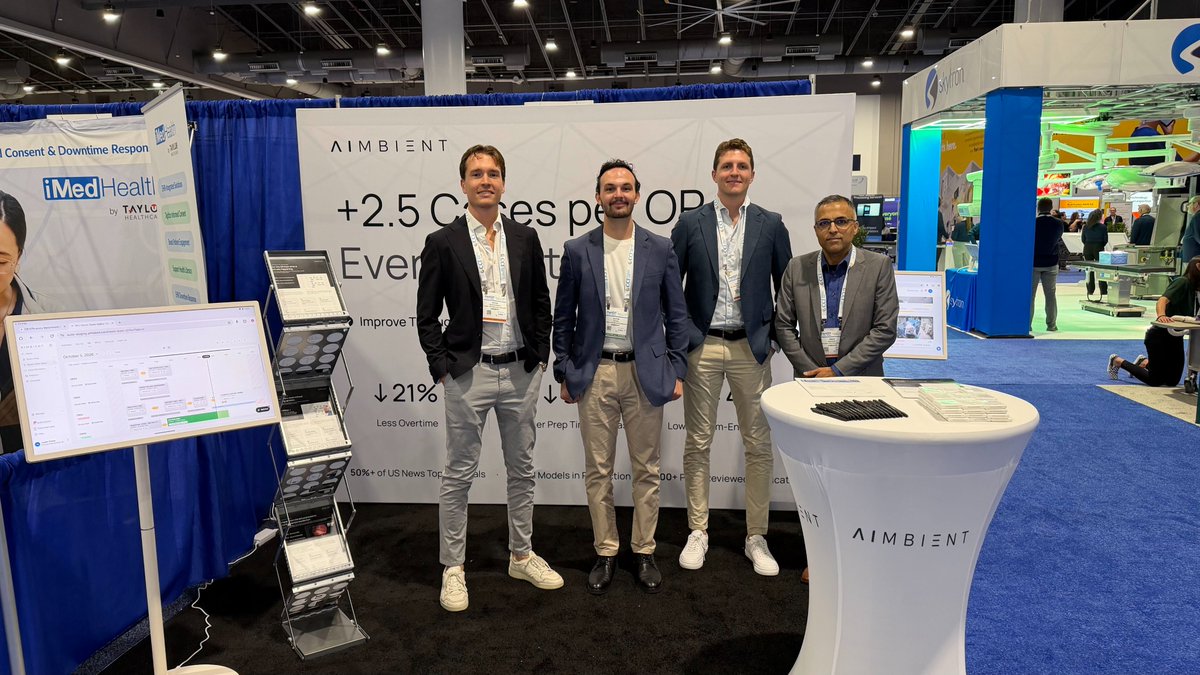
This week, the @aimbient team will be in Anaheim for the @AmCollSurgeons TQIP Annual Conference, November 13–15!
José Rodríguez, Caroline Kalbaugh, Stella Mo, and Justin Crites are looking forward to connecting with trauma care and quality improvement professionals who share a commitment to patient safety and continuous improvement.
If you’re attending, stop by Booth #715 to meet the team and learn how @aimbient is helping healthcare organizations turn procedural data into actionable insights.
We look forward to seeing you in Anaheim!
#TQIP2026 #TraumaCare #PatientSafety
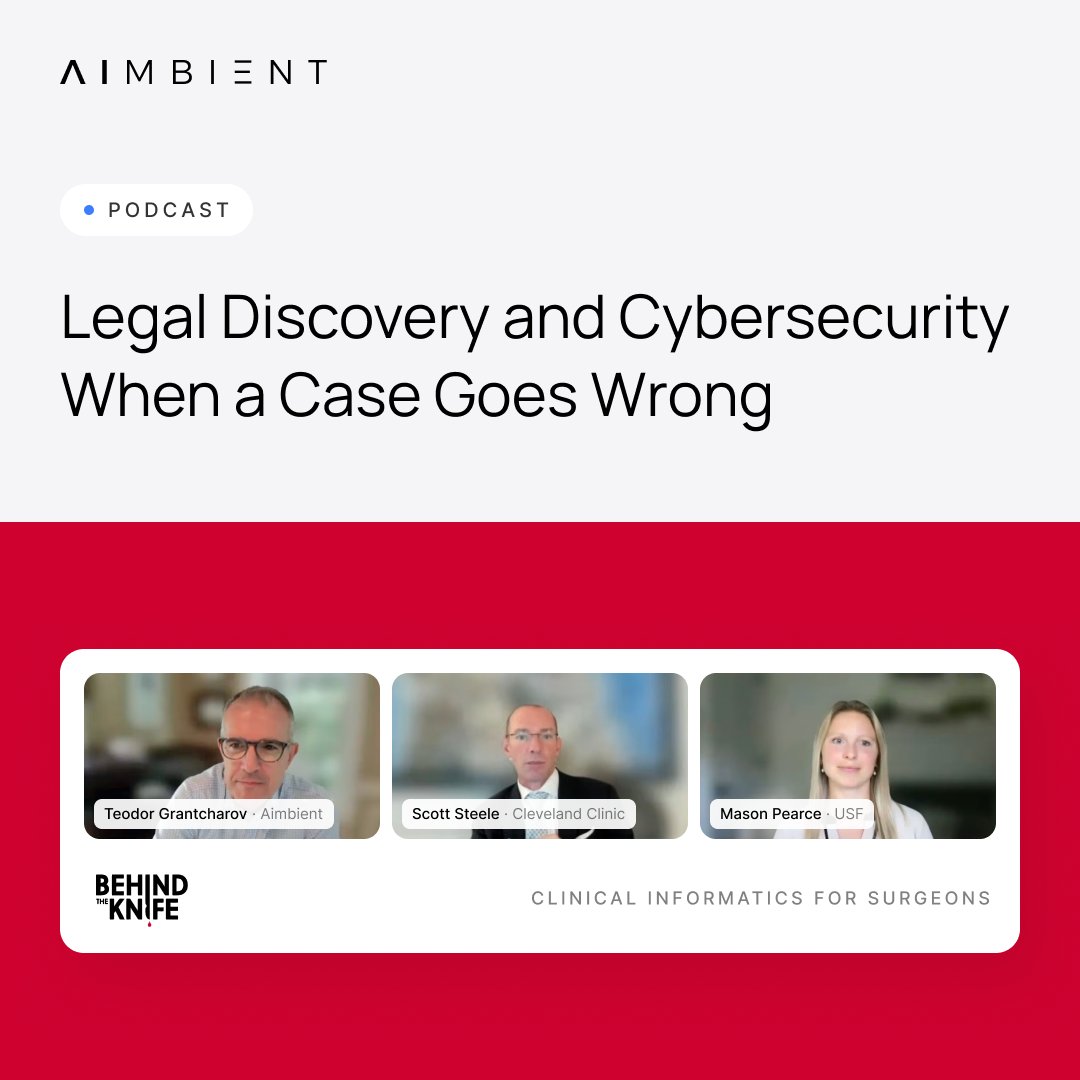
What happens to operating room data when a case goes wrong? @aimbient founder Dr. @TGrantcharovMD joins Dr. Scott Steele and Dr. Mason Pearce to discuss what the @aimbient platform captures, who can access that data, and how it can support learning and patient safety.
A key insight: governed recording can help surgical teams learn from complications—and may also protect clinicians. The conversation also covers AI’s role in clinical decisions and why cybersecurity is part of patient safety.
Listen now.
https://t.co/u2LNrXMffi
Why are highly trained clinicians still calling the OR to find out what’s happening?
On the latest episode of the @pearvc podcast, @aimbient founder and CEO Dr. @TGrantcharovMD joins Anson Zhou to discuss the information gaps that make procedural care harder to coordinate—from manually entered timestamps to events reconstructed after a case.
“We knew the outcome, but we did not reliably know how the outcome was produced.”
Teodor shares how making the OR measurable created a foundation for learning from everyday care, and where he sees procedural AI going next: toward timely support that fits into clinical work.
Listen to the conversation: https://t.co/YRORmNFmNG
#ProceduralAI #HealthcareAI
In an exciting collaboration, @DKFZ and @aimbient are training a model on 26,755 hours of real procedural video and evaluating it across more than 50 clinical tasks.
From recognizing surgical workflow to detecting instruments and bleeding, Human Surgeome aims to give future surgical AI applications a stronger foundation—and the team is putting it through rigorous testing across tasks and institutions.
We’re excited to share the story behind the project: how the model learns, how it’s being evaluated, and what comes next.
Curious what 26,755 hours of surgical video can teach an AI model? Read the blog to find out.
https://t.co/9etqud5OLU
#SurgicalAI #ComputerVision #SurgicalDataScience
The @aimbient team is in Chicago for Becker’s 14th Annual CEO + CFO Roundtable!
We’re looking forward to connecting with healthcare leaders and discussing how AI-powered surgical intelligence can help health systems improve visibility, operational efficiency, and patient care.
If you’re attending, stop by Booth #105 to meet the team and learn more about how @aimbient helps turn procedural and surgical data into actionable insights.
#BeckersHealthcare #HealthcareAI #OperationalEfficiency
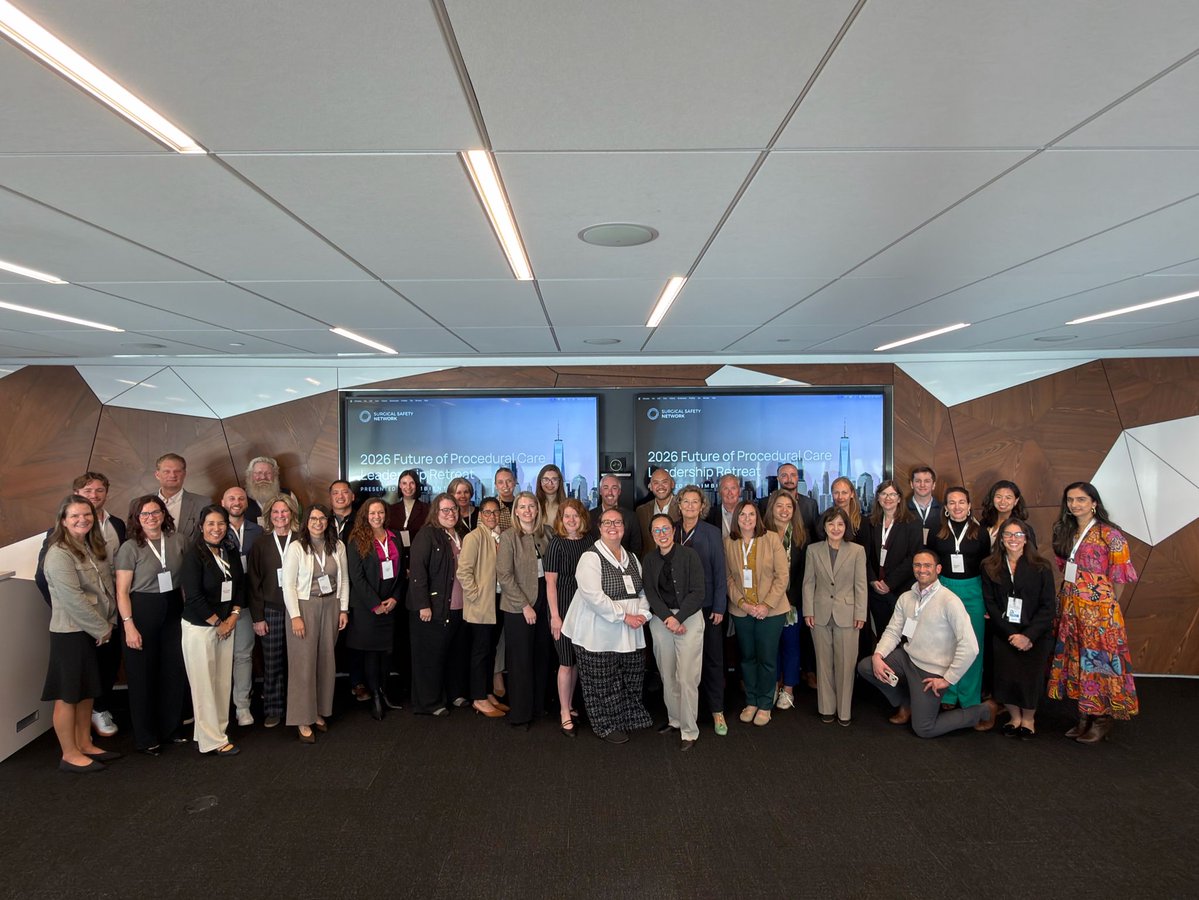
That’s a wrap on the @SurgSafetyNtwk Future of Procedural Care Leadership Retreat!
Over two days, healthcare leaders explored how to turn objective insights into safer, more efficient procedural care.
A central takeaway: improvement takes collaboration across disciplines and clear ownership of what happens next. Day 2’s mistaken-identity exercise brought this to life—showing why preventing errors requires reviewing the workflows patients move through and assigning responsibility for improvement.
Thank you to our attendees, speakers, and partners for sharing their experiences and helping turn these conversations into action.
#FutureOfProceduralCare #HealthcareLeadership #PatientSafety
How do we turn objective insight into better day-to-day practice?
That question connected the conversations on Day 1 of the @SurgSafetyNtwk Future of Procedural Care Leadership Retreat at One World Trade Center in New York City.
Across the sessions, a shared theme emerged: data can reveal gaps in OR scheduling, code response, and debriefing. Preparation, frontline teamwork, and human judgment are what turn those insights into safer care.
Dr. Andrew Petrosoniak brought this theme to life in "The Architecture of Preparation," exploring how teams and systems prepare to translate insight into performance.
A discussion featuring Kristen Cummings of The Ohio State University, Stephanie Battiste of Stanford Health Care and William Daniel of UT Southwestern Medical Center examined what it takes to advance quality and safety in procedural care.
Participants also put these ideas into practice during "Make Your Case: A Workflow Challenge," an interactive workshop exploring the realities of changing workflows and implementing improvements.
Thank you to everyone who contributed their experience, questions, and perspectives. We're looking forward to building on these conversations on Day 2.
#FutureOfProceduralCare #HealthcareLeadership #PatientSafety
“Reflective process is absolutely key, whether we are getting better at a sport or improving operations at a hospital.”
Dr. Andrew Petrosoniak brought this idea to life in this morning’s workshop at the @SurgSafetyNtwk Future of Procedural Care Leadership Retreat, exploring how effective teams turn objective feedback and insights into better performance.
A key takeaway: improvement starts with making time to reflect—and putting what we learn into practice.
Looking forward to more insights and conversations over the next day and a half.
#FutureOfProceduralCare #HealthcareLeadership #Workshop
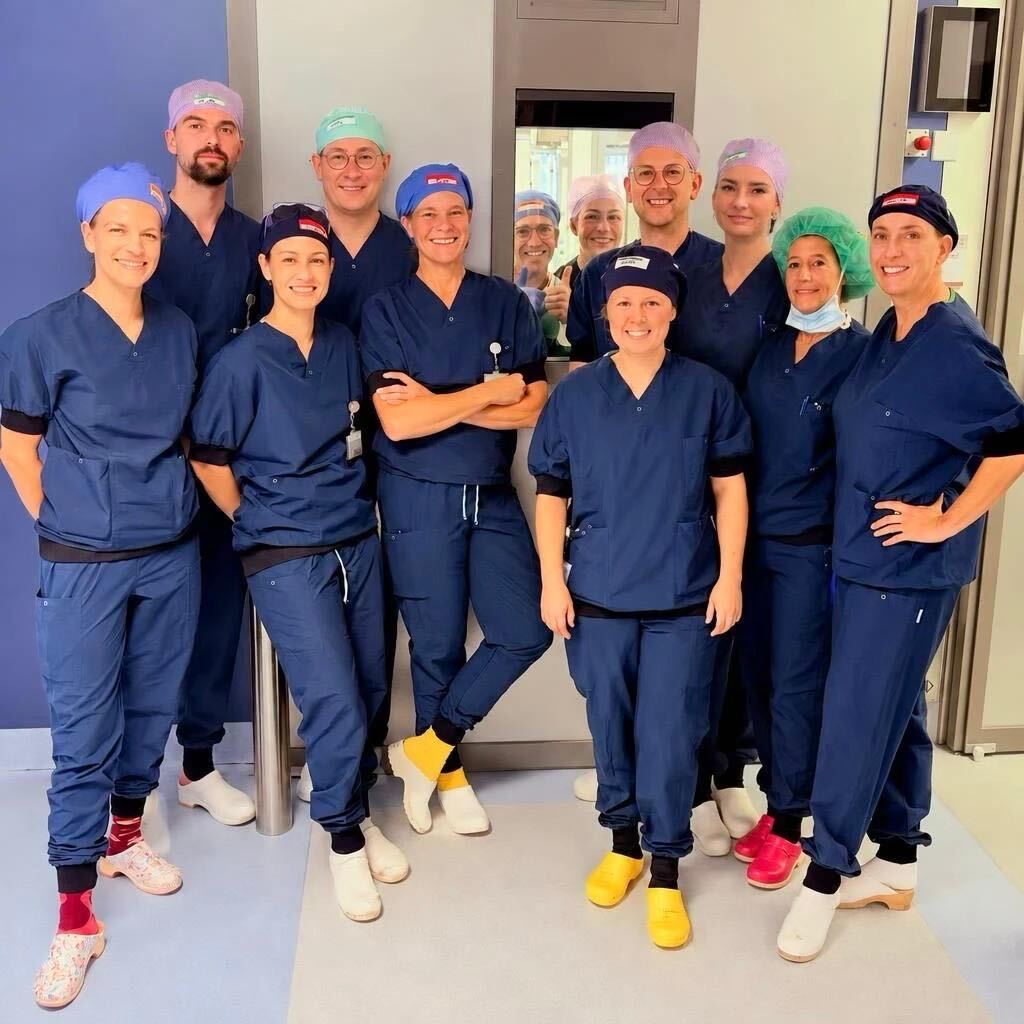
@aimbient's technology has officially been implemented at @amsterdamumc in the Netherlands!
This marks an important milestone in our continued work to bring AI-powered surgical intelligence into operating rooms around the world.
Thank you to Dr. @Marliesschijven and the @amsterdamumc team for their collaboration and dedication to bringing this deployment to life.
We're proud to recognize everyone involved in reaching this milestone, including the KEEPCARING project.
About Aimbient: Aimbient (formerly Surgical Safety Technologies) is an ambient AI platform that helps health systems improve efficiency and safety across surgical and procedural care. Founded by surgeons and trained on more than 15 million hours of real procedural data, Aimbient brings together real-time room visibility, predictive planning, safety insights and performance benchmarking on one platform. It gives clinical and operational leaders a shared source of intelligence to coordinate daily operations, improve scheduling and staffing, and continuously improve care across rooms and specialties. Aimbient’s platform is deployed in 650 surgical and procedural rooms.
#HealthcareInnovation #SurgicalIntelligence #HealthcareAI #AmsterdamUMC
Meet the @aimbient team attending the @AmCollSurgeons TQIP Annual Conference!
José Rodríguez, Caroline Kalbaugh, Stella Mo, and Justin Crites, will be in Anaheim, connecting with trauma care and quality improvement professionals and discussing the role of AI in advancing patient safety and surgical care.
If you're attending, stop by Booth #715 to meet the team, ask questions, and learn more about @aimbient
See you in Anaheim!
#TQIP2026 #HealthcareAI #PatientSafety #TraumaCare
What does it take to turn insights into meaningful improvements in procedural care?
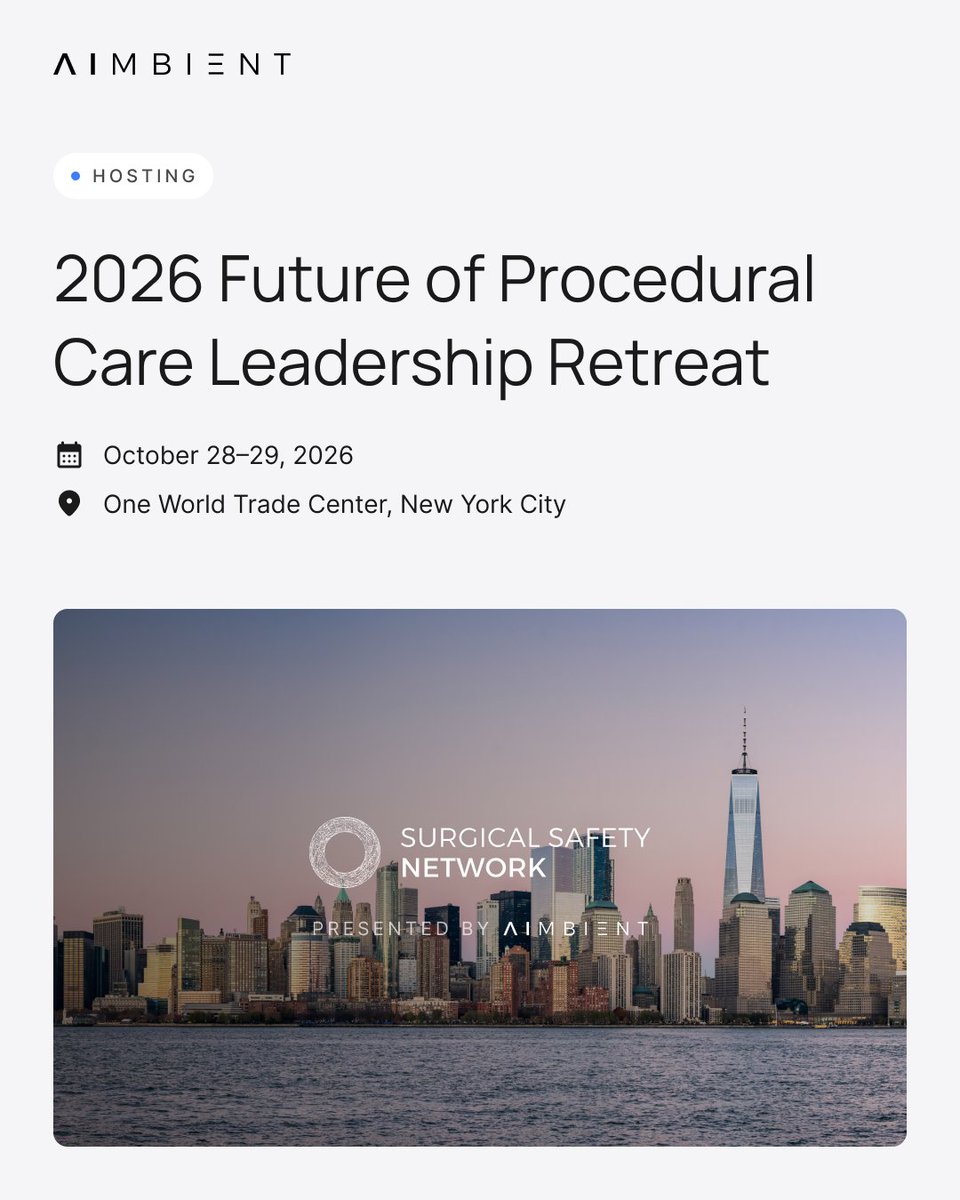
Next week, healthcare leaders will come together at One World Trade Center for @SurgSafetyNtwk 2026 Future of Procedural Care Leadership Retreat.
This year's agenda goes beyond traditional presentations, featuring interactive workshops, real-world case studies, and discussions focused on improving quality, safety, and operational efficiency.
From addressing common workflow challenges to exploring how teams can translate data-driven insights into practical solutions, the retreat will focus on strategies leaders can bring back to their organizations.
We look forward to the conversations ahead on October 28–29!
#FutureOfProceduralCare #HealthcareLeadership #PatientSafety
@aimbient will be in Anaheim, California, for the @AmCollSurgeons TQIP Annual Conference, November 13–15, at the Anaheim Convention Center!
Visit us at Booth #715 to learn how @aimbient is using ambient AI and procedural intelligence to help healthcare organizations gain greater visibility into surgical care and turn procedural data into actionable insights.
We look forward to connecting with trauma care and quality improvement professionals to discuss how technology can support patient safety and continuous improvement.
#TQIP2026 #HealthcareAI #PatientSafety #AmbientAI #TraumaCare
The future of procedural care is built through collaboration.
On October 28-29, @aimbient will welcome healthcare leaders to New York City for our Future of Procedural Care Leadership Retreat at One World Trade Center.
Over two days, attendees will explore key topics shaping the future of surgical care, including patient safety, AI-driven insights, and how healthcare organizations can turn early successes into systemwide impact.
Through interactive workshops and discussions, leaders will have the opportunity to exchange ideas, share experiences, and explore new approaches to improving procedural care.
We look forward to bringing everyone together!
#Aimbient #FutureOfProceduralCare #PatientSafety #HealthcareAI
We're heading back to Chicago!
@aimbient will be attending Becker's 14th Annual CEO + CFO Roundtable, November 2-5, at the Hyatt Regency Chicago.
As health systems look for new ways to improve operational performance, AI is creating opportunities to turn everyday procedural data into meaningful insights.
We're looking forward to connecting with healthcare executives and sharing how @aimbient is helping organizations improve visibility, drive efficiency, and make more informed decisions across procedural care.
Attending Becker's? Stop by Booth 105 and connect with our team!
#BeckersHealthcare #HealthcareAI #AmbientAI #HealthcareLeadership #OperationalEfficiency
Breakthroughs in surgical science do not happen in isolation. They happen when diverse communities have the tools to work together.
Through the @WellcomeLeap SAVE program, @aimbient helped connect clinicians, computer scientists, researchers, and engineers across hospitals and countries with secure, shared infrastructure for capturing, deidentifying, annotating, reviewing, and exchanging surgical video.
This collaborative approach contributed to ORena and the ORena FOCUS challenge, giving multidisciplinary teams new opportunities to study complex surgical video, develop stronger AI models, and build a shared understanding of surgical care. The work spanned more than 20 facilities across eight countries and four continents—all within two years.
Read Dr. Thomas Weiser’s perspective on how @aimbient helped bring these communities and capabilities together around a common goal: advancing surgical science and improving patient safety for patients everywhere.
https://t.co/WTwugdJUUi
#SurgicalScience #HealthcareCollaboration #SurgicalAI
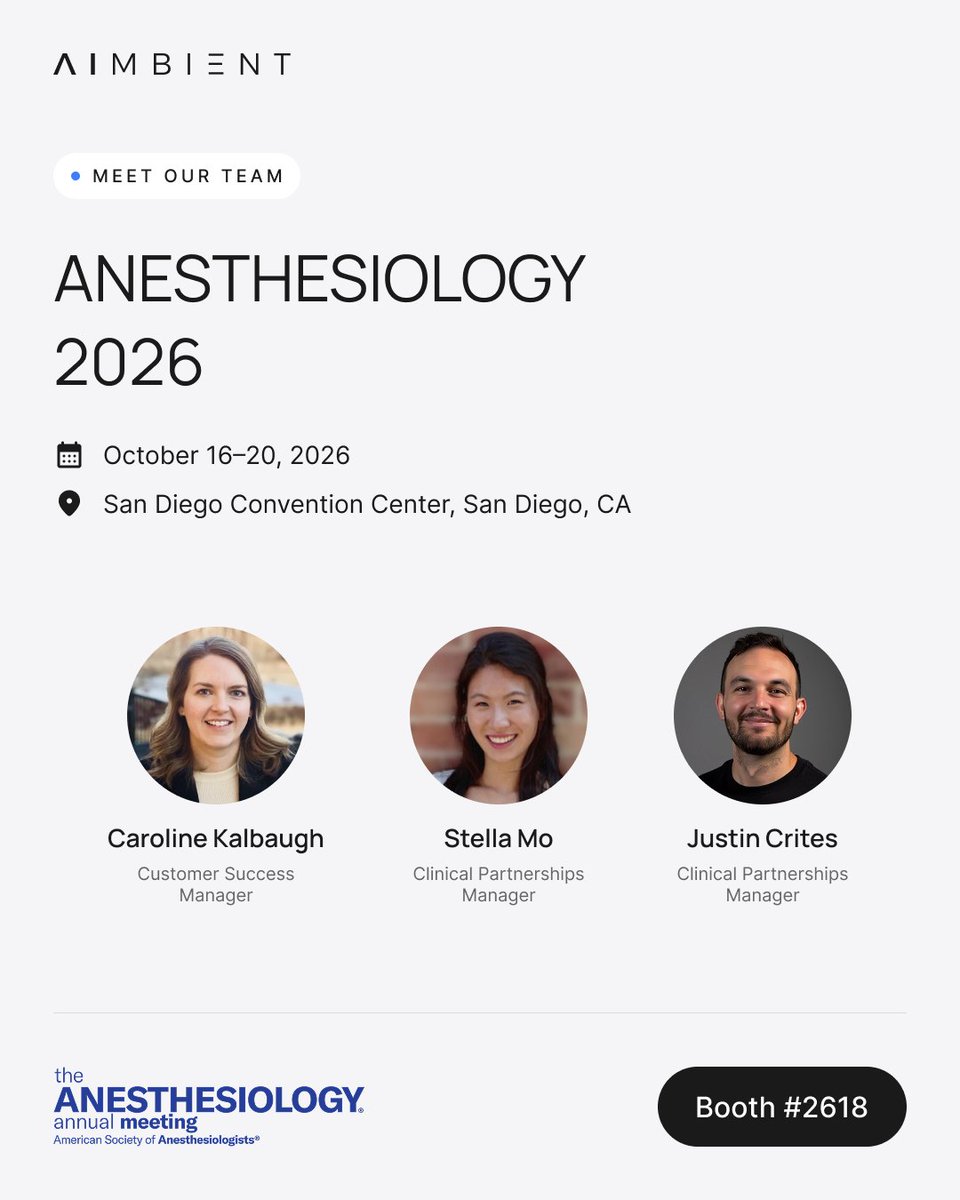
Meet the @aimbient team heading to San Diego for @ASALifeline ANESTHESIOLOGY 2026!
Caroline Kalbaugh, Stella Mo, and Justin Crites will be at Booth #2618 to connect with attendees and share how @aimbient is helping health systems use ambient AI and procedural intelligence to gain greater visibility into the OR.
If you’ll be at @ASALifeline ANESTHESIOLOGY 2026, stop by to meet the team and learn more about what we’re building.
See you in San Diego!
#ANESTHESIOLOGY2026 #HealthcareAI #Anesthesiology #PerioperativeCare #AmbientAI
AI governance in healthcare requires more than asking whether protected health information was used to train a model.
In our latest blog, Peter Grantcharov, Chief Technology Officer at @aimbient, outlines five questions healthcare leaders and AI governance committees should consider when evaluating privacy risk.
From understanding what a model can access and produce to examining how information flows through a deployed system, these five questions offer a practical framework for evaluating risk based on how AI actually operates in a healthcare environment.
Swipe through to explore the five questions every AI committee should be asking.
Read the full blog to learn more about building a practical, risk-based approach to healthcare AI governance.
https://t.co/BCjd5rMnYv
#HealthcareAI #AIGovernance #PatientPrivacy #HealthcareTechnology
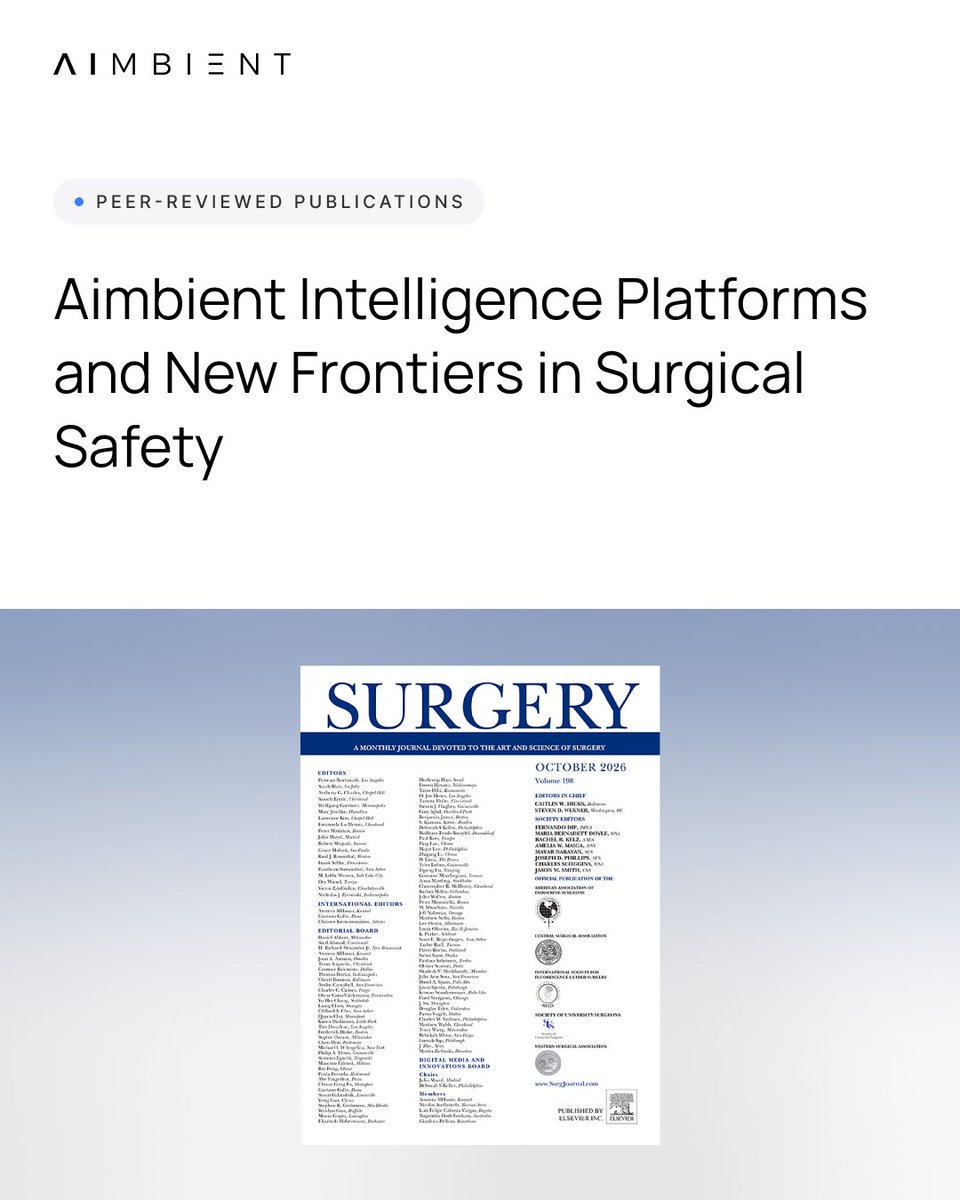
What happens when the entire OR team can learn from the same view of a surgical event?
A new article published in Surgery highlights why that visibility matters: one cited study found that surgical-site confirmation was reported as completed 95% of the time, but observed just 70% of the time.
That gap shows the opportunity to better understand how safety practices happen in everyday care.
At @StanfordHealth, multidisciplinary video review brought surgeons, anesthesiologists, nurses, sterile processing staff, and leadership together to learn from surgical events. Every one of the six sessions described led to a policy being created or changed.
“Aimbient Intelligence Platforms and New Frontiers in Surgical Safety,” by Dr. @lap_chloe, Dr. @maryhawn, and Dr. @TGrantcharovMD, explores how ambient data capture can help teams identify hidden safety threats and turn shared learning into concrete action.
Read the article: https://t.co/mKmmr4FRH9
#SurgicalSafety #QualityImprovement #Teamwork
The Aimbient team is in Savannah for Periop Leader Week 2026!
If you’re attending, stop by Booth #215 to meet the team and learn how Aimbient’s AI-powered procedural intelligence is helping health systems transform procedural data into actionable insights that improve quality, operational efficiency, and continuous improvement.
We look forward to connecting with you in Savannah!
#PeriopLeaderWeek #PerioperativeCare #HospitalOperations #PatientSafety #HealthcareInnovation
More than 20 facilities. Eight countries. Four continents. Two years.
These results demonstrate what is possible when surgical teams have the right infrastructure to turn complex, real-world data into a resource for innovation.
Through the @WellcomeLeap SAVE program, @aimbient helped teams securely collect, store, deidentify, annotate, analyze, and share diverse surgical video at a global scale. This work contributed to ORena, a surgical vision-language model dataset developed to support AI that can account for the variability of real operating rooms.
Discover how @aimbient capabilities helped transform surgical video from hospitals around the world into a foundation for research, learning, and safer care.
Read the full story: https://t.co/WTwugdKsJQ
#SurgicalInnovation #SurgicalAI #OperatingRoom