Author (Nine Lives, My time as MI6 spy inside Al-Qaeda), Ex banker, Ex spy, @MHConflicted .. Supreme Leader of the “Fraternity of Labelled Incoherent Pawns”
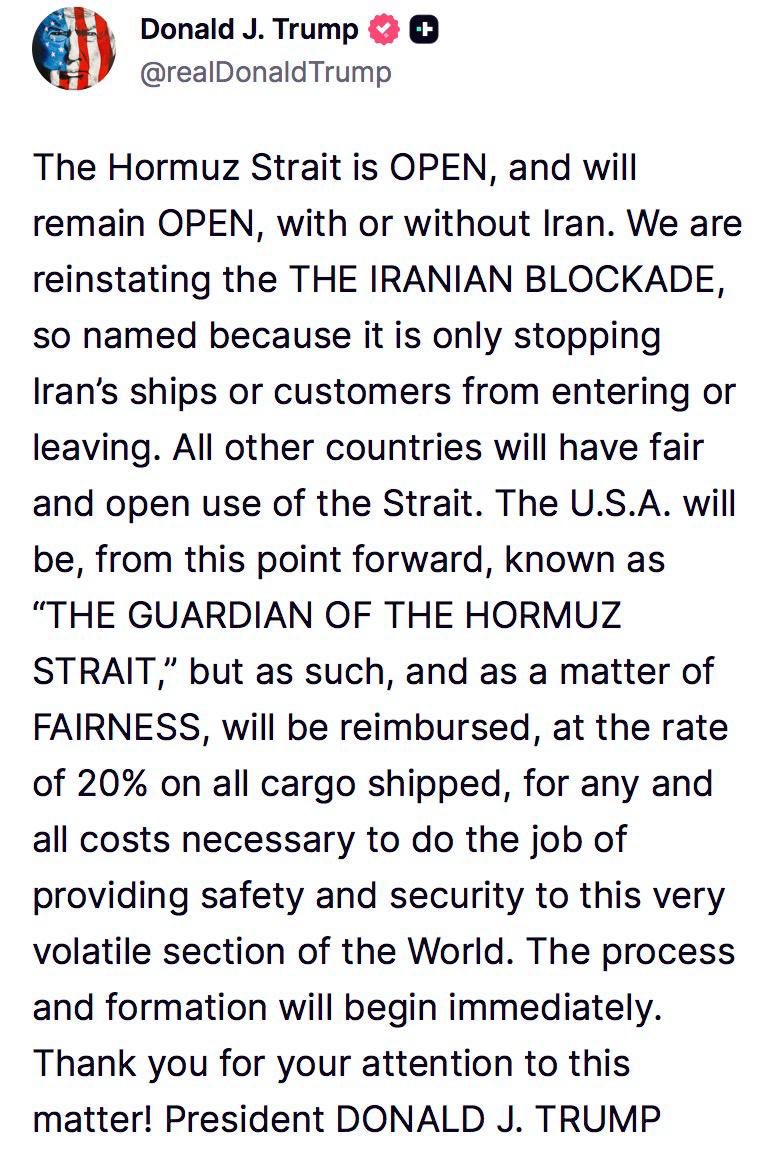
What’s the difference between Trump’s proposed piracy and the IRGC’s existing piracy?
The IRGC is actually cheaper. Trump should drop the 20% nonsense!
#Iran’s attack on Saudi & Qatari tankers in the Strait of Hormuz is a coercive tactic to extract concessions from the US
Riyadh & Doha condemned the attacks. But statemnts alone aren’t enough. Gulf states must confront the Iranian threat collectively & decisively b4 it’s too late
President Trump halted all military activity against Iran during Khamenei full week carnival funeral.
Meanwhile, Iran (supposedly mourning its loss) is continuing its terrorist attacks. Today they hit 3 tankers in Hormuz strait, 2 of them respectively Qatari and Saudi.
Du jamais vu.
The Pakistani PM (the “honest, impartial mediator”) might as well add that the late Supreme Loser was a mass murderer and a butcher who, apart from killing his own people, stoked the fires of civil wars across the Middle East .. wars that caused millions to die or be displaced.
Pakistani Prime Minister Shehbaz Sharif at Khamenei Funeral in Tehran: He Was a Great Scholar and Leader Whom Millions of Muslims Will Remember; Pakistan and Iran Will March Together under All Circumstances
@anexiledjew Turning up in white with low level representation is a more subtle message than not turning up! White was also the colour of the Umayyads!
Saudi Arabia sent a deputy foreign minister - not exactly a level befitting the holiness of the carcass in question - to the funeral of Iran’s now-defunct Supreme Loser, during Muharram no less.
And the delegation showed up in white robes. White. The colour reserved for Eids, weddings, and joyous celebrations. Not funerals. Certainly not Shia funerals during the month of mourning.
Now, before someone rushes in with “but it was a Friday and the Royal Court mandates white for officials on Fridays!” … sure, when you’re inside Saudi Arabia going about your Friday business. Not when you’ve been dispatched abroad to attend the funeral of a supposedly Muslim leader.
Royal Court protocol explicitly calls for black or dark brown robes at funerals (or no robes at all) … white is for when you’re happy. A low-level delegation dressed for a celebration, offering “condolences.” The most elegant slap in the face ever delivered under the guise of diplomacy between the two regional rivals.
@palacepatrol All were part of purchase agreement signed prior to hostilities and it involved KSA, UAE, Iranian and Omani “corporate entities” and there was no state involvement, except US authorities approval!🤦🏻♂️
Iran 🇮🇷 out of Syria 🇸🇾.
Iran 🇮🇷 out of Iraq 🇮🇶.
Iran 🇮🇷 out of Lebanon 🇱🇧.
Iran 🇮🇷 out of World Cup ⚽️.
Iran 🇮🇷 out of Yemen 🇾🇪 coming soon.
Iran out of World 🌎 coming soon.
#UAE#الامارات
The Iranian regime doesn’t want peace because conflict is their entire purpose for existing
Even when they sign a deal, the objective is to push the envelope to the limit of what the other side will tolerate
There’s no logic to it because it’s eschatological in nature
The truth is Iran never agreed, at any point, to "open" the Strait of Hormuz in the plain meaning of the term. We have only pretended that they did. Now we're fighting over it, again. Yet Iran continues to receive sanctions relief, access to frozen funds, and more. Why?
Mark, with all due respect — the UAE doesn’t need a permission slip from Washington to conduct its foreign policy. The UAE has 3 islands illegally occupied by Iran, a shared maritime border, and billions in bilateral trade exposure. Managing that reality isn’t “coddling” — it’s called statecraft, something that requires nuance beyond a cable news monologue.
The UAE stood firmly against Iranian proxies, hosted the US Fifth Fleet’s logistics, signed the Abraham Accords, and has been one of the most consistent partners in regional stability. If pragmatic diplomacy reads as weakness to you, perhaps the question is whether your framework is equipped to understand a region you’re watching from 7,000 miles away.
Frustration is understandable. Oversimplification, however, is not analysis.
@Khaledhzakariah First I’m a UK citizen who lived 22 years there and spent 8 years risking my life for Queen and Country, working for UK intel services under cover inside terror organisations!
I earned the right to speak my mind about UK issues!
So you better delete the bullshit you posted!
Hot take that will get me crucified in the UK 🇬🇧💀:
The NHS costs $255 billion a year. That’s more than the entire national budgets of Egypt, Bangladesh, and Pakistan combined - three countries running health, education, defence, and everything else for 550 million people - and they’re still $40 billion short of matching what Britain spends on “free” GP appointments and hip replacements for 65 million.
It’s not a health service. It’s a bureaucratic Godzilla in a hospital gown, devouring the economy one billion at a time.
The UK can’t tax its way out of this. You can squeeze the rich until they flee (they already are), hike taxes until no one bothers earning (getting there), and the beast will still be hungry next fiscal year, asking for another 5%.
The NHS isn’t free. It’s just invoiced to your grandchildren.
Break it up. Privatise it. Sell it off in pieces over 10 years. Use the proceeds to pay down the debt before it hits 200% of GDP and Britain becomes a museum of its former self.
“But healthcare is a right!” Sure. So is food … and Tesco seems to manage without a £200 billion state bureaucracy and an 18-month waiting list for a sandwich!
@OJayL06 Famine?!!!! There’s no famine!! Imports from Russia, Pakistan, China and India when it comes to food and medicine as well as massive local production are all keeping the population generally well fed! There is no famine!!!🤦🏻♂️
For almost two decades, I have investigated the financing of terrorism and the money-laundering architecture of the IRGC, its global network of proxies, sleeper cells, front companies, charities, facilitators, and agents. During that time, I trained banks, financial institutions, financial intelligence units, and law enforcement agencies across the Europe, South East Asia and the Middle East on how terrorist organizations move and preserve their money.
One lesson has remained constant throughout those years.
When a terrorist organization no longer has to spend its own money on feeding people, providing medicine, or supplying fuel in the territories it controls, it doesn’t become weaker. It becomes stronger.
Those three categories - food, medicine, and fuel - are not just humanitarian necessities. They are also governance costs. Every dollar that someone else spends on them is a dollar that the terrorist organization no longer has to spend itself. Those “saved” funds are then available for what the organization considers its real strategic priorities: recruiting fighters, purchasing weapons, producing missiles, building drones, paying operatives, and expanding its regional influence.
There is a second effect that is just as important.
When outside actors provide humanitarian necessities without addressing who controls the territory, they inadvertently help that terrorist organization maintain its grip on the population. The organization claims credit for stability while someone else pays the bill. That strengthens its legitimacy and entrenches its control.
This is why, whenever I hear arguments that easing restrictions is harmless because the money will “only” be used for humanitarian imports or agricultural products, I remain deeply skeptical.
The issue is not whether the money buys wheat or medicine. The issue is what money no longer has to buy wheat or medicine.
Money is fungible.
Even if every dollar were genuinely spent on humanitarian goods, it would still free up other funds inside the Iranian system to finance the IRGC’s strategic priorities—its proxy network, ballistic missile programme, and long-range drone capabilities.
I am equally unconvinced by the argument that such arrangements primarily benefit American farmers.
Iran is not structurally dependent on U.S. agricultural exports. Its staple diet revolves around wheat and rice, with significant imports traditionally coming from nearby suppliers such as Russia, India, and Pakistan, where geography and logistics often make procurement more economical. Soybeans and corn are hardly central to Iranian food consumption in the way they are often portrayed in political messaging.
So when policymakers argue that these transactions are primarily about helping American agriculture, I believe they are missing the larger strategic picture.
The real question is not what Iran buys.
The real question is what Iran no longer has to pay for—and where those newly available resources ultimately end up.
Anyone who has spent years following terrorist finance knows that this is precisely how financial pressure is diluted. The numbers on paper may appear humanitarian, but the strategic effect can be to preserve and strengthen the very military infrastructure that sanctions were designed to constrain.
That is the problem. And it has always been the problem.
The new sales pitch is unbelievable.
“$300 BILLION for the Ayatollahs? Don’t worry—it’s for American corn.”
Iran doesn’t need corn.
Iran doesn’t need wheat.
Iran doesn’t have a produce problem.
Iran has a freedom problem.
Oh, abd as we told @BarackObama abd @JoeBiden, now we tell @JDVance:
MONEY. IS. FUNGIBLE.
That’s why we call this not a “peace deal” but the Ayatollah Bailout.
Watch what our @VP actually said. 👇