Talarico: Here's what real men don't do. They don't lie and cheat their way through life. They don't sell their soul to the highest bidder. Real men serve others, weak men serve themselves. So I welcome this debate. I don't think Paxton or Cruz are in a position to tell anyone what a real man is.
A Nazi commander loaded his pistol, pressed the cold metal barrel directly against the forehead of an American soldier, and gave a chilling ultimatum: "Order the Jewish soldiers to step forward, or I will shoot you right now."
What happened next in that frozen prisoner-of-war camp changed history forever, yet the man who stared down death kept it a secret for the rest of his life.
It was January 1945, and the bitter winter of World War II was at its peak. Inside Stalag IX-A, a notorious German prison camp near Ziegenhain, thousands of American soldiers were trapped behind barbed wire. Among them was Master Sergeant Roddie Edmonds, a twenty-five-year-old from Knoxville, Tennessee. As the highest-ranking non-commissioned officer in his section, Edmonds was responsible for the lives of 1,275 men.
One day, the camp commander, a fanatical Nazi major named Siegmann, issued a terrifying directive.
He ordered that the following morning, all American prisoners of Jewish faith must step out of the ranks during roll call. Everyone knew what this meant. Separating the Jewish soldiers was the first step toward sending them to extermination camps.
Inside the dark, freezing barracks, the prisoners panicked. Some of the Jewish soldiers considered stepping forward willingly to protect their Christian brothers from Nazi wrath. But Edmonds refused to let that happen. He looked at his men and gave a clear, definitive order: "Tomorrow, everyone steps forward. Everyone."
The next morning, the ground was thick with snow. Major Siegmann walked out onto the parade ground, expecting to see a small, isolated group of Jewish soldiers standing apart from the rest. Instead, he stopped dead in his tracks. All 1,275 American soldiers had stepped forward together in perfect unison.
The commander turned red with anger and stormed over to Edmonds. "They cannot all be Jews!" Siegmann screamed.
Edmonds stood completely still, looked the Nazi straight in the eyes, and replied: "We are all Jews here."
Enraged, Siegmann drew his Luger pistol and pressed it against Edmonds' forehead. The tension was suffocating. Hundreds of men held their breath, waiting for the gunshot. But Edmonds did not blink.
"According to the Geneva Convention, we only have to give our name, rank, and serial number," Edmonds said, his voice steady and calm. "If you shoot me, you will have to shoot all of us. And when the war ends, you will be tried for war crimes."
Edmonds knew the German army was collapsing and the Allies were advancing. Siegmann knew it too. The Nazi commander looked at the wall of unified men, realized he could not break their spirit, and slowly lowered his gun. He turned around and walked away without saying another word.
Because of that moment of defiance, two hundred Jewish-American soldiers survived the Holocaust. When the war ended, Edmonds returned to Tennessee, married his sweetheart, and raised a family. He never bragged about his actions, never looked for medals, and never even told his own children what he had done. To him, protecting his men was simply his duty.
Decades after his death in 1985, his son uncovered the truth by talking to the survivors. In 2015, Edmonds was officially recognized as Righteous Among the Nations, the highest honor Israel bestows upon non-Jews who risked their lives to save Jews during the Holocaust. He remains the only American soldier to ever receive this recognition.
True heroism does not look for applause, and love will always be louder than hatred.
By standing together in the snow, those soldiers proved that when we refuse to abandon each other, ordinary human beings can become absolutely invincible.
BREAKING: Ken Paxton’s own lawyer just endorsed James Talarico:
“I defended Ken Paxton for years in the impeachment trial and in state criminal cases. But in my view, I think Ken has lost sight of his core mission, which is to represent the people of Texas.
And unlike Ken, I believe that you, James, believe in unity over division and that you know how to assemble not only Democrats but Independents and Republicans and we need that right now.
We need unity, we don't need any more division and that's why I'm supporting you.”
When the President of France visited the United States in April 1960, he asked the FBI to help him find a man.
The man he was looking for was an American citizen. He was sixty-four years old. He had been awarded fifteen French military decorations and — six months earlier, in a ceremony in Paris — had been made a Knight of the Légion d'honneur, the highest civilian honor France can give. The medal had been pinned to his chest by the President himself, who had publicly called him un véritable héros français. A true French hero.
The FBI located the man within a few days.
He was operating an elevator at Rockefeller Center in New York City.
The elevator operator's name was Eugene Bullard. He had been born in Columbus, Georgia, in 1895, the son of a man whose own father had been a slave.
He had run away from Columbus at the age of eleven, after watching a white mob nearly lynch his father.
He spent the next several years drifting through the American South. At sixteen, he stowed away on a German freighter at Norfolk, Virginia. He landed in Aberdeen, Scotland. From there he made his way to London, where he learned to box. By 1913, at eighteen, he was prizefighting in Paris.
When Germany invaded France in August 1914, Bullard was nineteen years old. He had no legal obligation to fight. He had no French citizenship.
He went to the recruiting office on October 19, 1914, and signed up for the French Foreign Legion.
He spent the next eighteen months as an infantryman in some of the worst fighting of the war — at the Somme, at Champagne, at Verdun. He was wounded three times. The third wound, on March 5, 1916, tore open his thigh and left him with permanent damage to his leg.
He was twenty years old. The doctors told him he would not return to the infantry.
He decided he wanted to fly.
In a Paris café in the spring of 1916, while he was recovering, Bullard mentioned to three white American friends that he was thinking of joining the French air service. A Mississippian named Jeff Dickson laughed.
Gene, Dickson said, you know damn well there aren't any Negroes in aviation.
Bullard answered: Sure do. That's why I want to get into it. There has to be a first to everything, and I'm going to be the first.
Dickson bet him two thousand dollars he would not make it.
Bullard took the bet. He earned his pilot's license on May 5, 1917. He won the bet.
He reported to the front in August 1917 and flew approximately twenty combat missions over the next three months in a SPAD VII. The fuselage was painted with a bleeding heart pierced by a knife and the French phrase Tout le Sang qui Coule est Rouge — All Blood that Flows is Red.
He carried, on every combat flight, a small capuchin monkey named Jimmy in the front of his flight jacket.
The French press began calling him L'Hirondelle Noire — the Black Swallow.
When the United States entered the war in 1917, Bullard immediately applied to transfer to the U.S. Army Air Service.
His application was rejected.
The U.S. Army Air Service had a policy, in 1917, of not accepting Black pilots. The other American pilots flying for France in his unit, all of them white, were transferred to the U.S. Air Service.
He was the only one who was not.
For the next twenty years, he was one of the most familiar faces in the Montmartre nightlife of Paris between the wars. He owned a nightclub called L'Escadrille. He spoke fluent French, English, and German. Hemingway drank there. Fitzgerald drank there. Langston Hughes drank there. Josephine Baker performed there. Louis Armstrong was a personal friend.
When Germany invaded Poland in 1939, Bullard was forty-four. His fluent German and his ownership of a nightclub frequented by German officers made him useful to the French Resistance. He became an intelligence agent — eavesdropping in his own bar on conversations between German officers who did not know he understood every word.
When France fell in June 1940, friends in the Resistance smuggled him across the Spanish border before the Gestapo could arrest him.
He came back to the United States for the first time in twenty-eight years.
He arrived in New York with thirty dollars in his pocket and a permanent limp.
He did not return to a hero's welcome. He returned to a country that had no idea who he was.
He worked at a perfume counter. He worked as a security guard. He worked at the Staten Island shipyards. By the late 1940s, he had taken the job that he would hold for most of the rest of his life.
He operated the elevator at Rockefeller Center.
He was wearing the elevator uniform on the day a producer from NBC came down from the studios upstairs to ask if he was the man Charles de Gaulle had been looking for.
A few weeks later, NBC sent a film crew to interview him in the lobby. The studios where NBC produced The Today Show were on the floors above. He had operated the elevator that took the network executives up to those studios every morning for nearly ten years. He had not been recognized as he did it.
He went back to operating the elevator the following Monday.
He died of stomach cancer on October 12, 1961, three days after his sixty-sixth birthday.
He was buried in the French War Veterans' section of Flushing Cemetery, in Queens, in the uniform of the French Foreign Legion. The casket was draped with the French flag.
In 1994 — thirty-three years after his death — the United States Air Force formally commissioned Eugene Jacques Bullard as a Second Lieutenant, posthumously.
It was the first commission the U.S. military had ever offered him.
He had been the first Black combat pilot in American history.
The French had been calling him a hero since 1917.
The Americans got around to it in 1994.
Boudreaux suddenly quit drinking, took a bath, quit chasing women, quit his poker games, and stopped just laying around. He started cutting the grass around the church, even painted the church, and was faithful to be first to attend on Sundays! Father Thibodeaux asked Boudreaux what about dis wonderful change that had done overtook him.
Boudreaux explained, "Mais Fodder, I heard on da news 'Crisis in the Gulf' . . . and if He's dat close, I wanna be good to go!"
Dear Scott Pelley: pull the entire 60 Minutes team together and go to MSNow and offer a package deal to recreate the show for Sunday night and call it The Hour
Rubio: "We're getting a lot of questions about us. I don't think it's fair because ultimately the people who have closed the Strait of Hormuz are Iran."
Sen. Schatz: "Nobody's defending what Iran is doing. I think what we're saying is this was not just predictable, it was predicted…It's really shocking to me the degree to which this administration expresses shock that the thing that everybody said was going to happen ended up happening."
At 100 years old, WWII veteran Bernie Smoot still drives his convertible Ford Mustang to play golf five days a week, shoots in the low 80s and shares wisdom from 74 years in the game: “You live to play golf. But to reach my age, you play golf to live.”
To celebrate Bernie — who landed at Omaha Beach just months after graduating high school — his PGA Coach and friend Jeff Maynor organized a tournament in his honor at the University of Maryland Golf Course, where Bernie plays five days a week.
Maynor, the course’s PGA Director of Golf, has run a @PGAHOPE program there for Veterans since 2019, which Bernie loves to support. The tournament for Bernie was a chance for those Veterans to thank him and celebrate his love for the game.
Every year, I share this video of French caretakers who take sand from Omaha Beach in Normandy, and scrub them into the letters to give them the gold coloring.
They do this for all 9,386 US soldiers who died.
France also gave us this land as American soil. #MemorialDayWeekend
SNYDER: Our entire diplomatic process has been reduced to only two negotiators: president’s son-in-law and president’s friend. They are not diplomats.
You would probably say, “That looks incredibly corrupt,” and you would also say, “That looks like it could never work.”
And it can never work. It won’t work with Ukraine, it won’t work with Iran. In fact, it has already failed with both Ukraine and Iran.
But the deeper problem is that United States cannot help anyone negotiate an end to a war unless United States has clear sense of its own interests.
And Trump administration does not operate on the basis of American interests. It operates on the basis of what is convenient for few people around Trump.
🚨NEW: Kerry Kennedy has announced Late Show Host Stephen Colbert is the recipient of the 2025 Robert F. Kennedy Human Rights Award for his advocacy for free speech and speaking truth to power.
RETWEET to congratulate Colbert on this honor!
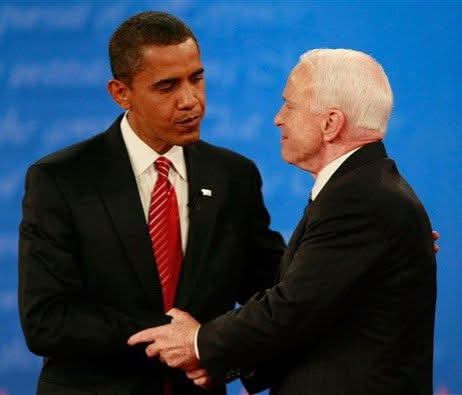
"Circa early 2018, somewhere in the quiet of his beloved Cornville, Arizona ranch, John McCain — living with the knowledge that his days were growing shorter — made a decision that was so perfectly, mischievously, achingly him that it made the whole country smile through their tears when they finally heard about it: he picked up the phone and called Barack Obama, the man who had defeated him for the presidency a decade earlier, and asked him to speak at his funeral. Obama later said that when that call came, he felt 'sadness and also a certain surprise' — and then, with the warmth that defined him, he recognized exactly what McCain was doing, telling mourners at the Washington National Cathedral on September 1, 2018 that the invitation showed McCain's 'irreverence, his sense of humor, a little bit of a mischievous streak' — because, as Obama put it to a cathedral that erupted in laughter through their grief, 'what better way to get a last laugh than to make George and I say nice things about him to a national audience?' It was John McCain's final act of political theater, and it was genius — choosing the two men who had each defeated him for the presidency to stand before the nation and celebrate his life, sending a message louder than any speech he could have given himself: that in America, rivalry and respect are not opposites, that the man you run against can still be the man you trust with your legacy, and that decency is not weakness but the most durable form of strength. Obama stood at that altar and told the packed cathedral that McCain had 'made this country better,' that he had made Obama a better president, and that when all was said and done, despite every disagreement, 'we never doubted the other man's sincerity or the other man's patriotism' — and in the front pew, Cindy McCain wept, because her husband had arranged, from the very edge of his life, one last beautiful lesson in what it means to be an American.
CBS News Radio is shutting down tonight after nearly a century on the air.
The storied service started in 1927 and gave rise to such icons as Douglas Edwards, Walter Cronkite and Edward R. Murrow.
Together, they and their colleagues brought history into our homes:
From the liberation of Nazi camps in Germany, to the assassination of President John F. Kennedy, to the deadliest attack on American soil, 9/11.
The company announced the closure in March, blaming what it called "challenging economic realities."
To borrow Mr. Murrow's famous phrase, we wish everyone at CBS News Radio one final "Good night, and good luck."
NEW: I asked CBS News if Stephen Colbert will interview Pope Leo XIV on Thursday’s final Late Show.
They declined to comment.
Colbert lost his father and two brothers in a plane crash when he was ten.
He has spent the next fifty years making his Catholic faith the spine of everything that followed — including the late-night chair he hands back on Thursday.
The moment reveals the guiding light of his career: a Catholic faith forged in trial, tragedy, and redemption. https://t.co/76769yGC7e
His affection for Pope Francis was the throughline of his Late Show years.
He cheered the Argentine pontiff’s encyclicals on the poor and on creation, defended Francis when American leaders sniped from the sidelines, and spoke about him the way one speaks about a beloved uncle — proudly, possessively, with the easy intimacy that comes from feeling seen by the institution you love.
When Francis died on Easter Monday last year — April 21, 2025 — Colbert opened his monologue with a quiet eulogy that did not ask for laughter.
He simply said the pope had shown him what mercy looked like in motion.
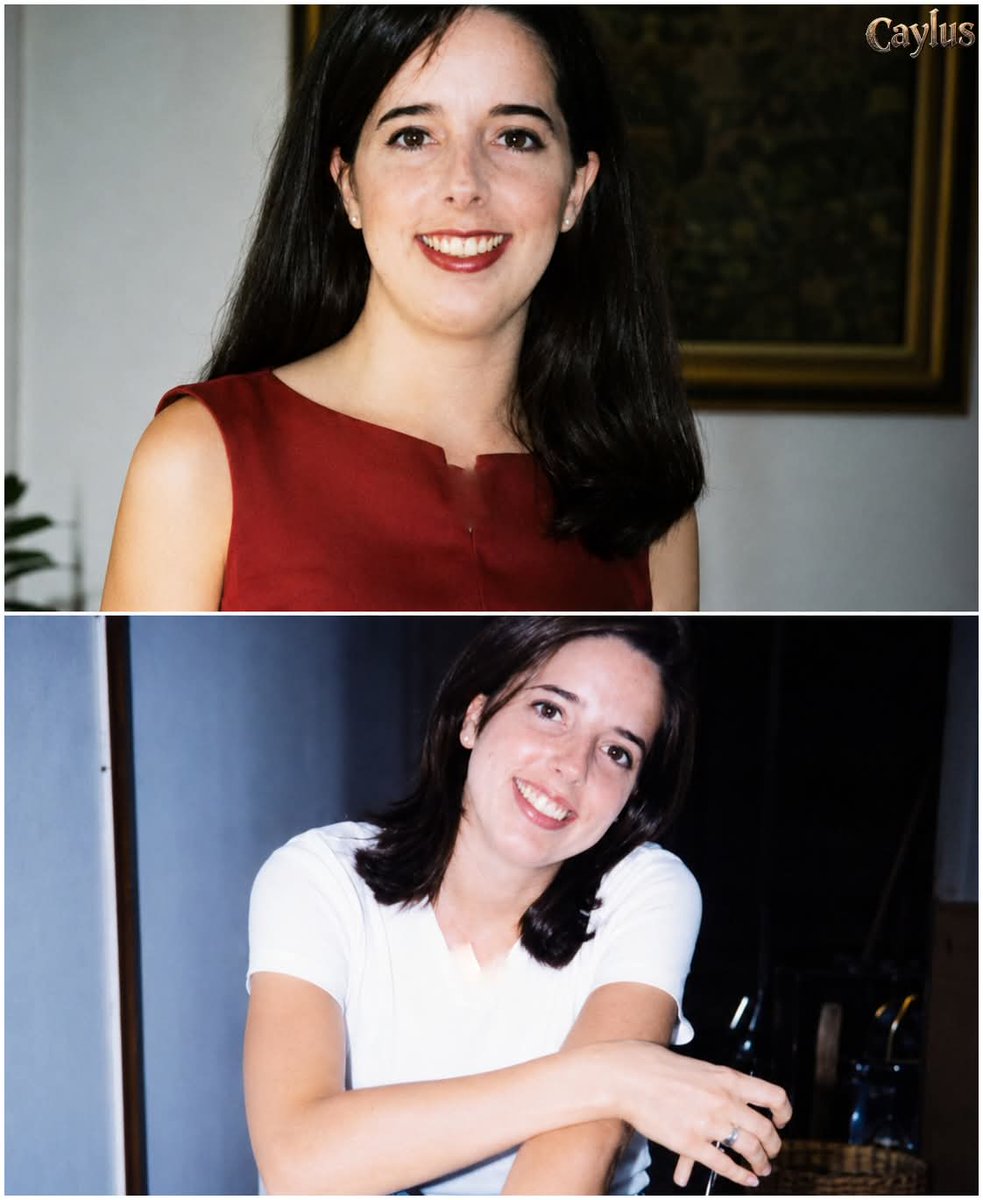
On September 11, 2001, a 27-year-old woman called her stepmother from a hijacked plane and said 8 words that have stayed with her family for over 20 years: "This is going to be so much harder for you than it is for me."
Two days before that phone call, Honor Elizabeth Wainio had been in Paris.
She had traveled through Europe for a friend’s wedding in Florence, then spent time wandering the streets of Paris with another friend, eating lunch along the Champs-Elysees and lighting a candle in a church for her grandmother. She once told her mother that if she ever got to see Paris, she could die happy.
Back home in New Jersey, she sounded full of life. She talked about craving her mother’s spaghetti, catching up on work emails, and preparing for a business trip to San Francisco. Everyone called her Lizz. At twenty-seven, she was already one of the youngest district managers at Discovery Channel Stores.
Bright. Warm. Driven.
On the morning of September 11, she boarded United Airlines Flight 93 at Newark International Airport. The sky was clear. The world still felt ordinary.
Then, at approximately 9:28 a.m., four hijackers stormed the cockpit.
Passengers were forced toward the back of the plane as panic spread through the cabin. But unlike the people on the earlier hijacked flights, those aboard Flight 93 learned the truth in time. The Twin Towers had already been hit. The Pentagon too.
This was not a negotiation.
The plane itself was the weapon.
The passengers understood. And somewhere inside that terror, a woman sitting near Lizz handed her a phone and told her to call someone she loved.
Lizz called her stepmother, Esther Heymann.
What Esther heard in those final minutes never left her. Lizz’s voice was calm, impossibly steady for someone who knew she was going to die. She did not spend the call talking about her own fear.
Instead, she worried about theirs.
“It just hurts me most,” she said softly, “that this is going to be so much harder for you than it is for me.”
For several minutes, they stayed on the line together, breathing and talking quietly across unimaginable distance. Then Lizz said something else.
“I’m gonna be with Grandma.”
Her grandmother had once lived near rural Pennsylvania, close to where the plane would eventually crash.
At 9:57 a.m., the passengers fought back. Todd Beamer prayed before saying the words that would echo across America: “Let’s roll.” Others rushed toward the cockpit together.
Just before the assault began, Lizz spoke one last time.
“They’re getting ready to break into the cockpit. I have to go. I love you. Good-bye.”
Minutes later, Flight 93 crashed into a field near Shanksville, Pennsylvania. The hijackers never reached Washington.
But what people remember most about Lizz is not how she died.
It is how she loved.
In the final moments of her life, her instinct was still kindness. Still comfort. Still concern for the people she was leaving behind.
That is a kind of courage the world never forgets.
"Patience is not Trump’s strength. One outside adviser, who speaks with him regularly, told me the president is 'bored' with the war."
- @JonLemire
https://t.co/OJcb9KwoFf
OMG. The crowd at the White House burst out laughing when Melania mentioned Trump’s “empathy.” Even Melania laughed.
Painfully humiliating for the dear leader.