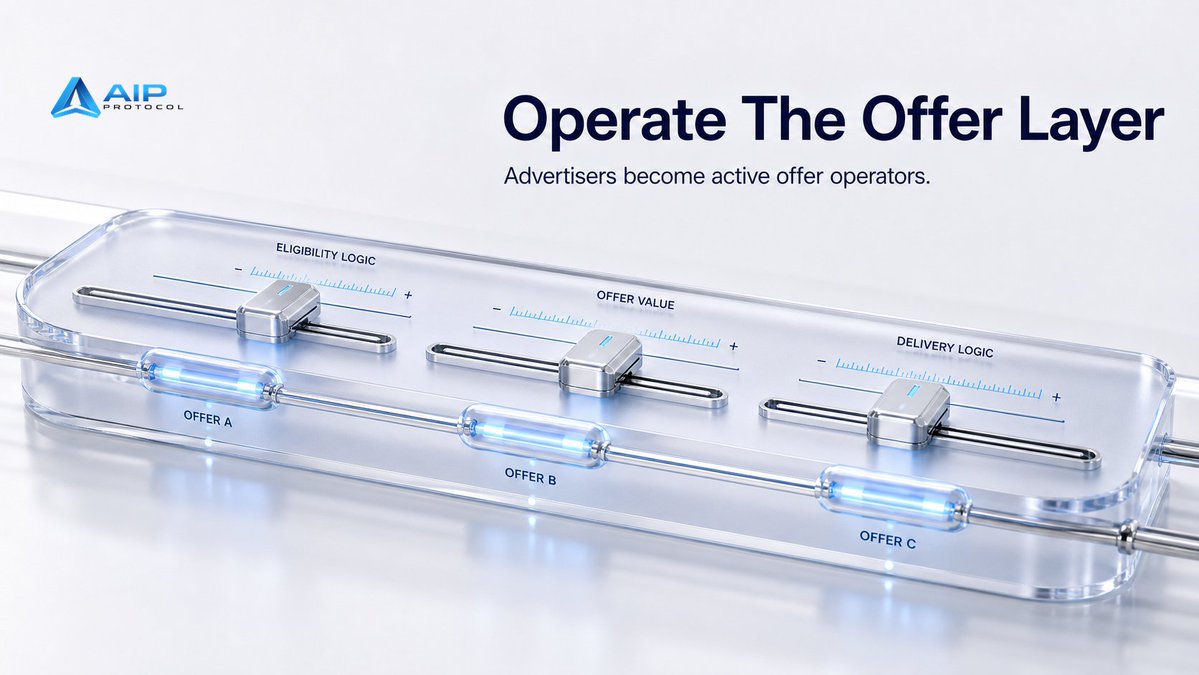
Advertisers entering AI interfaces will need to think less like media buyers and more like offer operators.
The winning campaign is not just the one with budget.
It is the one with a clear use case, accurate constraints, reliable fulfillment, transparent terms, and enough structured context for an AI system to know when the offer genuinely belongs.
AIP makes that operational discipline more valuable.
AI recommendations create a new brand-safety problem.
The risk is not only appearing next to bad content. It is appearing inside bad advice.
If commercial participation is routed into sensitive, low-confidence, or unsuitable moments, the advertiser inherits part of that trust failure.
AIP's market layer needs policy and quality gates because AI commerce has to protect the user and the brand at the same time.
The AIP stack is easier to understand if you separate three questions:
What is the user trying to decide?
Which campaigns are eligible to help?
Where should the disclosed recommendation be delivered and measured?
That maps cleanly to intent, market decisioning, and distribution plus settlement.
The architecture is not decorative. It keeps each responsibility legible.
One useful way to evaluate AI-native ad systems:
Do they have a memory of why a recommendation was shown?
Not private user history exposed forever. A decision record: intent detected, campaign eligible, relevance scored, disclosure applied, outcome measured.
AIP's direction makes logs and accountability part of the commercial loop, because opaque delivery claims will not be enough in AI interfaces.
Intent is not inventory in the old sense.
You cannot manufacture high-quality decision moments just by creating more placements.
If the user is not deciding, the commercial signal is weak. If the offer does not fit, the recommendation becomes noise.
That is why AIP is designed around qualifying the moment before monetizing it.
The market starts with intent quality.
For builders, the question is not just whether AIP can create revenue.
It is whether the integration can preserve product control.
A good monetization rail should let an app define where recommendations may appear, which categories are allowed, how disclosure is rendered, and when the product should decline commercial output entirely.
Infrastructure works best when builders keep agency.
In AI commerce, advertiser metadata becomes infrastructure.
A campaign cannot be ranked well if the system only knows the bid.
It needs structured information about inventory, geography, timing, constraints, user fit, category risk, and what action the advertiser actually wants to support.
AIP's market layer depends on cleaner inputs because vague campaigns produce vague recommendations.
The next hard problem in AI advertising is not only matching a prompt to an offer.
It is deciding which offers are even allowed to enter the market.
Campaign review, category filters, eligibility checks, and quality controls matter because an AI recommendation sits closer to a user's decision than a banner or feed unit.
AIP treats those controls as part of the decision layer, not as cleanup after the auction.
The important question is not whether brands will want visibility inside AI assistants.
They will.
The important question is what rules decide when that visibility is earned.
AIP's answer is infrastructure: intent-aware ranking, explicit commercial disclosure, user-consented context, and measurable outcomes. Without those rules, AI advertising risks becoming just another trust leak.
AIP is a bet that AI commerce will need neutral rails.
Not every assistant will want to build its own advertiser market, ranking system, disclosure layer, attribution flow, and settlement logic from scratch.
If decision intent becomes a shared commercial surface across AI products, then shared infrastructure starts to make more sense than isolated monetization hacks.
The AI interface compresses the funnel.
Discovery, comparison, filtering, and selection can all happen inside one conversation.
That compression is exactly why old ad logic feels incomplete here.
AIP is built around the idea that monetization has to operate inside the decision process itself, with enough transparency that the user still understands what is organic and what is sponsored.
A decision-aware auction should not only ask who pays the most.
It should ask whether the offer fits the prompt, whether the user context supports it, whether the source is trustworthy, and whether showing it improves the decision instead of interrupting it.
That is the difference between selling access to attention and building a market around useful recommendations.
AI-native advertising has a coordination problem.
Advertisers need measurable intent.
Builders need sustainable revenue.
Users need useful answers and clear disclosure.
Protocols need rules that do not collapse into pure pay-to-rank.
AIP sits in the middle of that coordination problem, trying to make the incentives visible enough to be trusted.
AIP's strongest product principle may be this:
The answer and the monetization layer cannot become indistinguishable.
If users cannot tell whether they are receiving advice or being steered, the assistant loses authority.
Clear labeling is not a cosmetic detail. It is one of the conditions that lets commercial recommendations exist without poisoning the interface.
The next ad stack will need more than audience segments.
It will need:
- intent interpretation
- consented identity signals
- real-time ranking
- transparent sponsored labeling
- attribution and settlement
- distribution across agent interfaces
That is why AIP sounds less like campaign tooling and more like infrastructure for AI-mediated commerce.
AIP is not trying to make every AI answer commercial.
It is trying to define when commercial participation belongs inside an AI decision flow.
That distinction matters. The future of AI advertising should not be "every response becomes an ad."
It should be a more transparent market for moments where a user has real intent and a relevant provider can genuinely help.
One underappreciated challenge in AI monetization is negative space.
Sometimes the right commercial decision is not to show a sponsored result.
That requires ranking logic with discipline. A system that inserts paid options into every answer may generate short-term inventory, but it trains users to distrust the assistant.
AIP's framing makes room for relevance thresholds, not just auction pressure.
For agent builders, the monetization layer should feel like infrastructure, not a product tax.
If it slows the assistant down, trust drops.
If it hides commercial logic, trust drops.
If it forces irrelevant offers, trust drops.
The standard is simple: monetization should make the agent more sustainable without making the user feel less served. That is the bar AIP is building around.
Attribution becomes much more interesting in AI commerce.
A user may ask a question, compare options, refine constraints, receive a recommendation, and act later through another surface.
Old attribution models were not designed for that kind of conversational path.
AIP treats the recommendation layer, auction logic, and settlement flow as connected pieces because the value is created across the whole decision journey.
The easy version of AI ads is simple:
Show a paid option when the user asks for something.
The durable version is harder:
Only show it when it is relevant, label it clearly, avoid corrupting the answer, settle value transparently, and give builders a way to monetize without making their product worse.