FLOODWATERS INUNDATE TAXIWAYS AT FORT LAUDERDALE INTERNATIONAL AIRPORT!
Significant flooding has inundated multiple taxiways at Fort Lauderdale-Hollywood International Airport (FLL) as torrential rainfall continues to impact South Florida.
Rainfall measurements indicate 4.83 inches since midnight and 7.65 inches over the past 24 hours, with widespread flooding reported across the region.
⚠️AIRPORT OPERATIONAL STATUS: FLL remains OPEN and operational despite the flooding. However, multiple taxiways have been closed due to standing water, disrupting ground movements and contributing to flight delays.
The FAA's temporary ground stop affecting flights bound for FLL has been lifted, and flight operations have resumed, although residual delays may continue.
A flood watch remains in effect across South Florida, with additional rainfall potentially worsening conditions.
Passengers are strongly encouraged to check with their airlines for the latest flight status and allow additional time when traveling to the airport.
📹Credit: Noteworthy News / @newsnoteworthy
#Aviation #FLL #FortLauderdaleAirport #FloridaFlooding #SevereWeather #AirportOperations
NTSB issues the preliminary report for its ongoing investigation into the Oct. 30 crash of a Cessna A185F airplane near Key Kodiak, Alaska: https://t.co/xDNCiIHhji
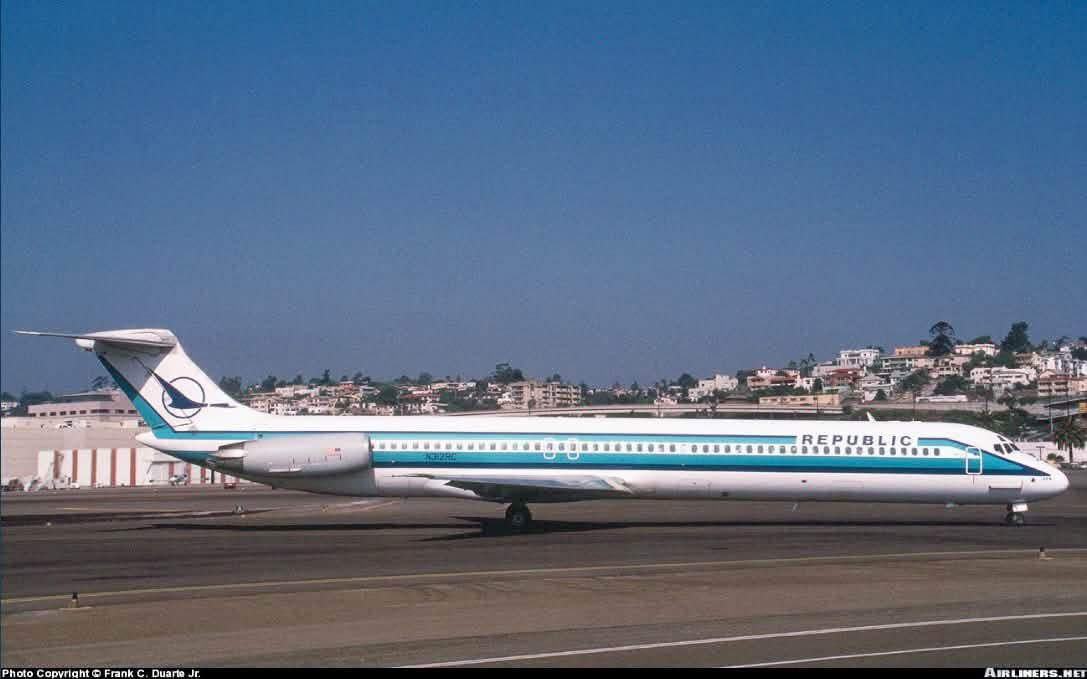
An airport safety vehicle inadvertently entered the active runway at Melbourne Airport causing the flight crew of a Boeing 737 freighter to conduct a high-speed rejected take-off, an ATSB investigation final report details.
https://t.co/2MWd2y13ug
Pilots at Hollywood Burbank Airport were left coordinating their own takeoffs and landings on Wednesday evening after the airport's air traffic control tower was left without controllers.
Southwest and Alaska Airlines crews could be heard announcing their positions and movements over a shared radio frequency, normally used at airports without an operating control tower.
The tower reportedly went “ATC Zero” at least twice on November 18, with interruptions lasting around 30 minutes each.
Regional controllers continued guiding aircraft towards Burbank, but pilots had to coordinate runway movements themselves.
Staffing shortages are suspected, although the FAA has not officially confirmed the cause.
Remarkably, this wasn't the first time. In October 2025, Burbank's tower was left without controllers for nearly six hours.
The airport normally handles more than 100 flights daily, including services operated by major US airlines.
#AirTrafficControl #AviationNews #FlightSafety
EASA TIGHTENS ATR 42/72 DE-ICING SYSTEM CHECKS FOLLOWING FATAL VOEPASS CRASH INVESTIGATION!
The European Union Aviation Safety Agency (EASA) has introduced stricter maintenance requirements for ATR 42 and ATR 72 turboprop aircraft, significantly reducing the intervals between functional checks of critical de-icing system valves.
The new Airworthiness Directive AD 2026-0219, issued on November 16 and effective November 30, 2026, follows further safety analysis of potential failures that could remain undetected until an aircraft encounters icing conditions.
WHAT EXACTLY IS BEING CHECKED?
ATR aircraft use inflatable pneumatic de-icing boots installed along the leading edges of their wings and tail surfaces.
These black rubber chambers periodically inflate and deflate to crack and remove accumulated ice, helping maintain the aerodynamic performance of the aircraft.
However, the system depends on critical pressure regulator and shut-off valves (PRSOVs) to control the supply of air.
EASA has identified a risk of dormant failures in these valves. If a failure remains undetected and the aircraft encounters icing conditions, the resulting degradation in de-icing capability could ultimately lead to a loss of aircraft control.
HOW MUCH MORE FREQUENT ARE THE CHECKS?
Under the revised requirements, functional checks must now be performed at the following intervals:
• ATR 42-200/-300/-320: Every 190 flight hours.
• Specified unmodified ATR 42-400/-500 and ATR 72: Every 210 flight hours.
• Specified modified ATR 42-400/-500 and ATR 72: Every 160 flight hours.
The biggest change affects the modified aircraft group, where the interval has been reduced from 1,050 to just 160 flight hours — an approximately 85% reduction!
Any discrepancy identified during the checks must be rectified before the aircraft's next flight.
THE CONNECTION WITH THE FATAL BRAZIL ATR CRASH
The strengthened requirements follow the investigation into the tragic crash of Voepass Flight 2283 on August 9, 2024.
The ATR 72-500 crashed near Vinhedo, São Paulo, Brazil, killing all 62 people aboard.
Brazil's aviation accident investigation authority, CENIPA, released its final report in July 2026, identifying severe icing, repeated de-icing system failures, crew actions and organizational safety deficiencies among the contributing factors.
The investigation highlighted how degraded aircraft performance in icing conditions can become particularly dangerous when appropriate warnings and procedures are not effectively managed.
The latest EASA directive builds on earlier corrective measures introduced in January 2025, following the initial safety concerns identified after the accident.
THE BIGGER PICTURE
Ice accumulation is not simply a cosmetic problem. It can disrupt airflow over the wings, reduce lift, increase drag and raise the aircraft's stall speed.
For a turboprop operating in icing conditions, maintaining the effectiveness of its ice-protection systems is critical.
EASA's latest action reinforces an important aviation safety lesson: a component that appears to be functioning normally on the ground can still contain a dormant failure that becomes critical in demanding flight conditions.
🎥 Courtesy: Francisco Cunha - ✈️ Aviation et al
@OnDisasters
#AviationSafety #AircraftMaintenance #DeIcing #FlightSafety #Aviation
Pilot awarded a gold-plated Rolls-Royce after landing this A320 chartering the Qatari Royal family, filmed Tuesday in Berne, Switzerland. Man, this was shakey (rumor has it the winds reached 65 knots!)
A 737 freighter was forced into a high-speed rejected take-off after an airport safety vehicle crossed the runway ahead of it, the ATSB has found. #aviation#aerospace
https://t.co/fPbfTOMVic
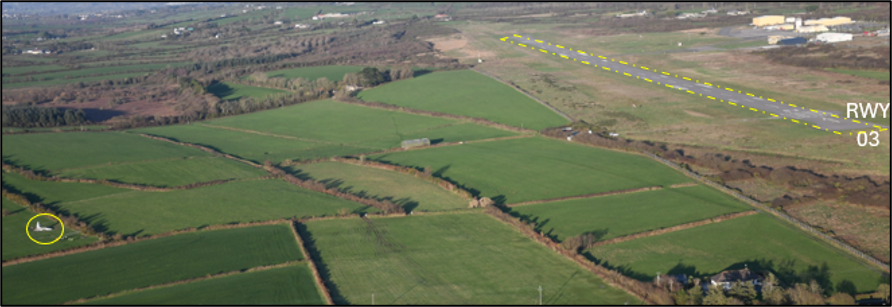
The AAIU has published an Interim Statement on the
Investigation into a fatal accident involving a Vulcanair P.68C-TC, EI-HPY, at Lisselan, Co. Waterford, Ireland on 20 November 2025. https://t.co/FFpJvXFEFd
ALL THE OCCUPANTS ARE SAFE: PIPER PA-46 MALIBU CRASHES ON BUSY HIGHWAY
The accident occurred on November 18, 2026, when a Piper PA-46 Malibu, registration XB-MKC, reportedly lost power during takeoff from Aeropuerto Internacional del Norte.
The aircraft left the airport perimeter, crossed the perimeter fence and came down on the busy Monterrey–Nuevo Laredo highway, where it caught fire following the impact.
Aircraft and flight details:
Aircraft: Piper PA-46 Malibu
Registration: XB-MKC
Operator: Casago, S.A. de C.V.
Departure: Aeropuerto Internacional del Norte, Apodaca
Destination: Aeródromo Dr. Jorge Jiménez Cantú, Atizapán, State of Mexico
Occupants: Six (two crew members and four passengers)
Date: November 18, 2026
Remarkably, all six occupants survived the accident. They reportedly sustained minor injuries and bruises, with no fatalities or serious injuries reported.
Emergency services responded quickly and brought the resulting fire under control.
Although the reported loss of power is considered a preliminary explanation, the definitive cause of the accident remains subject to investigation by Mexican aviation authorities.
An incident with a fortunate outcome: six lives spared in an accident that could have ended very differently.
#AviationAccident #MexicoAviation #Apodaca #AviationSafety #AircraftIncident
EARTHQUAKE AT LAX! A 4.2 magnitude earthquake shakes Los Angeles at 3:25 AM on Friday, November 20th! Our 24/7 cameras were rolling LIVE, capturing about 10 seconds of shaking as the camera pointed directly toward Terminal 1 at LAX. Watch the moment the earthquake hit, all caught LIVE on Airline Videos Live!
The Queen of the Skies wearing her retro colors! ✈️ Cathay Pacific’s Boeing 747-8F in the classic “Lettuce Leaf Sandwich” livery, celebrating 80 years of Cathay Pacific, arrives at LAX from DFW! Spotted LIVE on the 24/7 Airline Videos Live broadcast from the H Hotel on November 18, 2026!
What did the C and X mean in historic aircraft registrations like NC and NX? Learn how the prefixes identified an aircraft’s airworthiness—and why oversized wing markings were known as “buzz numbers.”
https://t.co/6MHe2z1tiz