Its nearly time for your Sunday Morning get together! We will be live from Manchester Airport in less than 10 mins!
Get a brew on and come say hello ☕👋https://t.co/zMdqd76mkT
SELLING FAST!! Pre-orders for our new EasyJet and Jet2 plush are flying in... pardon the pun!
Will begin shipping early Jan! Get your pre-order in before stock sells out!
Check out the full plush range of airlines here: https://t.co/Ldo8OTYusg
You asked... we delivered!! EasyJet & Jet2 Plush toys now available for PRE-ORDER!!
Shipping early JAN! Get your order in before stocks sell out. Get yours here: https://t.co/zsjMS2AgbS
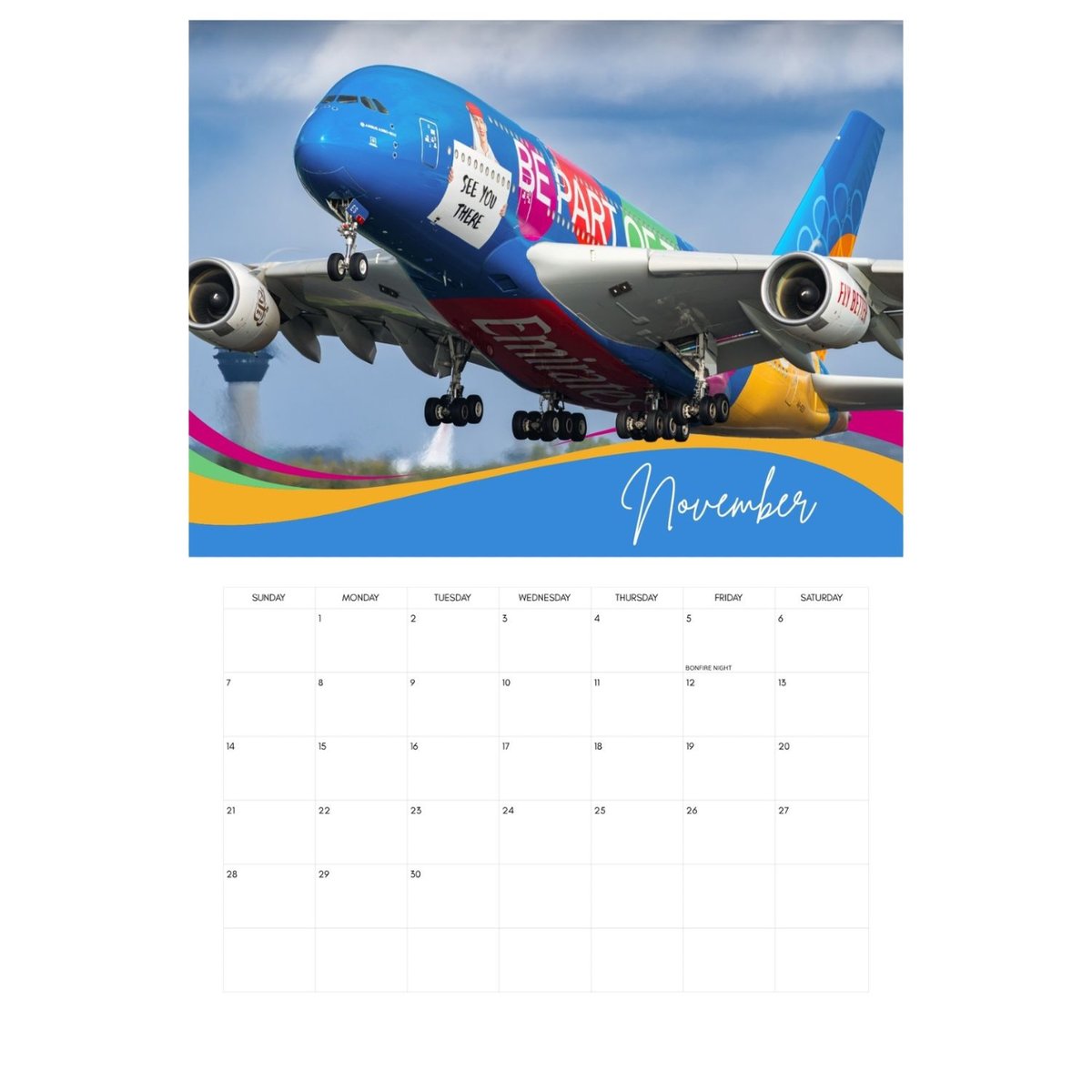
Calendars are now available 📢
Pre-orders are now open❗
Only 165 will be in stock, so once they're gone, they're gone!
Expecting them to ship next week
Head over to https://t.co/K0MselI06d to get yours ordered!
We’re LIVE at Manchester Airport with REAL people behind the cameras, real conversations and a community that makes every stream different. ✈️🔴
In a world filling up with AI cameras, support human-made content. Be part of our community!
👇 Incredible Stormy Arrivals!
https://t.co/9RIs8DF7Ov
⚠️ STORM BOELO LIVE NOW MANCHESTER AIRPORT | LOTS OF GO AROUNDS | https://t.co/MKI1xKXiij
No footage to be shared outside of our platforms without written permission - Thank you
#AVIATION#PLANESPOTTING#MANCHESTERAIRPORT
🎥 Our thoughts as independent content creators on YouTube.
‼️🚨Reports have emerged that the UK Government is considering extending the scope of the BBC TV licence to cover streaming services including YouTube, Netflix and Amazon Prime Video.
Interestingly, these reports have emerged at almost exactly the same time as BBC News has launched its own 24-hour live channel on YouTube.
Under the current rules, viewers are required to hold a TV licence to watch live television programmes or use BBC iPlayer. However, independently produced YouTube content, including original livestreams such as Airliners Live, does not currently require a TV licence.
That distinction could potentially change.
If the reported proposals go ahead in their broadest form, people who exclusively watch independent content creators on YouTube could find themselves required to pay the BBC licence fee.
We believe that would be completely unacceptable.
Now, to be clear, I have personally held a TV licence uninterrupted since moving out of my family home. I occasionally enjoy traditional television programming and recognise that public-service broadcasting has a role to play.
This isn’t about refusing to contribute to something we use.
It’s about being asked to contribute to something we don’t use, simply because we choose to watch something else.
Take Airliners Live as an example.
We produce our own content, fund our own equipment, pay our own production costs and have spent years building an audience of more than 1.6 million subscribers.
Our viewers, members, sponsors and advertisers make that possible.
The BBC doesn’t fund our broadcasts. It doesn’t contribute towards our production costs. If our equipment fails tomorrow, the BBC isn’t going to replace it or help us get back on air.
Yet, under a sufficiently broad expansion of the licence fee, somebody could potentially be required to pay the BBC simply because they choose to watch our content.
We create the content. We fund the production. We build the audience. So why should watching our work create a financial obligation to a broadcaster that had no involvement in making it?
Of course, we understand that people watch a variety of content and that the BBC provides services beyond television entertainment.
But that doesn’t make the principle any less concerning.
Independent creators are increasingly becoming a genuine alternative to traditional broadcasters. From aviation livestreams to podcasts, documentaries, interviews and independently produced entertainment, the landscape has changed dramatically.
And we believe that competition and choice are good things.
The BBC’s recent expansion onto YouTube makes the timing of these reports particularly interesting. While there is no evidence that the two developments are connected, it raises an important question about how traditional broadcasters and independent creators will coexist on the same platform.
We would urge YouTube to take an active interest in these proposals and stand up for the independent creators who have helped make its platform what it is today.
We would also encourage the BBC to explore greater commercial opportunities, including advertising, rather than relying on expanding compulsory payments to audiences who may never choose to watch its content.
If independent creators are going to be brought into the TV licensing system, then those creators deserve a voice in the conversation.
The Government’s White Paper is expected before the end of 2026, and the precise details have yet to be confirmed.
Until then, we believe this deserves serious scrutiny.
If you’re a content creator, we’d encourage you to follow this story closely.
And if you’re a viewer, we’d genuinely like to hear your thoughts.
Should somebody who only watches independent YouTube creators be required to pay the BBC licence fee?