@truemed Over $150 billion sits unused in HSA and FSA accounts across the US every year. Your home's air quality should be part of how those funds get spent 💛
To our US-based community:
Our radon and air quality monitors are now HSA/FSA eligible through a partnership we just launched with @truemed. This is a first for radon monitors in the US. More in the thread about how it works...
@truemed The process is simple. Buy an eligible product on https://t.co/kbx7rqwerk, fill out a short questionnaire through Truemed, get your Letter of Medical Necessity within 24 hours and then submit to your HSA/FSA provider.
@GustavoValverde@levelsio We love to hear that! Sounds like you’re building a great setup 🙌 Monitoring means you don’t have to guess whether your air is good, so we hope you get some really useful insights 😁
@levelsio Really cool to follow your journey to better sleep! Even we're jealous of that sleep score 😅Thanks for talking about this - air quality (inc. temperature, humidity, and, of course, CO2) has more impact on sleep, comfort, and well-being than people realize.
🌡️ Sucking the CO2 out of my bedroom turned out to be the final thing improving my already good sleep to great
My weekly sleep is now 1st in Los Angeles, 5th in California and Japan and 9th in Amsterdam, so really good
Most people have way too high CO2 in their bedroom (1500 to 2500 ppm) because that's what you breathe out and it doesn't get refreshed, I discovered this after getting an @airthings sensor (unaffiliated, I just like it)
There's a lot of confusion about CO2, you can't "air purify" CO2 out, it doesn't work like that, also it's not CO, it's CO2, it's what you breathe out, slowly a room will fill up with it and your brain and body will start struggling. You realize CO2 high when you feel a room is "stuffy", too many people breathing out, not enough fresh air coming in
If you sleep as a couple the CO2 will be double because you both breathe out for 8 hours. Americans who think HVAC will save them: no most HVAC recirculates air it does not refresh air (very new houses do though), also outside US: regular AC just recirculates air, for CO2 to be removed you have to bring in fresh air from outside (like a bathroom fan sucking out air to create pressure to bring in new air, or an actual refresh air system). Opening a window is a nice idea but these days (?) almost everywhere is loud and you'll wake up from stuff to also slowly destroy your sleep
Most people also sleep WAY too hot around 23°C/73°F but don't realize it, because that's a good temperature for a living room in the day, but way too hot for good sleep. Most studies show the ideal bedroom temperature is around 15-18°C / 59-65°F. Above that your body will not enter deep sleep meaning 8 hours of sleep in a hot bedeoom might just be 5 hours of actual sleep (I see people from warm countries consistently not accept this, so my rebuttal is: if you sleep so well, why is your GDP so low). The fix is installing a powerful AC, not blasting it in your direction (that's bad for your nose), and cleaning it regularly. I run my AC at 17°C/62°F with fan on 3/4 strength directed downward so we don't feel the air hitting us directly (important). Many ACs suck, we had Daikins and they suck, they go on and off repeatedly after hitting their target temperature, which wakes you up too, you need an AC that has constant cold air flow, we got Mitsubishi Electric which is great
One other thing that I like and use every night is the @curaofsweden weighted blanket (also unaffiliated), it's 9kgs/20lbs (related to your body weight so buy the right one) which creates deep pressure and compression on your body which calms your nervous system, I think this is also related to modern bed sheets/blankets: they used to be made of organic materials like cotton etc and were way heavier than modern lightweight polyester/plastic sheets so you don't get that effect anymore, with a weighted blanket you do
On top of that weighted blanket, I have a blanket that I put over it usually around 5am when my core body temperature hits the lowest point, of course this makes a good argument for those temperature regulating beds (but that's too much even for me for now)
Outside of bedroom what also really helps my sleep is exercise, I lift weights about 3-4x per week and try hit 30min gym cycling for cardio 2-3x per week too. Especially the lifting puts me in a coma. Yesterday I squatted 120kg for example and you just feel like falling into your bed after that, also deadlifts and benchpress etc
Anyway this is how I made my already good sleep great, I hope it helps! 😊
Hi! Great point :) we have offered this in the past, and current bundles are informed by data on what’s typically performed well. However we’re currently working on a personalized product selection feature to help customers choose and bundle products according to their home & use case - coming soon!’
@SurrealBlend@levelsio@NorbertDragan Hi @SurrealBlend yes - it's the View Plus 🙌 (Space Pro is the B2B version, based on much of the same tech and sensors, just some added extras for optimizing larger workplace & school-type environments).
Happy to help if you'd like any more info🙂
@andersmarksen@levelsio Can 100% confirm, we do love a cold bedroom 🇳🇴❄️
And yes to cloud API! You can learn more here about that (& integrations) if helpful: https://t.co/3ORfNLiSsH
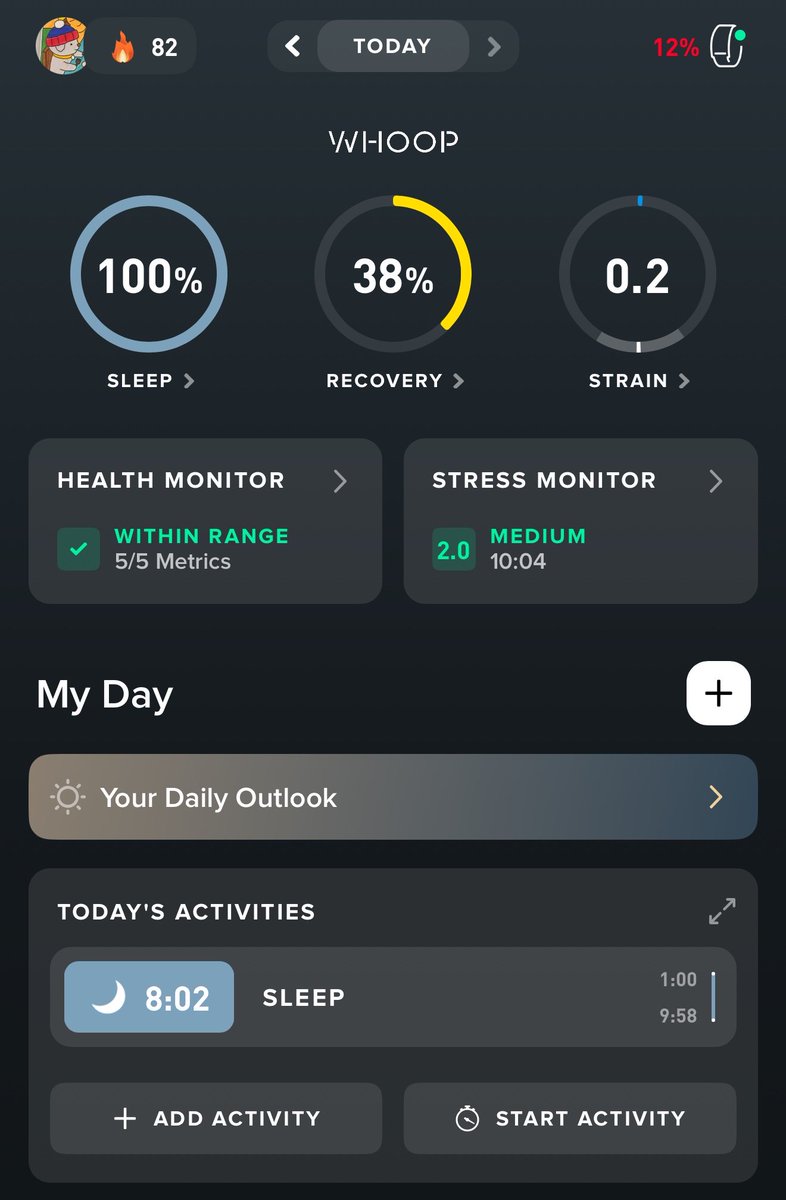
🌡️ Update: 100% sleep score with bathroom fan on to keep CO2 low
It sucks CO2 out of the room and creates a low pressure field that brings in new fresh air from outside the room
Last time 100% sleep was in an Airbnb in Brazil we stayed which was a house built in 1970s mostly wood and very breathable, but our house is modern and very insulated
So it seems it worked to improve our sleep
Science supports this: high CO2 levels above 1500 cause fragmented sleep, more brief awakenings, less deep sleep and worse REM
Also CO2 levels are a proxy for other air contaminants which build up in a closed bedroom so keeping it low is good
We can go lower to 400-500 ppm with a real bedroom fan/vent but again this is a good start
So if you're having sleep problems, check your CO2 levels
Thanks so much for writing back! That’s totally fair, travel or using it in a vacation home are definitely nice use cases, and we know different homes and customers have different needs.
One thing to add (because we love talking about radon whenever we can 😇) is that for at-home use, radon isn’t something a purifier can detect or handle (yet 😅). So if radon is a concern where you live (you can explore data from our monitors at https://t.co/QsEiV9kKUA), a standalone monitor like ours can be really useful.
Used alongside something like Mila, it can then give you the complete picture of your home’s air quality.
@TonsTweetings Hi! Thanks for your message. Unfortunately, our consumer monitors aren’t available in Thailand just yet, as we’re not certified there. We’re always exploring new markets though, so hopefully one day 🙂🤞