“The West won the world not by the superiority of its ideas or values or religion but rather by its superiority in applying organized violence.”
Samuel P. Huntington
Northern Nigeria is sitting on a gold mine but we keep digging it with bare hands and selling the raw stones instead of building the machines that turn it into real wealth.
In 1979, a Vietnamese man called David Tran fled Vietnam after the war. He arrived in America as a refugee. He was not carrying a Silicon Valley idea. He was not carrying oil blocks. He was not carrying government allocation. He was carrying taste, memory, hunger, and a sauce people like him already understood.
Chilli sauce was not new. Asians already had it. Thailand already had Sriracha-style sauces. Immigrant communities already cooked with pepper, garlic, vinegar, heat, and memory.
But David Tran did something very important.
He did not merely sell chilli sauce.
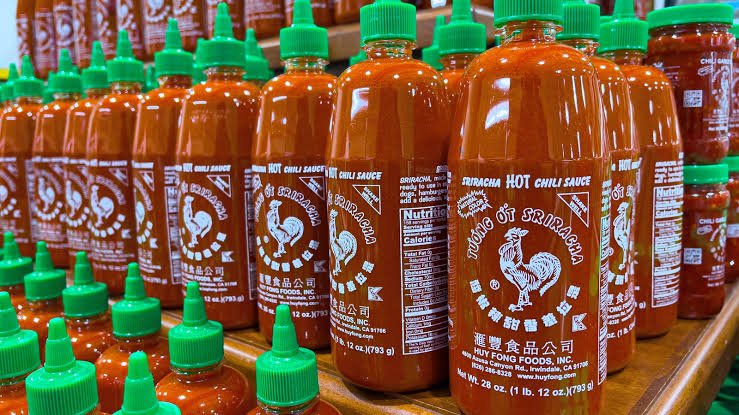
He bottled it. Branded it. Standardised it. Distributed it. Protected the taste. Built a factory around it. Put a rooster on the bottle. Gave it that green cap. Made it visible. Made it trustworthy. Made it repeatable.
Then America helped carry it.
Restaurants used it. Shops stocked it. Chefs played with it. Food writers talked about it. Immigrants bought it first, then everyone else followed. Suddenly, something that could have remained “ethnic food” became a mainstream condiment.
And today, that decision has turned into serious economic power.
Huy Fong Foods, the company behind Sriracha, generates hundreds of millions of dollars in annual revenue. At its peak, it was estimated to be worth well over $1 billion, all built from a simple chilli sauce that was properly packaged, standardised, and scaled.
That is how culture becomes an economy.
It is not luck.
The same thing has happened in many places.
Mexico turned tacos, tortillas, guacamole, salsa, chilli, beans, and grilled meat into a global food language. You can enter cities that have never seen a Mexican village and still find Mexican restaurants, taco trucks, packaged salsa, avocado dips, tortilla chips, seasoning mixes, frozen burritos, and entire supermarket shelves built around Mexican taste.
Japan turned sushi from a local food culture into a global premium experience.
Italy did it with pizza and pasta.
America did it with burgers and fried chicken.
Turkey did it with kebab.
The Middle East did it with shawarma.
India did it with curry, spices, biryani, chai, naan, and packaged masala.
The lesson is simple.
The world does not reward people merely because they have culture. The world rewards people who build systems around culture.
Then you come to Northern Nigeria.
We have Zobo.
A drink with colour, memory, taste, local demand, heat, spice, ginger, cloves, pineapple, sugar, hibiscus, and history. A drink that already sits inside our social life. Weddings. Naming ceremonies. Ramadan. Markets. Schools. Roadsides. Homes. Small shops. Plastic bottles. Coolers. Freezers.
Everybody knows it.
Everybody understands it.
Almost everybody has tasted it.
Yet our imagination has kept it small.
We still treat Zobo like a survival business for women trying to make ₦200 per bottle in traffic. The woman selling it is not the failure. She is proof that demand already exists. She has done her part. She has shown us that people will buy it cold, cheap, fast, and repeatedly.
The failure is above her.
Where are the food scientists standardising the recipe without killing the taste, the bottling plants giving it shelf life, the investors building a real beverage company around hibiscus, the designers making Zobo look like something that belongs in supermarkets, airports, hotels, cafés, restaurants, campuses, gyms, and export cartons,the cooperatives linking hibiscus farmers to processors, the labs checking sugar levels, acidity, preservatives, hygiene, and packaging safety, the brands making Zobo concentrate, Zobo syrup, Zobo tea bags, sparkling Zobo, sugar-free Zobo, Ramadan packs, wedding packs, school packs, diaspora packs, mocktail bases, powdered mixes, and premium glass-bottle editions?
Where is the cold-chain, the distribution, the export desk, the national shelf, the African shelf?
Where is the person who looks at Zobo and sees not “small hustle” but farms, factories, branding, logistics, jobs, tax, exports, and cultural power?
That is the Zobo economy.
It is not just about a drink. It is about the way we leave value lying on the table because we are too used to seeing our own things in poor form.
A foreign company can take hibiscus, package it as a wellness drink, call it botanical, organic, antioxidant-rich, caffeine-free, natural, premium, and sell it to middle-class consumers at a price we would never dare to charge.
But when it is our own Zobo, we reduce it to “that thing women sell in used bottles.”
This is how value escapes us.
First, we underprice the product.
Then we underbuild the system.
Then we under-respect the people producing it.
Then someone else enters with packaging, standards, capital, and language.
Suddenly, the same thing we ignored becomes premium.
This is not only Zobo.
Kunun aya is there.
A grain-based drink with tiger nut, ginger, spices, and deep cultural familiarity. It could become bottled breakfast nutrition, school drink, Ramadan drink, hotel drink, dairy-free health beverage, powdered mix, chilled supermarket product, or export item for African stores abroad. But mostly, it remains in nylon, bowls, buckets, and roadside bottles.
Fura da nono is there.
It should not be trapped only in calabashes and local markets. Properly handled, it can become a serious dairy and grain product: packaged yoghurt-style drink, fortified meal replacement, chilled café product, northern breakfast brand, protein-rich school feeding item, and diaspora nostalgia product. But where are the hygiene systems, milk collection centres, pasteurisation units, cold rooms, branded kiosks, and distribution vans?
Gum arabic (Bagaruwa) is there.
This one is almost insulting. Gum arabic is used in food, drinks, pharmaceuticals, printing, cosmetics, confectionery, and industrial applications. It is the kind of product that should make dryland communities part of a serious global supply chain. But how much of the value do the communities actually own? Where are the processing plants, quality labs, traceability systems, export brands, and farmer-protection structures?
Livestock is there.
Cattle, sheep, goats, hides, milk, meat, bones, horns, manure, transport, markets, veterinary services, feed, cold rooms, abattoirs, leather, dairy, sausage, yoghurt, cheese, fertiliser. Livestock is not supposed to be just animals moving across roads and causing conflict. It is supposed to be an industry with ranches, feedlots, animal health records, milk collection, meat processing, leather factories, logistics, insurance, and export discipline.
the same logic applies to dates, sesame, shea, leather, tomatoes, and groundnuts.
This is the pattern.
We have the products, the memory, the demand, the land.
We have women already working.
We have young people looking for jobs.
And we have culture that can travel.
But we do not build the institutions that turn these things into owned prosperity.
A people cannot keep praying for development while treating every potential industry as petty trading.
The woman selling Zobo in traffic is not small.
The system around her is small.
She has already proved the market. She has already done the customer discovery. She has already shown product-market fit in the hardest conditions possible: heat, traffic, no advertising, no branding, no cold-chain, no investor, no supermarket shelf.
That is what hidden potential means.
But the real question is: who is building the machine?
Because culture without machinery becomes nostalgia.
And Zobo without industry remains ₦200 in traffic.
David Tran did not invent chilli.
He built a system around it.
That is the lesson.
Our tragedy is not that we lack our own Sriracha.
Our tragedy is that Zobo has been staring at us for years, cold inside a plastic bottle, waiting for somebody to take it seriously.
@FurqanAkeyede@TheYorubaTimes The moment he said, "from the North," I knew something was fishy. An Oba should be for everyone, regardless. Even members of the White Garment churches are free to pay him a visit whenever they consider it appropriate. 🥱
My Ajo group expanded from a group of 10 people to 36 and a subgroup of about 10 people. We started with 100k monthly to 500k monthly and the day I jokingly said we would do 1m monthly, people don dey send DM to book their slots; and we’re just in July.
When people here talk about Ajo and make fun of it, I just laugh because little do they know that some people have done many meaningful things for themselves through that; and it’s been close to 4years without a single default or story that touches the hearts. 😂
AREWA, WE ARE IN PAIN. 💔
Students sitting for the NECO examination at Lassa Secondary School in Borno State reportedly had to flee for their lives following an attack by suspected Boko Haram terrorists.
Imagine preparing for your future, only to be forced to run for survival.
Education should never become a battlefield.
Ya Allah, protect our people, grant peace to the North, and end this suffering. Ameen. 🤲
@Muhammad_Okoye@Omotorewapupo This ain't fair in all honesty! U can be making heinous narration from a little boy letter to his sis! You may have this likes you desire, but this is not it.
You see how almost everyone's criticism is directed to the offender and not Christianity as a religion, same should be done when it involves a Muslim (and believers of other religions). Because if a Muslim had done this, many people will push narratives, making it a religious thing and not focus on who did the wrong, and such acts fuel discrimination.
@MSIngawa We are not back benchers by any metric. With a Second Class Upper (2:1), an MSc, and a PhD in progress, we still take on menial jobs to educate ourselves and support our families, while others move from one lucrative position to another. This is not fair to begin with.