AI safety student group at UW-Madison. We think that reducing risks from advanced artificial intelligence may be one of the most important problems of our time.
Today, more than 100 leading AI experts endorsed a set of minimum requirements to take seriously AI companies' recent call to embed external evaluators.
These evaluators need to be genuinely independent, transparent, and represent a range of expertise areas. They also need to be guaranteed employee-level access and to be protected from retaliation for findings that make companies look bad.
We welcome model developers’ recent calls for independent oversight, but it’s what they do next that matters. The labs must be accountable for ensuring these requirements are met, so that the public can have faith in the process and the outcomes.
Over the past week, the AI community has debated the appropriate role of external evaluation, including who should do it and on what terms. We may not agree on everything, but there is a lot of common ground.
To make embedded evaluations credible, more than 100 experts with varying backgrounds and ideas about AI risk agree in today’s letter that frontier AI developers should:
1. Guarantee embedded evaluators full editorial independence and mitigate conflicts of interest
2. Rely on multiple evaluators with differing viewpoints and areas of expertise
3. Publicly document the terms under which evaluators operate, as well as facilitating permissive publication of methods and findings
4. Shield evaluators from retaliation
5. Grant access equivalent to that of highly privileged employees
There is a thriving and growing ecosystem of independent AI evaluators who are advancing this science every day – but we need aligned standards, guaranteed protections, and independent funding. That’s why we created the AI Evaluator Forum.
Today we are entering our next phase. We’re launching an open call for new members, collaborators, and independent funding sources to help evaluators meet this moment and demand accountability from developers. Join us in building the evaluator ecosystem.
See the public letter here: https://t.co/LopvS0NaFW
Learn more at https://t.co/7S7G6hia4n
Applications for WAISI’s Fall Fellowship are now open!
Over six weeks, fellows partake in a two-hour weekly discussion centered around our curriculum’s core topics and explore AI safety fundamentals. The fellowship offers two tracks:
Technical: AI safety challenges and research strategies for reducing catastrophic risks.
Policy: Governance challenges in developing and deploying AI systems reliably.
No machine learning or policy background is needed. We welcome UW-Madison undergraduate and graduate students, as well as industry professionals, from all backgrounds.
Applications are due 9/19 at 11:59 PM. The sooner you apply the better! https://t.co/XCqQYNGR04
WAISI members and alumni are conducting research at organizations including the University of Chicago Existential Risk Lab, the Cooperative AI Foundation, and MATS Research.
This fall, three of them are mentoring projects in @SPARexec's Fall 2026 cohort, the program that connects new AI safety researchers with experienced mentors.
1/n
If you are a student or researcher who wants to work on any of these, SPAR mentee applications close August 18. Be sure to apply at https://t.co/EFLHiZK2GN.
For more of our members' research: https://t.co/D7QC1Dbrvk
5/5
WAISI members and alumni are conducting research at organizations including the University of Chicago Existential Risk Lab, the Cooperative AI Foundation, and MATS Research.
This fall, three of them are mentoring projects in @SPARexec's Fall 2026 cohort, the program that connects new AI safety researchers with experienced mentors.
1/n
@kaustubhais (U-Chicago XLab, Director @ WAISI), with @christinecorryy :
AI Safety Said Simply. Producing short, accessible explainers, demos, and videos that make AI safety legible to policymakers, journalists, and the public. https://t.co/ojrZNKO7GU
4/n
It was an incredible opportunity to present our research at the Advanced AI Expo with the Center for AI Policy and engage with key decision-makers on AI security risks. Huge thanks to @aipolicyus for organizing and to everyone who participated! #AISafety#AIExpo
In Feb, @aisafetyuw presented at @aipolicyus' Advanced AI Expo, a "first-of-its-kind tech exhibition" gathering researchers from 14 universities.
"Our goal was to educate key decision-makers on the frontier of existing AI security risks," says WAISI Director Jeremy Kintana.
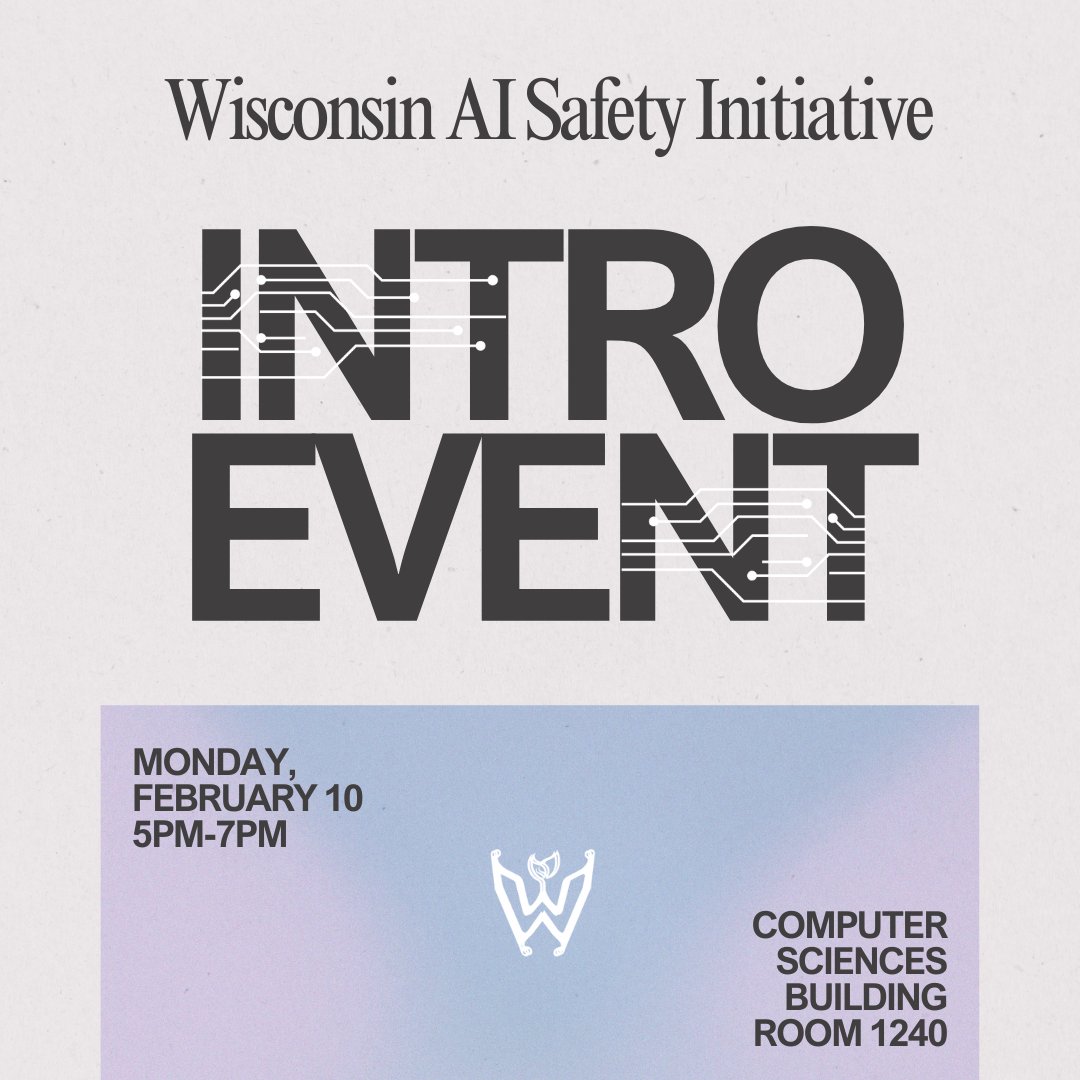
🚀 Interested in getting involved with WAISI this semester? Join us next Monday for an introduction to our org + programming for Spring 2025 (plus free pizza 🍕)!
• Date: Mon, Feb 10th
• Time: 5-7 PM
• Location: CS Building, Room 1240
• RSVP 😊: https://t.co/Nu68fj97S5
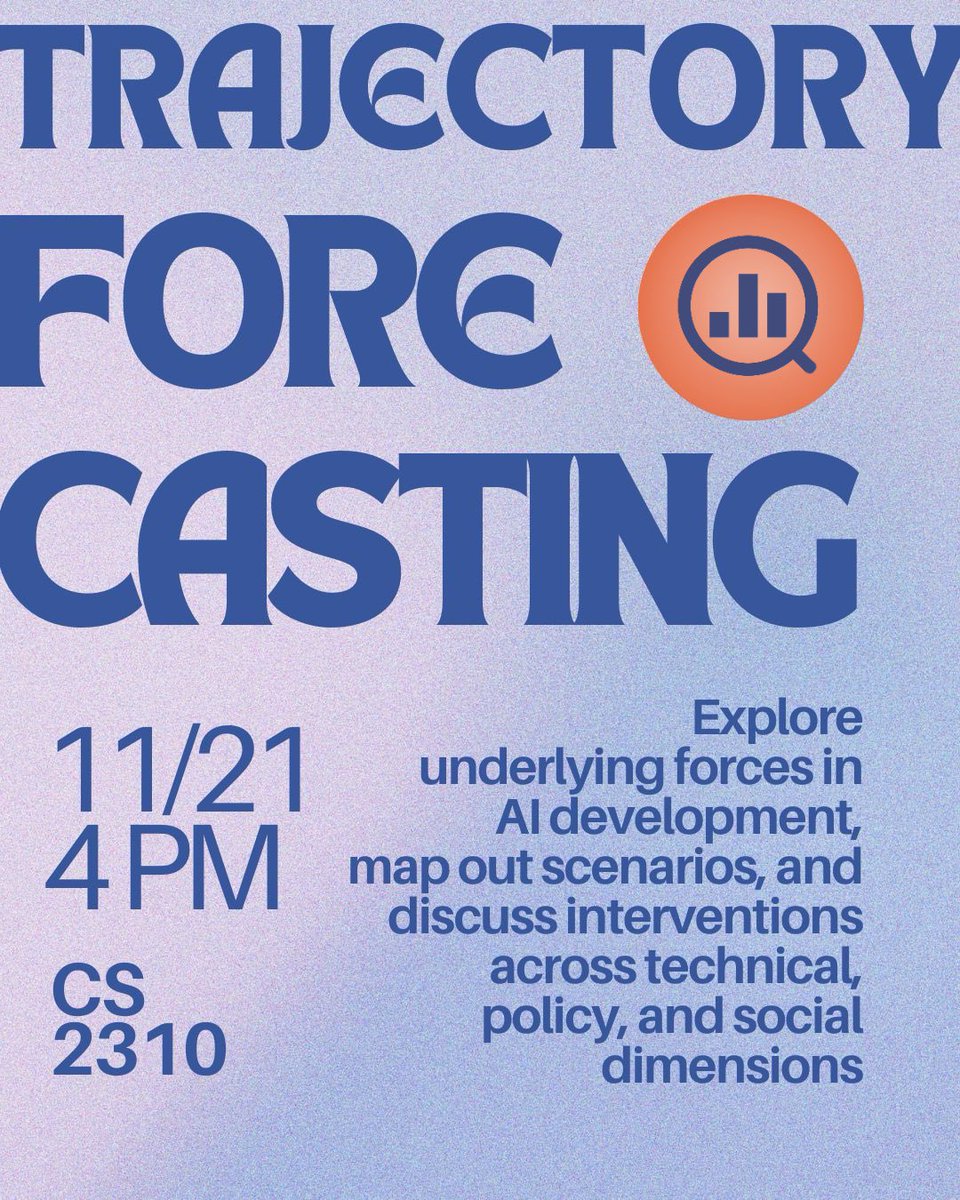
Join us for our upcoming Trajectory Forecasting Social! It'll be hosted on Thursday, November 21, 4-6 pm in CS 2310. We look forward to seeing you there!
We're hosting a CS Trivia Night in collaboration with WACM! Join us today at 4 PM in CS 1240 for a test of knowledge, free pizza, and a chance to win gift cards. RSVP here: https://t.co/Vffy4cHp37
WAISI is excited to host Evan Hubinger for a Speaker Event on April 23rd at 6 pm! He will be talking about his paper on strategic deception in AI. RSVP at this link: https://t.co/eQEKS8x71l
Join us on Wednesday, April 10th, in room S429 of the Chemistry Building! WAISI is proud to host Séb Krier and his talk on forecasting frontier AI capabilities and their implications for policy.
Full event details: https://t.co/X9ivgKmgyw
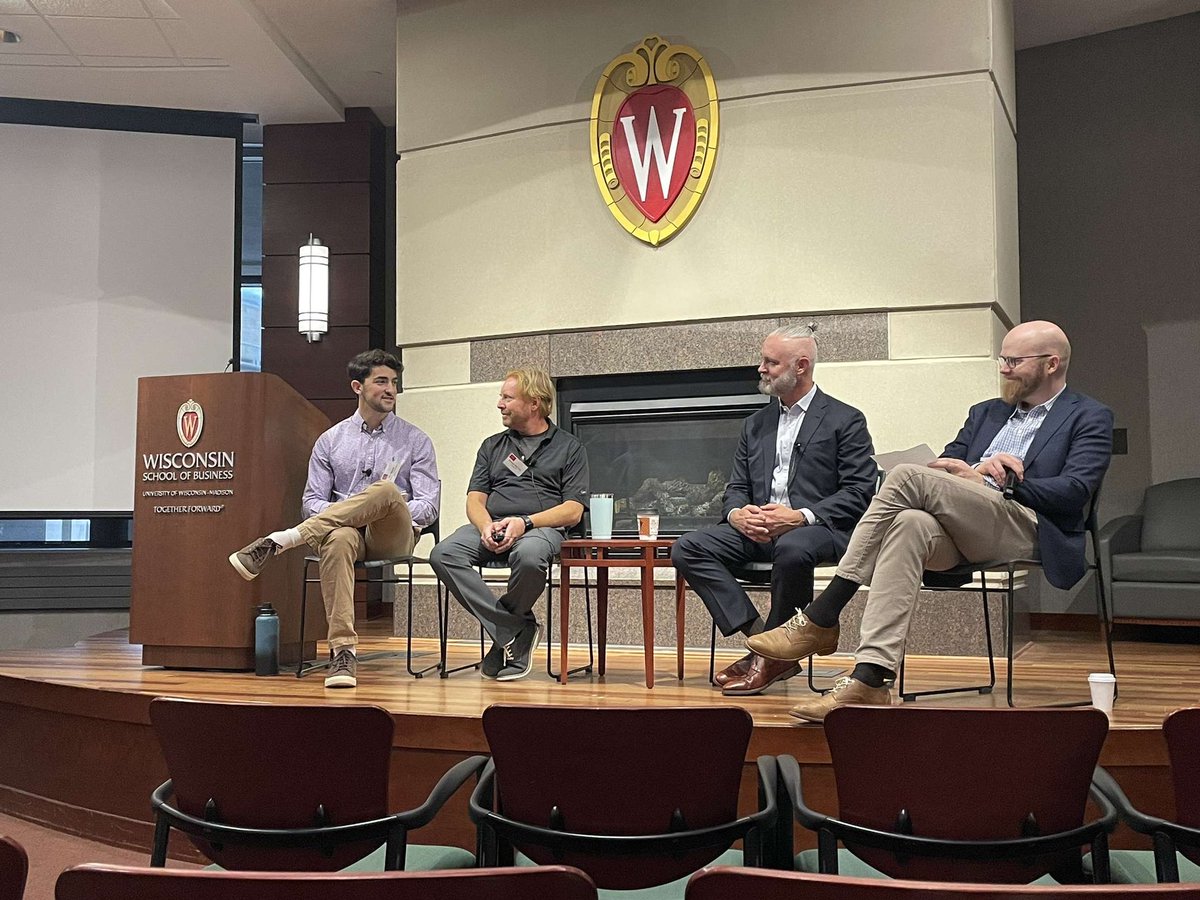
Our President Ben Hayum had a great time today talking with the Wisconsin School of Business (@UWBusiness) on a Generative AI panel about the future trajectory of AI and risk that it brings.
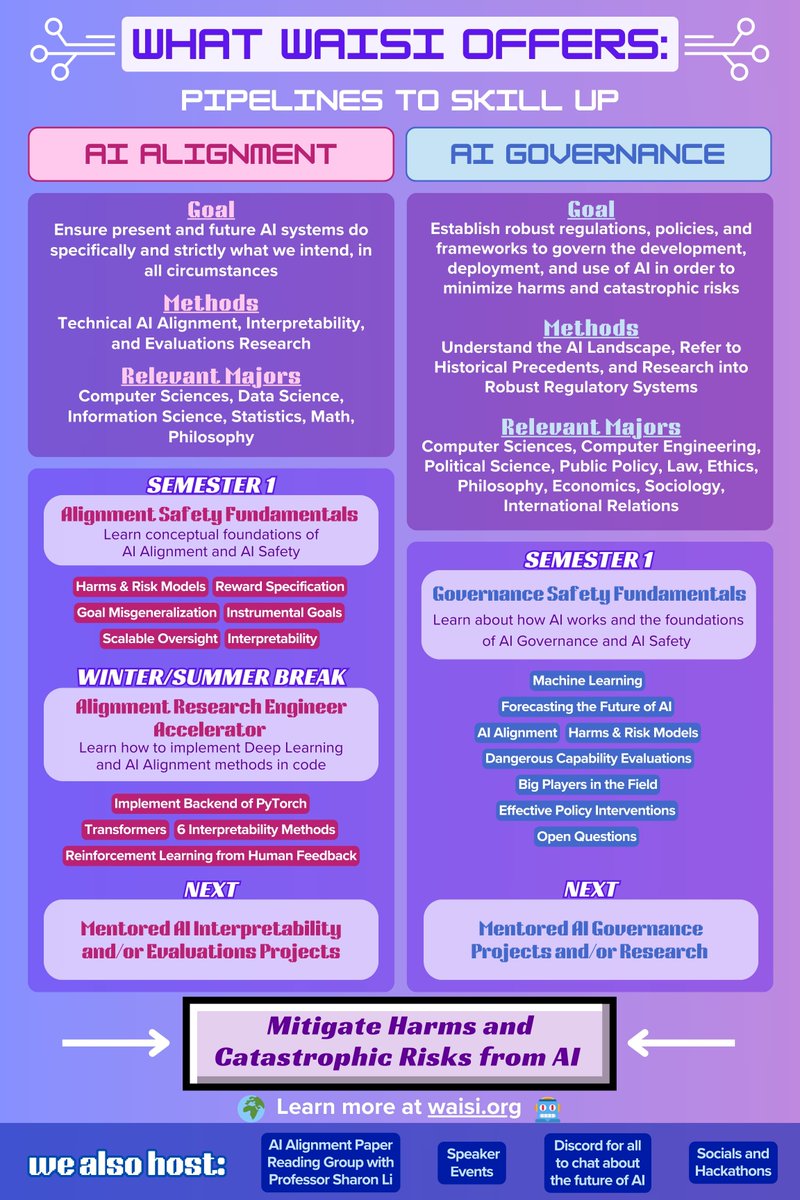
Want to make an impact by mitigating risks posed by increasingly capable AI? Looking to skill up in alignment and engineering or gain a holistic understanding of AI governance? Join the Wisconsin AI Safety Initiative - our intro meeting is 9/17 from 5-6pm @ the SAC, Room 4201.