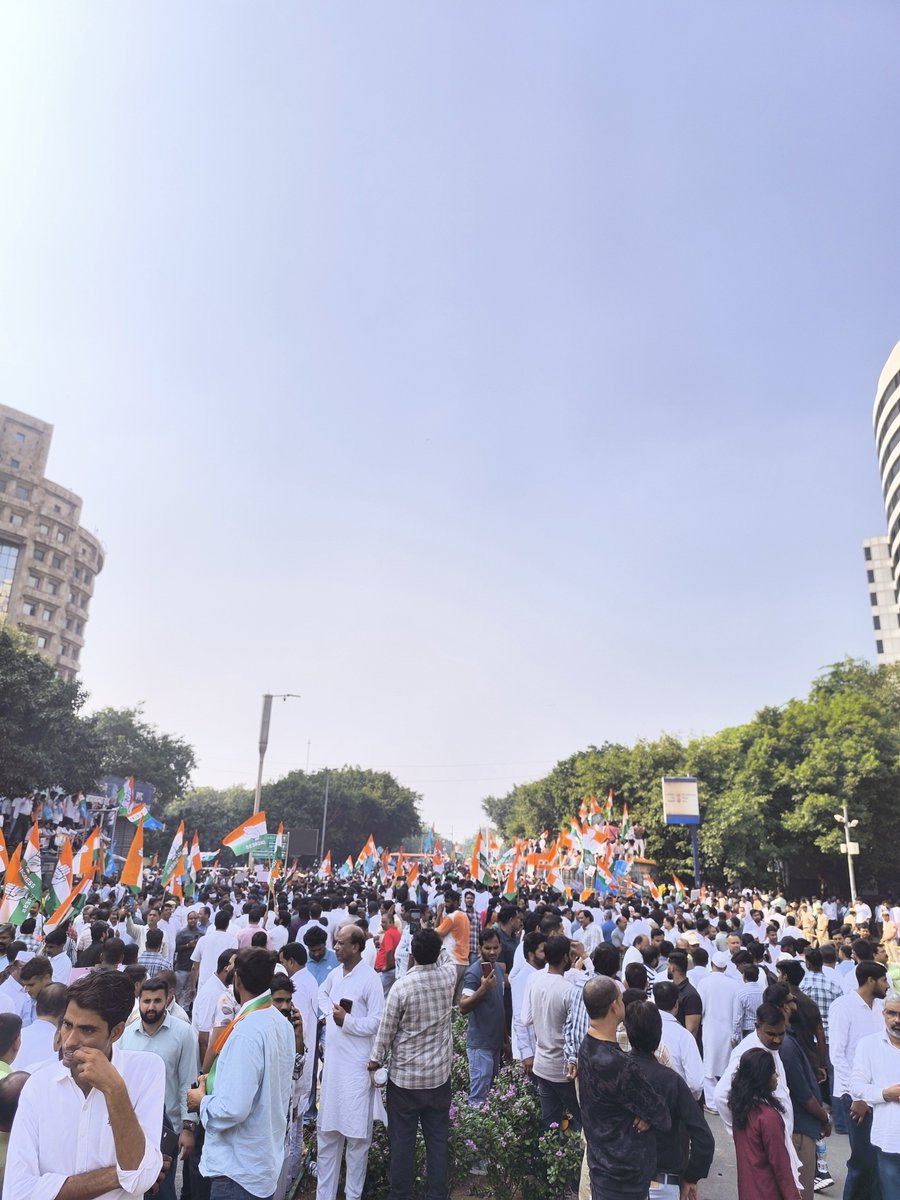
As Connaught Place practically taken over by protesters, surreal to think that this very place was completely empty -- locked down with tens of thousands of security forces, barricades, goons just a couple days back.
In repression unfolding across the country, following are equal partners-- govt, judiciary, police leadership and civil servants... without the latter three, repression is not possible. Have said this often about the smaller repression of 1975-77 also.
A beautifully written review, which summarizes the book so well and has great insights on the role of lower courts in advancing constitutional change - thank you @aish1801!
I review @rehanabeyratne brilliant new book for American Journal of Comparative Law. Must read for those interested in judicial politics and LGBTQ+ rights. I raise some questions about book’s focus on apex courts.
https://t.co/gX5bUIBDlZ
@notabhineet@gautambhatia88 To clarify, as I say I want to build on the book to ask more questions of design and what it does. If the design changes, would that change the politicised nature of judicial review in India? Does constitutional practice evolve beyond design etc
@notabhineet@gautambhatia88 My critique is more about formal/doctrinal engagements with the Constitution be it of the transformative or the critical variety. I am more interested in the external forces that act on the law.
I review @gautambhatia88 excellent book, The Indian Constitution: A Conversation with Power. In my review, I make some comments about how to think of and beyond constitutional design to understand Indian constitutionalism.
See here: https://t.co/w3xO2CTIwr
The BJP government’s Transgender Persons Amendment Bill is a brazen attack on the Constitutional rights and identity of transgender people.
This regressive bill:
- strips transgender people of their ability to self identify, violating a Supreme Court judgement
- wipes out the diverse cultural identities of communities across India
- forces trans people to undergo dehumanizing examinations by a medical board
- introduces criminal penalties and surveillance without safeguards
The BJP government hasn’t consulted the trans community and brought a bill which stigmatises rather than protects them.
The Constitution protects every Indian’s right to life, liberty, identity, and dignity. This BJP government is violating our Constitution and destroying India’s rich history of honouring transgender communities in pursuit of its narrow ideas.
The Congress Party unequivocally opposes this Bill.
#Interview | 'They Want to Erase Our Identity': Grace Banu on Transgender Amendment Bill 2026
@ksharmita_ is joined by @thirunangai to discuss the proposed amendment to the Transgender Persons (Protection of Rights) Act, 2019.
Watch: https://t.co/7qOxy2tpQz
With the increasing subversion of the parliamentary processes by the government, it may be useful to revisit the structural features that weaken the opposition in the Parliament and the ways in which the opposition responds. I discuss them in my article: https://t.co/nHXEw4xbZA
At 12am, Speaker announces that some MPs still want to speak so proceedings will continue till debate is over. Minister will respond to debate tomorrow. MPs being asked to wind up speeches within few mins.
Why the rush? Govt wants Bill passed tomorrow, come what may!
I wrote about the presence of anti-colonial rhetoric in global right-wing discourse for @kafila. I argue that the similarities between anti-colonial and right-wing arguments are only prima facie. Details reveal the farce:
https://t.co/F9L3Hz5Il6
Wrote something. "....the Gandhian Constitution falls short of the very same standard which Sengupta has mapped out in his book and suffers from similar flaws as those that Sengupta has alleged against the Constitution."
Special Issue out now: “When Law Meets Dissent” How do opposition forces operate within and against constitutional systems? How does public law influence their struggle for relevance? And how far disconnected are its legal ideals from political practice? https://t.co/KtsoOzVret
@Dan_Schndlr, @riegnerm, and I have co-edited a special issue for World Comparative Law / VRÜ on the theme of Public Law and Political Oppositions.
The symposium examines how law frames, enables, and constrains political opposition across different constitutional settings.
Excited to share my first solo authored article. I discuss how the food security regime in India treats women’s labour as a free resource to implement the state’s welfare agenda and what alternative feminist imagination of the law could be. Open access https://t.co/AddiIpELaA