Exploring the latest AI through real workflows, experiments & hacks.
GPT6 Astra, Fable / AI Video / 3D / AI MV.
Building, testing & sharing what really works.
Tested Claude Opus 5.5 yesterday by building an open-source game in a few hours: Alone in the Dark × Creepy Japanese School.
The pacing and environmental horror are surprisingly legit.
Play & explore the source code: https://t.co/EPm8vk4CKs
Not playing? Watch the trailer below to see what Opus 5.5 pulled off 👇
#github #Opus #AIGaming #IndieDev #SurvivalHorror #JapaneseHorror
Any real trader or AI developer will tell you this is 100% fake.
Anyone with even basic AI skills could mock up this exact screen in under an hour. These posts never provide actual proof, verified trade history, or transparent logs. More importantly, both basic math and market mechanics make these claims mathematically impossible.
Yet thousands of people still fall for it.
So where does the money actually go? Straight into the pockets of the scammers peddling these fairy tales. They aren't making money from trading—they're making it by selling garbage content to gullible audiences.
A 19-year-old Japanese student built a trading bot with Claude Code in 2 days.
Used his iPad as a second monitor.
First night: $6,732 profit.
Starting capital: $68.
Total profit so far: $750,000.
Here's how it works:
The bot scans over 50 markets simultaneously.
Syncs live BTC data from Binance every second.
Spots price errors before humans even notice.
The edge is pure speed + pattern recognition.
While traders stare at charts trying to predict the next move, his bot is already executing on mispricing across dozens of markets.
No guessing.
No emotions.
No hesitation.
Just Claude Code logic finding gaps that close in seconds.
He built the entire system in 48 hours:
→ Claude Code handles the trading logic
→ Binance API feeds real-time BTC data
→ iPad displays multi-market monitoring
→ Executes trades when arbitrage windows open
The system runs 24/7.
Every price dislocation = profit opportunity.
Most people are still trading manually, refreshing charts, second-guessing entries.
Meanwhile this 19-year-old engineering student turned $68 into $750K by letting Claude Code do what humans can't: process 50 markets instantly and execute without fear.
Why are people still trading manually?
💡 I'm giving away the exact Claude Code setup for free.
24 hours only.
To get it:
1️⃣ Comment "Fable"
2️⃣ Like and Repost
3️⃣ Follow @anjum_ai
I'll DM you the complete setup.
You don't need to be a 3D pro to build stunning pre-visualizations.
❌ No Blender
❌ No AI platform subscriptions
❌ No installation
❌ Zero 3D skills required
Build any scene for FREE with APVS.
The first major update just dropped today—and there’s so much more to come! 🚀
Try it out now & let me know what you think! 👇
As a creator, I wanted more control over my AI videos—and thought others might too. So I built APVS with GPT Astra, for myself and the creator community.
It’s a free beta, still rough in places. I’d love to hear what helps you and what needs work. https://t.co/tndrdpdhDP
Kling 4.0 is coming this October. Kling 4.0 Flash is live now for Ultra Yearly subscribers.
Kling 4.0 brings video creation to a new level of visual realism, creative control, and narrative completeness.
🎞️ Upgraded Audio & Visuals: Stable dynamic motion, high-quality stereo audio, more accurate lip sync, up to 4K resolution, and 10-bit HDR output.
🔮 Omni Reference: Richer reference options with up to 15 multi-modal references, more consistent results, and enhanced video editing.
🎥 Seamless Storytelling: Multi-keyframe control supporting up to 10 keyframes, native 30-second generation.
🌍 Diverse Possibilities: Video extension, support for multiple languages, accents, and dialects.
The stage is set. You call the shots!
THIS IS INSANE 😱
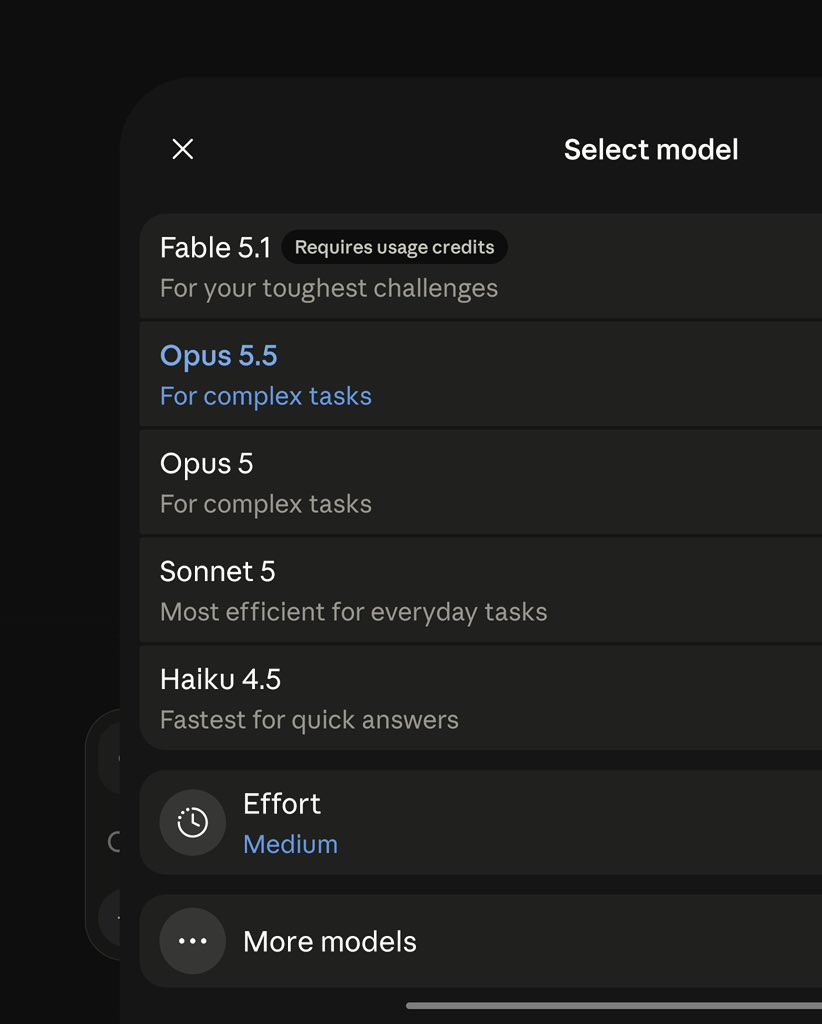
I built an entire Hearthstone-style game with Opus 5.5 in one go.
The gameplay and UX are almost identical — only the graphics are different.
And this was literally my entire prompt:
“Create a 1-on-1 card game like Hearthstone.
Just make it. As best you can.
In pixel art style.”
That’s it !
No game design doc.
No detailed mechanics.
No UI spec.
It just built the game.
And yes — I open sourced the whole thing.
Play it + source code ↓
As a creator, I wanted more control over my AI videos—and thought others might too. So I built APVS with GPT Astra, for myself and the creator community.
It’s a free beta, still rough in places. I’d love to hear what helps you and what needs work. https://t.co/tndrdpdhDP
I think this demo is a little misleading.
It’s basically using one image to generate a video — which was already possible before GPT Image 2.5.
A better demo would be:
Generate multiple views/images with GPT Image 2.5 → connect them into a sequence → show how well the character, outfit, proportions and details stay consistent across all frames.
That would demonstrate the real improvement: multi-image consistency, not just image-to-video.
@thsottiaux This changes the baseline completely. If Astra Low already exceeds Sol High, comparing reasoning levels by name becomes misleading. The right calibration is task performance per model, not Low vs High as fixed quality tiers
@BonBona9z Do you mean designing a house with an actual structural system? I think Astra could probably handle that too, especially given how strong it is at engineering and hard-science tasks.
How I built this house in Blender 🏠
The key was not starting from Blender.
First, I created a 15s reference video in Seedance 2.5 to lock down the exact look of the house — architecture, interior layout, furniture, materials, lighting, and overall mood.
Then I gave that reference video to GPT-6 Astra and asked it to rebuild the scene in Blender using the Blender Python API (bpy).
Core prompt (Just this one for house building and camera route):
“Build an editable Blender scene through Blender Python API (bpy) based on the reference video. Recreate the architecture, joinery, furniture, planting, materials, lights, and cameras, and make everything match the reference as closely as possible.”
The advantage of this workflow is simple:
Reference first → 3D reconstruction second → Render in Bender
Instead of asking AI to invent a house from scratch, I first give it a concrete visual target. That makes the final Blender scene much more consistent, controllable, and closer to the look I actually want.