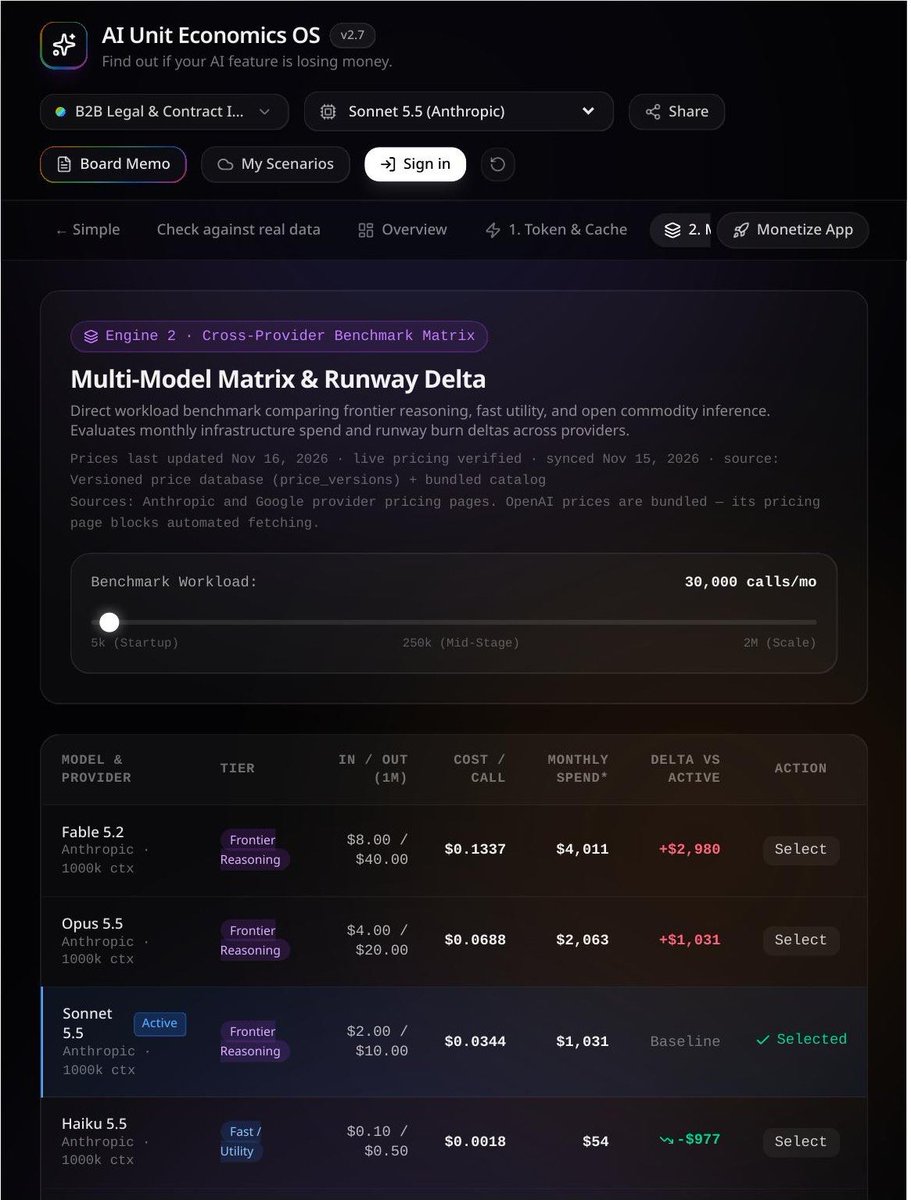
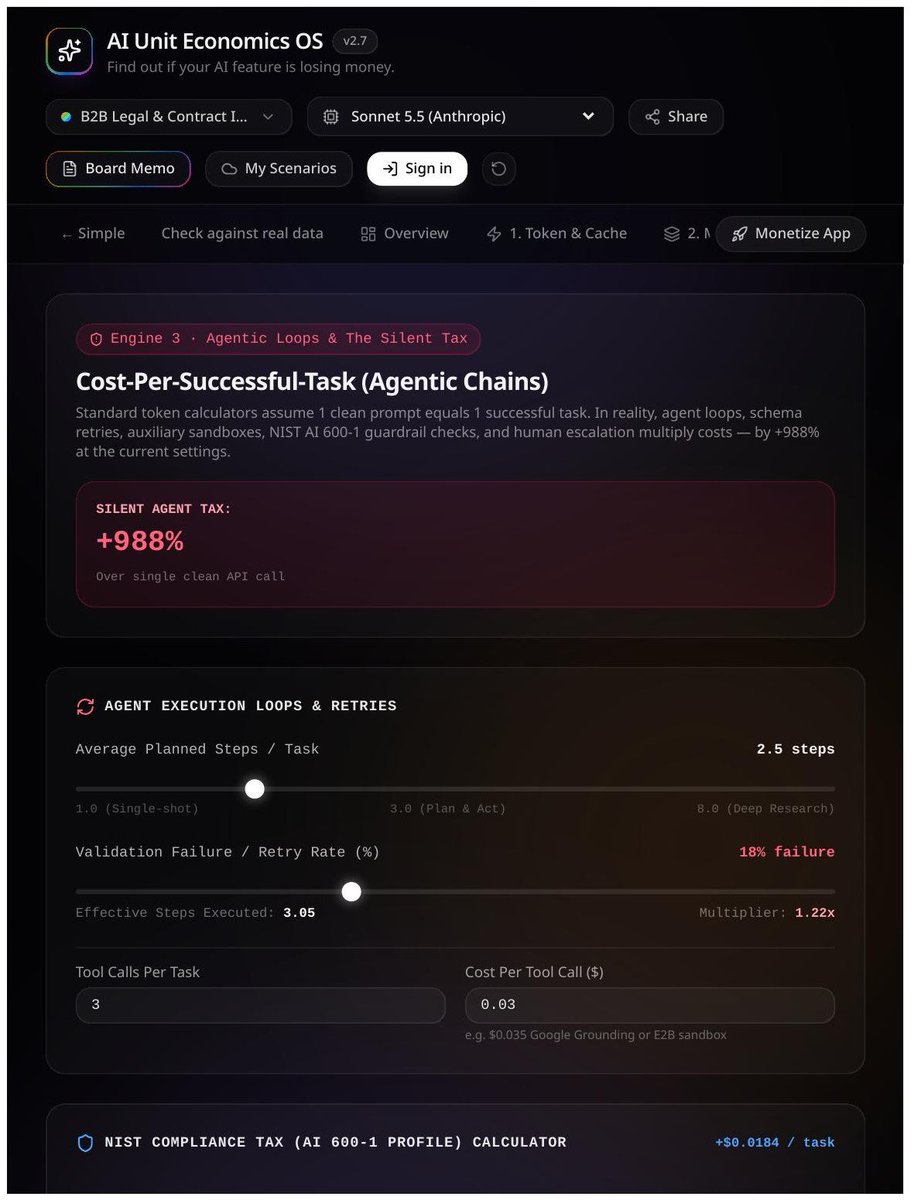
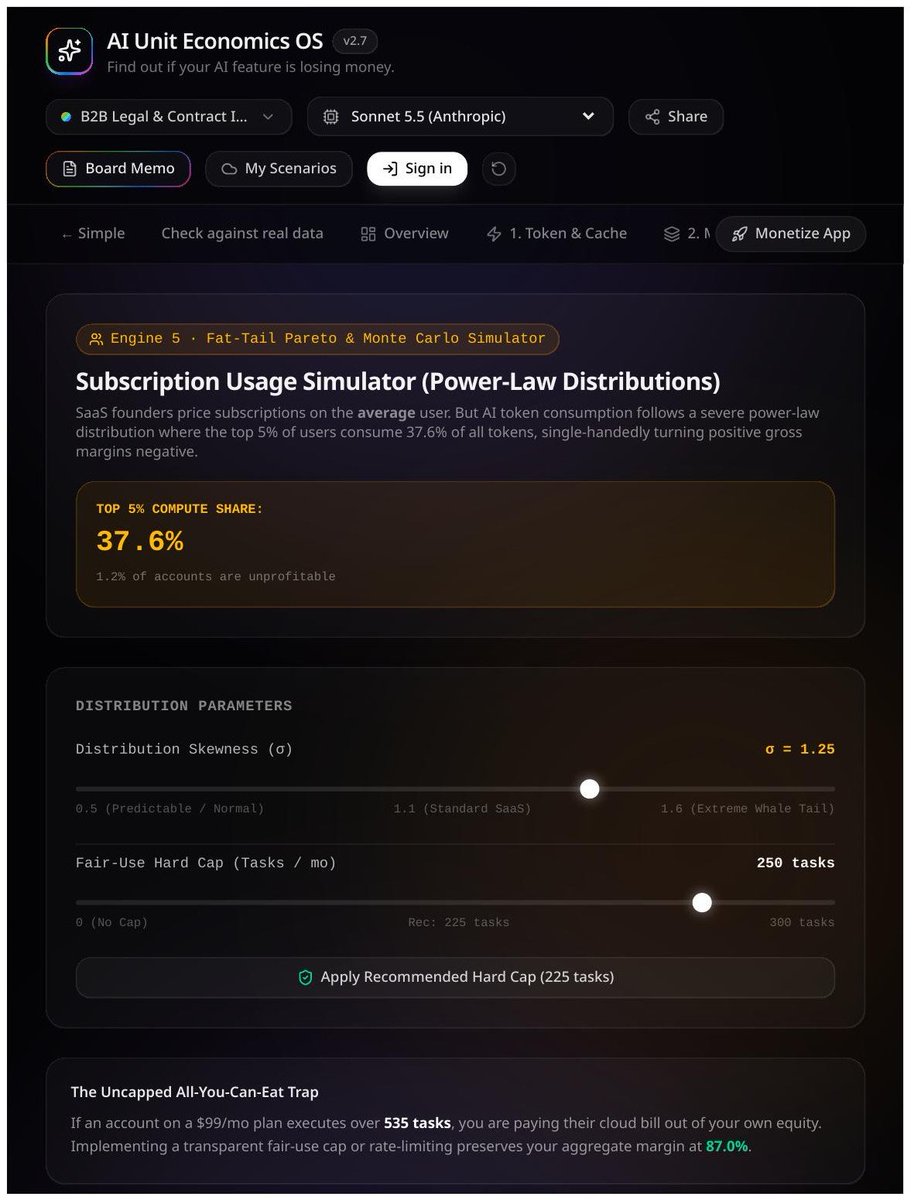
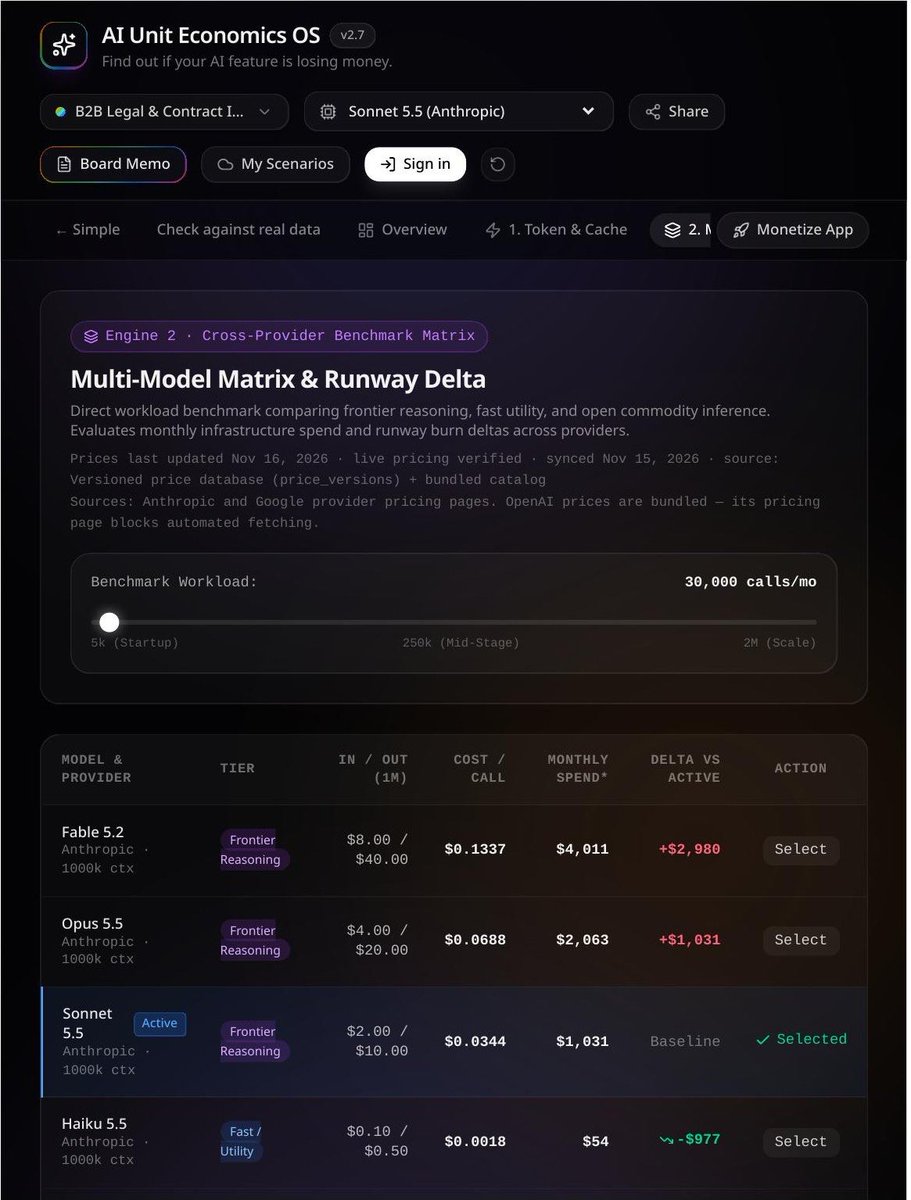
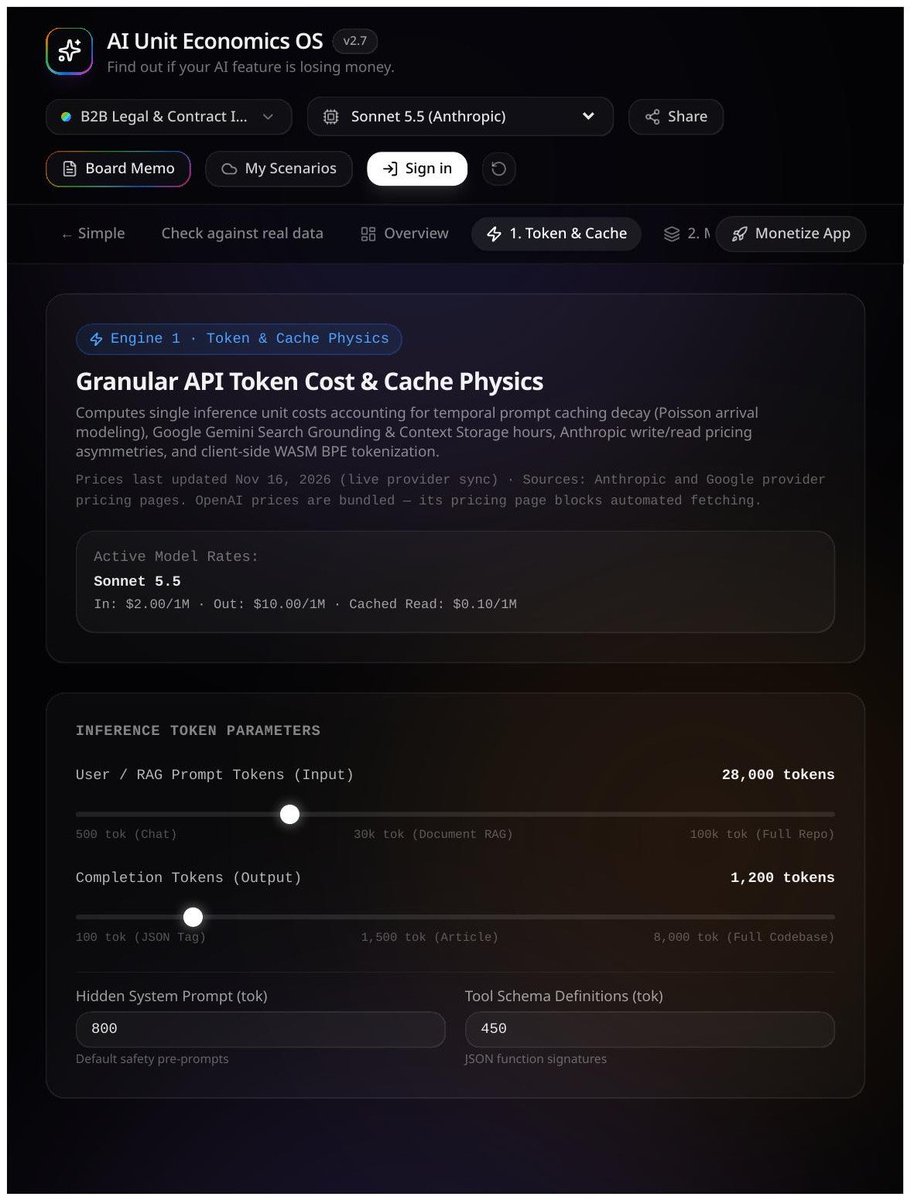
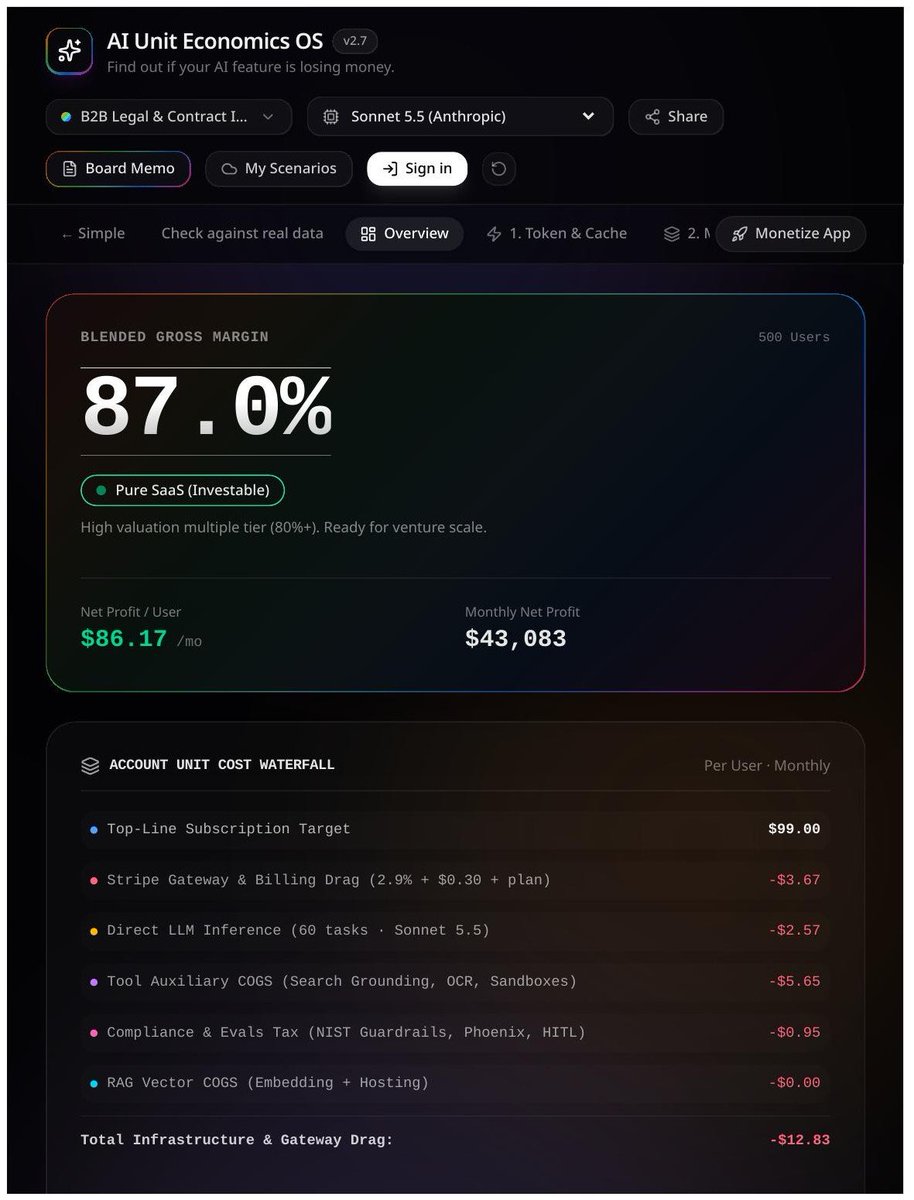
It gives you cost per request, cost per successful task, heavy-user impact, and breakeven. Before you merge, not after the bill.
Free: https://t.co/DlQfhD3KDY What do you measure before you ship an AI feature? #SoftwareEngineering#AI#DevCommunity
Software engineers measure latency, error rate, and p95. But most AI features ship with no cost metric at all.
You wouldn't ship a feature without knowing its latency. Why ship one without knowing its cost per request?
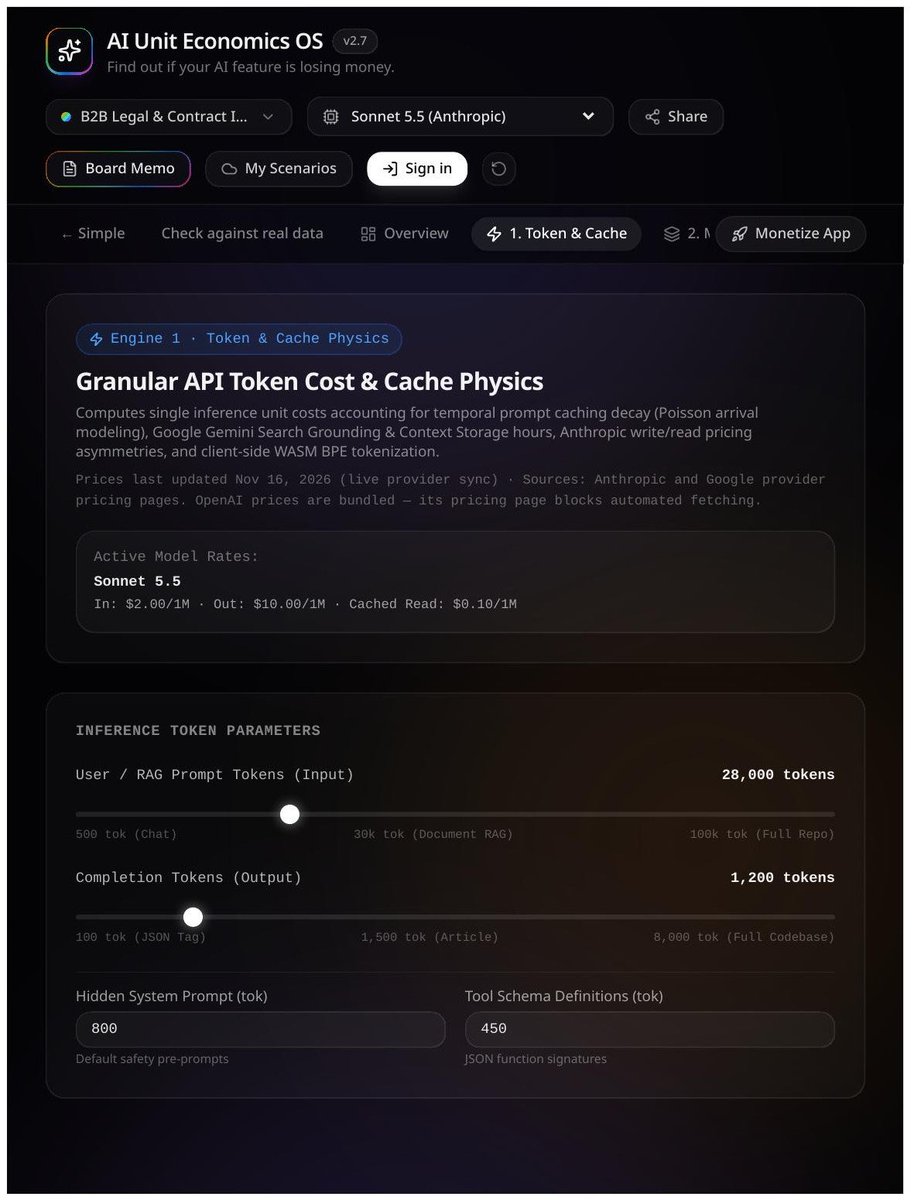
Cost per request is an engineering metric. Tokens in, tokens out, cache hit rate, retries, and output length. All measurable.
I built AI Unit Economics OS as a deterministic calculator. Zero model calls, client-side token counting, real prices from a 48-model catalog.
It also has live token counting, so you can see what your chunk size is really costing you. Smaller chunks aren't always cheaper.
Free here: https://t.co/DlQfhD3KDY How many chunks are you retrieving per query? #RAG#AI#LLM
RAG isn't expensive because of embeddings. You embed once. It's expensive because you pay for those chunks on every single query.
Retrieve 10 chunks at 500 tokens each? That's 5,000 input tokens before you even ask the question. Every time.
Add reranking, history, and system prompt, and your "cheap" RAG call is now an 8k token call. Multiply by 1,000 users.
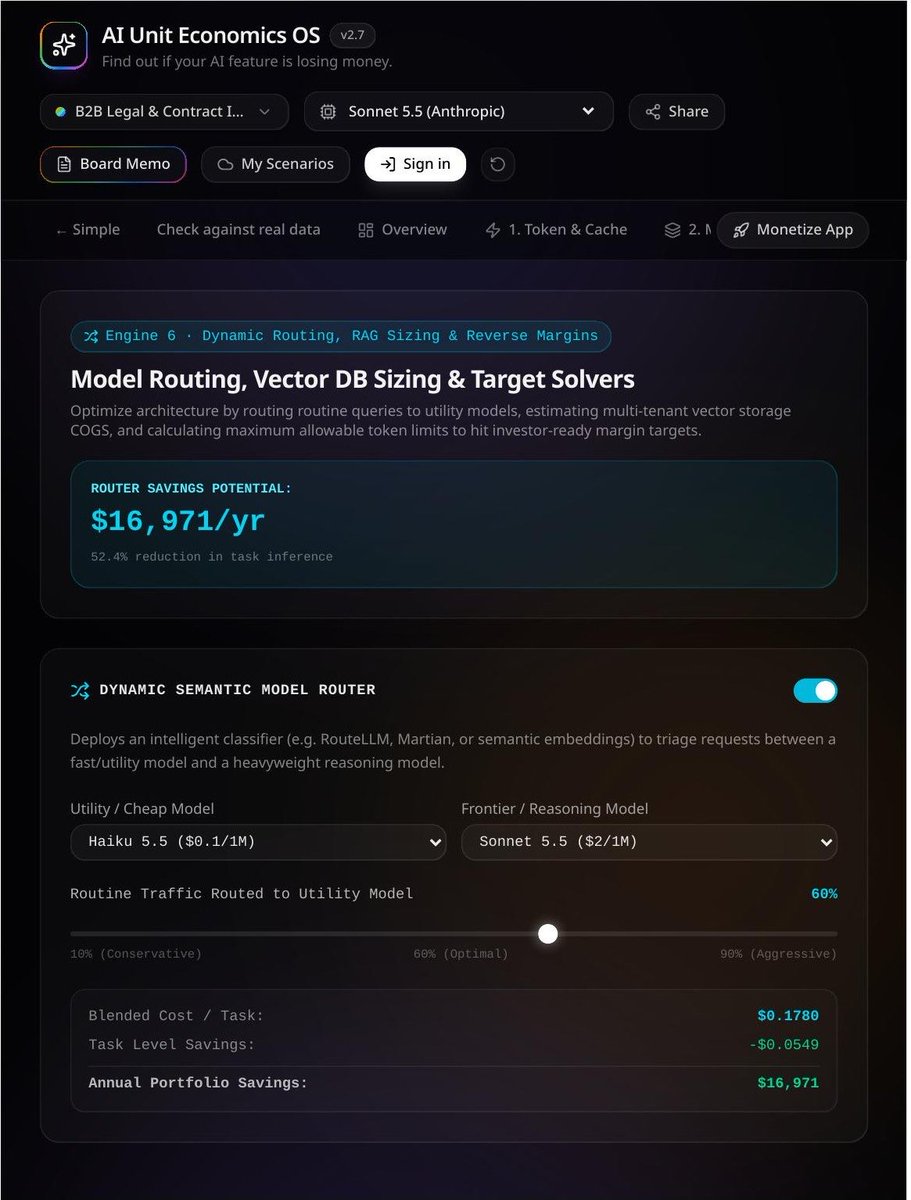
That's why I built a Routing & RAG calculator in AI Unit Economics OS. It prices retrieval, context, and cache decay together.
Indie makers, quick honest question:
How many of you priced your AI feature, launched, then got the API bill and realized you were losing money on your best users?
That was me. I was pricing from a demo call and the average user. Both were wrong.
If you're building an AI SaaS solo or bootstrapped, try it free and tell me what your breakeven came out to. Curious what you're all charging right now.