been testing a few perps platforms lately
just trying to understand how they actually compare in practice
at first i was only focused on the usual stuff
fees, execution, ui
but there’s one thing i didn’t expect to care about this much
what actually happens to idle capital
because when you really look at it
a lot of funds just sit there between trades
that’s something i started paying more attention to
especially since i began working with @StandX_Official
their approach here is a bit different
trying to make that idle collateral more productive
still early for me but interesting enough to keep testing
i will share more as i go
u can join here bro https://t.co/cBy0K1Ru8i
i used to get excited about every new feature in crypto
thought each one would change everything
but after a while
you start noticing a pattern
most of them don’t really stick
they come and go
what actually matters are the small things
the ones you don’t notice immediately
like how your capital is being used while you trade
that’s something i started paying more attention to
especially since working with @StandX_Official
turns out, small improvements there can make a bigger difference over time than most “big features”
lets join us : https://t.co/2ukffd19v6
ever actually checked how much of your trading capital is just sitting there doing nothing?
you deposit
open 1–2 positions
then the rest just… sits
waiting
i didn’t really think much about it before
felt normal tbh but the more i trade
the more it feels like wasted potential
that’s partly why i started working with @StandX_Official
and digging into how they approach this differently
their idea is simple like this fam
your collateral itself can generate yield
so idle funds aren’t completely idle
doesn’t replace trading profits
but from an efficiency standpoint?
it just makes more sense over time
so?? lets join with us
link : https://t.co/2ukffd0BFy
ngl most traders are kinda wasting their capital without realizing it
like… you deposit for perps
open a few positions
and the rest just sits there doing nothing lol
i used to think that’s just how it works
capital in = wait for trades
no trade = no return
pretty normal right?
but recently i have been looking into this idea of yield-bearing collateral
basically your idle funds still generate something in the background
@StandX_Official is trying this with $DUSD
it’s a stablecoin that auto generates yield while being used for trading
no extra farming, no moving funds around
not saying it’s some magic solution btw
perps are still risky
you can still get wiped if you mess up
but from a capital efficiency perspective
it actually makes more sense than just letting funds sit idle
especially if you’re already trading on BNB / Solana ecosystems
feels like a small but meaningful upgrade
still exploring this myself with @StandX_Official
curious how it plays out long term tbh
good platforms don’t just reward users
they shape behavior
that’s what’s interesting about @XOOBNetwork
XOOBNetwork
instead of random incentives, the system encourages:
consistent activity
exploration
learning by doing
users are guided into ecosystems step by step
this is closer to game design than traditional crypto products
progression matters
over time, behavior turns into habit
habit turns into retention
that’s where real value is built on XOOB
more
https://t.co/v02GsOse5a
https://t.co/4XN8Tb0mON
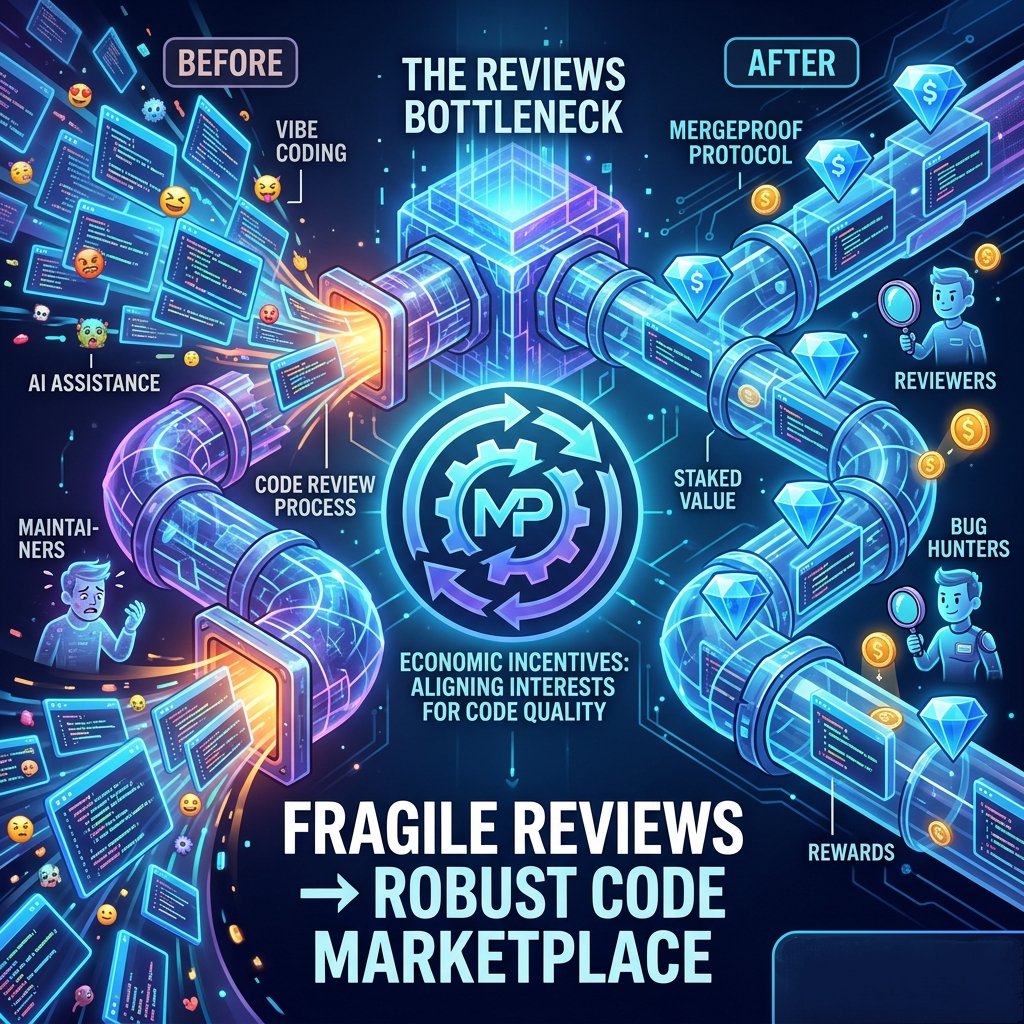
if you look closely, the current code review process is more fragile than it seems
it runs mostly on goodwill and whatever spare time maintainers have left
but now with vibe coding and ai-assisted development exploding, the number of pull requests is going through the roof while actual code quality isn't keeping pace
it starts to feel like a bottleneck that just never clears up
this is where https://t.co/0SwIVafyDV gets interesting
instead of adding yet another tool on top of the usual workflow, it’s a protocol that brings real economic incentives straight into the pull request process
contributors can stake their own value on a PR as a clear signal of confidence, and reviewers plus bug hunters actually get rewarded when they catch real issues
once there’s actual skin in the game, behavior shifts
people stop rushing sloppy code just to get merged fast
they start thinking about the risk tied to their stake
on the reviewer side, there’s now a real reason to dig deeper instead of giving quick approvals just to keep velocity high
it basically creates a small market for code quality
confidence becomes measurable, review effort gets compensated, and the risk of bugs gets priced in before anything ships
in the age of vibe coding this matters a lot
ai makes writing code ridiculously easy, so the real bottleneck moves to validation
without the right incentives, quality will always lag behind volume
mergeproof flips that by aligning everyone interests around actually doing the work properly
Miden stepping on stage with Morgan Stanley is the signal btw
this infra being positioned in front of capital allocators
institutions don't care about narratives
they care about execution, scalability and where flows can safely land
zk is crossing that line
from theory to something institution can actually underwrite
and @0xMiden being in that room means one thing
they're trying to own that conversation early
Element Lucky Draw 🎁
Introducing The Hollow @TheHollow_NFT — a raffle platform for community engagement on @Katana.
Early supporters who hold the NFT Pass may unlock future benefits, including potential airdrops and more.
🎟 200 FREE MINT spots on Element up for grabs!
📅 Feb. 15–17, 14 PM (HKT)
🔗 Join here: https://t.co/KCt055CxLA
#ElementNFT #LuckyDraw #Giveaway
how does @rakebitcom make money?
here is a simple breakdown fam
casino platforms rely on the house edge
every game has a small mathematical advantage for the platform
sports betting platforms generate profit through odds margins
these margins allow the platform to stay sustainable.
combined with affiliate systems and platform fees, this forms the core business model
most model failures aren’t architecture failures
they are data failures
the model is doing exactly what it was trained to do
the world just moved
three things happen when data isn’t diverse and real time
• model drift
• bias amplification
• hallucinations
let’s break that down
you train on historical data
deploy into live environments
user behavior changes
language evolves
markets shift
your model slowly becomes less accurate
because it’s outdated
if your dataset over represents certain regions
demographics
platforms
or viewpoints
the model learns that skew
scale that bias across millions of outputs
and it compounds
this one gets misunderstood
hallucinations often happen when the model lacks high confidence signals
outdated data
thin domain coverage
missing edge cases
the model fills gaps probabilistically
confidence without grounding
snapshot training data
periodic bulk refresh
long retraining cycles
the feedback loop lags reality
AI ends up modeling yesterday
real time, diverse data changes the equation
continuous signal flow
behavioral updates
multi-source inputs
reduces drift
improves grounding
balances representation
this matters especially for @PerceptronNTWK
> agent systems
> search
> financial modeling
> moderation
> recommendation engines
> anything dynamic breaks first
9/ keyword check
model drift
data bias
AI hallucinations
real-time data
diverse datasets
continuous data pipelines
better models help
but better data foundations prevent the breakage in the first place
people keep framing this wrong
it's not perceptron vs openai
not perceptron vs anthropic
not perceptron vs meta
that's surface level thinking
@PerceptronNTWK challenging something deeper
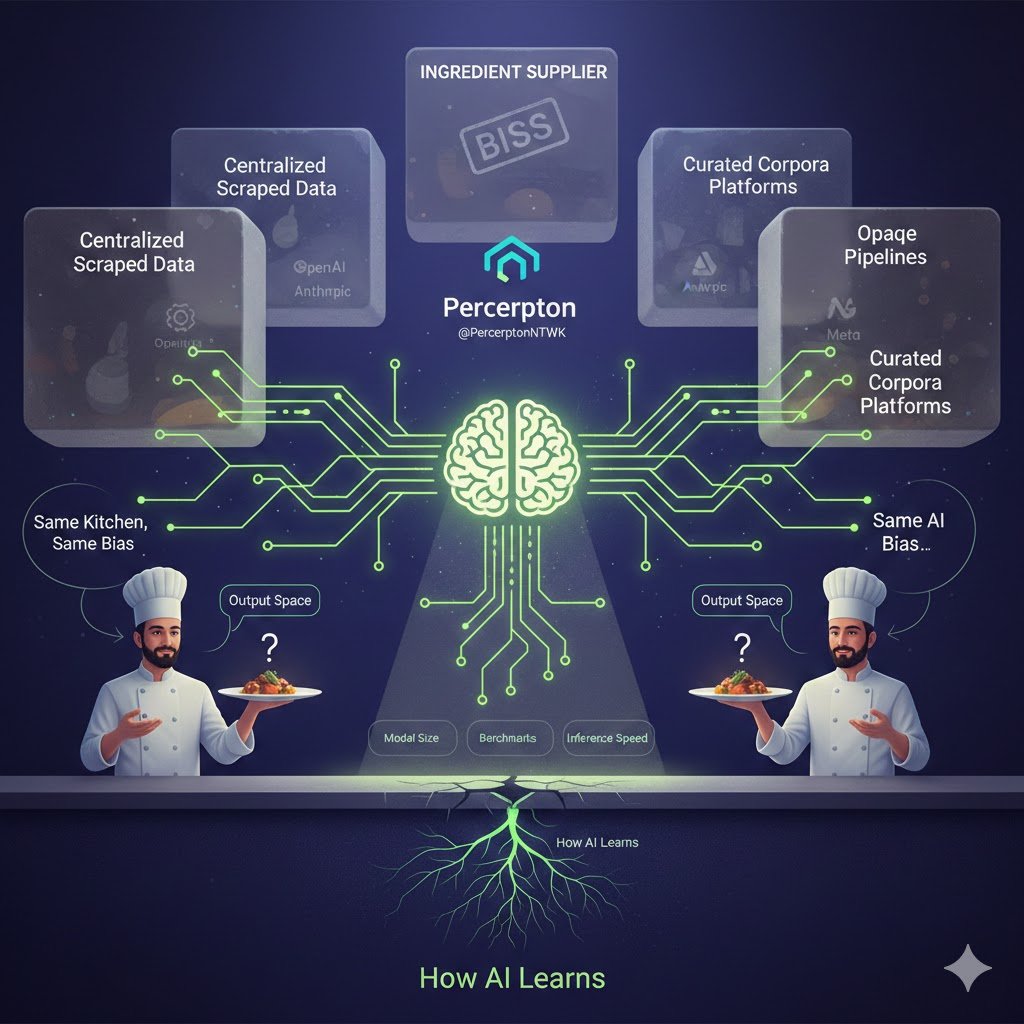
how ai learns in the first place
most debates focus on model size
benchmarks
inference speed
almost nobody questions the training pipeline
that's the real foundation
arguing over which chef is best
while ignoring where the ingredients come from
same kitchen
same supplier
same bias
different plating
if today's ai learns from
centralized scraped data
curated corpora platform
opaque pipelines
then the output space is constrained before training even starts
if inputs are weak
outputs drift
most projects optimize for demos
@PerceptronNTWK is optimizing for pipelines
continuous data mesh
reputation weighted contribution
ai ready infrastructure
not sexy
but necessary
mainstream attention follows visible layers
interfaces
models
apps
but serious builders eventually care about
data
trust
alignment
this is why it feels early
just foundational work
decentralized data infrastructure
continuous data mesh
data trust
ai alignment
human powered signals
infra compounds quietly
and quiet things usually win long term