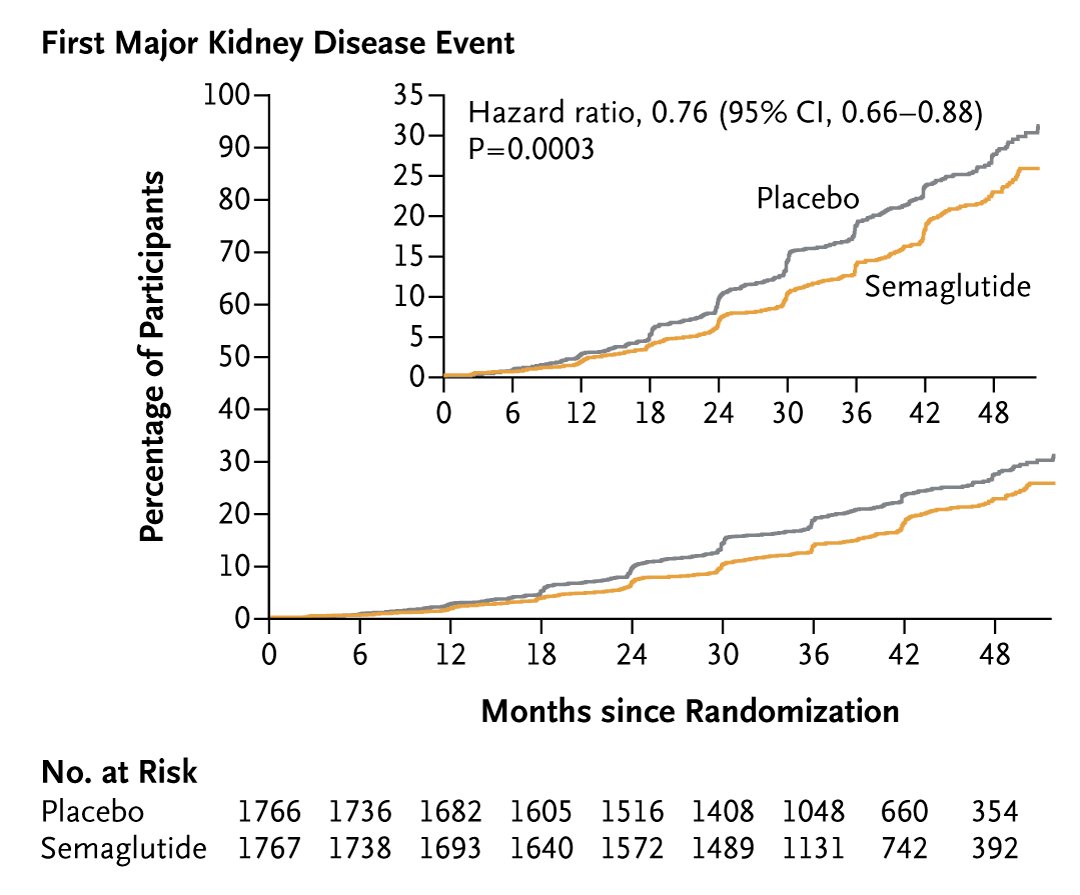
How does Semaglutide protect the kidneys? Is it weight loss? Glycemic control? According to @hswapnil, who cares!
Plus a reduction in the all important "Hit-by-bus-outcome by @Jwaitz
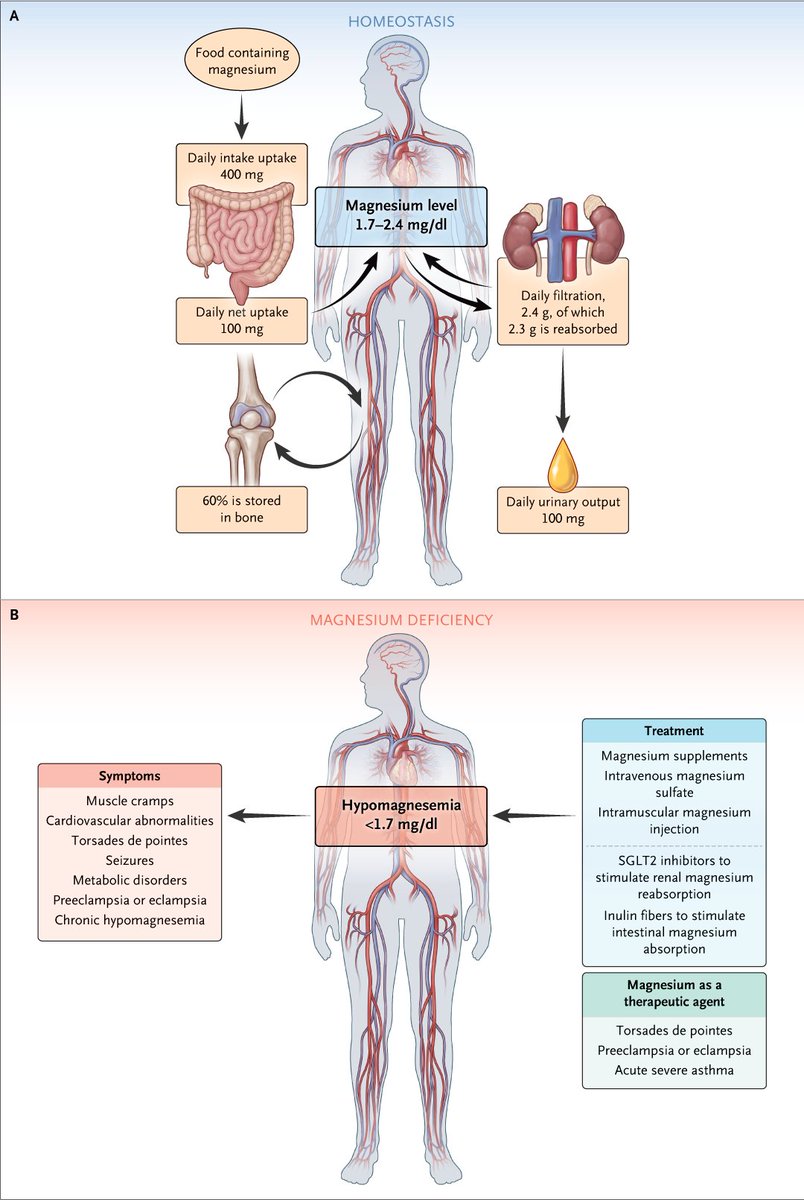
Hypomagnesemia is present in 3 to 10% of the general population, but its prevalence is increased among persons with type 2 diabetes and hospitalized patients, especially those in the intensive care unit. Learn more: https://t.co/hpbdwSUdgL
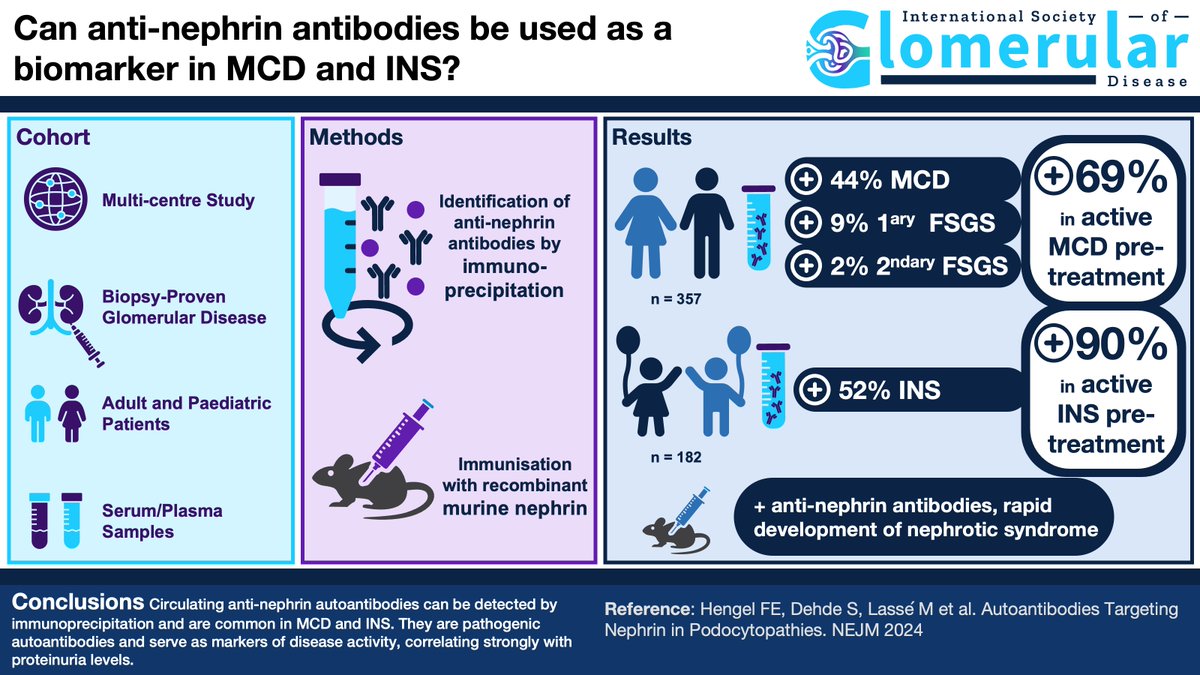
Winner! 🎉 Congratulations @FHullekes, MD, and @RodrigoGassen, PhD, whose abstract, "The Role of Anti-Nephrin Antibody in Primary Focal Segmental Glomerulosclerosis and Recurrence Post-Transplantation" was selected as the Day 4 Best in Congress winner!
Walking into the plenary & on screen @RodrigoGassen @FHullekes from our lab @mgh_transplant @MGHKidneys @MGHSurgery got the best in congress poster on June 4th!!! Greatful to our amazing collaborators TANGO consortium, @cravedilab@AstridWeins Andy Watts https://t.co/pTMsUQJkDq
People say the reason why no one discovered anti-nephrin earlier is because it’s hard to detect. The major reason is though that no one except Helmut Rennke had imagined this as an antibody mediated disease. The rest was logical thinking and rigorous execution.
@VelezNephHepato Well, sometimes unbiased approaches are too diluted to render real results. Sometimes you just have to use your observations, your knowledge of physiology and histology and cell biology to hone in on what makes sense. ;-) I had no doubt it would be reproduced and validated.
Presented at #ERA24:
FLOW trial: In patients with type 2 diabetes and chronic kidney disease, weekly semaglutide significantly reduced risks of major kidney events, cardiovascular events, and death from any cause while slowing loss of kidney function. https://t.co/Q9DAA6mPte
🫘🫡Antinephrin Autoantibodies in Podocytopathy-Late breaking in @ERAkidney
🧬Antinephrin antibodies highly prevalent in pts with MCD/FSGS
😎Correlate with disease/relapses
🙏Can be used to guide therapy
🗣️by @Tobias_B_Huber#ERA24
Presented at #ERA24:
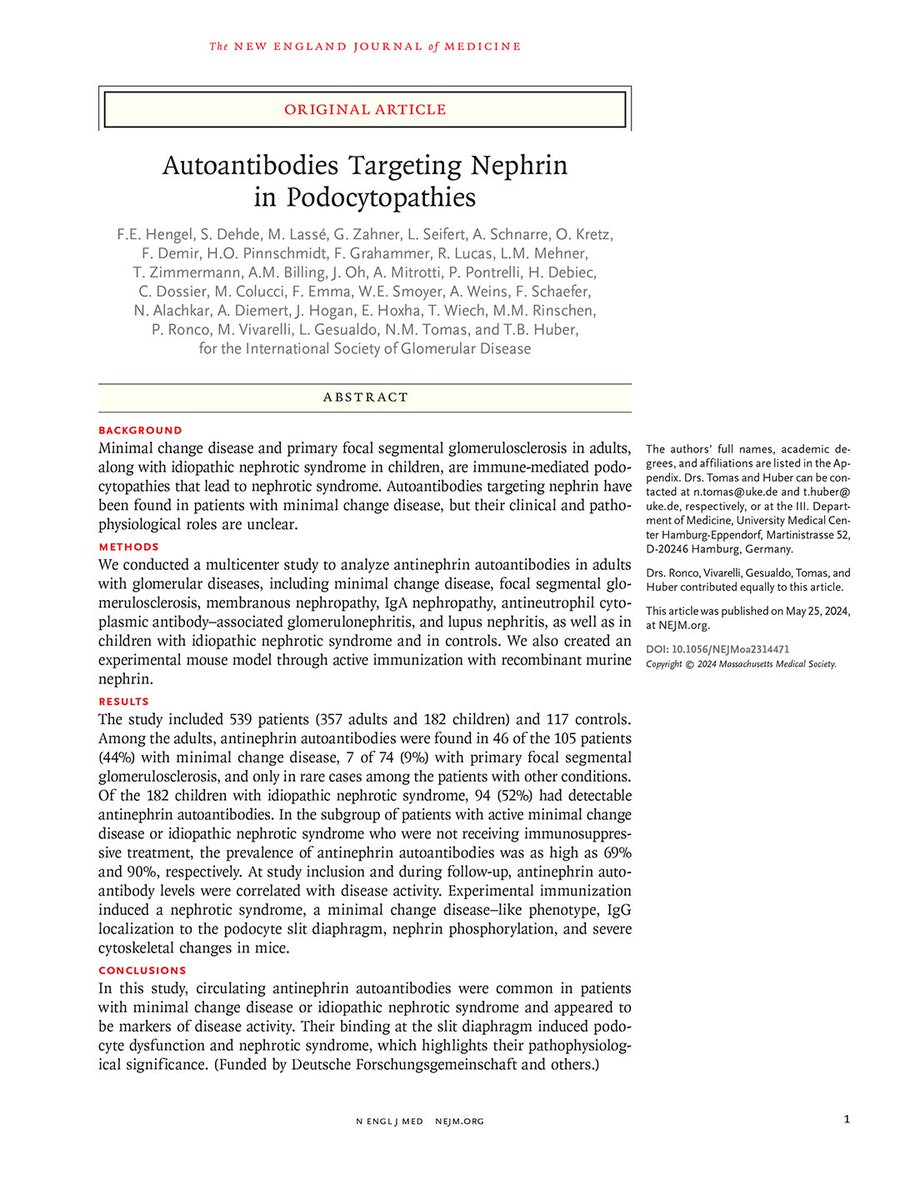
Antinephrin autoantibodies occur in adults with minimal change disease and children with idiopathic nephrotic syndrome and appear to be disease activity markers. Their binding at slit diaphragms may induce podocyte dysfunction. https://t.co/kJLkUQJQH2