"Any artist can draw when they have made a discovery. But to draw in order to discover — that is the godlike process"
- John Berger, A Painter of Our Time
This reminds me of the phenomenological line of thinking… in a healthy psychological state, our mental faculties have a “transparent” quality and they are the invisible lens through which we engage with the world. In psychopathology, the psyche loses its transparency, and becomes opaque, heavy, rigid, alien, forcing itself into conscious awareness and inviting obsessive introspection.
"The choice we make of how we dispose our consciousness is the ultimate creative act: it renders the world what it is. It is, therefore, a moral act: it has consequences."
Superb read: https://t.co/4ta2eRQ0ez
I can tell when people don’t actually listen to Cole music cause bruh has always been this vulnerable and open. This is why he’s Cole and why he’s made it this far
"My wasting of time is not merely laziness and disorder, but also a conscious protest against the most absurd, most insane, and most sacred principle of the modern world, namely that time is money. In itself, the expression is, of course, entirely correct; time can easily be turned into money, just as electric current can easily be turned into light and heat. What is insane, frenzied, and base in this most foolish of all human principles is simply that “money” is unconditionally set up as the designation of the highest value.
My revulsion toward this dogma of the modern world, and toward the modern world itself, by which I mean the entire machine culture, is so great that, wherever possible, I do not consider it worthy to adapt myself to the laws of such a world."
H.Hesse: "I DO NOT ADAPT TO THE WORLD", "Journey to Nuremberg"
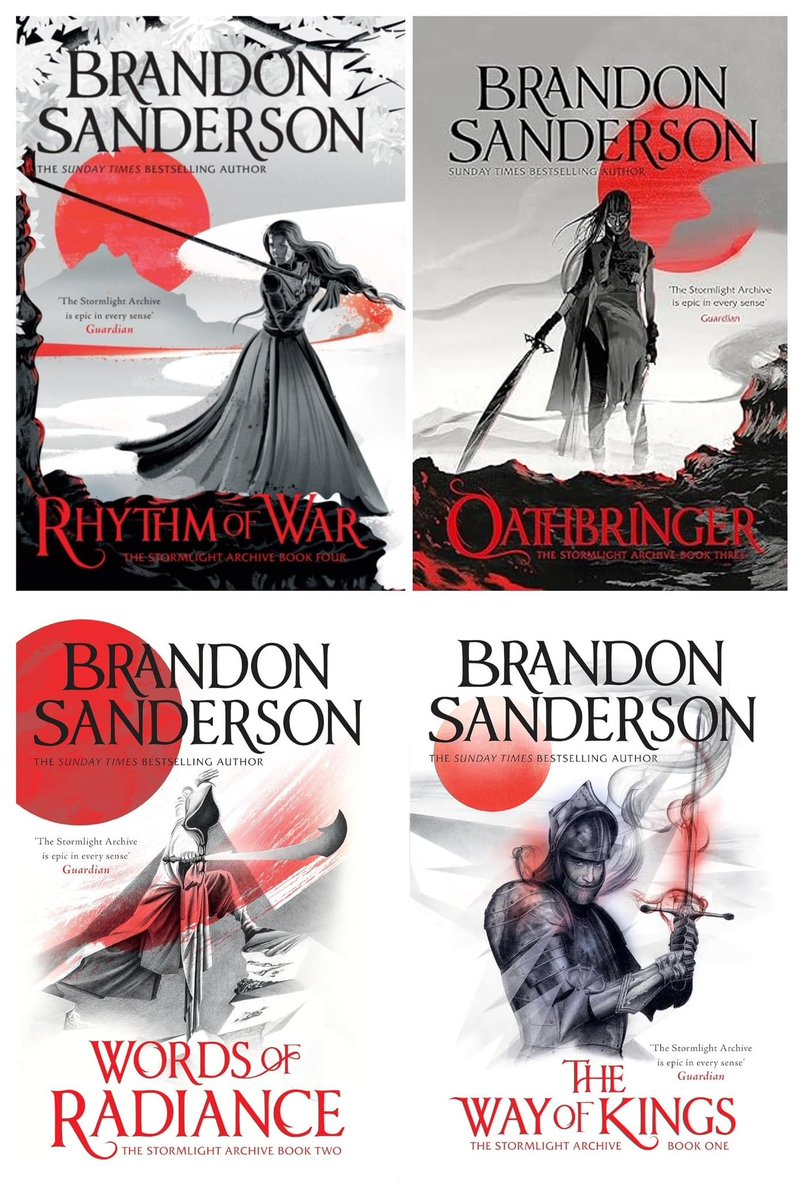
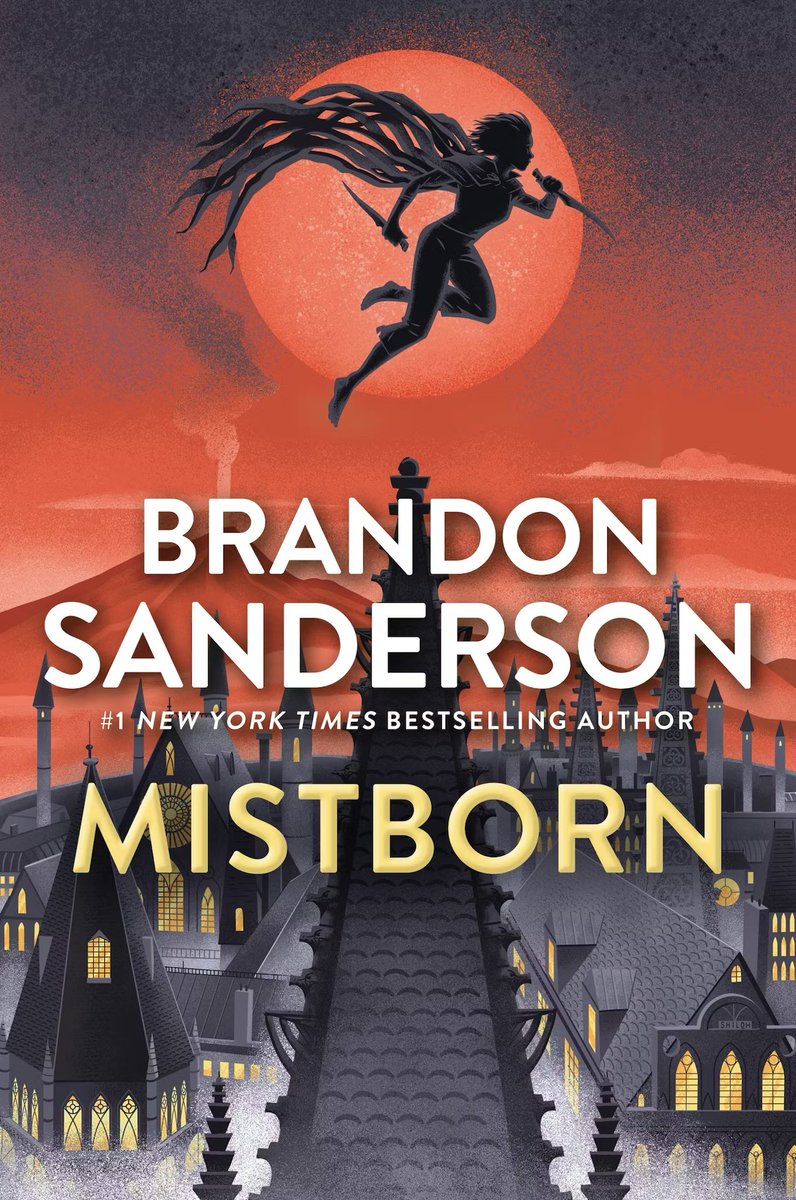
Apple has landed the rights to turn ‘MISTBORN’ into a film franchise & ‘THE STORMLIGHT ARCHIVE’ into a TV series.
Brandon Sanderson will write, produce and consult on all projects.
(Source: https://t.co/Ka6RvxmT3S)
one of the central ideas of Tolkien’s mythology was “the Long Defeat”: that the world was slowly & irrevocably sliding towards darkness, and all one could do is fight to maintain the beauty for a little bit longer
it sounds almost nihilistic, which is why LOTR is intensely focused on showing the vast room that this allows for valor & grace
Tolkien suggests the height of heroism is to look the certainty of doom in the face, and still say, “I’m going to fight”. all the wise forces in Middle Earth are laboring to preserve the world while fully knowing it’s a lost cause… which only heightens the effect of their sacrifice
it’s easy to be brave when we have hope & certainty of a good outcome. but we never truly have that certainty, and we’re asked to do hard & loving things anyway, and that’s both a tragedy & an opportunity
sometimes when that fear of uncertainty arises, it’s useful to remember that it makes our courage real. ideally the world & our lives would be perfect, but that wouldn’t offer any opportunity for sacrifice & heroism, which would also be a loss
“The majority believes that everything hard to comprehend must be very profound. This is incorrect. What is hard to understand is what is immature, unclear and often false. The highest wisdom is simple and passes through the brain directly into the heart.”
Viktor Schauberger
How does Authoritarianism happen?
It starts slowly, in slogans and small acts.
It starts in the eroding of decency and empathy.
It starts with a "Leader" undermining faith in any "Truth," the deliberate disorientation of the citizen's mind.
And then? It stirs in the heart of the common man, whose world has become too complex for him. He looks around and finds a world that is frightful, complicated, new. He sees his falling bank account. He loses his job. New media bombards him with changes he cannot understand. He despairs. He is filled with an unnameable terror.
When he can take the fear no longer, he abandons his reason. He hands his mind over to a Leader—a Fü*rer, a Chairman, a Figure He Never Had—who promises to simplify his thoughts, his feelings, his life; to tell him the one, concocted, state-sponsored Truth he wants to hear.
And that Leader will do exactly that.
Authoritarianism, therefore, thrives on the one-sided mind: the individual, and ultimately the group, that has become alienated from, or has repressed, a part of itself, usually in an attempt to avoid feeling what it is terrified to feel.
The one-sided person seeks to control the ways in which others express themselves, and he does so for precisely this reason: he unconsciously envies those who can feel what he cannot feel. Authoritarianism always begins with a reductive philosophy that despises empathy, that views tenderness as a weakness, that seeks to police how others love.
Dostoevsky once wrote that hell is nothing other than the state of being unable to love. Authoritarianism is nothing but the small mind's fear of the myriad riches of this world. Even as its rulers acquire material wealth, they wish to deprive the world of the spiritual riches they cannot have.
Thus, as a movement, the ultimate unconscious wish of Authoritarianism is always destruction, self-destruction, s*icide. It longs for stillness, not growth; its nationalistic fervor is a not-so-hidden desire to be alienated, to sever its bonds with other nations and peoples. It ends as H*tler did in Berlin: alone, isolated, taking everyone with it into the dark.
It is predicated, always, on a false nostalgia: a longing for an ideal, imagined past. Its slogans are vague enough to inflame the fantasies of the one-sided mind: be great again, blame others, your life is hard because of Someone Else.
Most catastrophically, then, the one-sided mind projects its repressed half (its shadow or its tenderness, its spirituality or its feeling) into this Other, and seeks to oppress it, then ultimately to destroy it. Genocide, tyranny, oppression: these are acts of the fractured, one-sided mind, afraid of encountering and experiencing the other side, the other opinion, the Great Other, in whose presence it would be challenged to face the whole of what it means to be human.
Art, mystery, poetry, education: these things reconnect us to our wholeness, to the varied voices within us. When we act from that grace, that state of openness, of listening, of synthesis and integration, we practice the lost arts, the arts that all power structures inherently desire to devalue and repress: empathy, compassion, creativity, love.
Where is the wise way between societal extremes? Where is the movement that supports the worker, the common citizen, without stoking his deepest fears and using them to divide society and conquer it? Where is the form of government that wishes for its citizen to be whole?
A fractured, one-sided mind is a mind that can be controlled, can be sold reductive narratives, can be induced to want and to purchase any artificial fulfillment. A whole mind, even a mind that strives for impossible wholeness, is free. And that is why real, radical wholeness is a threat to the status quo, to tyranny, to propaganda. As is art. As is grace. As is empathy. And that is why love, radical love, even in the darkness between two bodies, is a revolution that can bring kings to their knees.
We cannot allow the powerful and opportunistic to defame the word "Christian." That is far too convenient for the oppressive hypocrites, and far too spiritually destructive to the oppressed, who will turn that misunderstood term into a convenient pejorative.
What the powerful and nationalistic call "Christianity" is so far from the teachings of Jesus, and they know it—because those teachings, if we truly heard them, would try to do now what they tried to do in Christ's time: dismantle a soulless empire and build a new world based on compassion for the outcasts, hope for the despairing, and such a release from fear and false leaders that the powerless would answer only to Love.