I write about entrepreneurship and self-development to help burned-out men build self-agency and take back control of their income, health, and future.
Do you want to feel comfortable or do you want to make money?
Feel the fear and still:
• Start the business.
• Send the DM.
• Ask for the referral.
• Raise your price.
You won’t regret it.
AI can produce a post about any topic in seconds. So can a copywriter who charges by the hour.
What neither of them does is slow down long enough to ask:
• What did this founder actually experience?
• What problem did they solve that nobody else solved the same way?
• What's the specific story that only they can tell?
That's the work. Extracting lived experience and finding the words that transmit it the way only the founder could.
My first course business completely flopped.
After 6 months of solid effort, I ended up with only 40 sales at $17.
Why it failed:
• Nobody wanted it bad enough (nice-to-have, not a burning pain)
• The promise wasn't believable (a full novel in 30 days sounded fake)
• I lacked proof of work (nobody knew who I was yet)
Nothing teaches you business faster than launching to zero sales.
The fastest way to burn out as a freelancer is working with clients who won't respect your work and boundaries.
In 10+ years of freelancing, I found these to be the 3 biggest client red flags that you should spot early:
• Rate Grinding: If a client makes fuss about the price from the start, they will most likely make a fuss about everything else.
• Scope Creeping: There's nothing wrong with trying to give your clients more value, but draw a line where things get unreasonable and you end up doing twice the work you agreed on for the same price.
• Micromanaging: If a client doesn't trust you to finish the work on your own, they are wasting everyone's time. You will never get the work done 100% like they would, and that is a good thing.
If I could start over, here are the 3 non-negotiable rules I’d give my younger self to avoid working with draining clients:
1. Overcommunicate from the start: Agree in writing on scope, deadlines, and deliverables. If a request is out of scope, it doesn’t get touched without a new proposal and a new invoice.
2. Don't be afraid to set clear boundaries: Define your response hours, your revision limits, and your availability on day one so there are no surprises to your client. Teach them how to treat you.
3. It's okay to fire a bad client: No amount of money justifies working with bad clients. Business should feel more like a partnership and collaboration between peers, not a master and servant relationship. The moment a client gets disrespectful or condescending, walk away.
You are running a business long-term. Protect yourself, your health, and your mental sanity.
You are your business's most valuable asset.
The fastest way to burn out as a freelancer is letting clients walk over your boundaries.
In 10+ years of freelancing, here are the 3 non-negotiable rules I live by:
• Overcommunicate from the start: If it's outside the agreed scope, it doesn't get touched without a new invoice.
• Set clear boundaries: Define your response hours and revision limits on day one.
• Fire bad clients: Business is a partnership between equals, not master and servant.
You are your business's most valuable asset. Protect yourself.
Capturing someone's voice isn't a mystery. It's a checklist:
• Are they an opinionator or a fact-thrower?
• Do they use bold language or stay buttoned-up?
• Do they write dense paragraphs or punchy lines?
• Do they prefer British or American English?
• Do they use em-dashes or avoid them?
Find those specific nuances, and you have their voice.
The rest is just writing.
5 tips I'd give myself when I started freelancing 10 years ago:
1. Start with a free client to build your confidence.
2. At the beginning, say yes to most work until you figure out what you enjoy doing and what you are good at.
3. Charge every new client a higher rate and keep increasing your price as your skills improve.
4. Move away from hourly billing as soon as possible.
5. Niche down your offer to what problems get repeated with your clients and what you are getting good at solving.
Work with real clients, notice repeated problems, and get paid to learn.
Stop delegating your income and your family's future to a boss or the government.
Here are 5 lessons about money that I learned from 10 years of freelancing, going from $3/hour to 6 figures:
1. Make peace with money: Stop demonizing it. Money is just plain feedback on how much value you help others create or how much you help others achieve what they want.
2. Build your own thing on the side: Relying on one employer for 100% of your livelihood isn't security. It's a very costly illusion.
3. Educate away your fear: Most people fear money because they never take the time to understand it. Knowledge kills financial anxiety.
4. Build a 6-12 month safety moat: A real emergency fund is what keeps an unexpected hospital bill from bankrupting your life.
5. Think about the future and who you are doing it for: When your goal is protecting your loved ones for life, showing up to do the work stops being optional.
Take full agency over your financial life. Nobody is coming to rescue you.
Hiring a ghostwriter doesn't mean someone else is doing the thinking for you.
It means your thoughts finally get the time and space they deserve.
Founders have 10+ years of client results, hard lessons, and earned opinions. What they don't have is 20 hours a week to write, edit, schedule, and repurpose.
A great ghostwriter isn't just a writer. They show up as your thinking partner.
The days I felt least creative were often when I was closest to a breakthrough.
When I showed up anyway (tired, uninspired, out of ideas), something surprising happened. A random thought became my best-performing essay.
Those tough days build your creative muscle and prove that consistency beats motivation every single time.
Doing literally anything consistently for 30 days will make you noticeably better than most people at that thing.
Build the daily habit, trust the process, and enjoy the compounding rewards.
If you want to test your freelance mindset tomorrow morning, open your client Slack and ask one question:
"I noticed [bottleneck X] in the business. Would it be helpful if I built an SOP on how I fix that this week so others can use it?"
That single question moves you from another business expense into an indispensable partner.
My favorite part of ghostwriting for founders is the regular interview call.
Having someone to say their ideas out loud to helps founders clarify their own thinking.
By the time we finish, they aren't taking a leap of faith. They can see exactly how well their voice is captured before a single post goes out.
My first course business completely flopped.
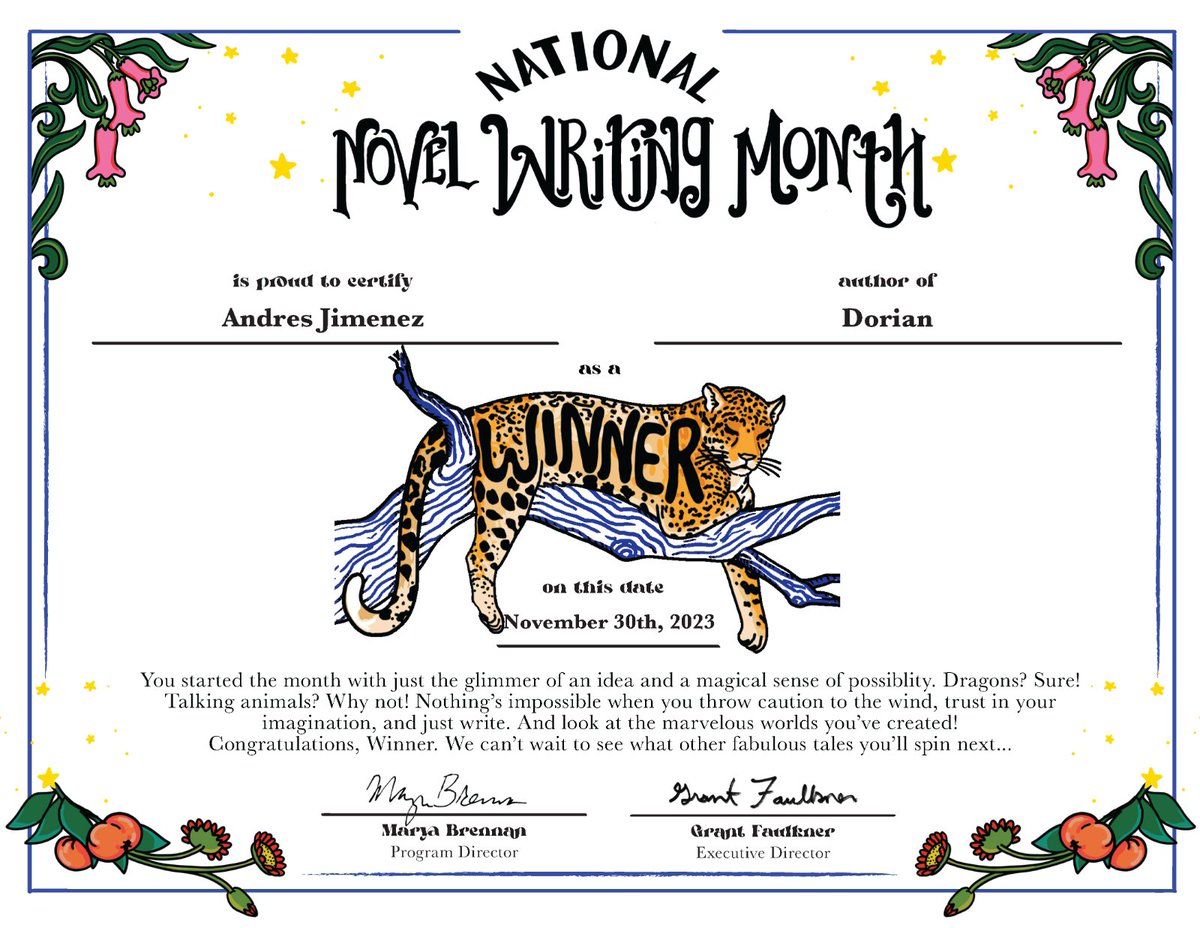
In 2023, I finished my first fiction novel in 30 days during NaNoWriMo and loved the experience. So I spent 6 months building a 30-day sprint to help writers finish their first novel.
I ended up with 40 sales at $17.
Why it failed:
• Nobody wanted it bad enough (nice-to-have, not a burning pain)
• The promise wasn't believable (a full novel in 30 days sounded fake)
• I lacked the proof of work (nobody knew who I was yet)
5 students actually finished their books, so it wasn't a total loss.
But nothing teaches you business faster than launching to zero sales.
You don't need 4 hours a day to write.
Stephen King and Mark Dawson might write 5,000 words a day, but copying their targets when you're busy will only frustrate you.
Set a goal you can hit every day. Neil Gaiman finished Coraline in 10-minute sessions over a year.
The point is to choose a window you look forward to, not one you dread.