Temporary accommodation has contributed to the deaths of at least 74 children in England in the last five years, official data shows.
https://t.co/vfCe9Sf8Kk
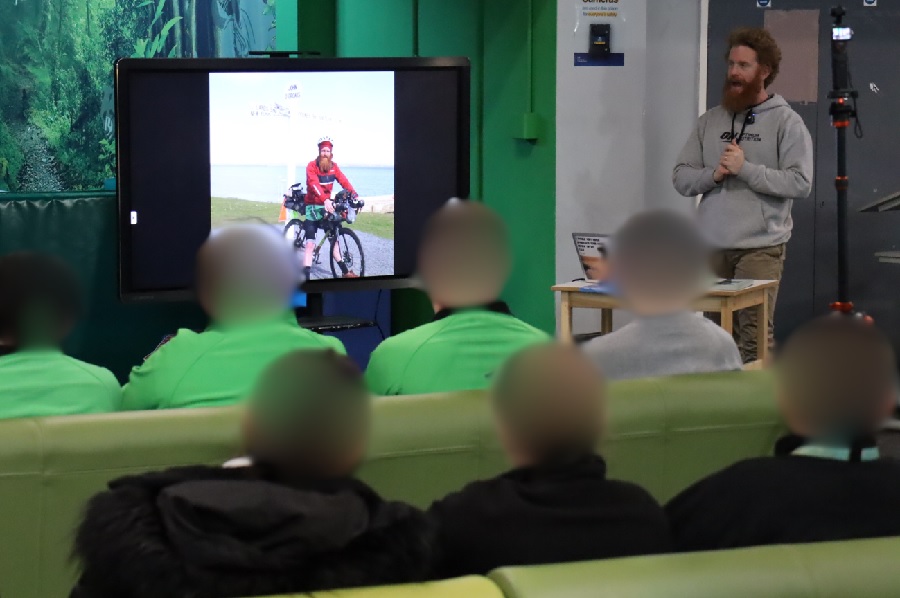
.@Conway_Sean visited us at HMYOI Wetherby to give an inspiring talk to the children and young people. Sean shared practical tips on staying focused and resilient through sharing his own journey as an athlete. It was a really engaging session - thank you Sean!
Anyone considering coming here to take part in race riots will have a prison cell waiting for them, a senior Sussex Police officer warned today
https://t.co/DXzH2BQrEN
Neurodiversity support managers are now in post across every public prison and young offender institution.
They support neurodivergent prisoners to access education, skills, & work opportunities to help aid their rehabilitation.
Find out more ➡️ https://t.co/1zjaaZHph6
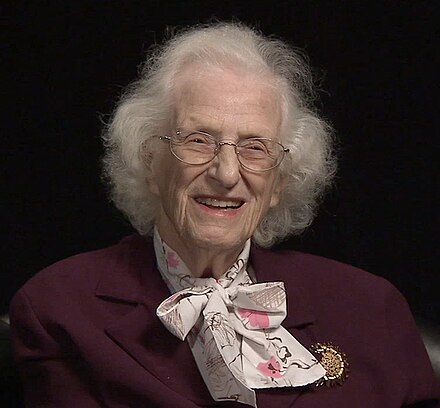
Woman of the Day Nancy Grace Roman born OTD 1925 in Nashville, the first woman Chief of Astronomy at NASA and the Mother of Hubble. Her PhD thesis provided the key to understanding the structure of the Milky Way, yet she was held back at every opportunity from primary school to the six years she spent at the University of Chicago. That’s how she ended up at NASA.
Nancy’s family relocated often when she was little. Her geophysicist father “taught me mental arithmetic by playing games with me” and introduced her to household mechanics. “He said that I could not leave for college without knowing how to rewire a lamp.” In Nevada, aged ten, she formed an astronomy club so she and her friends could study constellations in the night skies of Reno. In Baltimore, she read every astronomy book in the city library and decided that’s what she wanted to do. Her guidance counsellor was taken aback, "What lady would take mathematics instead of Latin?"
Nancy attended Swarthmore University where its dean of women only encouraged women to pursue “female-appropriate fields”. “If you insisted on majoring in science or engineering, she wouldn’t have anything more to do with you. So she sent me to Peter van de Kamp.” He wasn’t encouraging either but he did teach her astronomy.
Nancy attended the University of Chicago’s Yerkes Observatory for her PhD in 1946. It was a little easier; there were always at least two women students there. Her thesis adviser would go for six months without speaking to her - “He was just moody” - but visiting professors helped her research to move forward.
This involved looking for stars born with other stars in the Big Dipper using information in existing catalogues. “I could tell how stars were moving now and could reverse that motion, taking them back to the Dipper at about the right time.” She found more than 200 stars born in the Ursa Major cluster and noticed that where stars orbited in the Milky Way was connected to their metallicity: younger metal-rich stars near the centre, older metal-poor stars further out. She also developed a method of gauging stellar metallicities by comparing their brightness at blue and ultraviolet wavelengths. It is still used today.
After earning her doctorate in 1949, Nancy stayed on as an instructor and then assistant professor, the first woman on the astronomy faculty, and was paid just 60% of the salary of her male peers despite her growing international reputation. Her parents had to subsidise her and as the only woman on the faculty, she had no other women’s salaries to compare with her own. She took the matter to her department chair. He said, “We don’t discriminate against women. We can just get them for less.”
Yerkes Observatory refused to grant a permanent position to a woman (as shrewd a decision as Decca turning down the Beatles in 1962 and signing Brian Poole and the Tremeloes instead) so in 1954, Nancy moved to the Naval Research Laboratory in Washington DC. It meant changing her specialisation from optical astronomy to radio astronomy, at that time a new field for the US but now a major area of study. Because her salary at Yerkes had been so low, “They didn’t recognise it as professional experience…I have no soft spot for the University of Chicago.”
From there, it was a natural step to move to the fledgling NASA as Head of Astronomy, making her the first woman to hold an executive office there. “It was like learning to swim by jumping into deep water.”
Physicist and astronomer Lyman Spitzer Jr. is the Father of Hubble but Nancy advocated for it, wrote congressional evidence for it, brought together and consulted with astronomers from various specialties across the country, sat them down with NASA engineers to determine what was wanted versus what was feasible. She was instrumental in convincing the American government that the $1.5 billion price tag (not including ongoing operating costs) was worth it. She is the Mother of Hubble. It was worth every penny. It confirmed that the expansion of the universe is accelerating and discovered dark energy.
After retiring in 1979 to care for her elderly mother, Nancy slowed down: auditing programming courses, consultancies with government contractors, joining Goddard’s Astronomical Data Centre and becoming its director, mentoring budding scientists and engineers in underserved areas of the US, and giving talks on the Big Bang everywhere. “I like to talk to children about the advantages of going into science and particularly to tell the girls, by showing them my life, that they can be scientists and succeed.”
Her message to women in STEM still experiencing sexism: “Persevere. Things are better than they used to be. Women now can and do get professorships; women are heads of observatories and departments.”
She died in 2018, aged 93.
Ad Astra, Nancy.
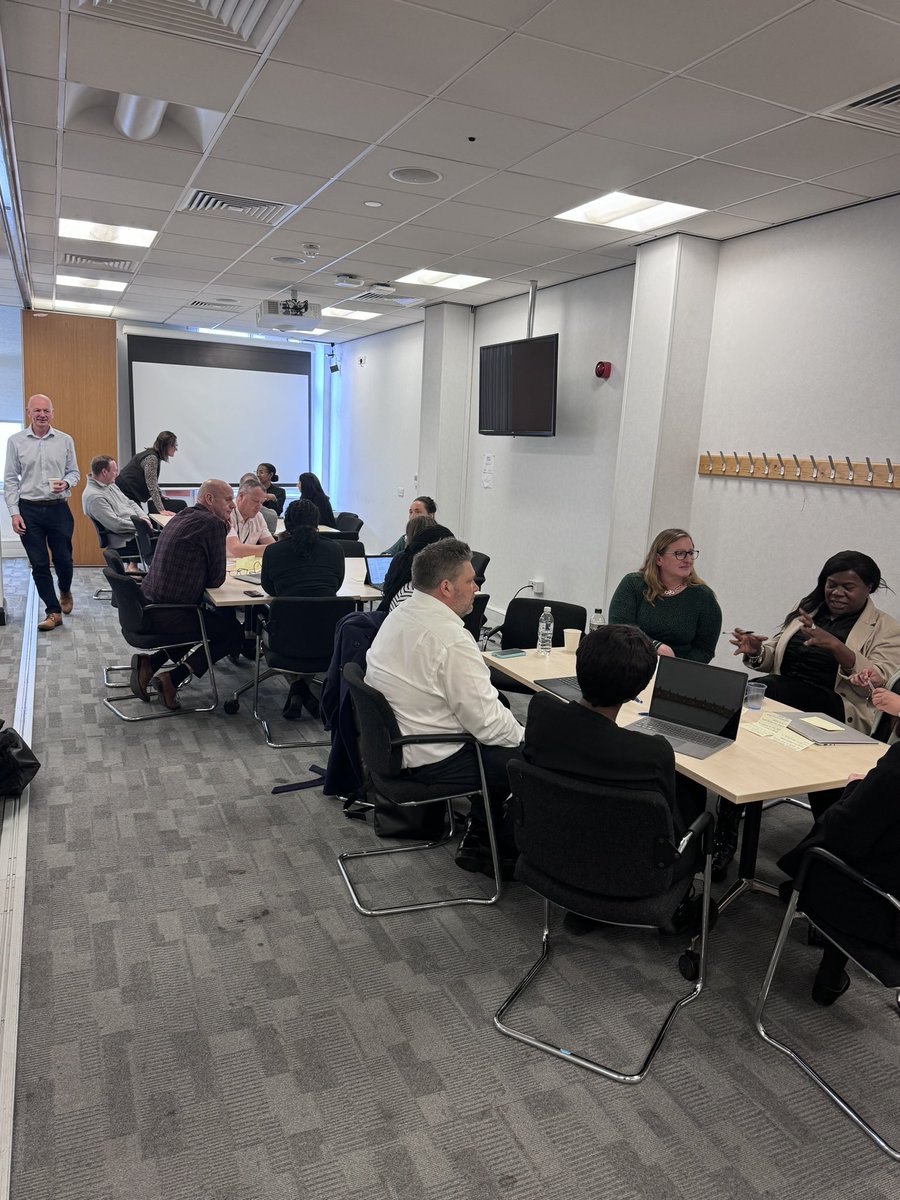
A focussed round table between YCS and YJS yesterday hosted jointly with LIIA @BenByrne101 Everyone working together to achieve the best outcomes for children.
Having led a piece of work on the criminalisation of children in residential care for @TheHowardLeague, it’s so depressing to read this. There has been progress on the details (and some principles), but the overall picture of funding etc is abysmal https://t.co/2ETIQFud2V
Custody is rightly the last resort for children, meaning those in our care have committed more serious offences and many have complex needs.
So it's positive to see latest stats show decreasing rates of assaults, assaults against staff and a considerable decrease in self-harm.
Well done to the team at @HmpParc!
Good outcomes achieved in 3/4 areas with particular praise from @HMIPrisonsnews for the positive culture. We know you’ll continue to work hard.
Thank you all for your commitment to our young people.
BREAKING: Kids at Angola are at risk of heat-related death, says a new filing by @ACLU. One child said he & others were confined to their unairconditioned cells for several days, only allowed out for showers, which they had to take in handcuffs & shackles. https://t.co/tqgJlRJrez
Majority of Texas children are kept on probation despite being low risk for rearrest
The rpt also found racial disparities among Texas kids placed on probation, w Black kids making up a majority of supervised youth despite being only 13% of Texas’ pop https://t.co/bEjQ5ybTQn