Trend follower | love charts and funda analysis | this is public trade journal shared for feedback and learning purpose ONLY. Not recommendations to buy or sell
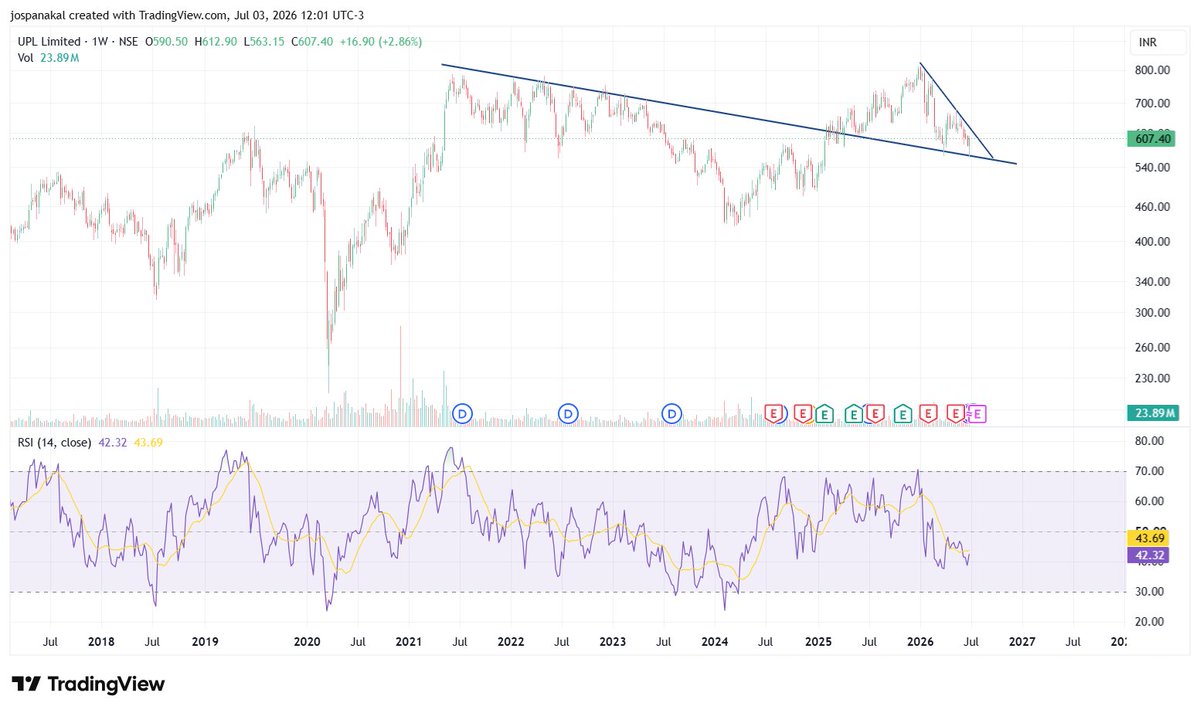
@piyushchaudhry What a call😍 that was time fund managers were bringing chappals for investors meet🤩. Btw around that time I guess u posted sbi, airtel. Still holding 3x n counting.
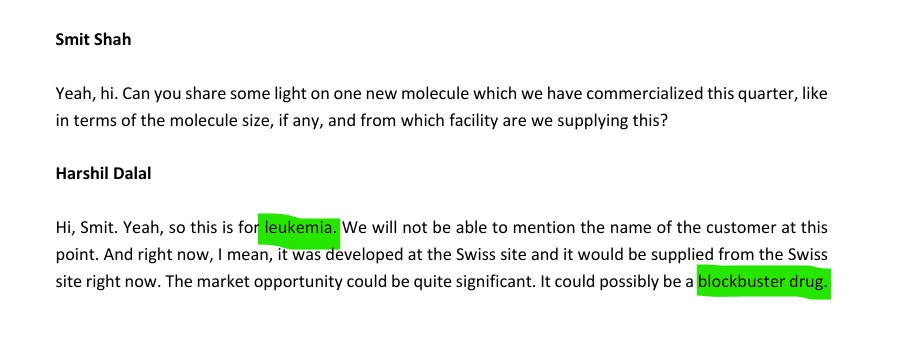
@punitbansal14 Sir any idea which molecule is discussed here? when i checked I could only find Decnupaz which usfda approved after phase 1/ 2, its ultrarare in nature.
The Indian battery chemicals value chain, and the FEOC bet sitting underneath it 🔋
First, the cost breakdown of a li-ion cell (BOM):
Cathode: 30 to 40% of cell cost, the most expensive piece. This is where the LFP vs NMC fight plays out.
Anode: 10 to 15%, mostly graphite today, with silicon slowly creeping in.
Electrolyte: only 6 to 10% of cell value, but the part everyone underrates.
The rest: separator, copper and aluminium foils, binders, conductive carbon and casing.
The electrolyte itself has three layers:
Solvents (organic carbonates): the bulk of the volume.
Lithium salt (mainly LiPF6, with LiFSI as the premium option): the hardest piece to actually manufacture.
Additives (VC, FEC and others): a tiny fraction of volume, but punch way above their weight on cycle life, safety and margin.
Now the players, mapped to where they sit:
Cathode and anode: Himadri (HSCL) on LFP cathode plus silicon anode via its Sicona stake, and Epsilon Carbon on synthetic graphite and carbon black.
Iron phosphate (the LFP precursor): Sudeep Pharma.
Formulated electrolyte: Gujarat Fluorochemicals and Neogen Ionics.
Electrolyte salt (LiPF6): Neogen via the Morita JV, and GFL.
Electrolyte additives: Acutaas (the old Ami Organics), the first additive maker outside China.
-Now the actual bet these cos are making is on FEOC which stands for Foreign Entity of Concern, a US rule that decides whether an EV qualifies for the clean-vehicle tax credit.
-Battery components from a covered nation were banned from 2024, processed critical minerals from 2025. The covered list is China, Russia, North Korea and Iran, but in reality this is about China.
-Electrolyte salts, additives and anode graphite got a temporary pass because they're hard to trace, but that exemption runs out at the end of 2026.
-From 2027, supply chains have to move to non-FEOC suppliers, and international customers are already shifting through this year to get ahead of it. China still dominates LiPF6 and electrolyte, so this is a real scramble.
Essentially, it's a regulatory arbitrage. Otherwise, these chemicals are over supplied in the world from China. Lets see what happens to their margins as the capacities start commissioning from FY27 end to FY28.
@ShivrattanDhil1 ev charging station owner had told me when charge is below 10% fast charging doesnt work as it should be. so work around he advised to slow charge till 10% n then fast charge n it worked for me.