🇮🇳 𝗖𝗢𝗡𝗡𝗘𝗖𝗧 𝗧𝗛𝗘 𝗗𝗢𝗧𝗦: 𝗜𝗻𝗱𝗶𝗮 𝗜𝘀 𝗨𝗻𝗱𝗲𝗿 𝗣𝗿𝗲𝘀𝘀𝘂𝗿𝗲
Look at the pattern.
The US pressures India over Russian oil, threatening tariffs because New Delhi refuses to sacrifice its energy security for Washington's geopolitical preferences.
Then comes pressure on Indian IT companies and Indian professionals, with tighter immigration policies affecting one of India's biggest exports: skilled talent.
Then there are repeated attempts to influence the debate around India's domestic policies.
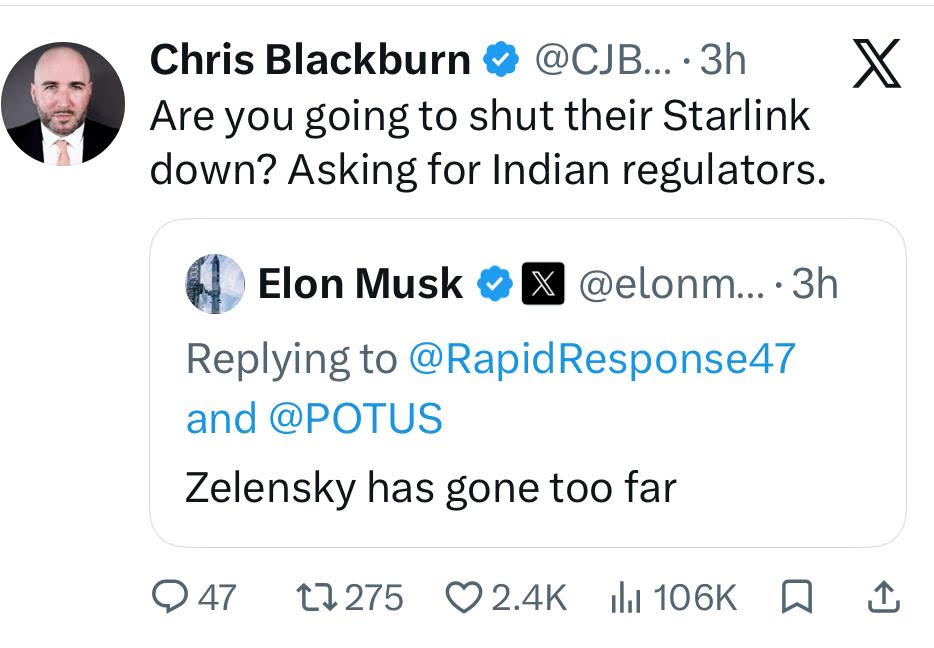
And now Elon Musk is openly calling Mukesh Ambani an “oligarch” while demanding easier access for Starlink.
The irony is hard to miss.
Musk himself is one of America's most powerful billionaires, with enormous influence over technology, media and political discourse. Yet he portrays an Indian businessman as an “oligarch” for having influence in India.
Meanwhile, American politicians and businesses continue to push for policies that serve American economic interests.
India and Indians should be wide awake to the possibility of external pressure being used to influence its economic and political choices.
India has its own interests.
Its own energy security.
Its own companies.
Its own immigration and telecom policies.
And most importantly, its own democratic process.
No foreign government, corporation or billionaire should get to decide who governs India, how India regulates its markets, or which strategic choices India is allowed to make.
𝗜𝗻𝗱𝗶𝗮 𝗰𝗮𝗻 𝗯𝗲 𝗔𝗺𝗲𝗿𝗶𝗰𝗮'𝘀 𝗽𝗮𝗿𝘁𝗻𝗲𝗿 𝘄𝗶𝘁𝗵𝗼𝘂𝘁 𝗯𝗲𝗰𝗼𝗺𝗶𝗻𝗴 𝗔𝗺𝗲𝗿𝗶𝗰𝗮'𝘀 𝗰𝗹𝗶𝗲𝗻𝘁. 🇮🇳
@Notjustheadline Good breakdown of the claims. But which specific court rulings or regulatory findings disprove the original allegations, rather than simply provide additional context?
Musk & Trump's Psychological Warfare to Bulldoze Deals
(a) US Experts: Trump & Musk both weaponize social media to publicly shame & disorient others and win (b) India has a historic 2013 PLAYBOOK to teach the US BULLY a lesson they will never forget.
Tribal Psychology on Steroids
a. Psychologists like Jay Van Bevel, neuroscience professor at NYU have highlighted how mass mobilization on social media can be used as a force multiplier in negotiations. Donald Trump and Elon Musk masterfully exploit tribal psychology.
b. Trump shared a social message calling India a “hellhole,” Vance called Indian immigrants “indentured servants,” and Elon Musk humiliated India’s Prime Minister and Mukesh Ambani together.
c. By publicly pressuring foreign governments over their domestic politicies, political & business leaders like Trump and Musk attempt to bypass formal diplomatic channels.
Their aggressive public call-outs energize their home fan base while shaming, disorienting, and testing the resilience of their targets.
d. How should India respond to a bully? The first instinct is to match the bully’s public insults in equal measure and demonstrate that we have “spine.” In reality, bullies like Trump and Musk thrive on engagement.
Joining their mudslinging on social media does not slow them down. It only feeds their algorithm-driven ecosystem, giving them the exact domestic hero-worship and international attention they seek.
India’s 2013 Playbook: A Masterclass in How to Tackle a Bully
a. On Dec 11, 2013, India’s Deputy Consul General in New York, Devyani Kobragade, was charged by the US authorities with visa & wage fraud for her Indian maid. Devyani was arrested, handcuffed, subjected to a “strip search,” and produced before a judge.
b. Action Without Emotion: While US prosecutors tried to justify a diplomatic arrest, New Delhi immediately transferred Devyani to the UN Permanent Mission. (UN post provided immunity.)
US demanded waiver of diplomatic immunity to put Devyani on trial. Indian govt refused and engineered her safe return to India.
c. Removal of US Diplomat: Within hours of Devyani’s safe exit from the US borders on Jan 9, 2014, India asked the US to recall Wayne May, its senior diplomat in New Delhi. India gave him 48 hours to leave the country.
d. Meetings Cancelled: India’s senior political leaders publicly cancelled planned meetings with a visiting high-profile US Congressional delegation to New Delhi.
e. Shutdown of Outlets: India ordered the US Embassy to immediately halt all commercial activities for non-diplomats on the embassy premises by Jan 16, 2014.
f. Closure of Embassy Club Services: India ordered ACSA club within the embassy compound to stop selling tax-free liquor, duty-free imported goods, and commercial services like restaurant, gym, swimming pool to guests & visitors.
g. Duty-Free Privileges Revoked: India froze duty-free import clearances for food, alcohol, and consular supplies meant for US embassy and consulate officials.
h. ID Cards Downgrade: The MEA revoked special ID cards held by US consular officers and family members across nationwide consulates. Standard IDs were issued matching the exact limited immunity the US had applied to Devyani.
i. Airport Access Revoked: Airport entry passes that allowed US diplomats and consular staff to bypass standard security checks at Indian airports were withdrawn.
j. Traffic Laws Enforced: Govt instructed traffic police to strictly enforce traffic rules, parking restrictions, and fines on US diplomatic vehicles, revoking immunity from municipal penalties.
k. Salary Audits: India mandated all US consulates to provide full disclosure of salaries paid to Indian domestic staff to verify if they were complying with Indian minimum wage and tax laws, same as they did to Devyani.
l. American School Scrutiny: India launched tax and work-visa compliance inquiries into teachers and staff working at the American Embassy School in Delhi to determine any tourist visa and tax violations.
m. Security Barricades Removed: Under MEA orders, the Delhi Police deployed bulldozers and tow trucks to haul away concrete security barricades and steel structures that had blocked off public traffic lanes around US Embassy complex.
For years, the US Embassy in Delhi had enjoyed exclusive use of a public road outside its perimeter wall. It was fully reopened to public. US expressed serious security concerns (post-9/11 world). India rejected all requests.
Moral of the Story: Tit for Tat
Choose dignity over drama. No Guts, No Glory.
🇮🇳 BREAKING: 𝗜𝗻𝗱𝗶𝗮’𝘀 𝗡𝗜𝗔 𝗧𝗮𝗸𝗲𝘀 𝗨𝗽 𝗙𝗹𝘆𝗗𝘂𝗯𝗮𝗶 𝗖𝗼𝗰𝗸𝗽𝗶𝘁 𝗔𝘁𝘁𝗮𝗰𝗸 𝗖𝗮𝘀𝗲
On September 30, an alleged attack took place inside the cockpit of a FlyDubai flight travelling from Dubai to Tel Aviv. Indian Captain Smit Machchhar reportedly suffered a serious head injury, and the aircraft made an emergency landing in Saudi Arabia.
What has happened now?
India’s central government has directed the National Investigation Agency (NIA) to investigate the incident. The NIA has registered an FIR under the Anti-Hijacking Act, 2016, and the UAPA.
What does this mean?
An FIR is the formal registration of a criminal case. The NIA will investigate what happened, why the attack allegedly occurred, and whether anyone else was involved.
The UAE is also investigating the incident.
Important: The investigation is ongoing.
The key question now is whether this was an isolated attack or part of something bigger.
India needs to go beyond a ₹2.5 lakh crore modernisation budget. With threats on two fronts, growing Chinese military capabilities and rapidly changing warfare, a $100 billion+ annual defence budget is becoming essential.
Modernisation cannot come at the cost of salaries, maintenance, ammunition or operational readiness. India needs a bigger overall defence budget, faster procurement and stronger domestic defence manufacturing.
The goal isn't just to spend more. It's to ensure India is prepared for any challenge. 🇮🇳
Homilies again.
Questioning the integrity of elections on the basis of internal notes that the Commission itself says were part of normal deliberations, followed by unanimous decisions, is not the same as proving bias or “vote theft.”
The SIR removed large numbers of dead, shifted, duplicate and untraceable names, a long-standing problem in Indian rolls. High restoration rates on the small fraction of appeals decided so far show process errors that need fixing, not proof that the exercise was engineered to favour one party.
Street agitations demanding the head of a constitutional authority, after “tasting blood” with the Education Minister’s resignation, turn legitimate scrutiny into pressure politics. A confident opposition would pursue these issues in court and Parliament, not turn the capital into a fortress while lecturing others on democracy.
United States has officially imposed sanctions on the International Criminal Court, just hours after former ICC judge Navi Pillay won the Nobel Peace Prize.
🇮🇳 𝗖𝗢𝗡𝗡𝗘𝗖𝗧 𝗧𝗛𝗘 𝗗𝗢𝗧𝗦: 𝗜𝗻𝗱𝗶𝗮 𝗜𝘀 𝗨𝗻𝗱𝗲𝗿 𝗣𝗿𝗲𝘀𝘀𝘂𝗿𝗲
Look at the pattern.
The US pressures India over Russian oil, threatening tariffs because New Delhi refuses to sacrifice its energy security for Washington's geopolitical preferences.
Then comes pressure on Indian IT companies and Indian professionals, with tighter immigration policies affecting one of India's biggest exports: skilled talent.
Then there are repeated attempts to influence the debate around India's domestic policies.
And now Elon Musk is openly calling Mukesh Ambani an “oligarch” while demanding easier access for Starlink.
The irony is hard to miss.
Musk himself is one of America's most powerful billionaires, with enormous influence over technology, media and political discourse. Yet he portrays an Indian businessman as an “oligarch” for having influence in India.
Meanwhile, American politicians and businesses continue to push for policies that serve American economic interests.
India and Indians should be wide awake to the possibility of external pressure being used to influence its economic and political choices.
India has its own interests.
Its own energy security.
Its own companies.
Its own immigration and telecom policies.
And most importantly, its own democratic process.
No foreign government, corporation or billionaire should get to decide who governs India, how India regulates its markets, or which strategic choices India is allowed to make.
𝗜𝗻𝗱𝗶𝗮 𝗰𝗮𝗻 𝗯𝗲 𝗔𝗺𝗲𝗿𝗶𝗰𝗮'𝘀 𝗽𝗮𝗿𝘁𝗻𝗲𝗿 𝘄𝗶𝘁𝗵𝗼𝘂𝘁 𝗯𝗲𝗰𝗼𝗺𝗶𝗻𝗴 𝗔𝗺𝗲𝗿𝗶𝗰𝗮'𝘀 𝗰𝗹𝗶𝗲𝗻𝘁. 🇮🇳
🇮🇳 𝗜𝗻𝗱𝗶𝗮'𝘀 𝗕𝗶𝗴 𝗡𝘂𝗰𝗹𝗲𝗮𝗿 𝗦𝘁𝗲𝗽 𝗮𝘁 𝗦𝗲𝗮
Something interesting has happened that most people probably haven't heard about.
India has joined the IAEA's ATLAS initiative, which is working on the future use of nuclear technology at sea.
Now, what does that actually mean?
Forget the complicated nuclear terminology for a moment.
Today, ships mostly depend on conventional fuels. But in the future, nuclear reactors could potentially be used to power certain ships or offshore facilities.
A nuclear-powered ship could operate for very long periods without needing the kind of frequent refuelling that conventional ships require.
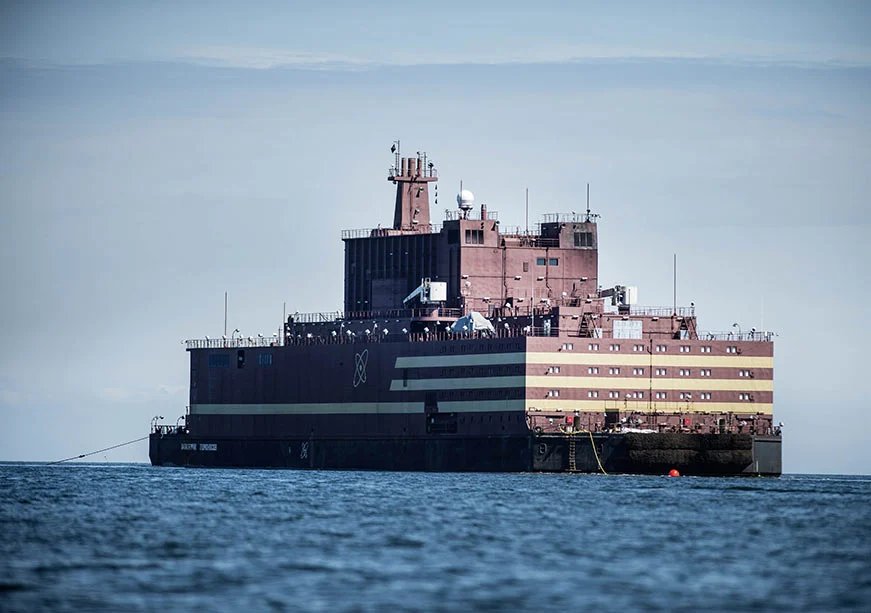
There is also another possibility: floating nuclear power plants.
Imagine a nuclear power plant mounted on a floating platform or barge that can provide electricity to coastal or remote areas.
These technologies are still developing, and they come with huge questions around safety, security, emergency response, transportation, regulation and liability. Existing international rules were largely not designed specifically for these new types of mobile nuclear systems.
And this is where India's participation becomes interesting.
The international rules for these technologies are still being worked out.
So instead of waiting until everything is already decided, India can participate in the discussions and help develop the standards that will govern this technology.
In simple words:
The world is still writing the rulebook. India wants to be in the room while that rulebook is being written.
That could become important if nuclear-powered shipping and floating nuclear plants become commercially viable in the future.
But there is one important clarification:
India joining ATLAS does NOT mean India has decided to build nuclear-powered commercial ships tomorrow.
It means India is participating in the international technical and regulatory work around these technologies.
And that's probably the most important part of this development.
India isn't just preparing for today's nuclear technology. It is also positioning itself for technologies that could shape tomorrow's energy and maritime sectors. 🇮🇳⚛️🌊
This looks like an attempt to build a narrative that Modi is denying ordinary Indians life-saving internet access. But given the response Indians have given Musk on his own platform, I think this strategy is about to fail. If Starlink wants to enter India, Musk may soon find himself seeking approval from Modi and the Indian government on India's terms, not his own. 🇮🇳
Ishtiaq, before lecturing India about democracy, perhaps look at the political system in your own country.
Pakistan's 2024 elections were marred by serious allegations of rigging, opposition leaders were arrested, and Imran Khan remains imprisoned. International observers have repeatedly raised concerns about the military's influence over elections and civilian governments.
Even today, Pakistan's military wields enormous influence over the country's political and economic affairs.
Yet you're suggesting that India's elected Prime Minister is merely a figurehead because a billionaire made a sarcastic post?
𝗥𝗕𝗜 𝗷𝘂𝘀𝘁 𝘁𝗼𝗹𝗱 𝘁𝗵𝗲 𝗼𝗶𝗹 𝗰𝗼𝗺𝗽𝗮𝗻𝗶𝗲𝘀: “𝗦𝘁𝗼𝗽 𝗯𝘂𝘆𝗶𝗻𝗴 𝗱𝗼𝗹𝗹𝗮𝗿𝘀 𝗶𝗻 𝘁𝗵𝗲 𝗺𝗮𝗿𝗸𝗲𝘁. 𝗪𝗲’𝗹𝗹 𝘀𝗲𝗹𝗹 𝘁𝗵𝗲𝗺 𝘁𝗼 𝘆𝗼𝘂 𝗱𝗶𝗿𝗲𝗰𝘁𝗹𝘆.”
Here’s what it actually means:
India’s rupee has been falling because big oil companies (IOC, HPCL, BPCL) buy huge amounts of dollars every single day to pay for oil. That constant buying pushes the dollar higher and the rupee lower.
From 12 October, the RBI will supply those dollars straight to the oil companies through banks. They no longer have to enter the open market daily. Less demand for dollars = less pressure on the rupee.
At the same time, RBI made large currency hedging trades more expensive and restricted. Big bets without real need are now harder, and you can’t keep cancelling and rebooking the same trade.
In short: RBI is trying to take some heat off the rupee by reducing everyday dollar demand and cooling down speculative trading. Whether it’s enough is another question.
@ZelenskyyUa The US will do what suits its own interests. You asked for sanctions and no gifts to Putin while Washington licensed Russian diesel after the Trump-Putin call. That leaves you with appeals, not leverage.
The desperation is showing.
Musk is trying to build public pressure by selling Indians on how amazing Starlink will be while attacking the Indian government and calling its regulatory process a “crime against the people.”
But the irony is that he's getting pushed back by Indians on his own platform.
India isn't asking for a saviour. It is asking Starlink to follow Indian rules. 🇮🇳
Dear Prime Minister Ambani,
Please accept my humble apologies for not realizing that you are the real boss of India.
Naturally, you would prefer to maintain your monopolistic exploitation of the great people of India, but would you nonetheless consider allowing Starlink to compete?
There are many areas of India, as there are in all countries, with no Internet access, which denies children the opportunity for education and for small businesses the opportunity to sell their goods to a global market. Starlink would change their lives for the better.
Thank you 🙏
This whole Trump tenure increasingly looks like threats, tariffs, sanctions and ultimatums as if Washington still believes the world is unipolar and everyone must fall in line.
The desperation to project power is becoming noticeable.
Sometimes a flame burns brightest just before it goes out.
Hypocrisy at its finest.
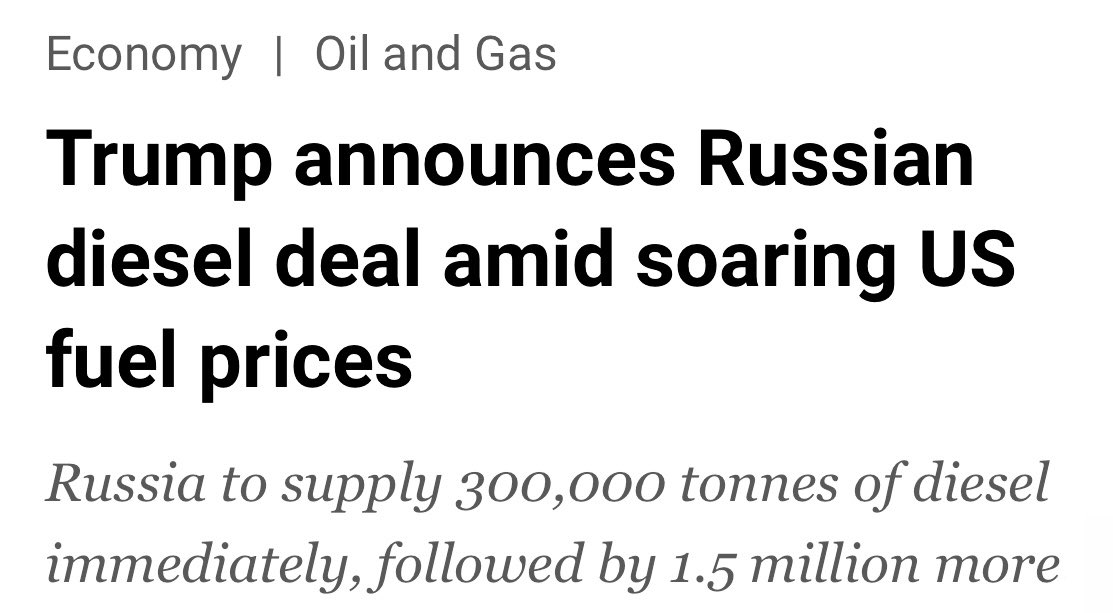
The US imposed additional tariffs on India for buying Russian oil, arguing that these purchases helped finance Moscow's war in Ukraine. Now Trump is reportedly discussing Russian diesel supplies to bring down fuel prices for Americans.
When India buys Russian energy to protect its economic interests, it faces punitive measures. When Americans need cheaper fuel, Russian energy suddenly becomes worth discussing.
Is buying Russian energy wrong, or is it only wrong when India does it?
India's energy security matters just as much as America's. You cannot demand that India bear the economic cost of your geopolitical priorities while making exceptions when your own voters need cheaper fuel.
Dear President Musk,
Please accept my humble apologies for not realizing that you are the real boss of America.
Naturally, you would prefer to maintain your monopolistic exploitation of the great people of the United States, but would you nonetheless consider allowing BYD and Huawei to compete?
BYD sells in well over 100 countries and Huawei in more than 170, yet both remain effectively locked out of the American market. There are many Americans who would like cheaper electric cars and more choice in phones and network gear. Letting them compete would change those options for the better.
Thank you 🙏
The AG’s briefing traces the shift to 2017, while he was studying in Australia, via extremist material. He later worked at Oman Air where reports say he was removed from flying over related concerns then briefly at Royal Air Maroc before joining Flydubai in 2026; screening at hiring reportedly showed no flags.