Assistant Professor of Computational Social Science at the University of Rostock and @MPIDRnews | Migration | Social Networks | Scientometrics | Sociology
I am extremely happy to share. Just out in @pnas.org:
“Global subnational estimates of migration of scientists reveal large disparities in internal and international flows”
Open Access: https://t.co/yAuXCYn3Ro
w/ @danko_maciej@XinyiZhao16@ezagheni@MPIDRnews#PAA2025
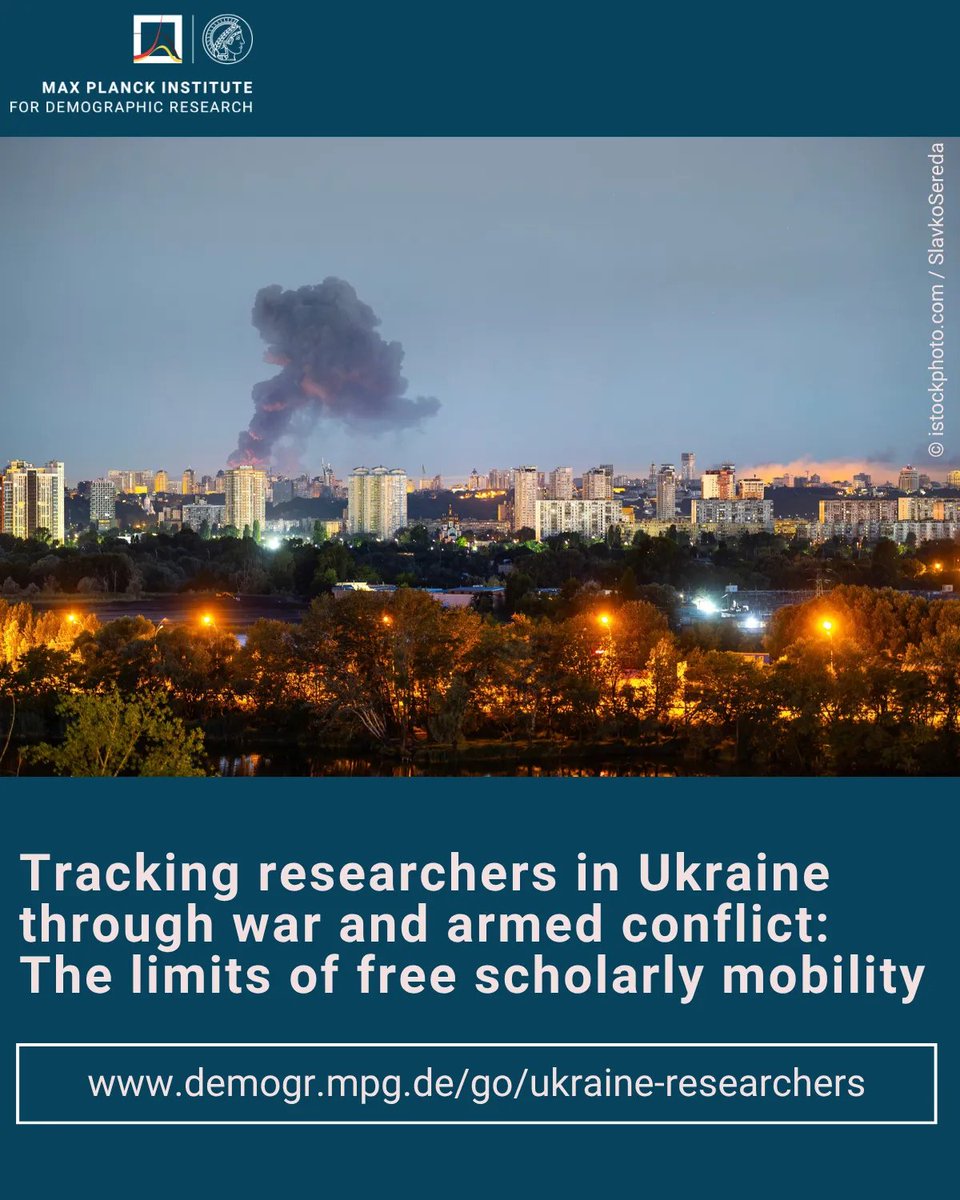
What happens to researcher mobility in war & armed conflict? A new study traces scholars in #Ukraine from 2009–2022: conflict-affected regions lost researchers within Ukraine & abroad.
Press release: https://t.co/kh376fX785
Paper: https://t.co/JUeDNwy32h
#ResearchersAtRisk
Great to have a bit of time to polish the personal website, and update the CV.
Here is the updated intro:
I am Aliakbar Akbaritabar (Ali), Assistant Professor of Computational Social Science at the University of Rostock and Research Scientist at the Max Planck Institute for ==>
sociology.
At this link, you can find my CV, publications, open materials, course resources, and presentation archive: https://t.co/4Euh7zeOhO
First photo was an overview of my research and teaching since 2013. Thank you to all of my collaborators, mentors, and students.
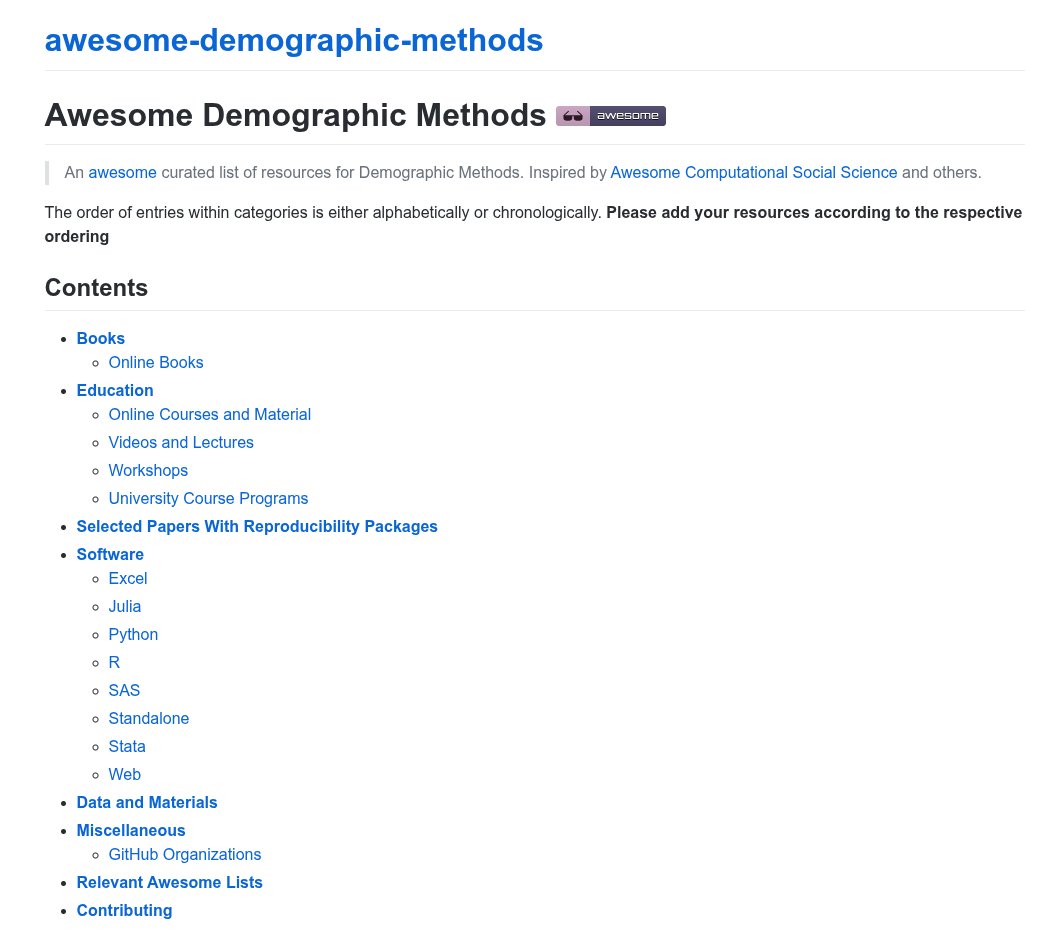
𝐀𝐰𝐞𝐬𝐨𝐦𝐞 𝐃𝐞𝐦𝐨𝐠𝐫𝐚𝐩𝐡𝐢𝐜 𝐌𝐞𝐭𝐡𝐨𝐝𝐬 list is live since a few weeks!
Access and share it with others:
https://t.co/cytAalkdPI
Several colleagues generously added their suggestions (Thanks).
You can contribute to it by adding new items here
https://t.co/Vj9DIuopMS
It was a pleasure speaking on "Mobility, Migration, and Collaboration of Scholars" for the Center for Computational Social Sciences at Koç University.
Thanks to everyone for the great discussion, for the invitation, and for sharing the recording.
https://t.co/xPP2c8mSB1
🚨Out today in @Nature our new paper uses deep learning to map four decades of global human migration.
By building the first comprehensive dataset of global annual flows (1990-2023), we reveal that migration has nearly tripled since 2000.
🔗https://t.co/DuPQKF1asT
@akib_kn Thanks for your interest. I would refer to the working paper for complete details. Briefly, we have three macro fields of science, three genders and data at country and subnational levels.
The Scholarly Migration Database 2.0 is now online!
Just in time for the European Population Conference 2026 in Bologna!
See the working paper here:
https://t.co/eoJattgmcO
Access the data on Zenodo:
https://t.co/A39PA9CKbV
@MPIDRnews@TheileTom@ezagheni
We have a new major release!
The Scholarly Migration Database 2.0 is now online!
Working paper is here:
https://t.co/OcltjY3FeS
Updated data: https://t.co/Oi87v47fjK
Website: https://t.co/jQUJpsbgND
This project was made possible by the @MPIDRnews and specifically the 2024 round of the Population and Social Data Science Summer Incubator Program https://t.co/mczUrlazQ6
Exciting new contributions on scientific mobility and collaboration!
The literature on scientific mobility and collaboration has long been paradoxical about whether scholars form collaboration ties before moving to an institution, or if they start collaborating after relocating.
In a new article published in PNAS Nexus by Alexandra Rottenkolber Ola Megahed Ali, Gergely Mónus, Jiaxuan Li, Jisu Kim, Daniela Perrotta, and myself, we address these questions and also look at institutional prestige. The Open Access paper is here: https://t.co/546BTXB38q
✂️ The #Iran internet blackout is now in its 81st day after 1920 hours. Meanwhile, the regime is attempting to extend its digital chokehold internationally, demanding control over other countries' cables in the Strait of Hormuz and big tech compliance with Islamic Republic laws.
Mobility, migration & collaboration of scholars—what can digital trace & bibliometric data tell us?
Join with Asst. Prof. Aliakbar Akbaritabar (MPIDR & Univ. of Rostock)
📅May 7, 2026 | 17:00 (Istanbul)
📍Online
https://t.co/eyVOl4hNmR
#CSSSeminarSeries#Migration
It allows you to leave feedback at the end of the interactive process. The only requirement is to have a free GitHub profile or sign-up for one:
https://t.co/32ISH7xwvG
What is Git, GitHub, and version control? Why should we use them?
In each of my courses in the past three semesters, I have spent the first sessions answering these questions by showing students the basics of them.
To motivate students to learn version control and how it ==>
Now, for this semester, I have converted my materials to an "Interactive Course on Basics of Git, GitHub, and Version Control" You are welcome to try it here. ==>