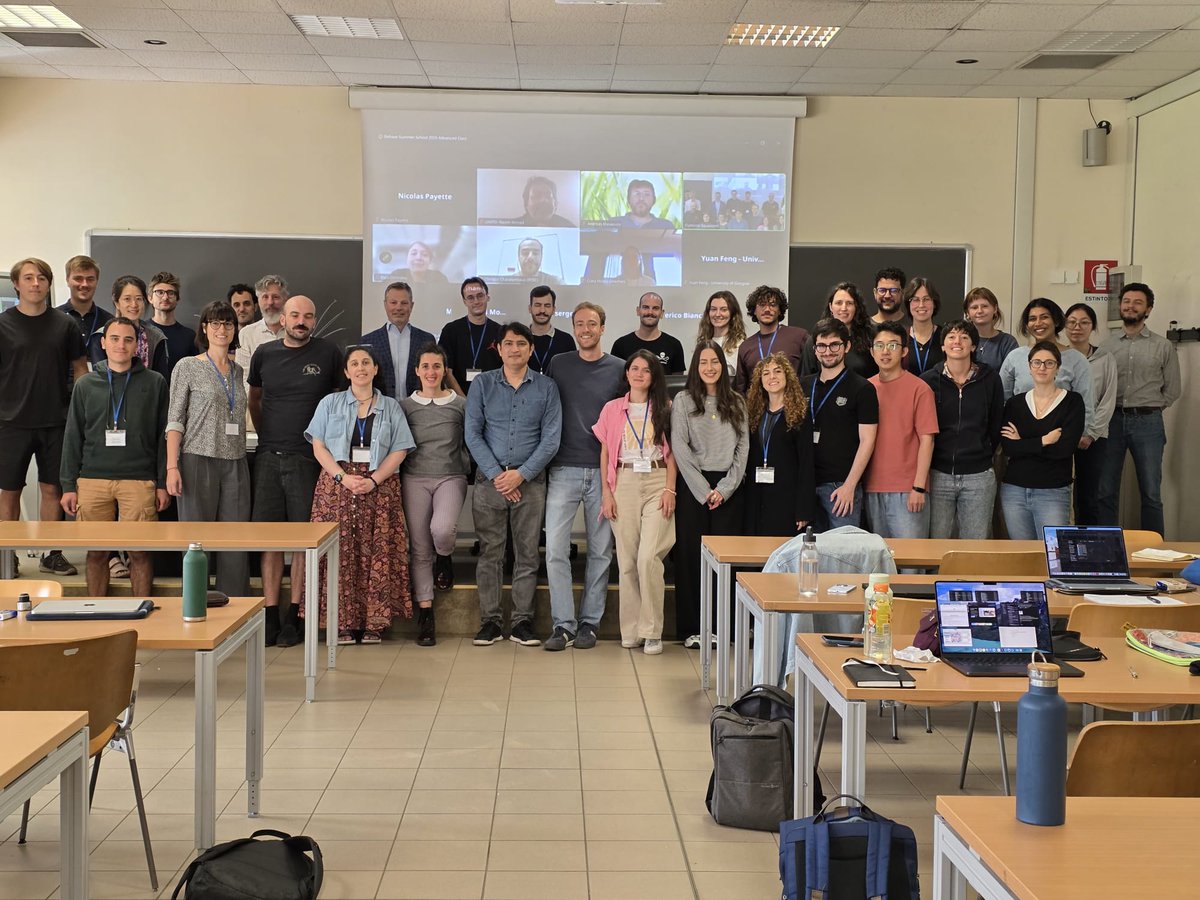
Preparing this talk to be given tomorrow at an internal seminar at @LaStatale! It is inspired by this recent paper with @ecfk0@FrancescoRenz27: https://t.co/eCS77R3suU
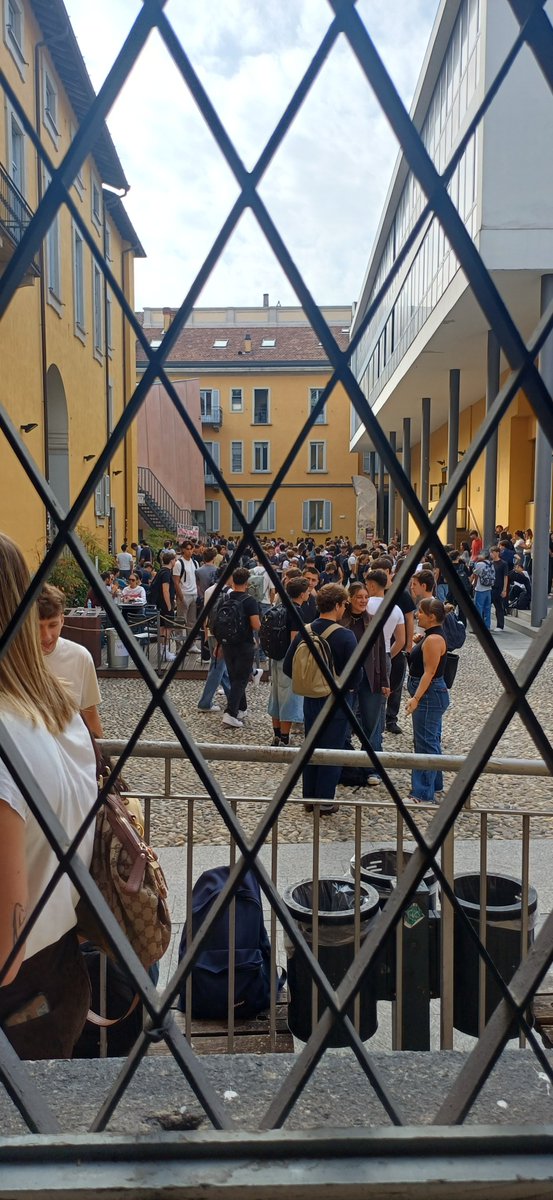
Siamo in una fase sociale gassosa. Ho cercato di portare qualche spunto sociologico sul dibattito su #giovani#proteste#Milano oggi su @La7tv@ignotox_
https://t.co/quN5WXNX4u
Si parla di #giovani e #protesta a #Milano. La #politica è più una parte del problema del disagio che non una soluzione. Trascrizione dell'intervista alla Radio della Svizzera Italiana di ieri https://t.co/I150WvIJyb
We are happy to announce that our @LaStatale@nasp_school#Phd student Yick Chung has published his latest paper on how model choice and memory influence preference consistency in #LLMs in Sociological Research & Methods! https://t.co/nCYa3KjMa9
Call for abstracts — I'm chairing "Biased Foundations of Macro-Social Order: Modelling How Micro-Level Cognitive Bias Shapes Aggregate Dynamics" at the ISA World Congress, Gwangju, July 2027 (RC45).
ABMs, dynamical systems, calibrated simulations, conceptual work on when bias amplifies vs cancels — all welcome.
Deadline 14 Oct 2026
https://t.co/sJdIstn7S8
#ISAWCS27 #CompSocSci #ABM
Call for expression of interest: 10 PhD Scholarships, DIViNE-Democratic Institutions and Violence Network in Europe.
DIViNE doctoral network brings together leading research environments: Uva Amsterdam, UESSEX , Unimi (Milan), UC3M (Madrid) and Uppsala: https://t.co/Hi4ilf5cAU
The same voting reform can polarize one democracy and moderate another. It comes down to system size.
Thomas Mustillo (@KeoughGlobalND, @KelloggInst) breaks down his new #JASSS paper on party competition under costly voting🎥https://t.co/ICnsdfz1cu
Here is our latest @LaStatale@BehaveLab_unimi@MarcoV_98 paper. We studied how the structure of the @Bitcoin transaction network evolved during periods of uncertainty, including the 2014 Mt. #Gox crisis and the #COVID#pandemic. Check it out! https://t.co/t07cfBomd2
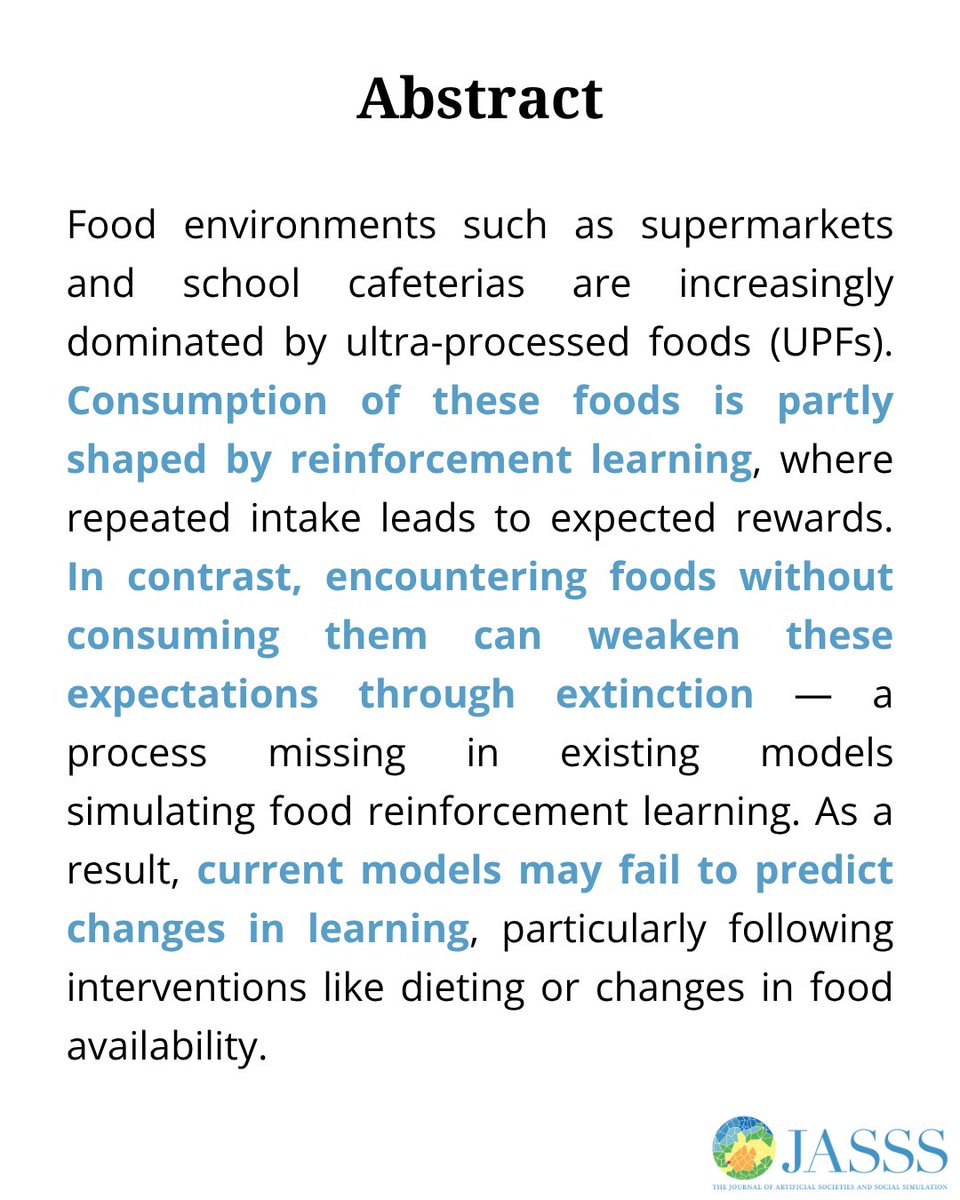
Why is it so hard to stop eating #UltraProcessedFoods? The simple truth is that dieting alone will not do it. A new #ABM study shows that only drastically reducing UPF availability can reverse learned food preferences.
Read the full #OA article in #JASSS: https://t.co/L0OvIqpkAC
Finding out that the European Commission has selected my proposal, PRISM, to promote sustainable #peerreview innovations in #journals and #publishing platforms for funding is a great way to start the summer! More news to follow!
Happy to be part of this new #journal on research on #research with a bunch of friends and colleagues including @GemmaDerrick@tonyR_H and many others! https://t.co/BcdoNceHtH