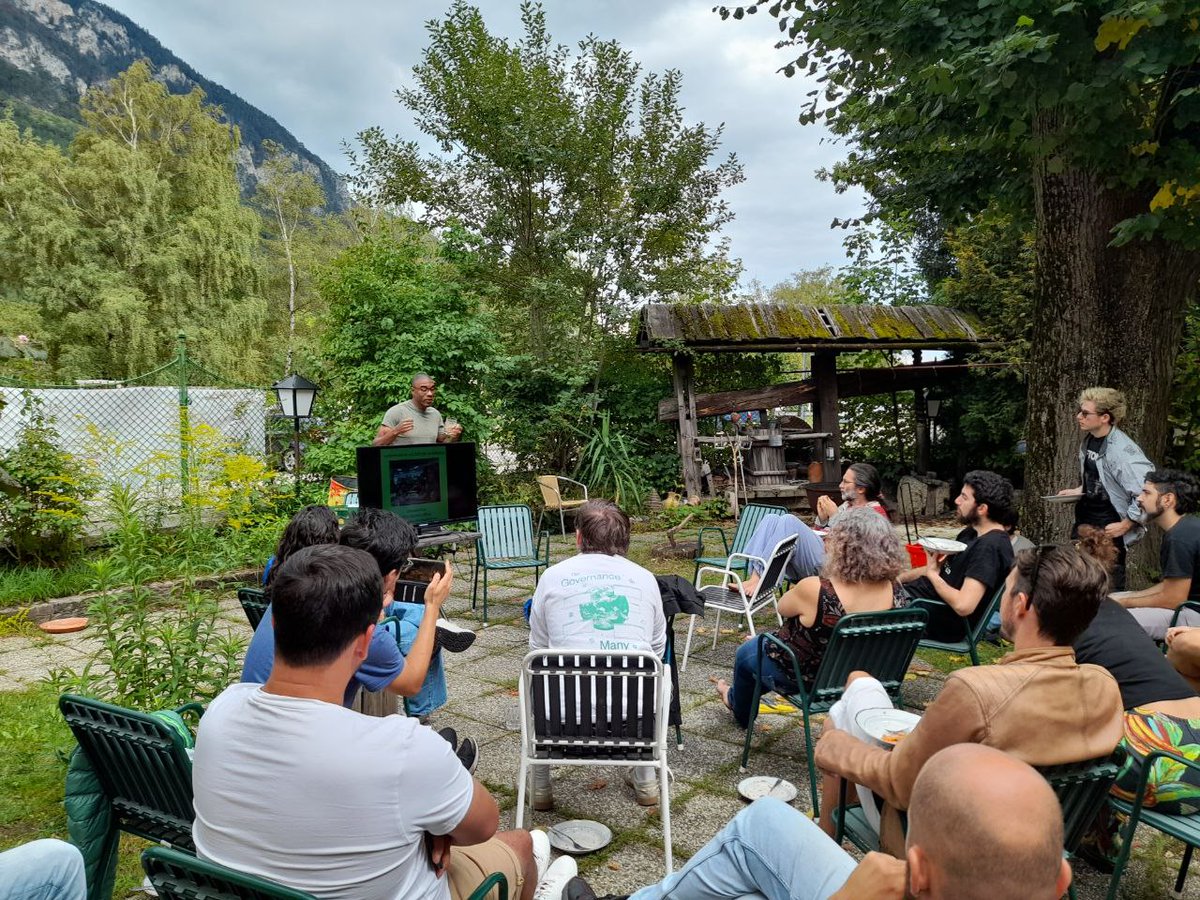
Here I announce a breakthrough in the neuroscience of the highly refined meditative states known as jhānas, revealing biological mechanisms of deep states of absorption that are profound, restorative, and deeply beneficial for the mind.
The jhanas are deep states of meditative absorption wherein the mind becomes deeply immersed in a meditation object and other aspects of awareness recede. These states are thought to: (1) deeply stabilize the mind; (2) serve as both a launchpad, and an inner laboratory, for investigating deep experiential aspects of the mind and perceptual reality; (3) help uproot unwholesome mental habits; and (4) offer rare glimpses into the genuine possibility a stable and reliable form of happiness. In this way, the jhānas are thought to prepare the mind for the meditative endpoint known as Nibbāna, or full Enlightenment.
Now, for the first time ever in the history of science, we have used cutting-edge brain imaging (7T fMRI) in a group of advanced meditators to measure the neural correlates of jhana-type advanced concentration absorption meditation (ACAM-J), including mapping the eight ACAM-J states evolving from joyful, energized focus to profound formlessness, where sensory content and self-referential thought fade entirely to reveal expansive, boundless awareness, and ultimately nothingness.
Here's what we found:
– Brain regions associated with self-monitoring and internal chatter (e.g., prefrontal cortex) quieted down, while areas involved world sensing and bodily awareness (including visual and midline regions) became more active.
– The brain’s usual hierarchy, from sensory-specific to high-level integrative areas, became more compressed, suggesting more unified, integrated brain function.
– Patterns of brain activity (eigenmodes) showed a U-shaped shift: early absorption states compressed cortical dynamics, while later states re-expanded, refined, and organized them.
– Changes in brain activity tracked closely with reported experience including equanimity, stable attention, clear awareness, and reduced suffering-related processes.
– The brain can volitionally enter coherent and stable states of deep awareness that are at the opposite pole from psychological distress.
Beyond potentially supporting mental health and wellbeing, these findings challenge mainstream models of consciousness with evidence that consciousness can persist in ways current models have yet to explain. Instead, the neuroscience of this ancient meditation opens an important new scientific window into the human brain’s inherent capacity to radically transform itself.
My deepest gratitude to our extraordinary team: Winson Yang @winsonfzyang (first author), Ruby Potash, Grace Mackin, Isidora Beslic, Marta Bianciardi, and Terje Sparby @terjesparby.
If this study resonates with you, please consider sharing it as this work thrives on our growing global community’s generosity and insights.
Please find the full preprint below ⤵️
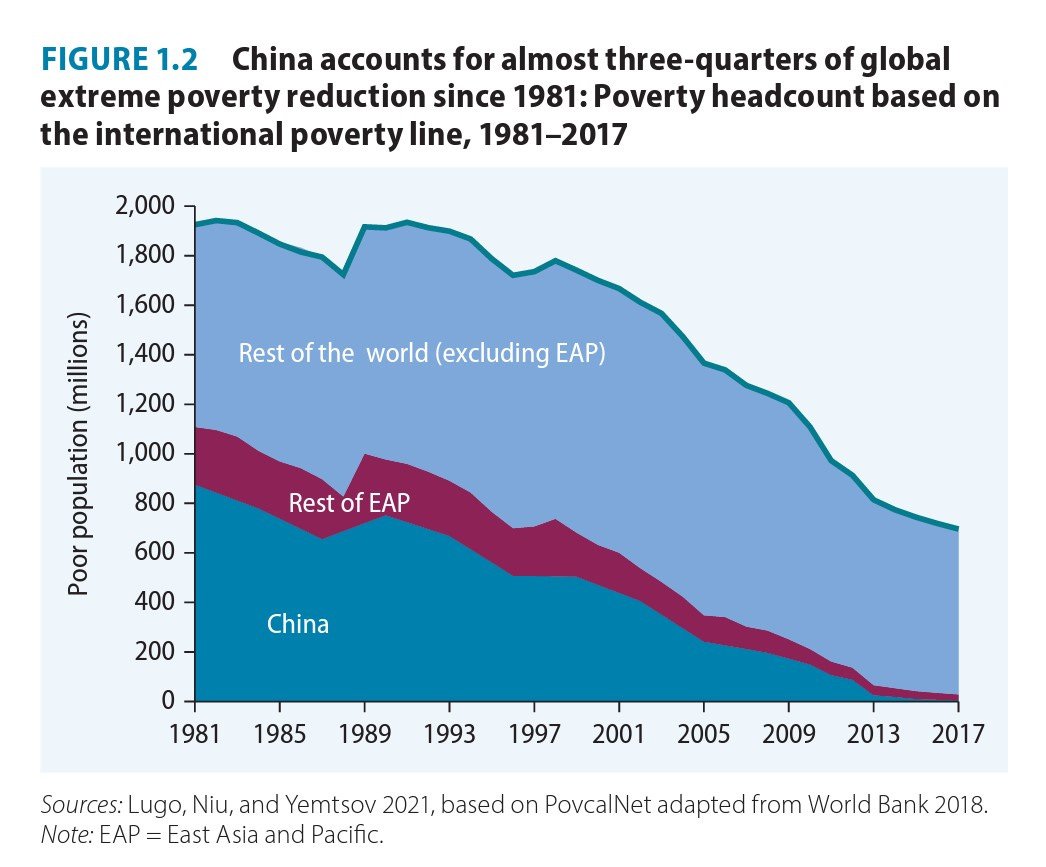
@pretentiouswhat Nice overview. Isn't China's low urbanization rate (compared to other middle-income countries, let alone the developed world) part of the story? In Brazil at least, most of the poverty is urban and it's also hard to translate 'peasant' - there's just no clear social equivalent
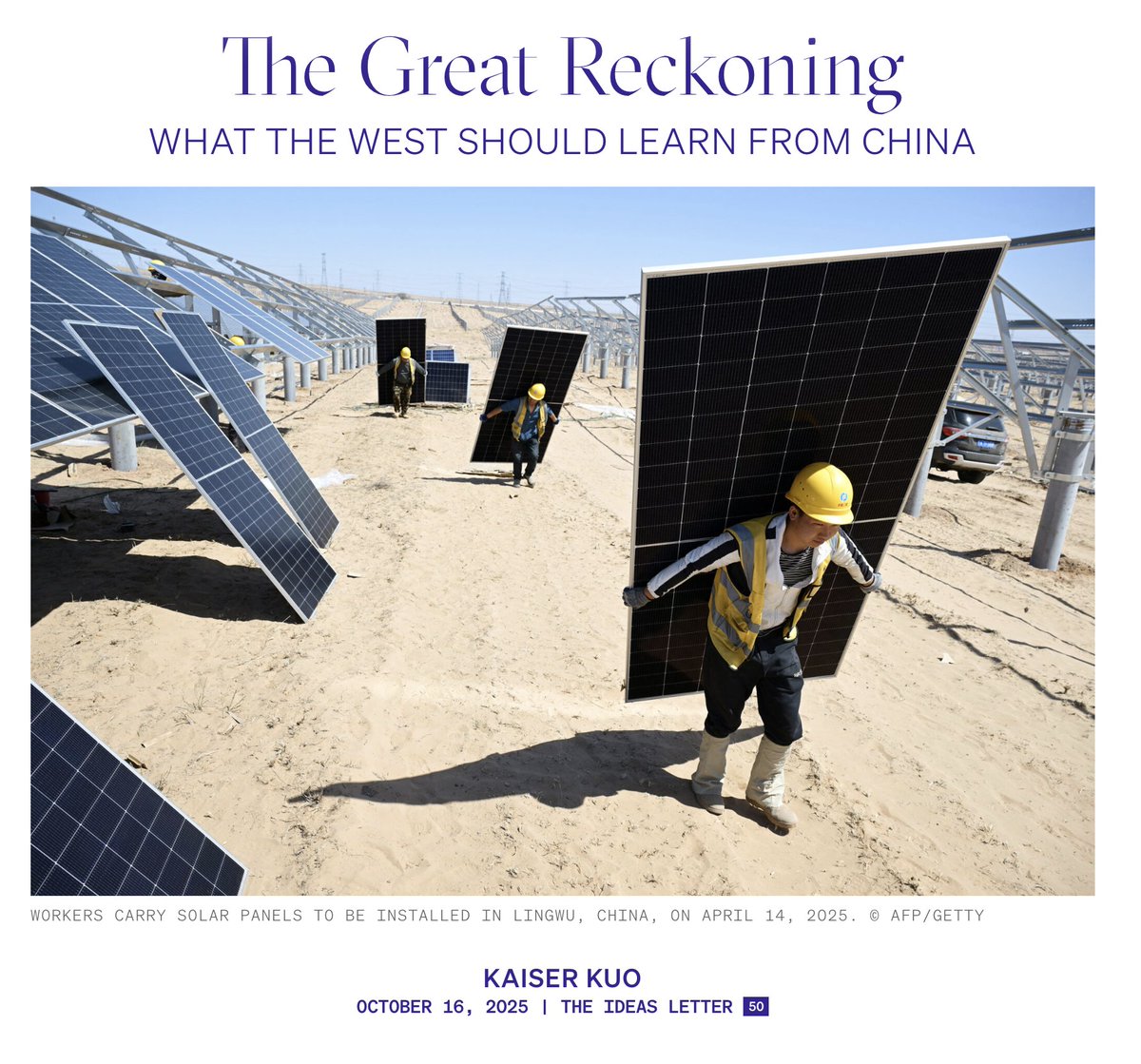
This essay by @KaiserKuo is the best piece of writing I've read on China's transformation.
It invites especially Westerners to approach China's progress differently. Whatever you think about China, the essay will challenge you.
Link to the full essay in replies.
This thread of quotes from @adam_tooze from our recent podcast interview inspired me to write a short essay in the middle of the night here. Link in replies: “The Thing We Still Can’t Say”
He has wonderfully heterodox ideas, enviable eloquence, a lovely and civil rhetorical style, and a voice that sounds like Viggo Mortensen. Hear @haugejostein discuss China's industrial policy, trade, and manufacturing with me on the latest @SinicaPodcast! Link in replies.
We are advertising a PhD position in Political Theory! Please let us know your interest. The day to day supervisors will be myself and Paul Raekstad, and Enzo Rossi will also be a part of our team.
PS: Through Easter, I won't be responding to DMs here.
https://t.co/fVIDNUVbfP
My recently minted 110 page MA thesis on #Solarpunk:
Renewable Imagination via the Sun: Solarpunk, Speculative Anthropology and the Making of Regenerative Futures
Long thread(s).
Sharing is healing.
Money plays a fundamental role in heterodox economics and yet theories of value are not frequently discussed.
I'm very pleased to share this @LevyEcon paper by Randy Wray.
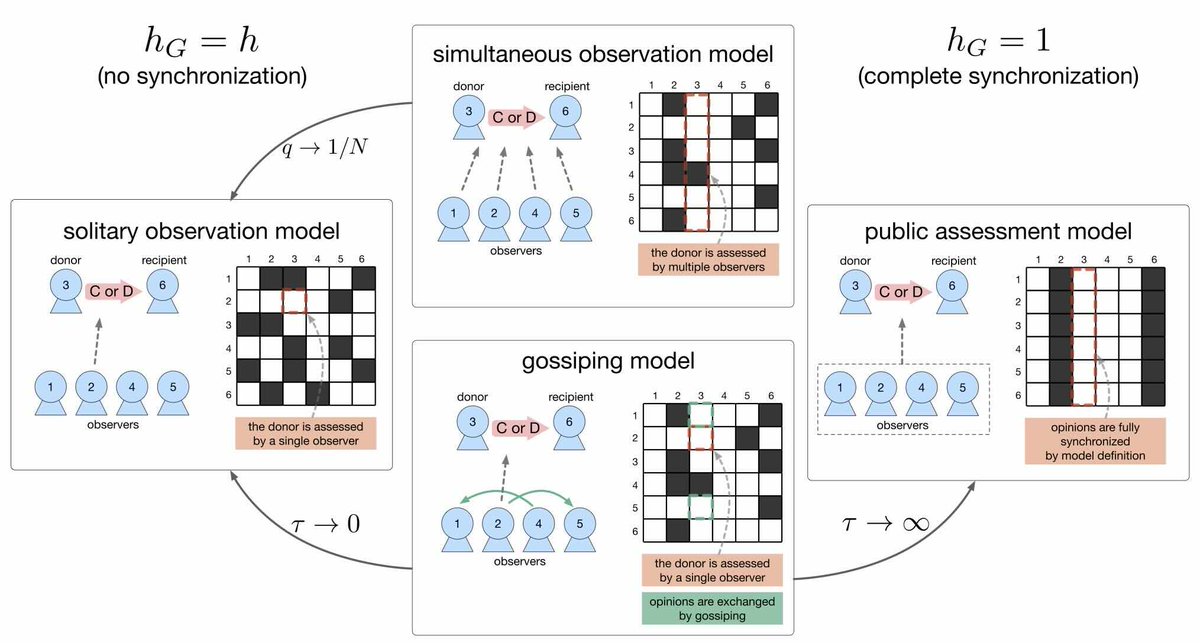
In a new paper published today in @PNASNews, @yohm13 and I discuss a general framework to make sense of social norms and different indirect reciprocity models. Below is a 🧵, here is the paper:
https://t.co/rqDdXSTWSx
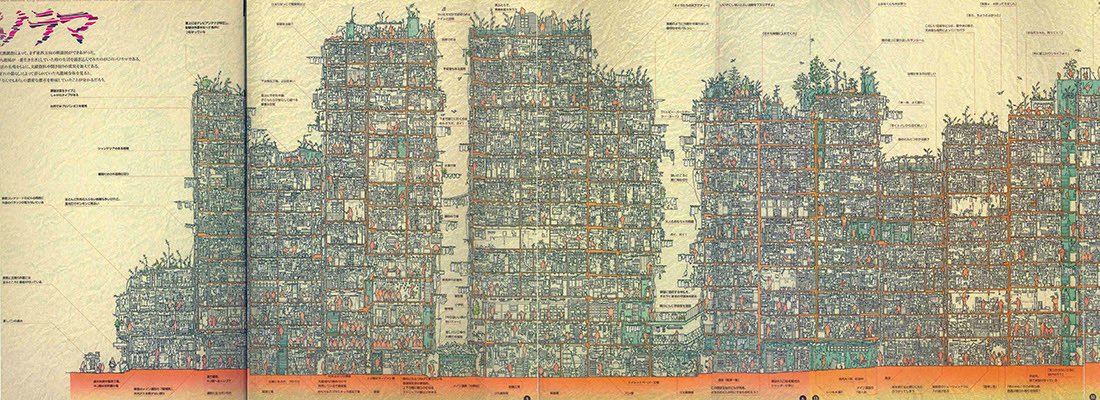
Kowloon Walled City, likely the densest place ever built (est. 1.9 million people per square km)
A team of Japanese researchers spent time until the night before it was demolished measuring and drawing the building, creating this incredible section
My last job was as Senior Stellarator Engineer at an early stage fusion startup. I was the lead design 'ideas' guy for stellarator systems - here's some things I learned about the art and science of stellarator design 🧵
First off, a stellarator is indeed a work of art:
Complex differentiability is an absurdly strong condition: distinctions like "differentiable" vs. "smooth" vs. "analytic" etc. that exist in real analysis simply dissolve in complex analysis. There is only one condition that encompasses them all: holomorphicity. (8/9)
... between federal and state tax rebates and the sales tax exemption, I estimate an average subsidy of close to $13k per EV delivered in the United States.
This compares to ~$2k per NEV in China.