i make $8,247/month selling a PDF on a twitter account that has no name or face attached to it. the whole business runs in 14 minutes a day.
6 months ago the account didn't exist. here's every step.
1. picked a niche where people were already spending money on guides and courses. not what i found interesting. what people were actively paying to learn.
2. searched twitter and reddit for "how do i" and "struggling with" inside that niche. looked for the same question being asked by different people in different words.
3. checked gumroad and whop to see if products already existed in that space. competition isn't a warning sign. competition is confirmed demand.
4. picked the one problem i understood well enough to explain clearly to a stranger in one sitting.
5. opened google docs and wrote the complete answer like a long text to a friend who genuinely needed help. didn't format. didn't design. just wrote until it was done.
6. organized the mess into: what the problem actually is, why most free advice doesn't fix it, the specific step-by-step solution, and real examples with real numbers.
7. kept it between 11 and 22 pages. short enough to finish in one read. detailed enough that the reader doesn't need to google anything else.
8. added screenshots wherever a step needed proof or visual clarity.
9. exported as PDF. made a cover in canva with a free template. 8 minutes.
10. created a gumroad account. free until your first sale, then 10% per transaction. uploaded the PDF. wrote a title that describes the outcome, not the file.
11. priced it at $39. low enough for an impulse buy. high enough that buyers actually respect it and open it.
12. pulled 2 pages from the guide and turned them into a free preview. this is the lead magnet that feeds everything.
13. created a free telegram group. pinned the free preview at the top. pinned the $39 product link right below it.
14. set up the telegram so new members land in a room where other buyers are posting screenshots, asking questions, and sharing progress. the community does the selling. not you.
15. created a faceless X account. profile picture with no face. bio explains who i help and what result i deliver in one line. bio link goes straight to telegram.
16. used an aged account (6+ months old) to skip the algorithm's new-account suppression. fresh accounts get buried for the first 60-90 days regardless of content quality.
17. found 10 accounts in my niche between 10K and 50K followers. screenshotted their 50 best-performing tweets. studied the hooks, the formats, and the structures that consistently pulled views.
18. set up a Claude project with 3 reference files: a bank of 170+ proven viral tweets with view counts, a voice profile with rules that strip every AI tell, and a formatting guide that controls rhythm and sentence variation.
19. used Claude to generate 3 tweets per day. every tweet checked against the reference bank and scanned for AI patterns before posting.
20. scheduled everything through TweetHunter. posting times locked at 8am, 1pm, and 8pm with 4-6 hour gaps. spacing defeats the algorithm's session decay penalty.
21. never posted more than 3 times per day. the algorithm runs a penalty called the AuthorDiversityScorer that exponentially cuts your reach for every additional post from the same author in someone's feed. your 4th tweet of the day gets roughly 20% of the reach your 1st one got.
22. made 1 of the 3 daily tweets a CTA. structure: first 70-80% is pure value strong enough to bookmark on its own. then "comment [KEYWORD] and i'll send you the free guide. must be following + RT."
23. set up TweetHunter's silent auto-DM. when someone comments the keyword, they get the telegram link automatically. no public reply. silent only. public auto-DM replies get flagged as spam behavior and tank your reach score.
24. replied publicly to every commenter for the first 30-60 minutes after every single post. each author reply fires a 75x engagement weight in the algorithm. this is the single highest-leverage action available to any creator on the platform and almost nobody runs it on purpose.
25. that 30-minute window exists because X's engagement cache refreshes every 5 minutes for new tweets but only every 10 minutes for tweets older than 30 minutes. engagement velocity in the first half hour propagates through the scoring system at 2x speed. after that the window closes and the same engagement is worth half as much.
26. spent 20 minutes every morning in DMs answering questions from new telegram members. kept answers short. when someone asked something the guide covers in depth i'd say "i cover this inside the full system, i don't normally go this deep in DMs but i can show you what's inside if you want." not a pitch. a boundary.
27. used yes-stacking in longer DM conversations. 4 questions the lead can only say yes to before the product ever comes up. by the time price is mentioned they've already decided without realizing it.
28. for anyone who said "let me think about it" i replied "honestly i don't think you're ready for this yet, let's revisit in a few months." took the sale away. 30-50% of stalled conversations closed same day from the near-miss psychology alone.
29. posted proof constantly. every gumroad notification screenshotted. every testimonial shared. every result documented. nothing on earth sells like receipts from real people.
30. raised the price $5 after every 20 sales. $39 became $44 became $49. same product. growing proof. more perceived value with every bump.
31. self-reposted top performing tweets at 12-24 hours with no penalty. re-posted them fresh after 48+ hours when the algorithm's cache resets and the tweet re-enters the candidate pool as brand new content. one great tweet performs 3 separate times if you time the reposts.
32. wrote one long-form X article per week. articles pull 300K-1M+ views in 2026 because they trigger dwell time (weighted +10 in the scoring) and bookmarks (weighted 10x). highest-reach format on the platform right now.
33. never posted off-topic. not once. one viral meme tweet feels good but mathematically drifts your content vector in the algorithm's embedding space. every on-niche post after it reaches fewer people because the system is less certain what your account is about.
34. stayed consistent even when growth felt invisible. the algorithm scores your posts based on recent engagement history before anyone sees them. going silent collapses that baseline. recovery takes 5-10 consecutive strong posts before reach returns. consistency isn't a motivational poster. it's a mechanical input to the scoring system.
35. added a $497 comprehensive course behind the $39 front-end product. 2-4% of $39 buyers upgrade within 30 days without being pitched.
36. added a $5K 1-on-1 partnership behind the $497 course. one person applies every 2-3 months. this single tier changes the entire math of the business overnight.
37. batched all content creation on sundays. one 90-minute session writing the full week of tweets. the system runs the remaining 6 days and 22.5 hours without me.
38. tracked what actually drove replies and bookmarks and cut everything else. likes are weighted 1x in the algorithm. replies are 13.5x. bookmarks are 10x. reposts are 20x. optimizing for likes is optimizing for the cheapest signal. the scoreboard is public knowledge and most creators have never looked at it.
the tools:
TweetHunter: $49/month (scheduling + silent auto-DM)
Claude: $20/month (tweet generation with reference system)
Gumroad: free until first sale, then 10% per transaction
Telegram: free
Canva: free
Tally: free (application form for $5K partnership tier)
total monthly cost: $69. total daily time: 14 minutes.
the timeline:
week 1-2: setup, first tweets, $0
month 1: 800 followers, finding the rhythm, $340
month 2: 2,100 followers, CTA tweets clicking, $1,800
month 3: 4,400 followers, telegram compounding, $3,200
month 6: 11,000 followers, backend kicking in, $8,247/month consistent
the first $340 took 6 weeks. the jump from $340 to $8,247 took 4 months. the system compounds because the telegram community grows every day and never shrinks. more members means more proof. more proof means higher conversion. higher conversion on the same traffic means the revenue climbs without the effort climbing with it.
i put all 38 steps into a full system. way more detail than fits in a tweet. module-by-module walkthroughs, the exact Claude prompts, the DM scripts word for word, the telegram setup, the pricing framework, the algorithm breakdown, and every template i use.
comment "SYSTEM" and i'll send you the link. must be following + RT.
I went to a private millionaires–only mastermind with 12 young entrepreneurs selling digital products and info, each person making 7 to 9 figures per year (in LA, Beverly Hills)
I've never felt so behind and broke even tho im making millions already
people were making millions with ebooks and courses on a variety of topics/niches: Ecom, Tik Tok shop, websites, etc
I've gathered some secret business methods including :
1) how they're getting millions of views per week
2) converting those views into $3K+ sales daily
3) how to automate the entire thing and build systems
4) breakdown example of posts and products sold
5) show you how many sales, sales calls, entire funnel
6) case studies : how complete beginners scaled to $100K+ per month within 8 months with the right methods
7) and how you can get started :)
comment "HOW" if you want this
must be following + retweet to receive
Digital Products is the #1 BEST business in 2026
- AI does all the work for you
- create 5 ebooks , 200 pages each within 20 minutes with AI , sell each for $500 ( other businesses take days at minimum )
- 99% margins and instant access & delivery to customer
- ZERO headaches
- takes 1 hour of work per day .
- $38 investment per month necessary to get started
Easily do $3000+ profit days
I started 2 years ago and now make $400K per month at 22 years old
And now, I'm teaching how, by giving you for free:
1) full ebook 100 step-by-step blueprint
2) YouTube tutorial ( 40 minutes )
3) Miro board + 15 templates + tools to get started
comment "X" if you want ALL this :)
** DELETING ALL THIS IN 24 HOURS
** Retweet and follow required to get
the entire info product backend can be built in a single weekend. not a stripped down version. the actual full system. i know because i've done it from scratch 4 times this year alone and helped others do it even faster
let me walk through exactly what gets built and in what order because the fact that people spend 3-4 months "getting ready" to sell digital products when the whole infrastructure takes 48 hours to set up is genuinely wild to me
saturday morning. build the product. pick the one specific problem you keep seeing people complain about in your niche. go on twitter. go on quora. screenshot the 40 best answers, frameworks, and breakdowns on that topic. reorganize them into a logical sequence. add context from what you actually know. use AI to help expand and polish but rewrite everything in a voice that sounds like you, not a robot. format it into modules. you now have a real info product. this takes 3-4 hours. maybe less
saturday afternoon. create the free guide. take the structure of the full product but strip out the implementation details. show people WHAT needs to be built without showing them exactly HOW. 8-11 pages. the guide should make someone think "okay i understand the model now but i need the actual system to execute it." that gap between understanding and execution is what makes them buy. this takes 2 hours max
saturday evening. set up the money infrastructure. gumroad account. upload the product. write a description that explains what they get, who it's for, and what result to expect. price it. $293-$497 range for mid ticket. takes 30 minutes. then create the free community. telegram group or discord. takes 10 minutes. pin the free guide in there. pin a welcome message explaining what the community is about
sunday morning. build the content engine. sit down and batch write 21 tweets. that's one week of content at 3 per day. use the 40/40/20 split. roughly 8-9 authority tweets. 8-9 personality tweets. 4-5 CTA tweets. schedule all of them in tweethunter across the next 7 days. set up the auto-DM so when someone comments on a CTA post they automatically receive the free guide link and community link. this whole thing takes 60-90 minutes once you know the rhythm
sunday afternoon. the part that everyone skips and then wonders why they make no money. start real conversations. go find 20 people in your niche who posted about a problem related to what you teach. reply to their tweets with something genuinely helpful. DM 10 of them with a real message offering the free guide. not a pitch. just value. this takes an hour
sunday evening. make the community feel alive. post an intro about what you're building. share an insight. ask a question. if you have even 1 friend in the space get them to join and post something. the community can't be dead when the first wave of leads arrives from monday's tweets
that's it. that's the whole setup
monday morning you wake up and the first 3 tweets go live automatically. the auto-DMs are armed. the free guide funnels to the community and the paid product. the content engine is loaded for the week. the conversations from sunday are warming up in DMs
by friday you have leads in the pipeline. a community with its first 20-30 members. and if you've been having real conversations you might even have a sale
i've seen people stretch this exact process across 3-4 months because they keep tweaking fonts on their gumroad page or rewriting their bio for the ninth time. meanwhile someone who just built the thing in 2 days and started talking to people is already making money
the infrastructure is not the hard part. the hard part is actually pressing go and talking to real humans about real problems. everything else is a weekend project
i put together a free doc that goes deep on this full system. the offer structure, content strategy, DM framework, community mechanics, launch playbook. everything mapped out step by step
RT this + comment "weekend" and i'll send it to you (must be following)
been thinking about something lately that changed how i look at this whole business
in info selling everyone obsesses over the big numbers. $10K months. $50K launches. viral tweets. huge follower counts
but when you zoom in the entire business comes down to one metric that nobody tracks
revenue per lead
let me show you what i mean with actual numbers because this made everything click for me
say you get 200 people to grab your free guide this month. from CTA tweets, auto-DMs, whatever. 200 new leads entering the system
if all you have is a $293 product and you're pitching it cold in DMs. your close rate is maybe 2-3% on a good month. that's 4-6 sales. $1,172-$1,758. revenue per lead: $5.86-$8.79
now same 200 leads but they enter a real backend
200 leads grab the free guide
→ 68 of them join the free community (34% join rate is what i typically see)
→ the community warms them for 2-4 weeks
→ 8 of those 68 buy the mid ticket product at $493 (about 11.7% community-to-sale conversion)
= $3,944 from mid ticket
→ 2 of the mid ticket buyers eventually ask about 1-on-1 help
→ close both at $2,200
= $4,400 from high ticket
→ affiliate links inside the free guide convert roughly 6% of the full 200 readers
→ 12 signups across various tools at an average of $14/month recurring commission
= $168 this month. but $336 next month. $504 the month after. keeps stacking
month 1 total from those same 200 leads: $8,512
revenue per lead: $42.56
$5.86 per lead vs $42.56 per lead
same 200 people. same niche. same tweets driving the traffic. the only difference is what's sitting behind the content
this is why someone with 1,200 followers and a proper backend makes more than someone with 19,000 followers and a gumroad link in their bio. the followers don't determine income. revenue per lead determines income
and revenue per lead is a function of how many layers exist between someone finding you and someone paying you
one layer (just the product) = $5-9 per lead
four layers (guide → community → mid ticket → high ticket + affiliates) = $35-50+ per lead
the accounts clearing $10K-$15K months aren't getting 10x more leads than everyone else. they're extracting 5-8x more value from every lead that enters the system
i wrote a free doc that maps out this entire backend structure. every layer, the conversion math between stages, the content system, the DM framework, all of it
RT this + comment "revenue" and i'll send it to you (must be following)
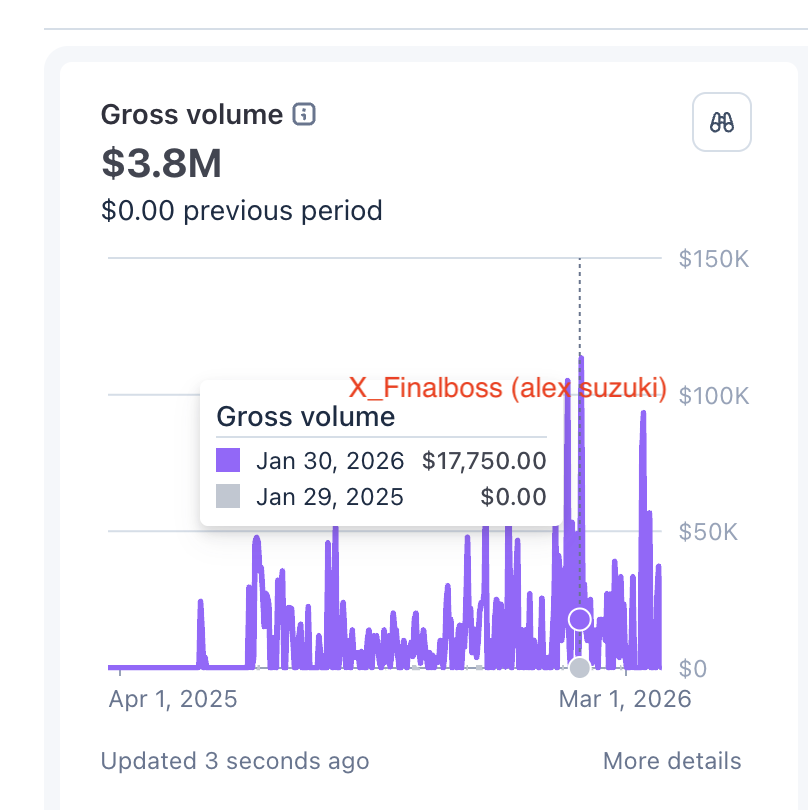
I made >$3.8M in the last 10 months selling digital products
Here's how in 15 steps:
1. make X account (5 sec)
2 get verified with blue checkmark $8/mo
3. pick topic: ecom, websites, sales, etc (5 sec)
4. find #1 influencer in that niche (10 sec)
5. gather their tweets, AI generate 300 tweets with claude
6. Use tweethunter to auto post 10 per day
7 Set up auto DM upon reply/like
8. you get 1M+ views minimum per month
9. automatically DM link to product to 500+ people daily
10. AI generate 5x 200 page ebooks in 35 minutes
11. ~400 people view the checkout page
12. u get 20 sales for $500 each. $10K/month profit
13 Upsell for a $2K package after that
14 Add 3-5 affiliate links to generate additional $7K per month passively
15 retire from your job
obviously there is more details to this business
if u want the full 130 page blueprint on how, comment "PDF" and i'll send.
Must be following + Retweet
90% of people trying to sell info products and digital products on twitter are stuck under $500/month. and it's the same structural problem almost every time
they have one product at one price point and they're trying to sell it cold to strangers through tweets
that's like opening a restaurant with one item on the menu and no front door. just yelling at people walking by on the street
the accounts consistently doing $8K, $12K, $18K months all have the same structure. it's not complicated but almost nobody sets it up because they're too focused on the content side
here's how the math actually works when you have a proper offer ladder
tier 1: free guide. costs you nothing. this is the entry point. someone comments on your tweet, auto-DM sends them the guide. this is not where you make money. this is where you collect leads. a decent CTA tweet doing 6K-12K views brings in 40-80 new leads per week
tier 2: low to mid ticket product. $197-$497. this is your course, your system, your template library. whatever it is. the people who read your free guide and joined your community see this offer naturally. no hard sell needed. conversion rate from community member to buyer sits around 6-11% in my experience. on 40 new community members per week that's 2-4 sales. call it $594-$1,988 per week just from this tier
tier 3: high ticket backend. $1,000-$3,000+. 1-on-1 partnership, direct mentorship, done with you. you don't advertise this everywhere. people discover it through conversations. after someone's been in your community for 3-6 weeks and maybe already bought your mid tier product, some of them will DM you asking for more hands on help. close rate on these inbound inquiries is 40-55% because they already sold themselves before reaching out. even 2 of these per month at $2,000 is $4,000
stack it all together in a normal month
mid ticket: 8-16 sales × $397 = $3,176-$6,352
high ticket: 2-3 sales × $2,000 = $4,000-$6,000
affiliate recurring from guide links: $400-$1,200 (and growing monthly)
total: $7,576-$13,552/month
from one twitter account. posting 3 times a day. no ads. no video. no employees
now compare that to someone with the same views, same engagement, but only one $297 product and no ladder. they're grinding DMs trying to convert cold leads at a 2% close rate. making maybe $300-$800/month and wondering what's wrong
nothing is wrong with their content. everything is wrong with their structure
i built a free doc that maps out this entire system. every tier, how they connect, the content strategy that feeds into it, the DM framework, the launch playbook. everything i set up across the backends i build
RT this + comment "ladder" and i'll send it to you (must be following)
Im going to leave you with this tonight.
Underrated life skill: asking for exactly what you want. Most people hint, hope, and wait for others to read their mind. Instead, state your request directly, explain why it matters to you, propose how it benefits them too, and give them an easy out. You'll be shocked how often the answer is yes. The worst they can say is no, which is exactly where you started. People actually respect clarity. Fortune favors the bold, but it adores the specific.
There's a difference between being good at something and being wired for it. And it takes most people years to tell the two apart.
Being good at something means you've practiced enough to perform. You get results. People praise you. From the outside, it looks like a fit. But internally, it drains you. Every task takes more effort than it should. You can do it, you just don't want to.
Being wired for something is different. It's the work that pulls you in before you've had coffee. The tasks where you lose track of time because your brain doesn't want to stop. You don't need discipline to do it. You need discipline to stop.
I spent 2 years studying neuroscience. I was good at it. I could get the grades, understand the material, do the work. But I never felt like I was operating the way my mind wanted to operate. It felt like running in shoes that were the wrong size. Functional, but off. It took me 10x as much studying and effort to get a good grade as it did for someone who understood the subject effortlessly. When I switched to psychology and eventually into operations, something clicked. It wasn't necessarily easier, but the way the work required me to think aligned with how my brain naturally functioned.
That's why I believe that most career frustration comes down to a wiring mismatch. You're spending 8 hours a day forcing your brain to work in a way it wasn't designed to. No amount of productivity hacks will fix that. The better question to ask yourself: "What am I good at that doesn't feel like I'm fighting myself to do it?" Sit with that one. The answer will probably point to somewhere you've been ignoring.