Claudia Roth wird auf der Klimakonferenz in Antalya übelst beschimpft. Die Alte wird von der eigenen Revolution in den Arsch gebissen.
Ich liebe alles daran 😍
BREAKING:
Turkish officer STOPS Pakistani Istanbul SUICIDE PROTESTER after persuading him to surrender his gun and HUG him.
This is humanity. This is how we should be.
Hoy he hablado con el presidente de Turquía, @RTErdogan.
Compartimos la preocupación por la seguridad en el Mediterráneo oriental y la estabilidad regional.
España reitera su llamamiento a un alto el fuego inmediato en Oriente Medio. Prolongar esta guerra solo agravará el coste humanitario y tendrá un impacto económico catastrófico para todos.
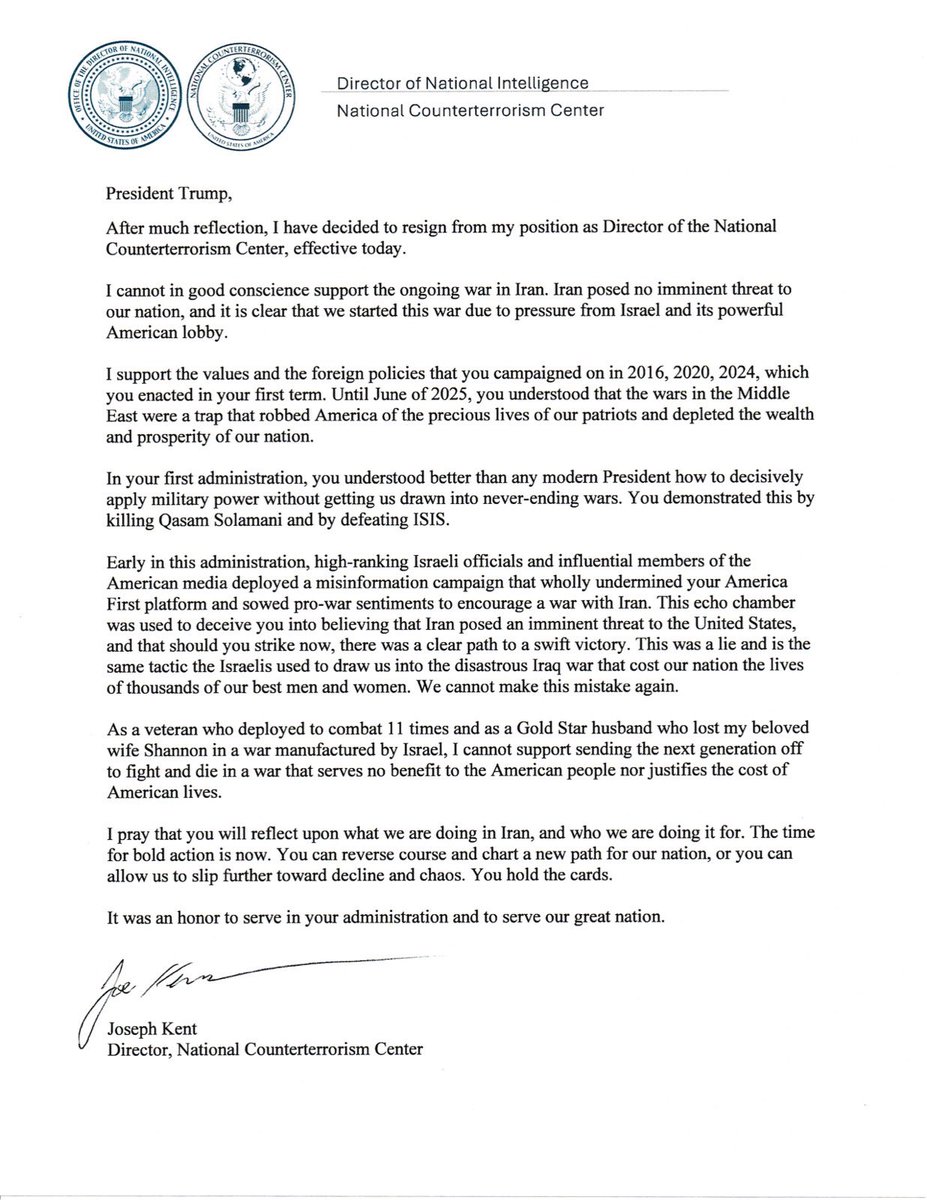
After much reflection, I have decided to resign from my position as Director of the National Counterterrorism Center, effective today.
I cannot in good conscience support the ongoing war in Iran. Iran posed no imminent threat to our nation, and it is clear that we started this war due to pressure from Israel and its powerful American lobby.
It has been an honor serving under @POTUS and @DNIGabbard and leading the professionals at NCTC.
May God bless America.
Sn cumhurbaşkanım,
Sana yıllarca muhaliflik yaptım. Ama bugün senin kurduğun stratejiler sayesinde Türkiye’de sevdiklerim, milletim savaştan uzak yaşayabiliyor.
Bir Türk vatandaşı olarak, içtenlikle teşekkür ediyorum.
Allah razı olsun.
Cette dame raconte à peu près n’importe quoi avec le plus grand aplomb. À ce point nous sommes dans une entreprise de désinformation méthodique des téléspectateurs…
Koerdische communistische extremisten en leugenaars verzinnen een nepcitaat van Erdogan om Turkije zwart te maken. Dit is hoe die PKK engnekken rollen. Het zijn wanstaltige pinokkios die hopen op meer chaos, oorlog en dood
The world, Europe, and Spain have faced this critical moment before. In 2003, a few irresponsible leaders dragged us into an illegal war in the Middle East that brought nothing but insecurity and pain.
Our response then must be our response now:
NO to violations of international law.
NO to the illusion that we can solve the world’s problems with bombs.
NO to repeating the mistakes of the past.
NO TO WAR.
https://t.co/KpRjBfwY4B
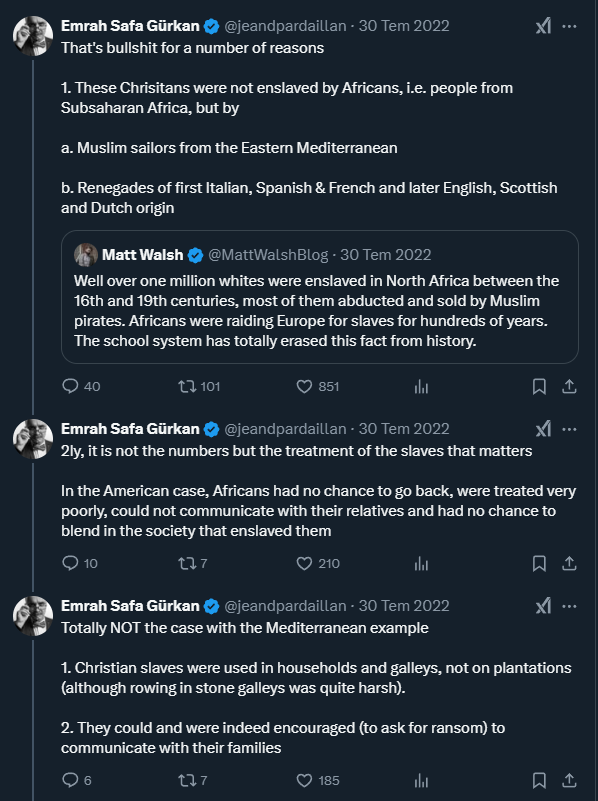
A slave in the Ottoman Empire could be a Grand Vizier or a Grand Admiral.
An African-American in US, 100 years after their emancipation, could not take a bus with the whites.
American slavery is a different form of slavery. It should be set apart from other non-western pre-modern forms.
For more either click https://t.co/Y10gAcgS2l
or check the images below
🇭🇺🤝🇹🇷 Productive talks in Istanbul with President @RTErdogan. Our partnership is built on results. We are strengthening trade between our nations, holding the line against migration, securing the TurkStream, and standing together for peace while others choose escalation. Hungary and Türkiye move forward together!
This is not really true. The idea that there is “nothing Turkish about Turkey” collapses under the weight of simple observation: there are countless cultural elements that are unmistakably Turkish 🇹🇷, shaped by Islam, shaped by the Turkic migrations, shaped by Ottoman history, and shaped by the lived experience of the Republican century. One does not need to dig very deep to find what is genuinely Turkish.
That premised, beneath those more recent layers lie older cultural strata that did not simply disappear when the Oghuz Turks arrived. For more than a thousand years after the fall of the Western Empire, Anatolia remained the political and cultural core of the Roman world. Constantinople was the direct, unbroken continuation of the Roman state, and rural life in Anatolia changed very gradually rather than by sudden breaks, at least until the nineteenth century. When the Turkic groups established themselves in the 11th–14th centuries, they encountered deeply rooted Romean communities whose agricultural cycles, family structures, ritual practices and sacred landscapes had been shaped by centuries of Roman – especially Roman Christian – life. Many of those customs took on new meanings within an Islamic and Turkic framework and survived as part of a unique synthesis.
The depth of this continuity becomes especially clear when one places inland Anatolia alongside inland Sicily. Reading Don Giuseppe Pitrè – in Sicilian Fairy Tales, Stories, and Folktales and above all the monumental Library of Sicilian Popular Traditions – one is astonished by how many customs he recorded in the late nineteenth and early twentieth centuries can be traced back to late-Roman rural culture. Already in his time some of those traditions were fading in Sicily, but their functional core still survives, often quite vigorously, in the Anatolian countryside today.
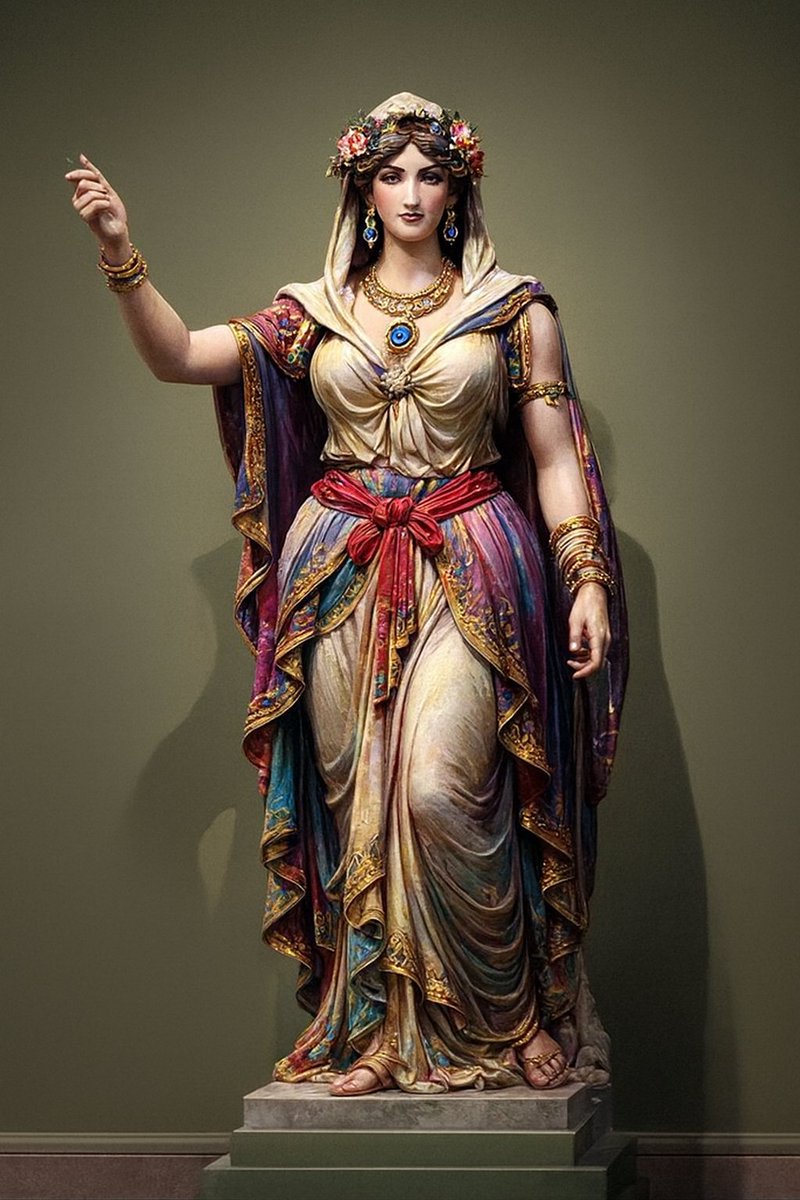
In the Sicily of his age, Pitrè describes red ribbons, silver hands and other amulets used to guard against the evil eye; in Anatolia one encounters the blue nazar bead protecting children and brides in precisely the same role. Sicilian villages honour their own holy protectors with seasonal processions linked to harvest and weather; in Anatolia local tomb-shrines, pilgrimage days and communal supplications to figures rooted in the land play a nearly identical part. The veiling of the bride, her ritual lament as she leaves her family home, the red belt she wears on her wedding day – the Roman cingulum, tied with a very hard knot, the knot of Hercules – and the symbolic foods ensuring prosperity are all ancient Roman marriage elements that Sicily kept into the twentieth century while Anatolia continues them today with Turkic and Islamic colouring, often blissfully unaware of their Romean roots.
Even the agrarian calendar, where Sicilian Christian feast days mark critical agricultural transitions, finds a mirror in Anatolian spring festivals such as Nevruz and Hıdırellez, festivals of fire and renewal. In Sicily, St Joseph’s vampe on 19 March preserve the same ancient impulse – great spring bonfires that once marked the turning of the year across Roman Italy. Death and remembrance likewise show shared habits: offerings of food to mourners, periodic visits to the dead, and a sense that the ancestors remain part of the community survive in both lands. And although each culture has its own heroes, the narrative structure of their folktales – the trickster, the miraculous helper, the moral journey – remains recognisably Mediterranean, part of a storytelling heritage the Romans shaped and successfully transmitted.
I often say that “the Turks are (in part) Muslim Romans.” Guilty as charged. It is an evocative metaphor, but yes, it oversimplifies a far richer reality, risking the erasure of the deep contributions of Turkic traditions, Islamic spirituality, Balkan and Caucasian migrations, and the social transformations of the Ottoman and Republican eras. What truly emerges is not replacement but syncretic continuity: Romean cultural memory, transformed yet unbroken, absorbed into – and reshaped by – a new civilizational layer.
The paradox, then, is that in many parts of Italy – even in Sicily – practices that Pitrè documented barely a century ago have now vanished or survive only in festival form. Yet in villages from Thrace to Cappadocia and beyond – well beyond the old frontiers with the Iranian and Arab worlds – those same practices, adapted to new beliefs, remain woven into the daily life of ordinary people. If one looks beneath flags, languages and modern identities, one discovers that the everyday life of Turkey still carries echoes of Rome – echoes that Sicily once shared and sometimes still vaguely remembers.
Had the Anatolians remained Catholics – either the Roman or the Greek variant – they would universally be recognised as the clearest heirs of the Romans. But historical circumstances led them elsewhere. So, if digging in Turkey reveals Roman foundations, that is because Rome lived in Anatolia longer than anywhere else. What stands on that ancient foundation today is Turkish – unmistakably, confidently, and syncretically so.
Listen my boy, we are native to this land. Our roots here go back far deeper than yours.
We were part of the empires and the ruling class, first Ancient Greece, then Rome, and later the Ottomans.
You guys were just a handful of small villages and mountain tribes that the West pulled together in the last century against the Empire. You will accept this reality.