Since working in government & leading the Nelson Mandela School of Public Governance, researching African migration governance reform at New South Institute.
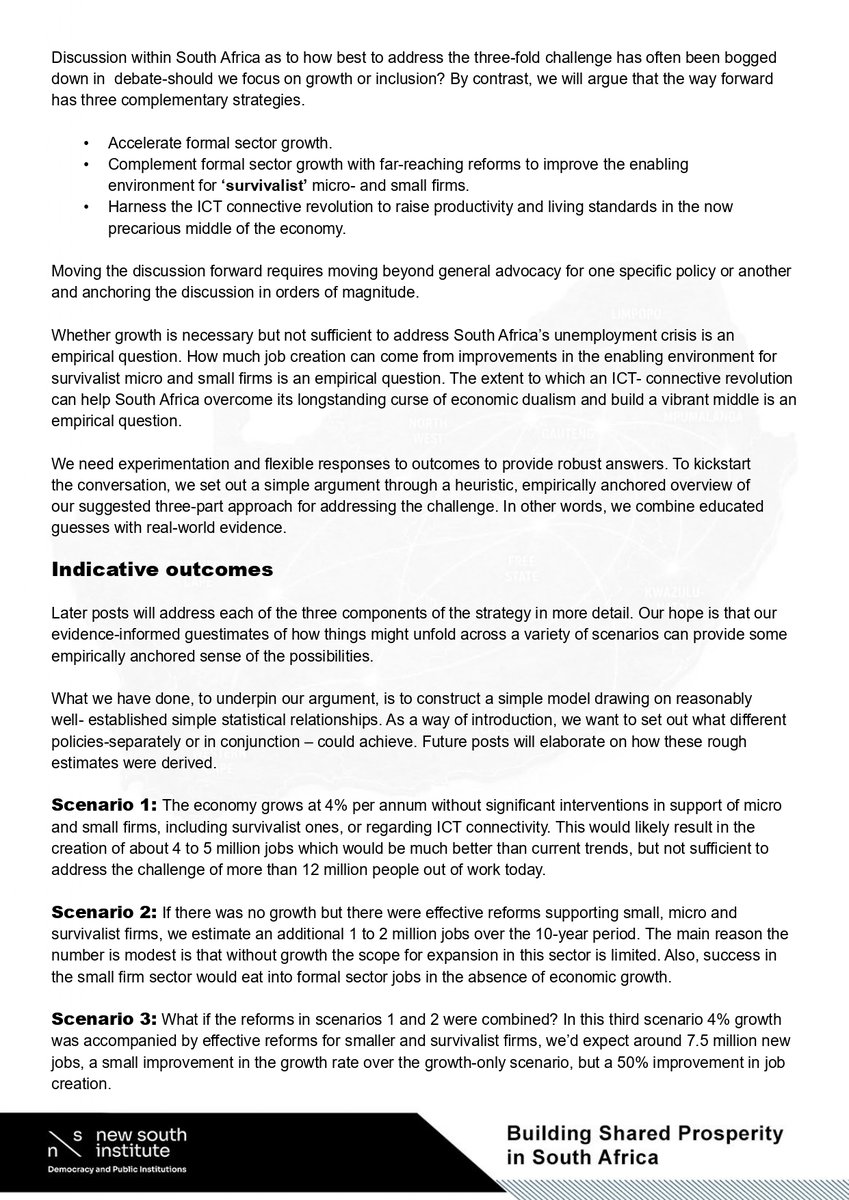
@Brianlevy387 and I recently talked with @Claudiamanning about how to drive more job creation in South Africa, beyond higher GDP growth which is necessary but not sufficient. @the_nsi recorded it and summarised the discussion and put it online here:
https://t.co/hF9yprrF7r
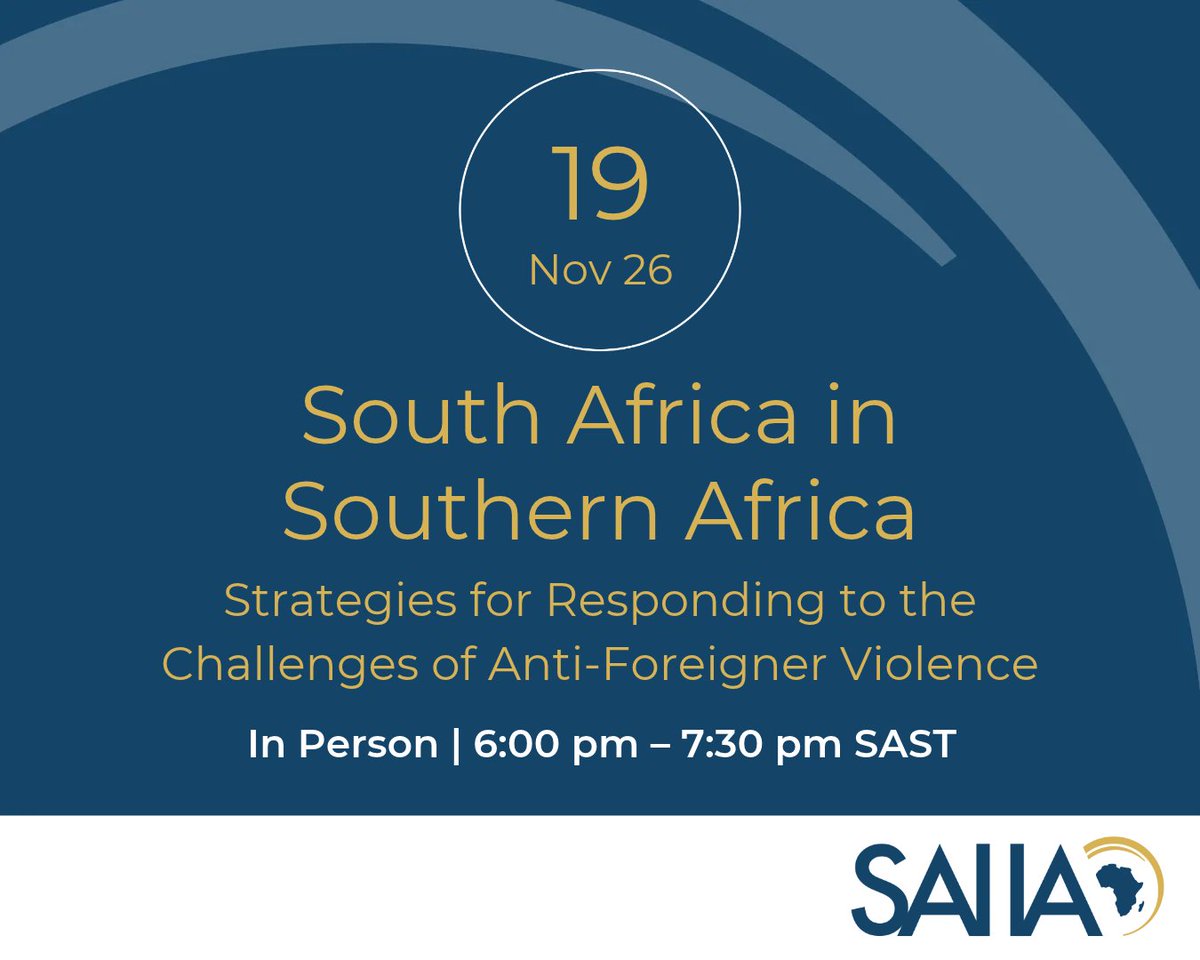
🗓️ IN-PERSON EVENT | What role can regional cooperation play in addressing South Africa’s #migration challenges?
Join SAIIA’s Western Cape Branch as Prof. @AlanHirsch2 explores regional responses to migration and anti-foreigner mobilisation.
🔗 RSVP: https://t.co/U9hClTsBdL
The economic strategies that once promised to create jobs in South Africa may no longer be enough.
As the global economy changes, so must our thinking about growth and employment.
Join the New South Institute (NSI) as @AlanHirsch2 and Brian Levy consider new pathways to job creation, drawing on their research in Building Shared Prosperity in South Africa.
17 November | 19:00 SAST | Online
Register: https://t.co/V68xMeE9oF
Head of the New South Institute’s Migration Governance Reform in Africa (MIGRA) programme and co-author of our latest series, Building Shared Prosperity in South Africa, @AlanHirsch2 joined Jon Gericke on @SAfmRadio to discuss migration, governance and growing social tensions.
Alan argued that rising anti-migrant sentiment must be understood alongside unemployment, economic pressures and weaknesses in public administration. He also considered the need for stronger institutions, effective migration systems and regional cooperation.
https://t.co/2dfHZnGgur @TheAfricaList@SouthSouthMMR@AfricaInsights@SVoice2030@Mixed_Migration@ImmigrationLab@diegoi@TsionTA@africaupdates
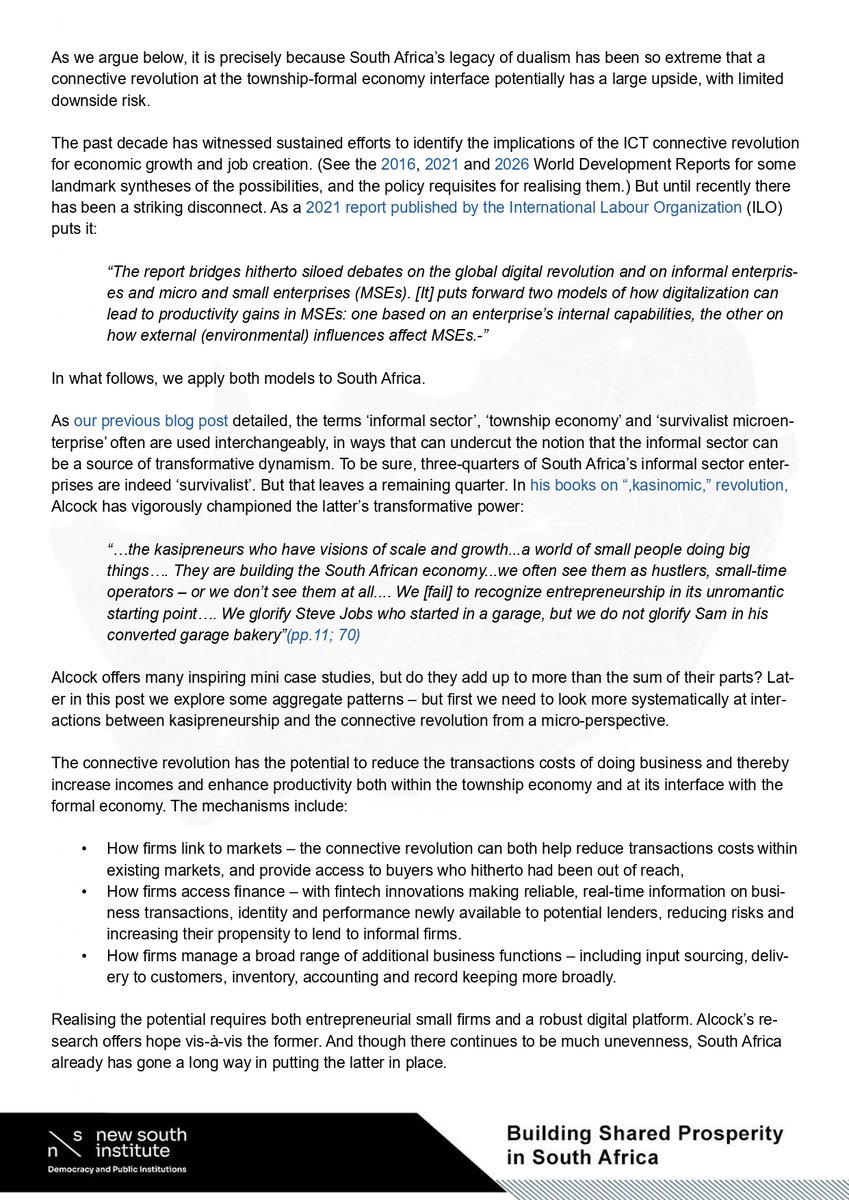
Shared prosperity is not just about more jobs--it's also about better jobs. In our fourth post we consider how productivity and incomes can rise for the precarious middle stratum of South African society.
The fourth article in the New South Institute's five-part series, Building Shared Prosperity in South Africa, is now available.
Brian Levy and Alan Hirsch turn their attention to overcoming the divide between South Africa's formal and informal economies.
Here's the third in my series of posts with Brian Levy towards a shared prosperity in South Africa. We ask what are the opportunities to grow jobs in the informal sector?
https://t.co/SpysEVsuZ6
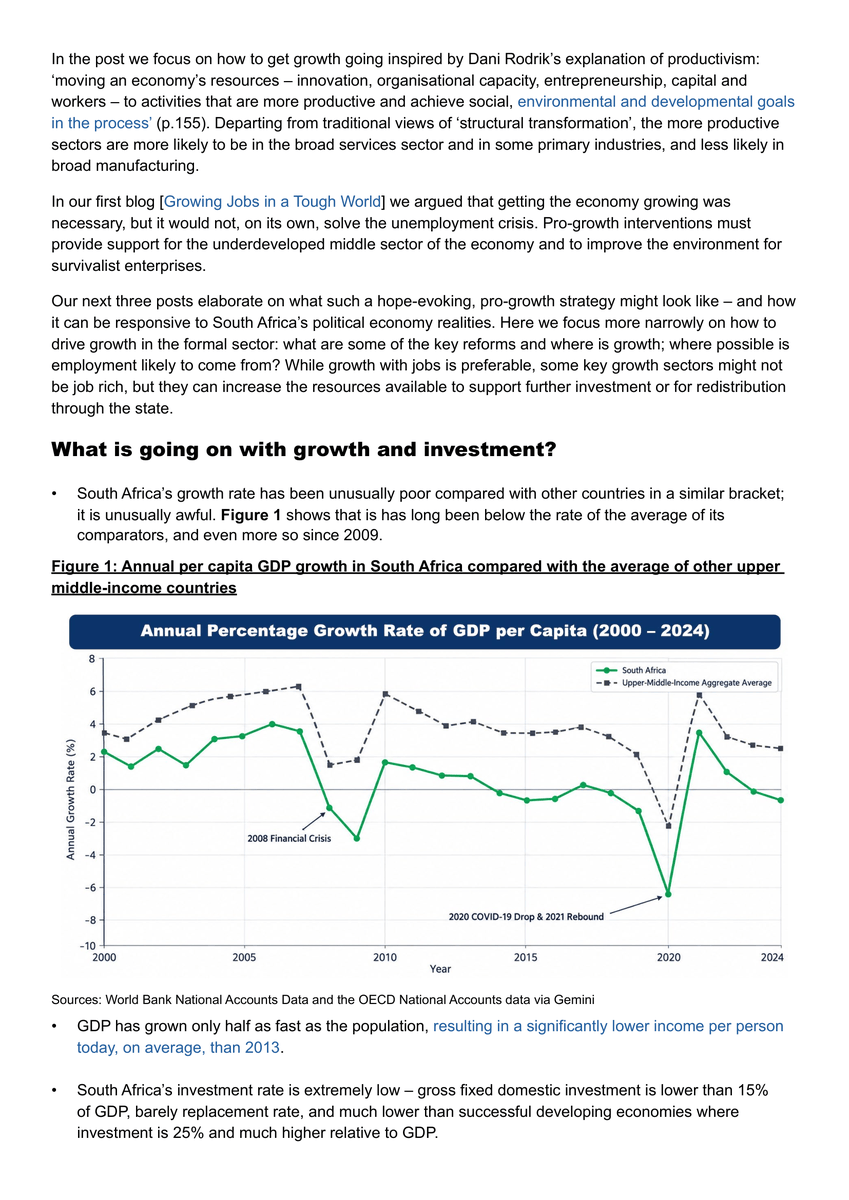
In the NSI's five-part series, Building Shared Prosperity in South Africa, we consider growth, jobs and the “missing middle.”
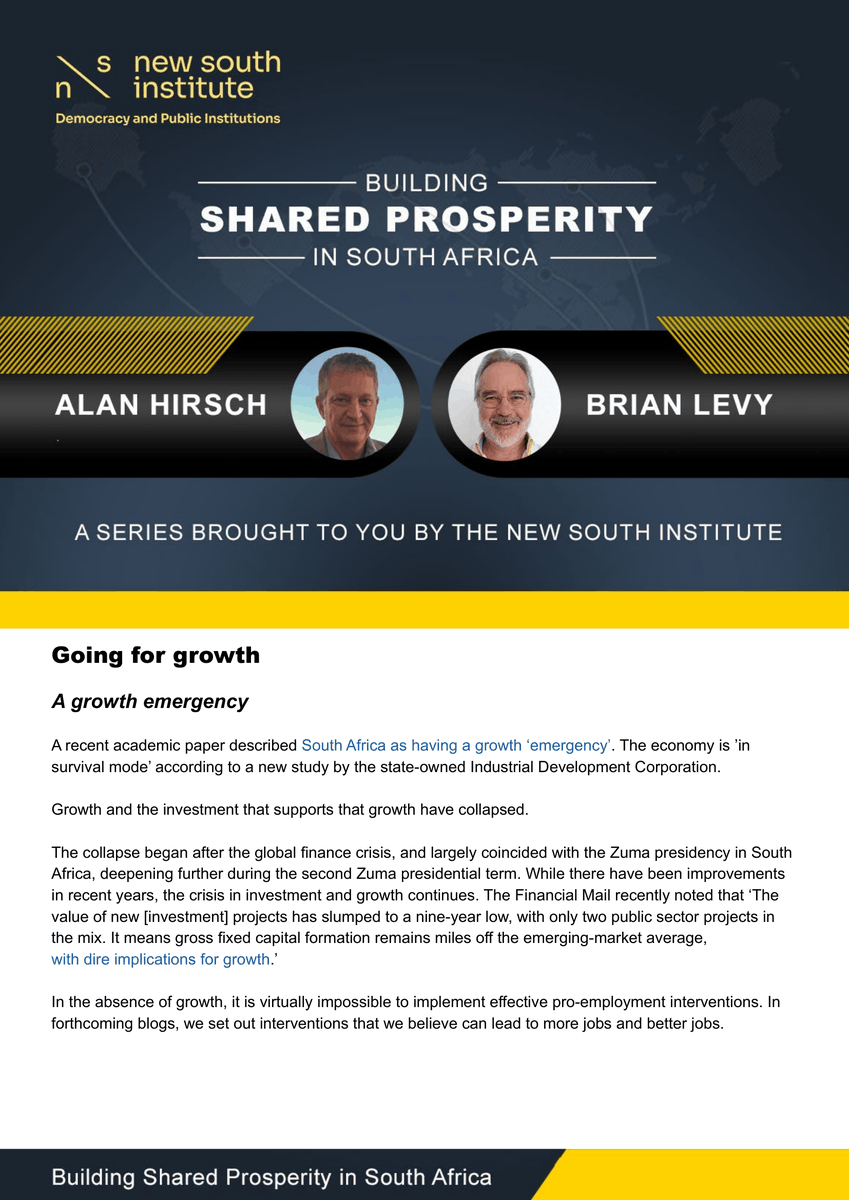
In Going for Growth, the second article, @AlanHirsch2 and @Brianlevy387 ask what it would take to restore growth in South Africa's formal economy.
https://t.co/62sYbGJiW2 @SALDRU1
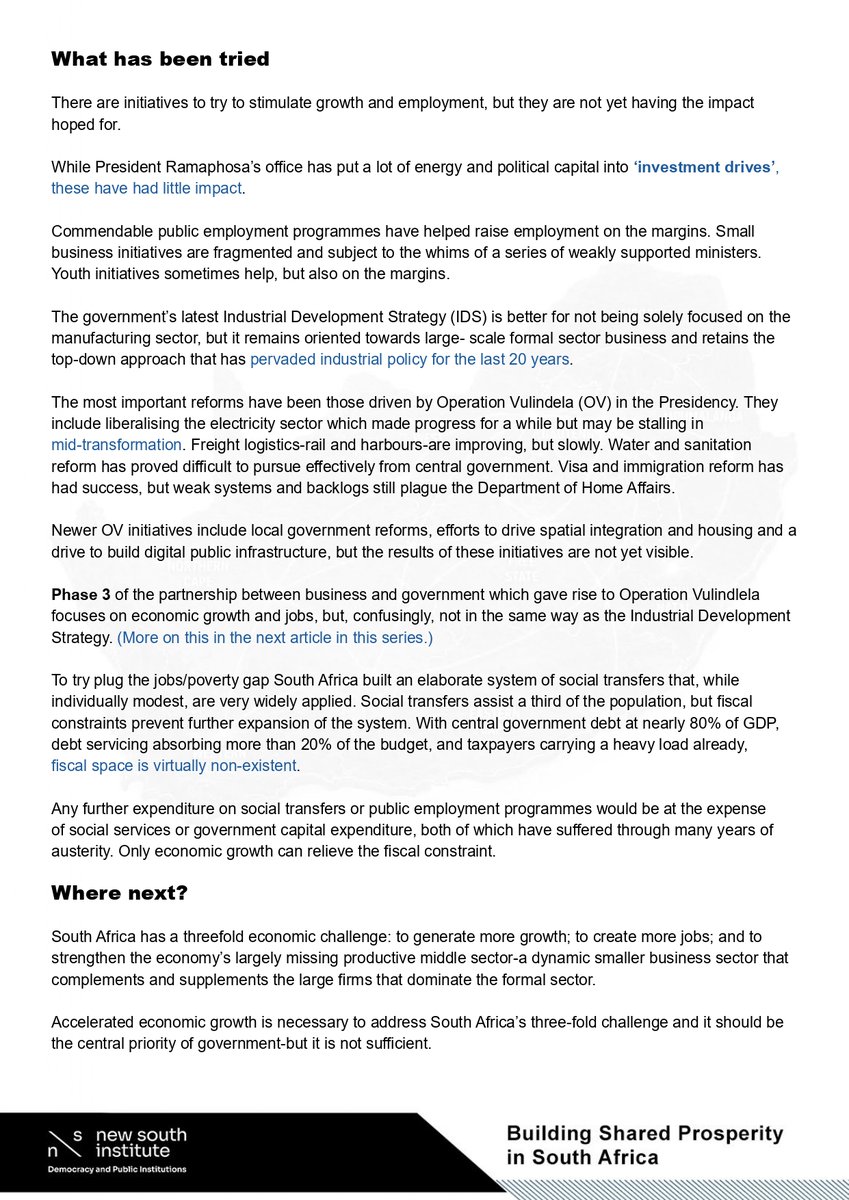
Brian Levy and I have been pulling together ideas about growth and job creation, and strengthening small and micro businesses in SA and how to get there. Here's the blurb and the first blog.
Building shared prosperity in South Africa requires an economy that creates jobs, supports entrepreneurship and expands opportunities for participation in economic growth.
The New South Institute has launched a new five-part blog series, Building Shared Prosperity in South Africa, which considers the policy choices and institutional reforms needed to address unemployment and support more inclusive economic growth.
Co-author @AlanHirsch2 joined Jeremy Maggs on Hot Business on @Hot1027FM to discuss the series and the challenges facing South Africa's economy.
Alan outlined three complementary priorities: accelerating formal sector growth, creating a more supportive environment for small and informal businesses, and harnessing information and communication technologies to improve productivity and expand economic opportunities.
The discussion also considered the importance of effective governance, entrepreneurship and cooperation between government and business in creating the conditions for shared prosperity.
Listen to the full interview: https://t.co/rbqeoh2BNL
Read the first article in the series: https://t.co/tz0h6Xvg5M
@SALDRU1@CDEsouthafrica@MandelaUCT@GTACSouthAfrica@IEJ_SA@ROAPEjournal@DPRU_UCT
As tensions around undocumented migration continue to shape public debate in South Africa, NSI’s @AlanHirsch2 joins @NewsCentralTV’s The Conversation today, 12 August, to discuss the economic implications and the broader questions of migration governance, employment and economic inclusion.
Watch live from 18:25 SAST on News Central TV.
Government has begun implementing elements of its five-point migration plan, but @AlanHirsch2, Head of NSI’s Migration Governance Reform in Africa programme, says the longer-term challenge extends beyond borders, documentation and enforcement.
Speaking to Africa Melane on @Radio702 and @CapeTalk , Alan pointed to progress in tackling corruption within Home Affairs and strengthening border management, while arguing that greater regional cooperation and economic development in neighbouring countries will ultimately be critical.
“The long-term solution is more economic development in those countries.”
Watch the conversation on what government has done so far, where the gaps remain, and what a longer-term approach to migration could require.
https://t.co/4PJrYa5Pdg via @YouTube@theafricainst@africaupdates@SouthSouthMvmt@Mixed_Migration@ImmigrationLab@HomeAffairsSA@ParliamentofRSA
Last week, at the 9th African Network of Parliamentary Budget Offices Annual Conference, hosted by the Parliament of the Republic of Namibia in Swakopmund, NSI’s @AlanHirsch2 discussed the fiscal dimensions of migration in Southern Africa.
Drawing on his South African research, he highlighted the relatively small share of the national budget represented by the migration-related costs he examined, alongside the potential benefits of labour migration, skills partnerships and regional cooperation.
Read more: https://t.co/9lBo91D29i
@Bruceps There aren't many. I recently travelled SAA and looked at the fleet number in the online magazine (yes, they have one). I think it was 17. Which I think is much less than half the number they had at the peak.
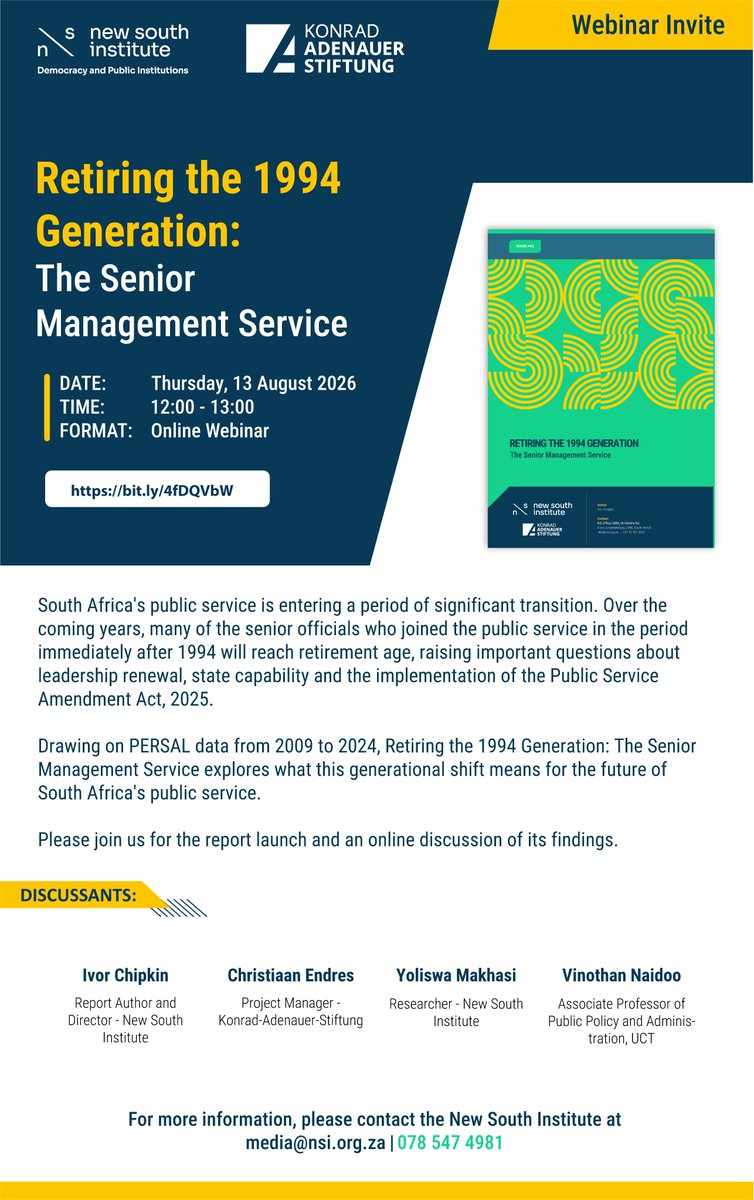
Fewer than 3% of South Africa's senior public service managers are under 40.
Drawing on PERSAL data from 2009 to 2024, our latest research finds the average senior manager is 53–55 years old, with up to 80% over the age of 50 in some sectors, and virtually no successor pipeline.
What happens when this generation retires, and who replaces them?
Join us to discuss the findings.
📅 13 August | 12:00–13:00 (online)
Register: https://t.co/FnVRah9Y2I
When governments face moments of crisis, leadership matters.
In a new article, @AlanHirsch2, Head of the Migration Governance Reform in Africa programme at the New South Institute, reflects on South Africa's response to anti-foreigner mobilisation, arguing that delayed action and mixed messaging allowed tensions to escalate.
Drawing lessons from South Africa's COVID-19 response and international experience, he considers what can still be done to prevent further conflict and strengthen social cohesion.
Read the full article: https://t.co/6YOakCAijj
Alan's presentation is also available to download on our website: https://t.co/ESYOm28t49
@TheAfricaReport@theafricainst@SouthSouthMvmt@AfricaInsights@SVoice2030@Mixed_Migration@diegoi@TsionTA@MandelaUCT
🗣️ Migration debates are often driven by claims – not evidence.
Our latest explainer examines three common narratives about migrants, jobs and crime in #SouthAfrica, and compares them with the available data. https://t.co/q0K0QzTM4F
South Africa-s Explosive Migrant Crisis: Anti-foreigner Violence Is Easily Sparked, What Hasnt Been Done To Deal With It - https://t.co/xhFscUCXdB @AlanHirsch2
What happens when a country built on the ideals of the Rainbow Nation begins to turn inward?
In a new @dailymaverick opinion piece, Mandira Bagwandeen (NSI) and Aaliyah Vayez reflect on the growing tensions between South Africa's pan-African aspirations and the realities of anti-migrant violence.
The article argues that the country's current reckoning is about far more than migration policy. It is about political leadership, the rule of law, and whether South Africa can uphold the values of dignity, solidarity and inclusion that have long shaped its place on the African continent.
https://t.co/Ee5c8aDlzW
#PanAfricanism #Migration #Governance #SouthAfrica #PublicPolicy