I’ve launched a new Buddhist discussion community on my website — the best place to ask me questions, join conversations, and follow updates on my books, videos, podcasts, and graphics. It’s new, so feel free to jump in and help shape it.
https://t.co/XLfcGc6x1n
NEW! A 12‑month Mahāyāna Buddhist practice based on the Six Pāramitās is now live. Use as a supportive, year‑long companion to your daily practice & temple life.
Article: https://t.co/7FlCn2Wkr0
Graphic: https://t.co/dGOpIcSkOi
My new 2026 Buddhist calendar is available in two versions. A full size and single page versions. Both are ready for you to view electronically or print out yourself. Subscribers to my Buddhism Graphics & Resources Super Pack can download today! https://t.co/dGOpIcSkOi
My 2026 Buddhist Calendar is now available as part of my Buddhism Graphics & Resources Super Pack! https://t.co/dGOpIcSkOi
You can also view the full article here: https://t.co/zVU9PaV7w8
Buddhist Mindfulness: Protecting the Mind from the Three Fires
In Buddhism, "mindfulness" isn’t just about being "present", as secular mindfulness tends to make us believe. Instead, it has a specific Buddhist religious purpose: it’s about being aware and discerning about what's around you and how it will impact you.
Every sight, sound, and thought we encounter has the potential to feed the "three fires": greed, hatred, and delusion/ignorance. When we grasp at these experiences or react impulsively, we “ingest” them into our consciousness, giving rise to karma that keeps us stuck in suffering.
If we look at the infographic, it reminds us that mindfulness is our inner gatekeeper. By observing without clinging, we prevent harmful mental states from taking root. This isn't the same as "suppression", but instead it's "spacious awareness."
When we stay grounded in the present, we create the conditions for peace, clarity, and compassion to flourish.
Don’t feed the fires. Instead, watch them flicker and fade away (and realize our true natural state of Nirvana).
A great sutra to read about this is the "Fire Sermon". In it, the Buddha explained that all around us is 'burning'. When we allow our eyes, ears, nose, etc., to "ingest" things that give rise to unwholesome karma in our mind, we are hindered.
Use your Buddhist practice, along with mindfulness, to be the "gatekeepers" to your consciousness preventing karma from hindering your progress on the Buddhist path.
New to Buddhism? Start your journey with my FREE Buddhism Starter Pack!
Includes a beginner-friendly eBook, graphics, and a resource page packed with videos, podcasts, Q&As, book recommendations, and virtual sessions information.
👉 https://t.co/Tfl1esYtrk
Prajna is a Sanskrit word that means “wisdom” that comes from seeing the true nature of reality. This is considered the highest form of wisdom which provides insight into the true nature of all phenomena.
As part of the Buddha's Noble Eightfold Path, Wisdom means more than an "intellectual" understanding of things (such as Buddhist scripture). Instead, it refers to a deep and fundamental understanding that mere intellect cannot comprehend. This is why Buddhist practice holistically includes morality/conduct and [meditative] concentration to round out the practice.
In Mahayana, Prajna Paramita is emphasized in many traditions. It means the perfect way of seeing the true nature of reality. Prajna=Wisdom and Paramita=Perfection. The Prajñāpāramitā also refers to nearly 40 different sūtras in Mahāyāna Buddhism.
Sutras such as the "Heart Sutra" emphasize the Prajñāpāramitā and Wisdom in general.
Today (July 13th) marks the Enlightenment Day of Guānyīn Púsà (觀音菩薩), (known in Sanskrit as Avalokiteśvara Bodhisattva). Guānyīn is said to be embodiment of boundless compassion in Mahāyāna Buddhism and is one of the most popular Bodhisattvas in all of Buddhism.
Guanyin realized Buddhahood a long time ago as “Tathāgata Right Dharma Brightness” (Zhèngfǎmíng Rúlái, 正法明如來), yet chose to remain in the world as a Bodhisattva to guide and rescue beings from suffering.
She vowed to respond to every cry, manifesting in countless forms (male, female, human, divine) to meet us where we are (any place, any condition, etc).
Her Enlightenment Day, celebrated on the 19th day of the 6th lunar month, reminds us that compassion is not passive but is instead active, responsive, and transformative.
She appears in the Western Pure Land of Ultimate Bliss (Sukhāvatī) alongside Amitābha Buddha and Mahāsthāmaprāpta Bodhisattva, which together form the “Three Sages of the West”.
Buddhists use this mantra, “Namo Guānshìyīn Púsà” (南無觀世音菩薩), which means “Homage to the Bodhisattva Who Hears the Cries of the World.” Reciting it today is said to multiply merit a hundred million times. While the version I shared here is in Chinese, the same structure is used throughout Buddhism but varies slightly due to local language.
On this special day may we embody her vow and one that those on the bodhisattva path resonate with:
“To remain in samsāra until every being is free.”
Reciting a Buddha's name is a widely popular form of Buddhist practice. Whether it is in Theravada or Mahayana, Buddhists find both faith and meditative concentration in this practice.
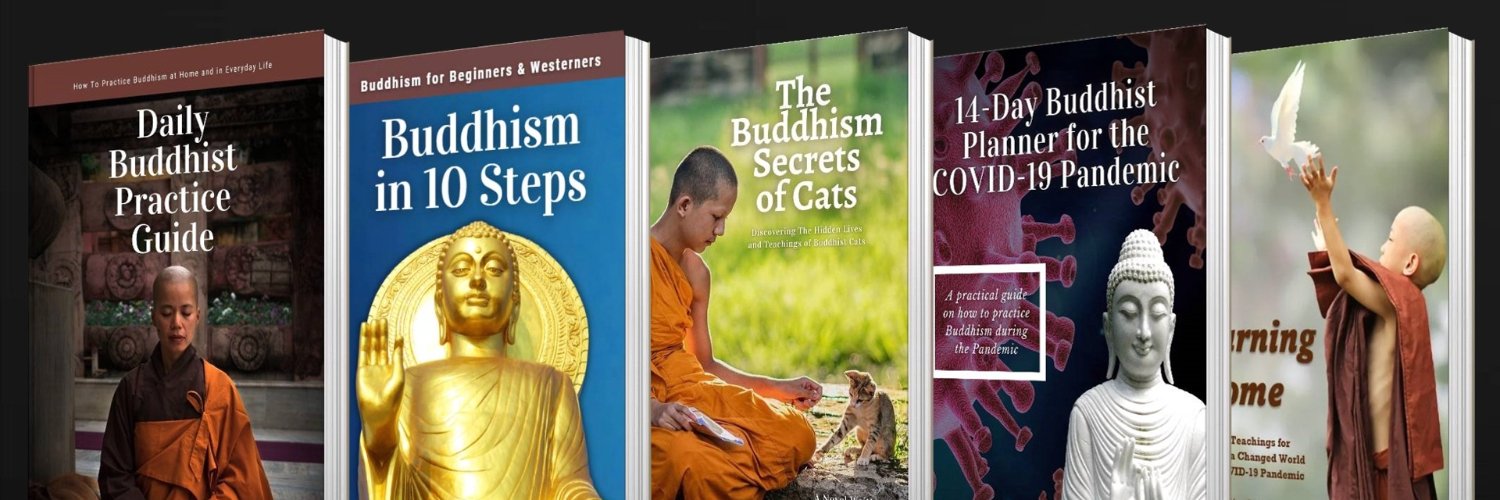
My "Buddhist Daily Planner for the COVID-19 Pandemic" is now available on my website and is 100% free! You'll get an eBook, 14-day practice, graphics, posters, and more! https://t.co/gQMiCw44Vh
If you are new to Buddhism and looking for a great way to learn about it, check out my "Buddhism Starter Pack". It's FREE and has an eBook, infographics, videos, and more. https://t.co/GyfA9MFlxU






![alanpeto's tweet photo. Prajna is a Sanskrit word that means “wisdom” that comes from seeing the true nature of reality. This is considered the highest form of wisdom which provides insight into the true nature of all phenomena.
As part of the Buddha's Noble Eightfold Path, Wisdom means more than an "intellectual" understanding of things (such as Buddhist scripture). Instead, it refers to a deep and fundamental understanding that mere intellect cannot comprehend. This is why Buddhist practice holistically includes morality/conduct and [meditative] concentration to round out the practice.
In Mahayana, Prajna Paramita is emphasized in many traditions. It means the perfect way of seeing the true nature of reality. Prajna=Wisdom and Paramita=Perfection. The Prajñāpāramitā also refers to nearly 40 different sūtras in Mahāyāna Buddhism.
Sutras such as the "Heart Sutra" emphasize the Prajñāpāramitā and Wisdom in general.](https://pbs.twimg.com/media/GxjBZLnbYAAi79E.jpg)


