Barriers and Facilitators of Mindfulness‑Based Interventions for Muslims in the UK ..
Our paper is out ! Looking forward to your feedback 🙏 @BathMindfulness#mindfulness#Minority
https://t.co/wAVz6OYo4I
Falling back isn't evidence that change is impossible. It's information about what the pattern is doing for you in the moments you return to it. Almost always, a persistent pattern is providing short-term relief from something uncomfortable, and that short-term relief is powerful enough to override longer-term intentions in the heat of the moment.
The question that changes things isn't "why can't I stick to my intention?" It's "what is this behavior doing for me right now, in this moment, when I reach for it?" Once you understand the function clearly, you can start building something that addresses the actual need rather than just fighting the behavior directly.
Something you'd like me to address? Leave it in the comments and I might answer it next.
#psychologicalflexibility
#ACT
#ACTtherapy
There's a version of mindfulness that sounds passive, just noticing whatever shows up. But present-moment awareness as I think about it is more active than that. It involves choosing what to attend to, which is actually one of the more demanding things a mind can do.
Here’s why scientists say activating happiness in the brain has nothing to do with money, fame, or luck.
Neuroscience shows that happiness is driven less by external rewards and more by internal processes. The brain’s well being circuits are activated through behaviors that create meaning, connection, and a sense of progress, not status or possessions.
One key factor is engagement. When the brain is fully involved in an activity that feels purposeful, dopamine is released in a balanced way. This kind of dopamine supports satisfaction rather than short lived excitement.
Social connection also plays a major role. Acts of kindness, shared experiences, and feeling understood activate oxytocin and serotonin, chemicals tied to lasting emotional stability rather than temporary pleasure.
Another driver is agency. The brain responds positively when you feel in control of your choices and actions. Small wins, learning, and self directed goals strengthen neural pathways associated with confidence and contentment.
The takeaway is simple. Happiness is not found by chasing outcomes. It is built by practicing habits that consistently activate the brain’s natural well being systems, regardless of circumstances.
Research from Massachusetts General Hospital and Harvard Medical School shows that regular mindfulness meditation can produce measurable changes in brain structure.
In an eight-week mindfulness-based stress reduction (MBSR) program, participants practiced meditation for an average of about 27 minutes per day. MRI scans taken before and after the program revealed increases in gray-matter density in brain regions associated with learning and memory, self-awareness, and emotional regulation, including the hippocampus.
At the same time, researchers observed a decrease in gray-matter density in the amygdala, a brain region involved in stress and fear responses. This change was associated with reduced self-reported stress levels among participants.
These findings suggest that consistent, relatively short daily meditation practice can be linked to structural brain changes related to emotional regulation and stress processing.
New research from Massachusetts General Hospital shows that meditating about 27 minutes a day for eight weeks can actually change the physical structure of your brain.
Scientists found increases in gray-matter density in areas tied to memory, self-awareness, and emotional regulation.
Meanwhile, the amygdala — the brain’s stress center — became smaller, aligning with participants’ reduced stress levels.
These changes indicate that meditation can strengthen emotional balance and cognitive functioning.
The findings highlight how even short daily practice can lead to measurable brain growth and reduced stress.
Your thoughts are literally shaping your brain
What you dwell on doesn’t just pass through your mind; it physically reshapes it. When you deliberately turn your attention toward what’s good, your brain starts building and reinforcing pathways that make it easier to spot more of the same. This is neuroplasticity in action: the lifelong capacity of your brain to form fresh connections based on where you direct your focus, emotions, and habits.
Each time you pause to appreciate a kind gesture, a quiet success, or a fleeting moment of beauty, you’re strengthening the neural networks that filter reality through a clearer, steadier perspective. With repetition, this habit becomes your default setting—your mind begins to automatically notice what’s right instead of fixating on what’s wrong. The result? Lower stress, greater emotional balance, and a tougher mental immune system to face challenges .
This isn’t pretending problems don’t exist. It’s choosing to train your brain to look for possibilities rather than staying stuck on obstacles. The remarkable thing is that you hold the controls—you can start rewiring these circuits whenever you decide.
Try it: find one good thing today. Tomorrow, find two. Then five.
Watch what happens next
Your mood follows your attention. Gratitude shifts it in the right direction.
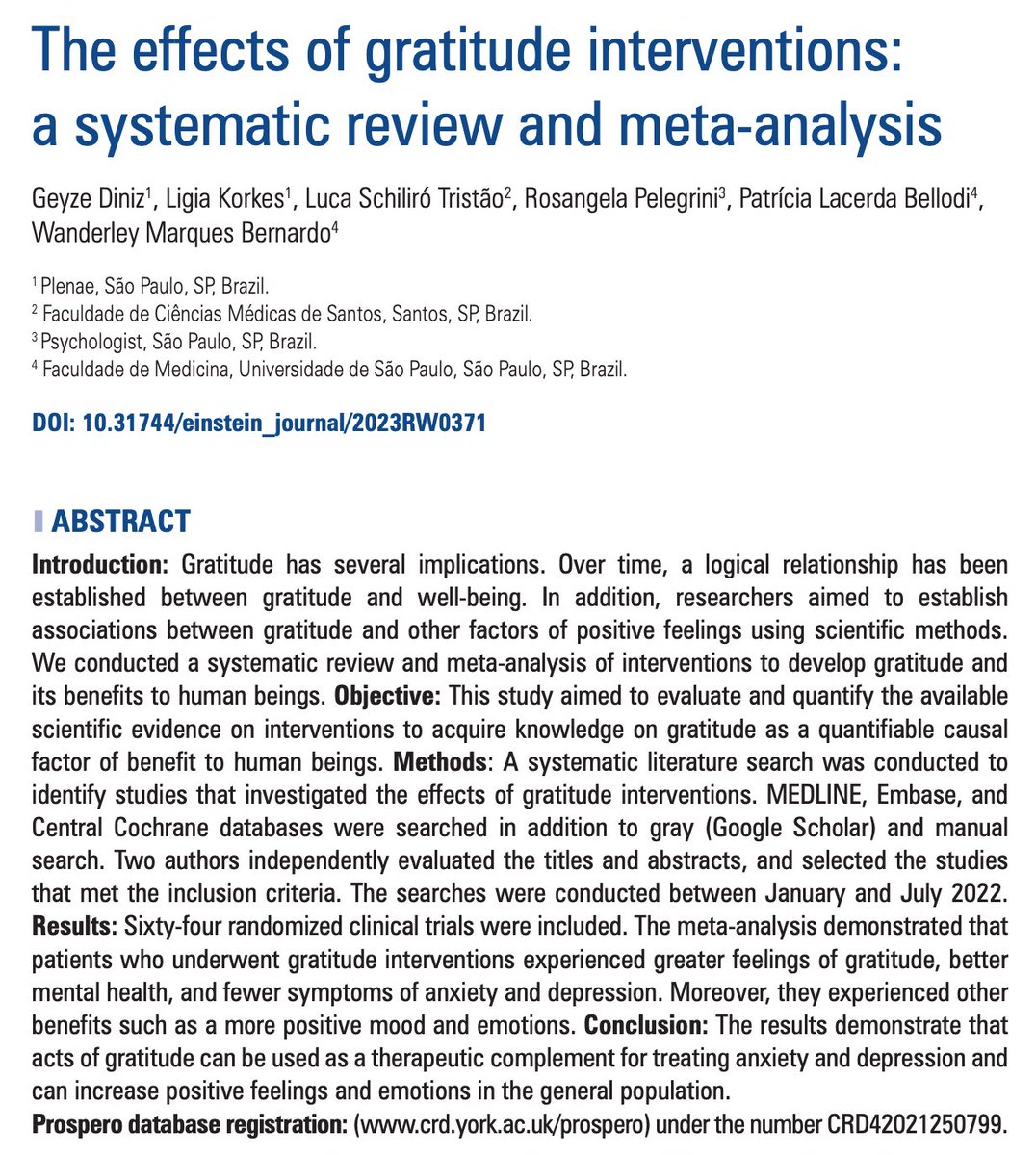
Across 64 randomized trials, simple gratitude exercises (diaries, expressing thanks, grateful reflection):
- Lower anxiety (8%)
- Lower depression (7%)
- Greater life satisfaction (7%)